Artwork
Veue de l'Eglise nostre Dame de Rouen
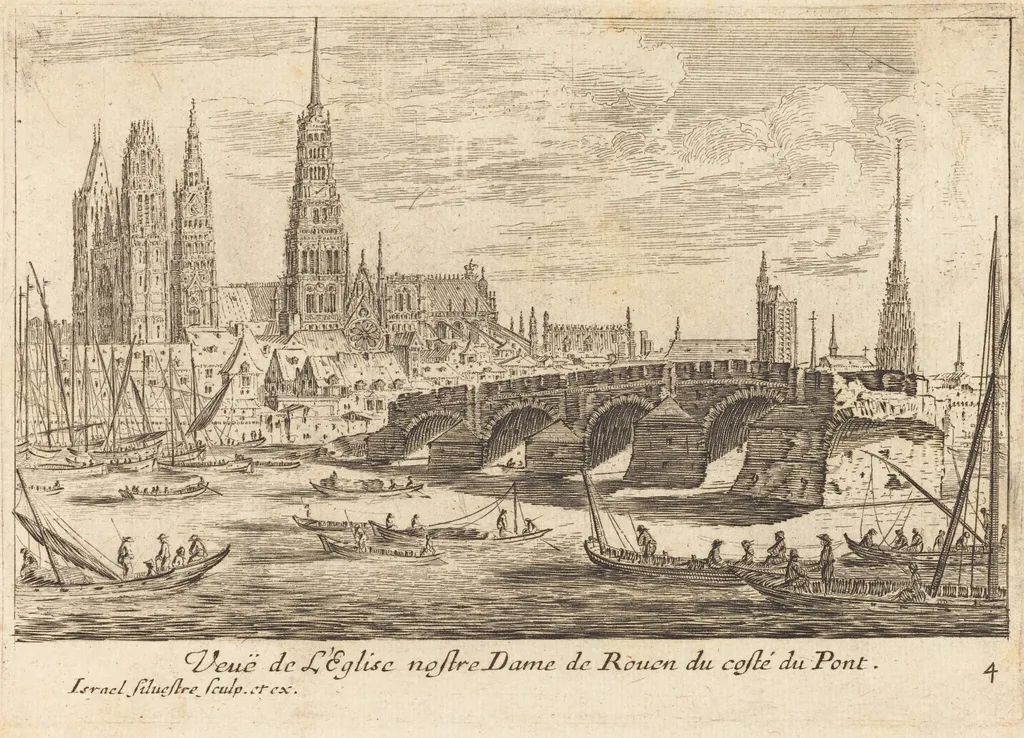
Veue de l'Eglise nostre Dame de Rouen is an ink print by the Baroque artist Israël Silvestre. It dates from 1664 and is held in the collection of the National Gallery of Art. Created in 1664, this etching presents a panoramic view of Rouen’s cathedral set against a bustling riverfront.
About this work
Overview
Created in 1664, this etching presents a panoramic view of Rouen’s cathedral set against a bustling riverfront. The composition balances the soaring silhouette of the Gothic edifice with a crowded harbor filled with vessels, while a line of steeply roofed structures frames the scene. The work exemplifies the artist’s interest in documenting urban landmarks with precise, linear detail.
Subject & Meaning
The image captures the cathedral’s dominant verticality, emphasizing its role as a focal point in the city’s skyline. Around it, the busy quay and smaller buildings suggest the everyday commercial activity of Rouen, juxtaposing sacred architecture with the practical rhythms of river trade. The contrast underscores the cathedral’s prominence within the civic landscape.
Technique & Style
Executed with fine, incised lines on a copper plate, the etching relies on sharp hatching to render water, sailcloth and stone façades. The artist’s hand is evident in the slightly rough texture of the lines, which convey both architectural accuracy and the kinetic energy of the harbor. The monochrome palette highlights tonal variations without resorting to elaborate shading.
History & Provenance
The print was produced by Israel Silvestre, a French draftsman who specialized in topographical subjects. Orphaned early, he was trained by his uncle, an established etcher and print‑seller in Paris, and later traveled through France, Spain and Italy gathering material for his works. This particular plate was sold individually and also appeared in series of city views during the mid‑17th century.
Context
Rouen’s cathedral was a frequent subject for artists documenting the city’s architectural heritage. Silvestre’s depiction aligns with a broader 17th‑century French interest in recording urban environments for both scholarly and commercial purposes, providing viewers with a visual record of notable landmarks and their surrounding activity.
Artist & collection
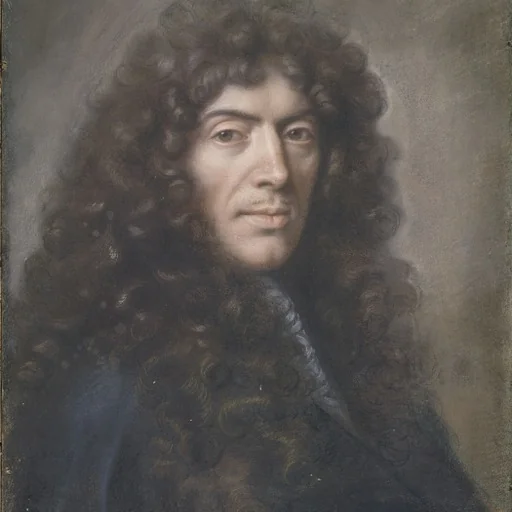
Artist
Israel Silvestre (13 August 1621 in Nancy – 11 October 1691 in Paris), called the Younger to distinguish him from his father, was a prolific French draftsman, etcher and print dealer who specialized in topographical views and perspectives…

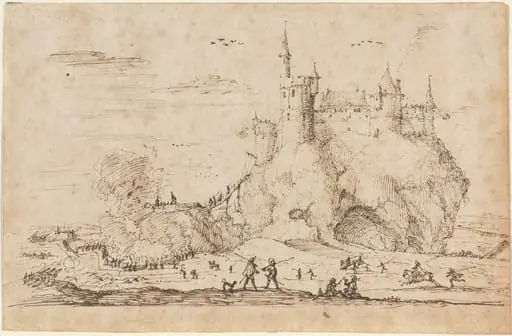 Castle under Siege
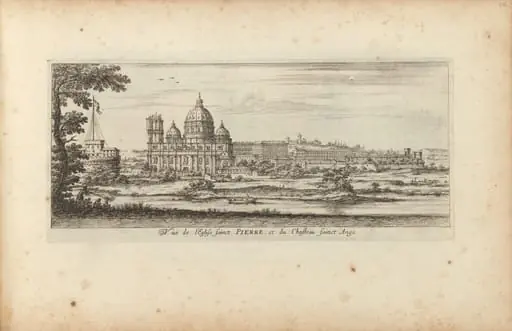 Vuë de l'Eglise sainct Pierre, et du Chasteau Sainct Ange
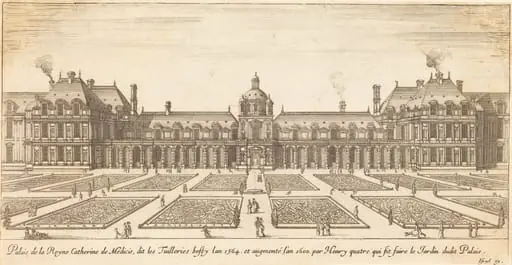 Palais de la Reyne Catherine de Medicis
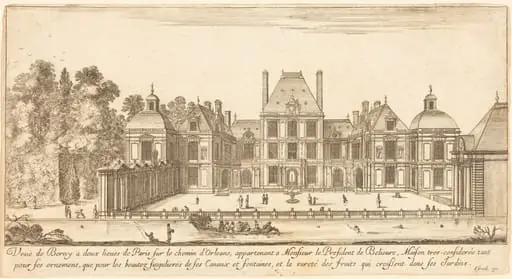 Veue de Berny a deux lieues de Paris sur le chemin d'Orléans
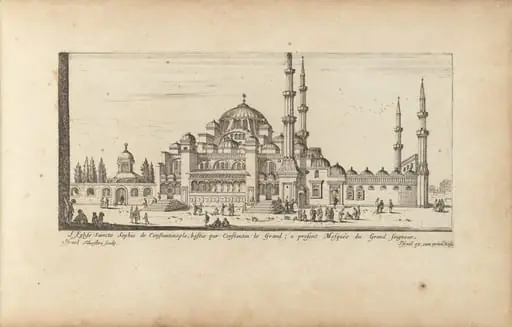 L'Eglise Saincte Sophie de Constantinople, bastie par Constantin le Grand; a present Mosquée du Grand seigneur
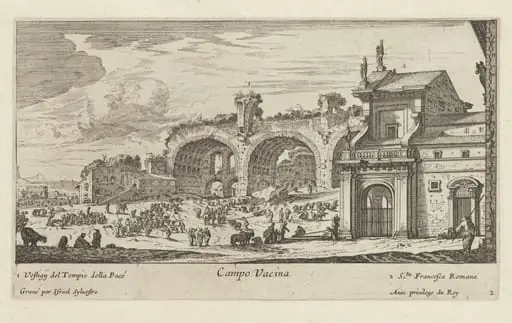 Campo Vacina
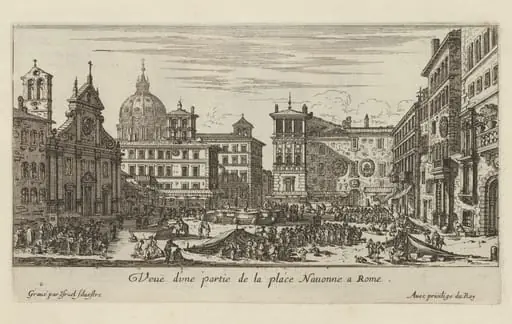 Veuë d'une partie de la place Navonne a Rome
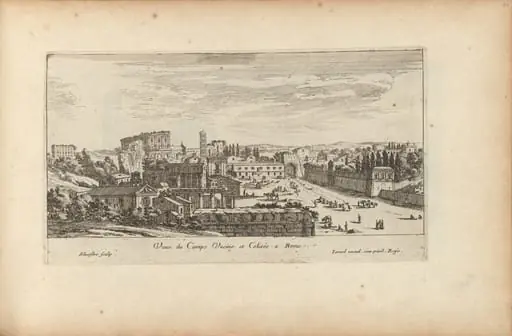 Veue du Campo Vacine et Colisée a Rome
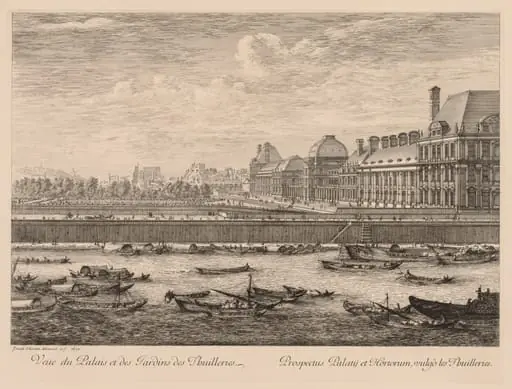 Vue du palais et des jardins des Tuileries, du côté du quai
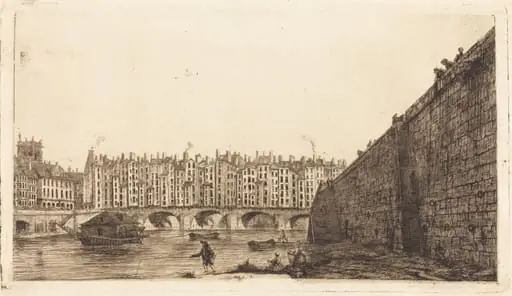 Le Pont-au-Change, Paris, vers 1784
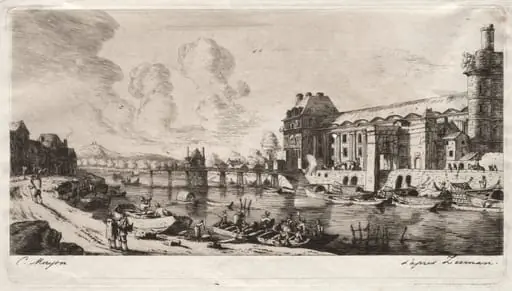 The Pavillon de Mademoiselle and part of the Louvre
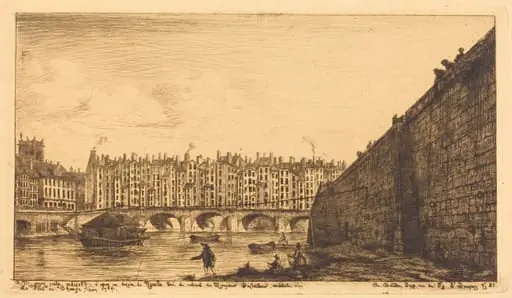 Le Pont-au-Change, Paris, vers 1784
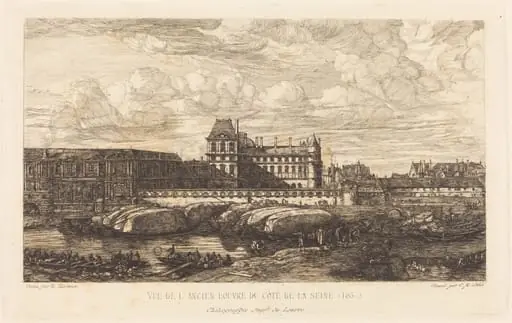 L'ancien Louvre d'après une peinture de Zeeman, 1651 (The Old Louvre, from a Painting by Zeeman, 1651)
![St. Angelo from "Prospectus Locurum Urbis Romae Insign[ium], by Lievin Cruyl](https://artifactworldgallery.com/img/lievin-cruyl--st-angelo-from-prospectus-locurum-urbis-romae-insign-ium--b52698c9c51ea586-w320.webp) St. Angelo from "Prospectus Locurum Urbis Romae Insign[ium]
St. Angelo from "Prospectus Locurum Urbis Romae Insign[ium]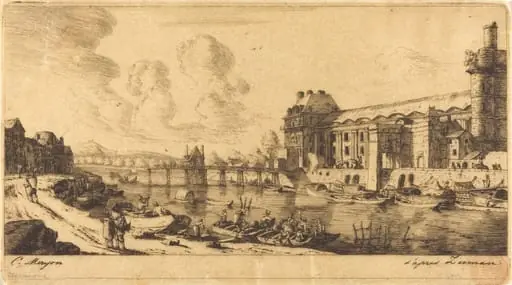 Le Pavillion de Mlle. et une partie du Louvre
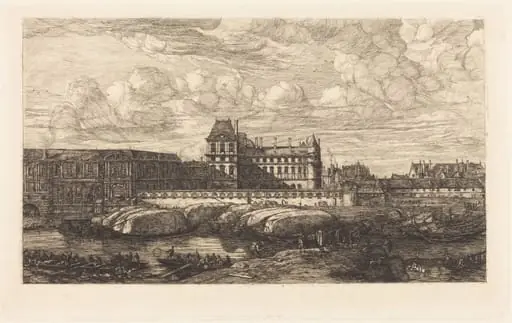 L'ancien Louvre d'après une peinture de Zeeman, 1651 (The Old Louvre, from a Painting by Zeeman, 1651)
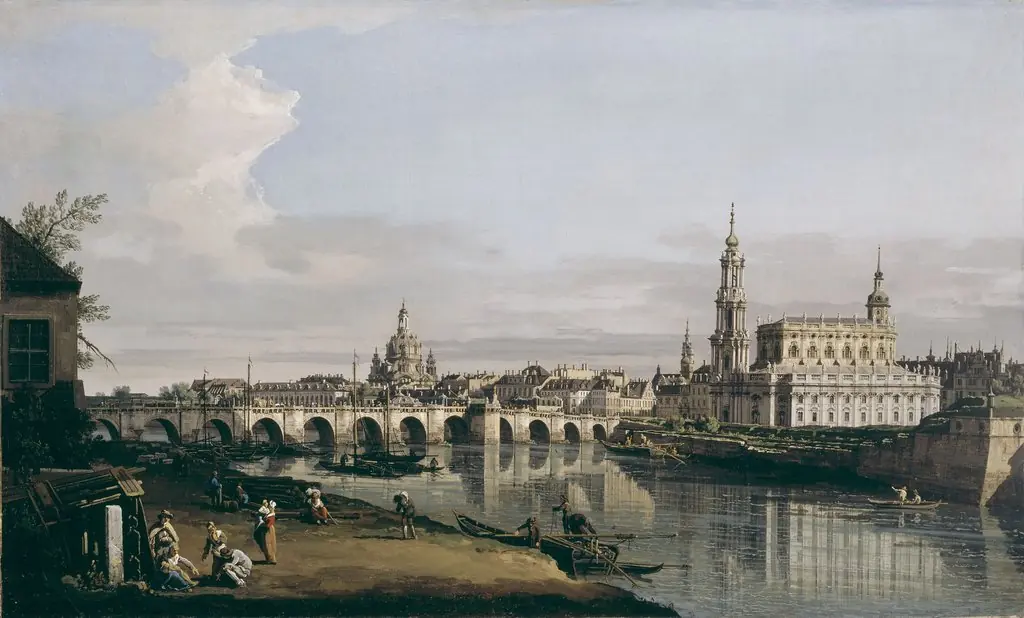 Dresden from the Right Bank of the Elbe, below the Augustus Bridge
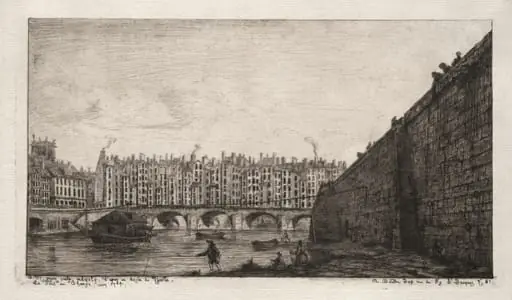 The Exchange Bridge, Paris, about 1784