Artwork
L'Eglise Saincte Sophie de Constantinople, bastie par Constantin le Grand; a present Mosquée du Grand seigneur
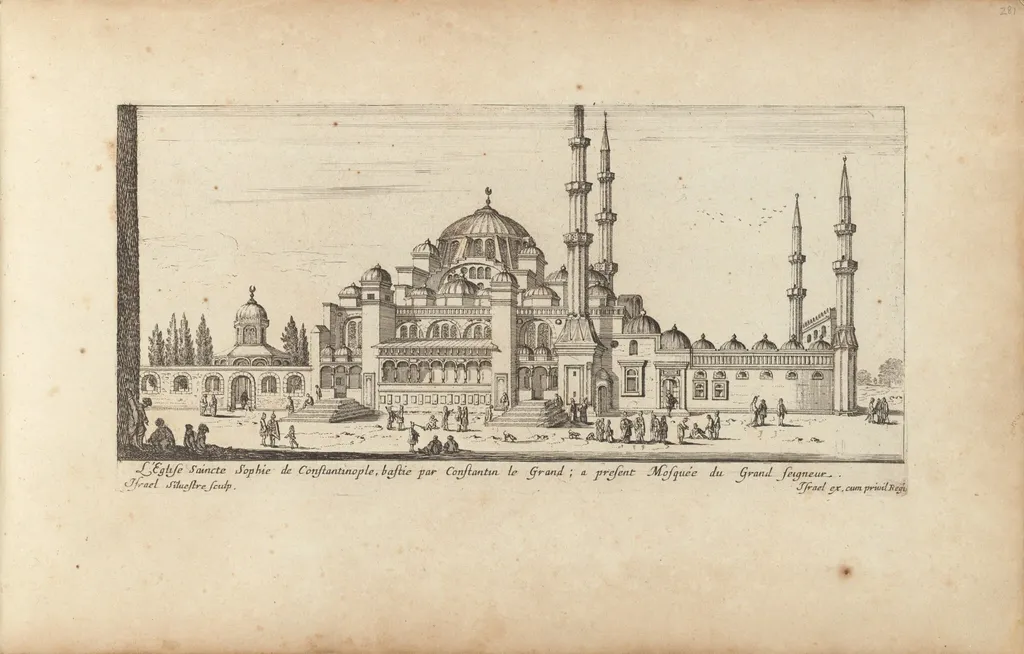
L'Eglise Saincte Sophie de Constantinople, bastie par Constantin le Grand; a present Mosquée du Grand seigneur is an ink print by the Baroque artist Israël Silvestre. It dates from 1650 and is held in the collection of the National Gallery of Art.
About this work
Overview
L'Eglise Saincte Sophie de Constantinople, bastie par Constantin le Grand; a present Mosquée du Grand seigneur is an etching on laid paper created by French artist Israël Silvestre in 1650. It is a topographical view of the Hagia Sophia in Constantinople, showcasing the artist's skill in architectural perspectives.
Subject & Meaning
The etching depicts the Hagia Sophia, originally a church built by Constantine the Great, later converted into a mosque under Ottoman rule. The scene includes the mosque's central dome and four minarets, surrounded by smaller buildings and people going about their daily activities.
Technique & Style
The work is characterized by fine detail, intricate lines, and shading that create a sense of depth and texture. Silvestre's use of light and shadow adds to the overall atmosphere and mood, exemplifying the dramatic qualities of Baroque art.
History & Provenance
Israël Silvestre was raised by his uncle, an etcher and print-seller, in Paris. He traveled extensively in France, Spain, and Italy before producing etchings from his sketches. His prints, including this etching, were sold individually and in series.
Artist & collection
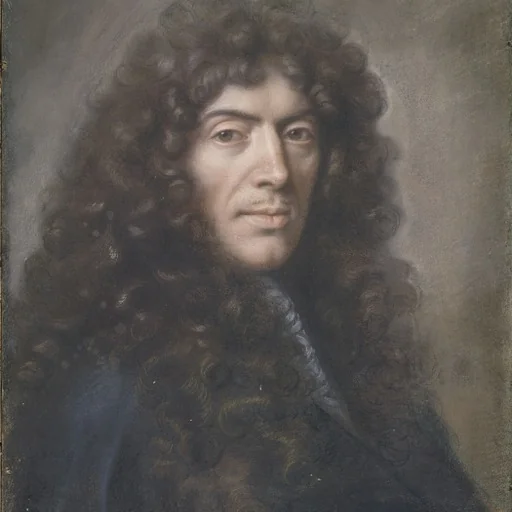
Artist
Israel Silvestre (13 August 1621 in Nancy – 11 October 1691 in Paris), called the Younger to distinguish him from his father, was a prolific French draftsman, etcher and print dealer who specialized in topographical views and perspectives…

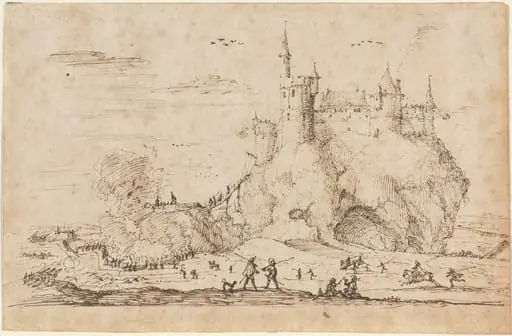 Castle under Siege
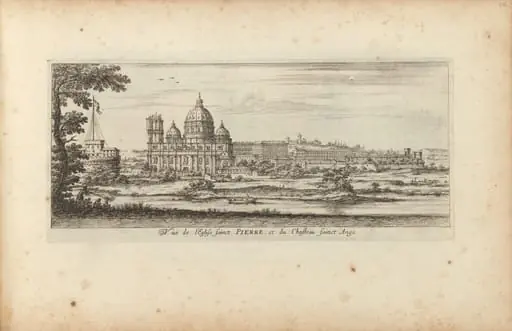 Vuë de l'Eglise sainct Pierre, et du Chasteau Sainct Ange
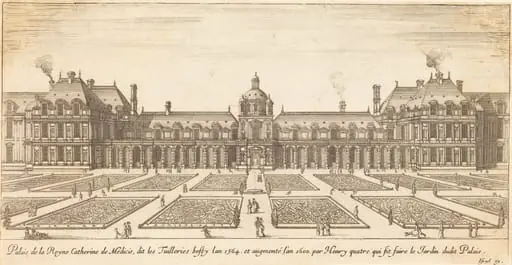 Palais de la Reyne Catherine de Medicis
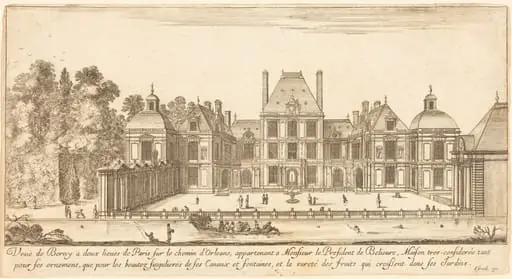 Veue de Berny a deux lieues de Paris sur le chemin d'Orléans
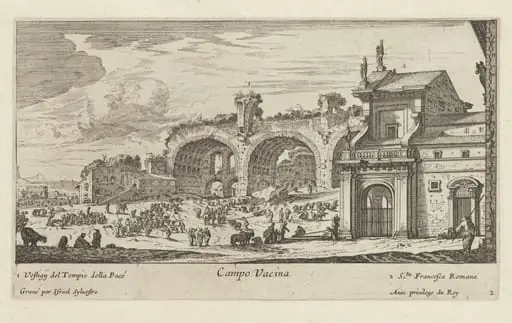 Campo Vacina
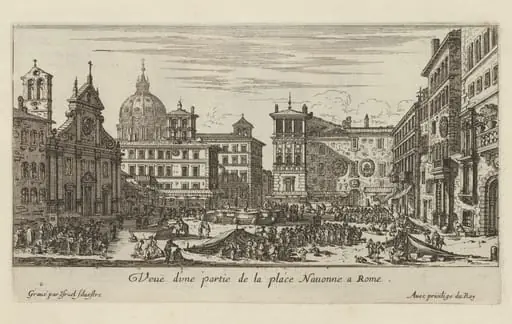 Veuë d'une partie de la place Navonne a Rome
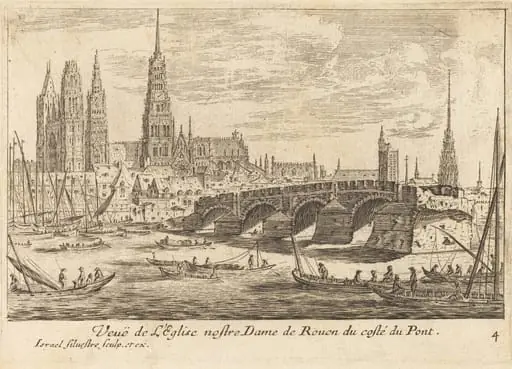 Veue de l'Eglise nostre Dame de Rouen
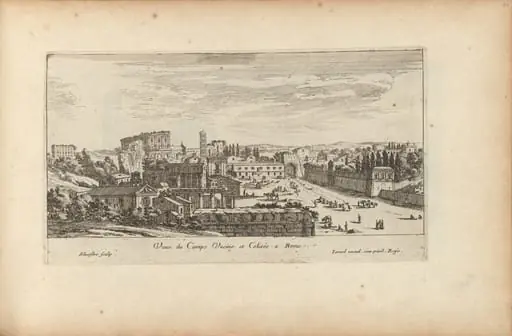 Veue du Campo Vacine et Colisée a Rome