Artwork
Veue de Berny a deux lieues de Paris sur le chemin d'Orléans
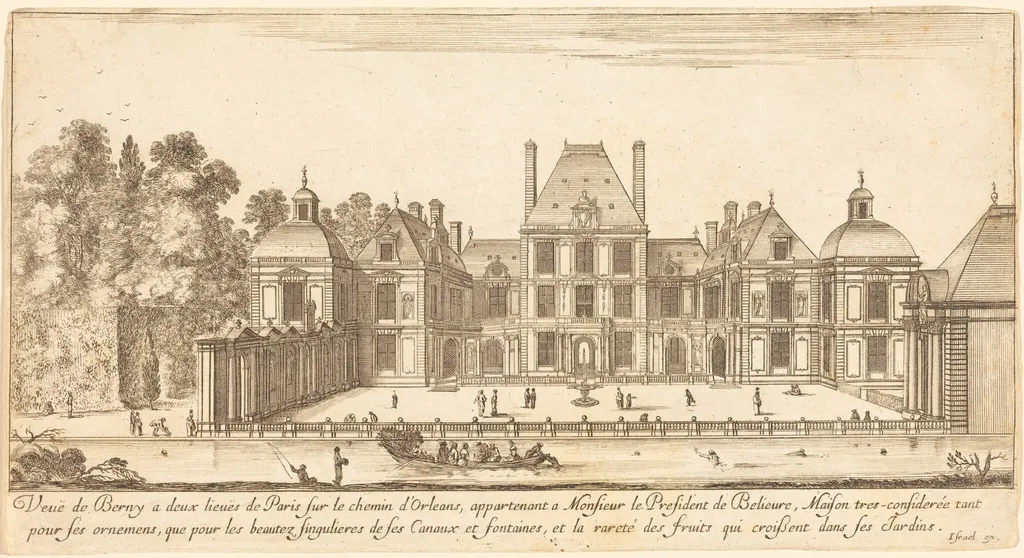
Veue de Berny a deux lieues de Paris sur le chemin d'Orléans is an ink print by the Baroque artist Israël Silvestre. It dates from 1651 and is held in the collection of the National Gallery of Art.
About this work
Overview
This 1651 etching by Israel Silvestre presents a topographical view of Berny, a rural estate situated roughly ten kilometers south of Paris along the Orléans road. Silvestre, trained in draftsmanship and printmaking, specialized in recording architectural and landscape subjects, often transforming his on-site sketches into finely detailed prints for distribution.
Subject & Meaning
In the foreground, a canal reflects the structure, while figures stroll along paths and a small boat drifts on the water.
The composition centers on a substantial manor house characterized by its symmetrical façade and steeply pitched roofs. In the foreground, a canal reflects the structure, while figures stroll along paths and a small boat drifts on the water. The scene conveys the ordered elegance of a privileged residence, emphasizing its gardens and hydraulic features, which were celebrated elements of the property.
Technique & Style
Silvestre employed etching, a process involving acid-bitten lines on a metal plate, to achieve crisp, controlled delineation. The print relies on monochromatic tonal gradations—ranging from deep blacks to delicate grays—to model form and space. Linear precision and subtle cross-hatching define the architecture, foliage, and water, reflecting the artist’s training under his uncle and exposure to earlier masters like Jacques Callot.
History & Provenance
Created in 1651, the print formed part of Silvestre’s broader project to document notable sites across France. Orphaned early, he was mentored within a Parisian printmaking milieu and later traveled extensively, gathering material for his etchings. These works were marketed both as standalone sheets and within thematic series, catering to collectors interested in contemporary landscapes and architecture.
Context
During the mid-seventeenth century, topographical prints served as visual records of estates, cities, and scenic routes, appealing to patrons who valued both artistic craftsmanship and documentary accuracy. Berny, with its renowned gardens and hydraulic engineering, exemplified the refined tastes of the French aristocracy. Silvestre’s work contributed to a growing market for reproducible images that preserved such sites for a wider audience.
Legacy
Silvestre’s etchings endure as historical documents, offering insight into the built environment and landscape design of his era. His methodical approach influenced subsequent generations of printmakers specializing in architectural views. While individual prints like this one circulated widely, they also functioned collectively, reinforcing the role of reproductive media in shaping perceptions of place and property.
Artist & collection
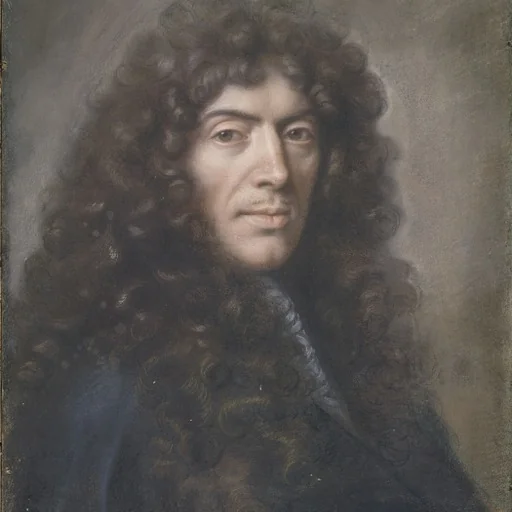
Artist
Israel Silvestre (13 August 1621 in Nancy – 11 October 1691 in Paris), called the Younger to distinguish him from his father, was a prolific French draftsman, etcher and print dealer who specialized in topographical views and perspectives…

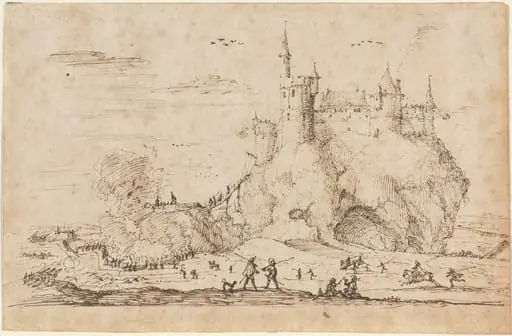 Castle under Siege
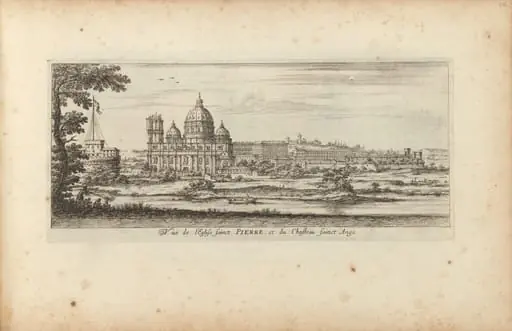 Vuë de l'Eglise sainct Pierre, et du Chasteau Sainct Ange
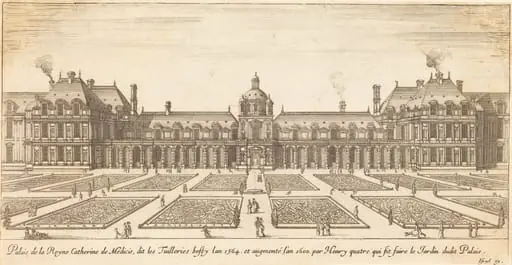 Palais de la Reyne Catherine de Medicis
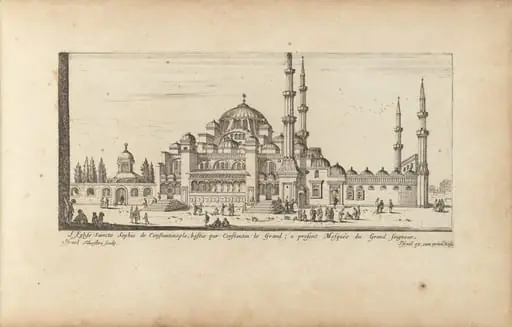 L'Eglise Saincte Sophie de Constantinople, bastie par Constantin le Grand; a present Mosquée du Grand seigneur
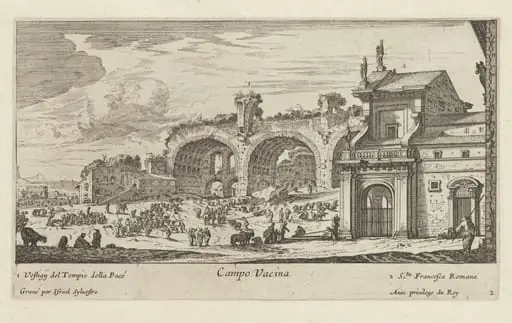 Campo Vacina
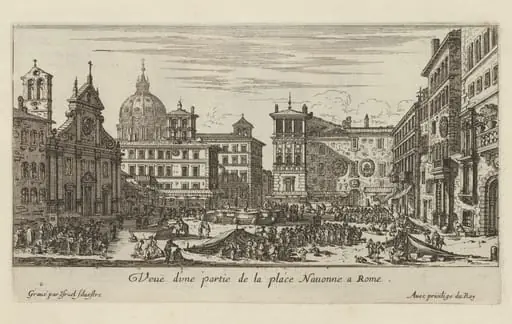 Veuë d'une partie de la place Navonne a Rome
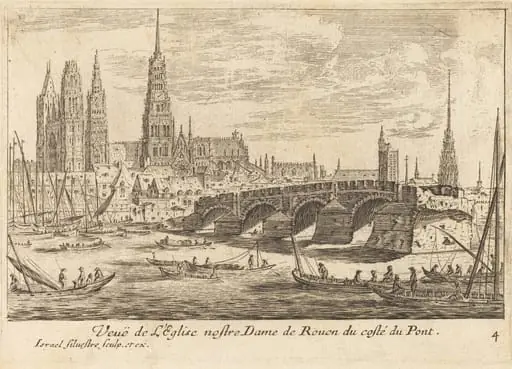 Veue de l'Eglise nostre Dame de Rouen
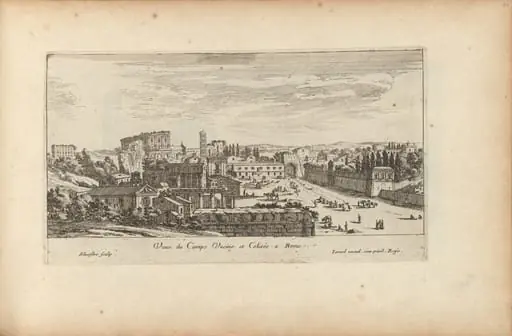 Veue du Campo Vacine et Colisée a Rome