Artwork
Sheep in a Turnip Field: Winter
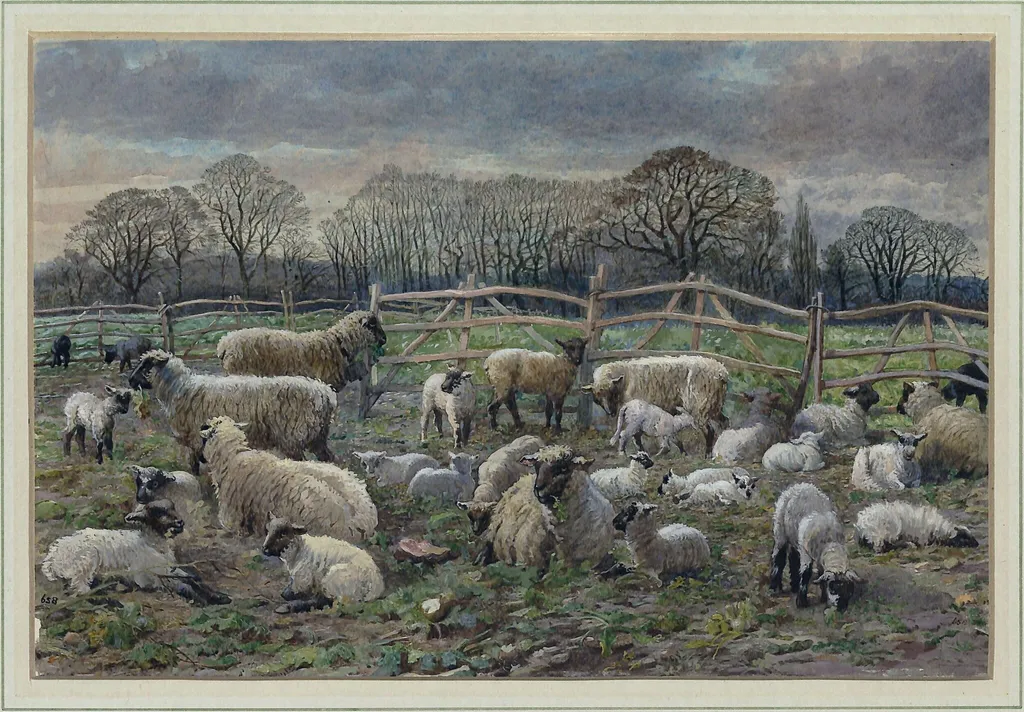
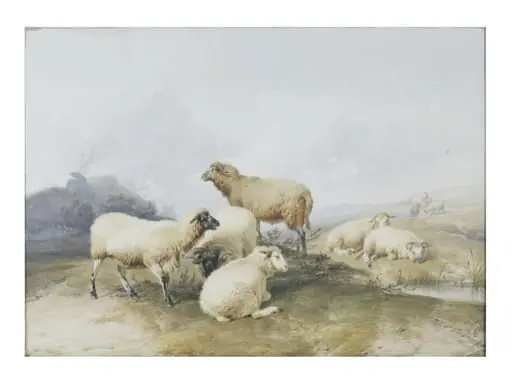
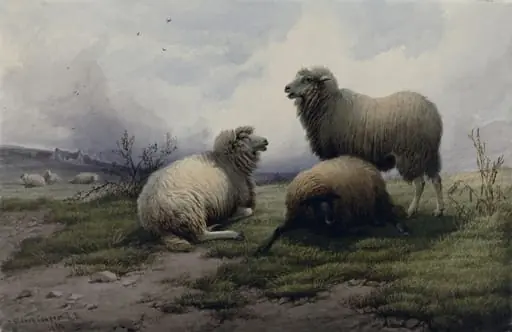
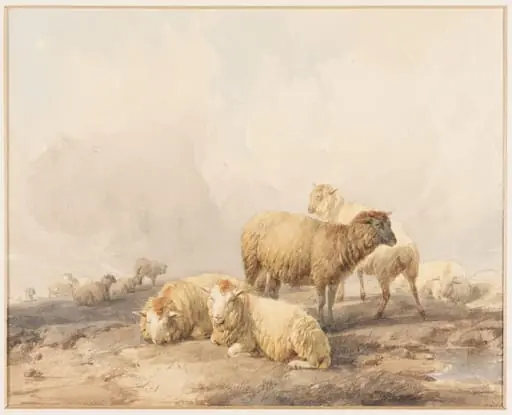
Sheep in a Turnip Field: Winter is a watercolor work on paper by the Barbizon school artist Skill. It dates from 1866 and is held in the collection of the Victoria and Albert Museum. Created in 1866, this watercolour presents a winter scene in which a flock of sheep occupies a muddy, uneven field.
About this work
Overview
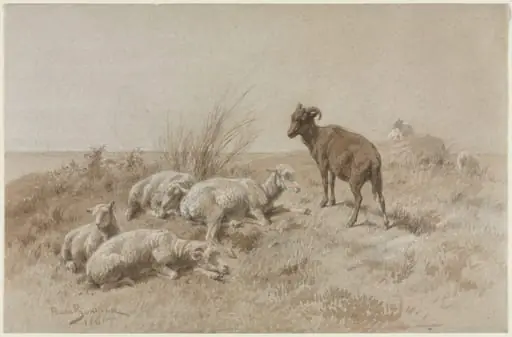
Created in 1866, this watercolour presents a winter scene in which a flock of sheep occupies a muddy, uneven field. The animals are shown both standing and lying down, their thick coats rendered in muted tones that echo the bleak, overcast sky. A low wooden fence marks the upper edge of the composition, while leaf‑less trees punctuate the background.
Subject & Meaning
The work concentrates on the everyday reality of farm life during the cold months, emphasizing the sheep’s dirty, shaggy appearance and their restless activity. By depicting the animals in a natural, unidealised state, the artist highlights the labor and perseverance inherent in rural agriculture, offering a straightforward observation rather than a romanticised vision.
Technique & Style
Executed in watercolour, the painting employs a restrained palette of greys, browns and subdued greens that blend seamlessly with the cloudy sky. Loose washes convey the wet, muddy ground, while finer brushwork defines the texture of the wool and the bark of the trees. The overall effect is one of atmospheric modesty, focusing attention on the collective mass of the flock.
History & Provenance
The piece dates to the mid‑nineteenth century, a period when watercolour was increasingly used to document rural scenes. Though specific details of its ownership are not recorded, the work reflects contemporary interest in portraying ordinary agricultural subjects, aligning it with a broader trend of realistic genre painting of the era.
Artist & collection
Artist
This artist left a small but charming trail of watercolors that quietly capture everyday winter scenes.