Artwork
The Annunciation and The Nativity
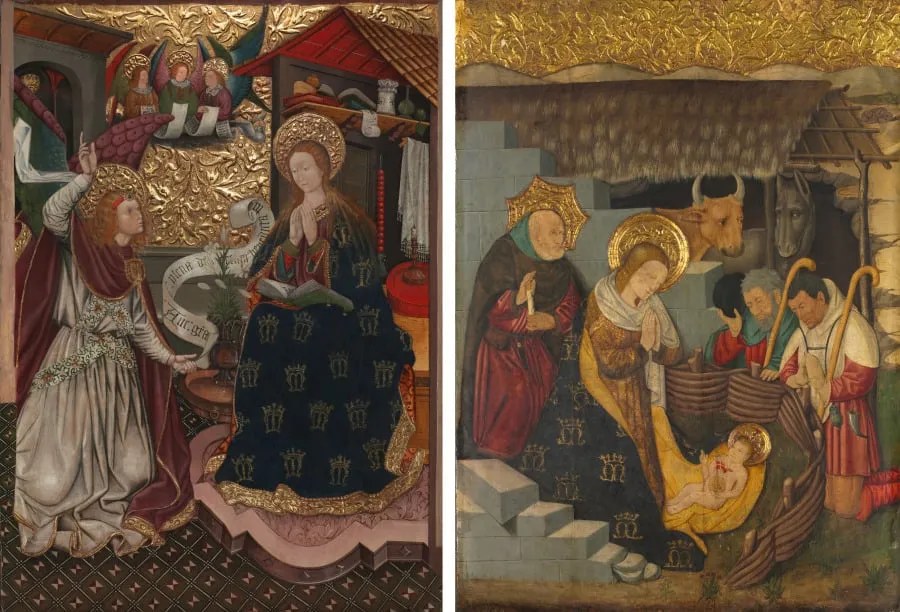
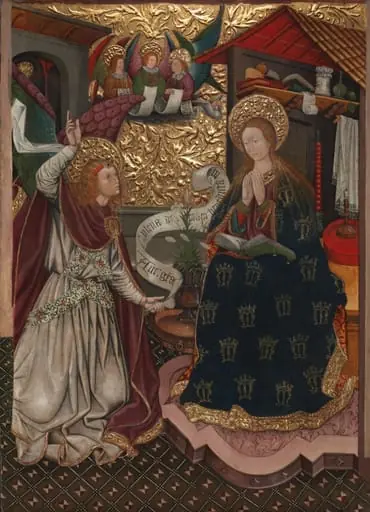
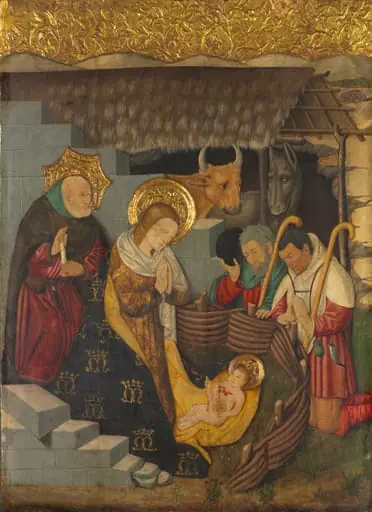
The Annunciation and The Nativity is an unspecified painting by the Renaissance artist Jaume Ferrer II. It dates from 1457 and is held in the collection of the Cleveland Museum of Art.
About this work
Overview
The two panels, depicting the Annunciation and the Nativity, are believed to be the surviving wings of a six‑panel altarpiece once dedicated to the Virgin Mary. The central, larger panel of the original work now resides in Barcelona’s Museu Nacional d’Art de Catalunya, while the two side panels remain together as a pair.
Subject & Meaning
Two books—one closed, one open—represent the Old and New Testaments, foretelling and fulfilling the messianic promise.
In the Annunciation scene, the Archangel Gabriel announces to Mary that she will bear the Christ child, while the Nativity shows the birth of Jesus with Mary resting in a modest stable. Everyday objects are laden with symbolism: lilies denote Mary's purity, a covered jar and water vessel suggest inviolability, a pomegranate hints at resurrection, and an apple recalls humanity’s fall. Two books—one closed, one open—represent the Old and New Testaments, foretelling and fulfilling the messianic promise.
Technique & Style
Both panels employ a gold ground that is not merely painted but built up with pastiglia, a raised decorative paste that creates tactile dots and lines catching the light. This sumptuous treatment of the background and halos is characteristic of 15th‑century Catalan painting, adding a three‑dimensional quality to the otherwise flat surface.
History & Provenance
The work was a collaborative commission between Ferrer and the painter Pere Garcia de Benavarri. Although the original altarpiece was dismantled, the central panel entered the collection of the Museu Nacional d’Art de Catalunya, while the two side panels have remained together, preserving their original narrative sequence.
Context
Spanish altarpieces of the period often featured elaborate gold‑ground decoration and a blend of domestic interiors with theological symbolism. The Annunciation and Nativity panels reflect this tradition, integrating everyday household settings with iconographic elements that convey doctrinal messages to a lay audience.
Artist & collection

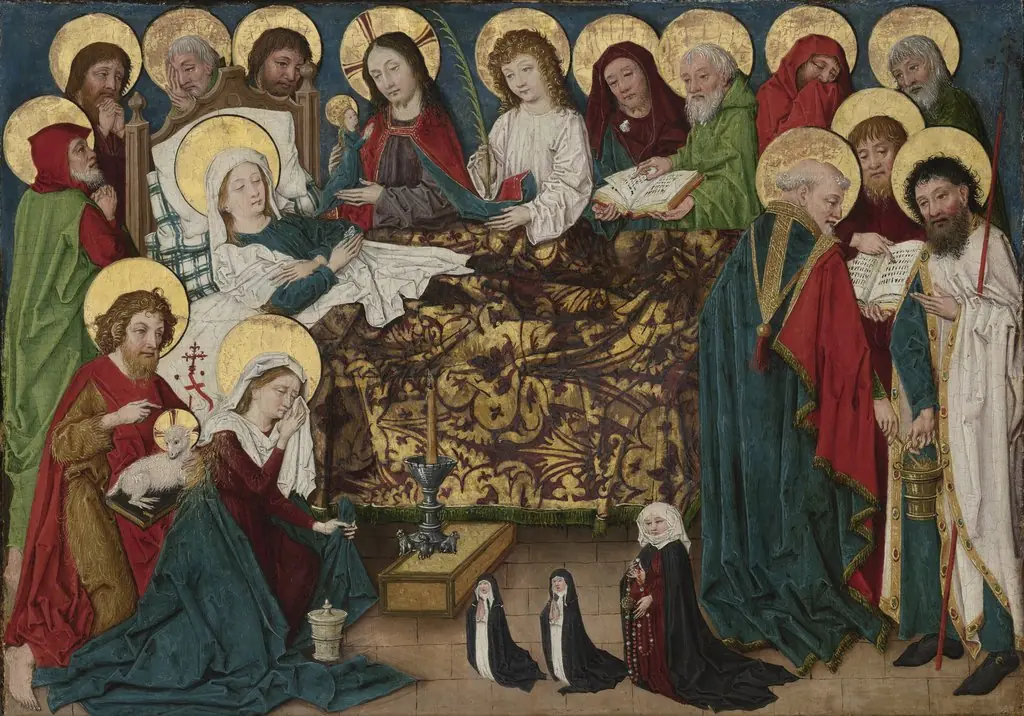 Dormition of the Virgin
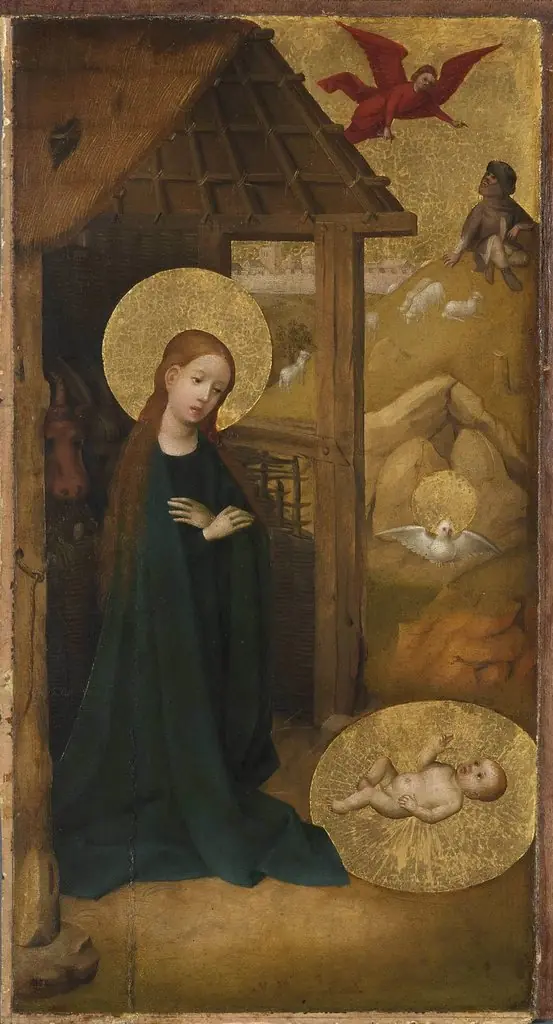 Nativiti (altar piece, with the Cucifixion op Saint Peter and a martyr as outer parts)
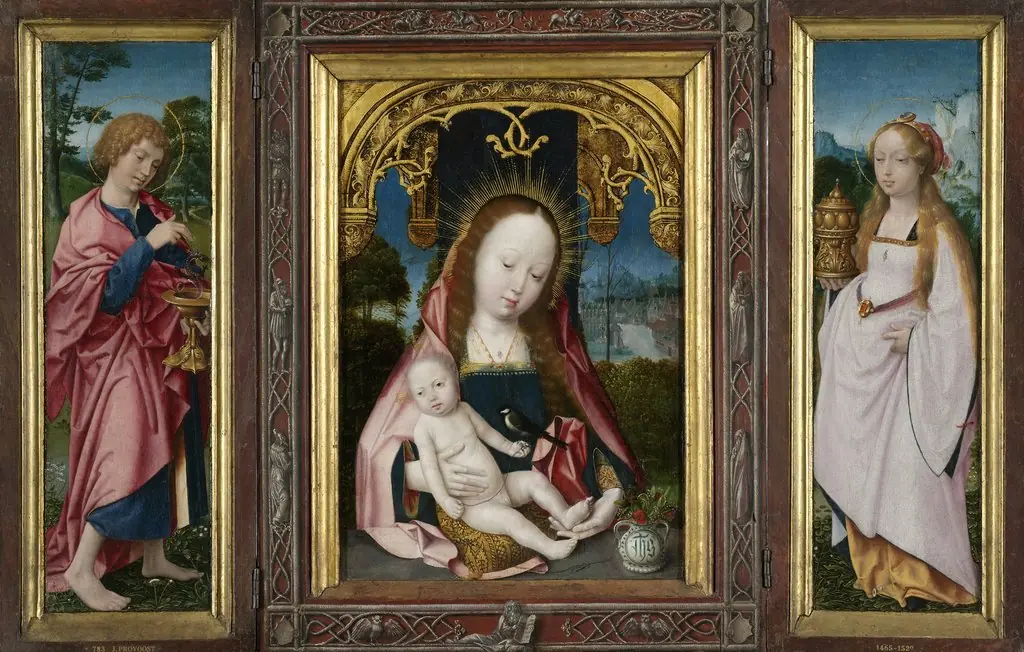 Triptych with the Virgin and Child (centre panel), St John the Evangelist (inner left wing) and Mary Magdalen (inner right wing)
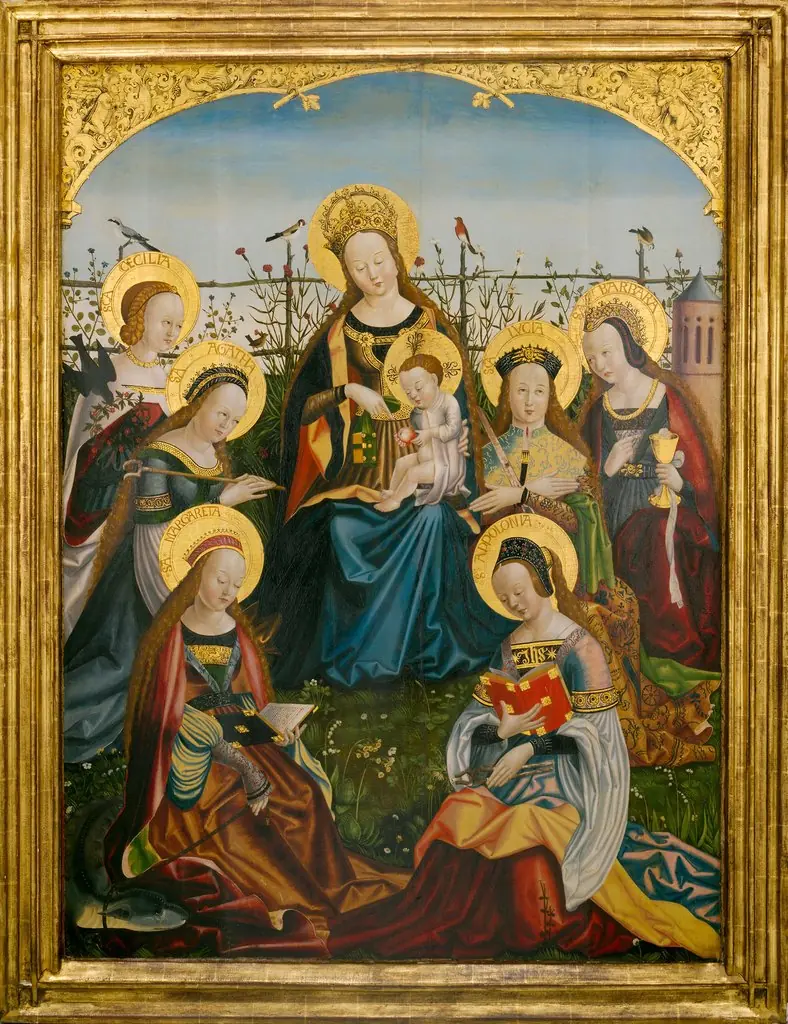 Triptych of the Virgin and Child with Saints
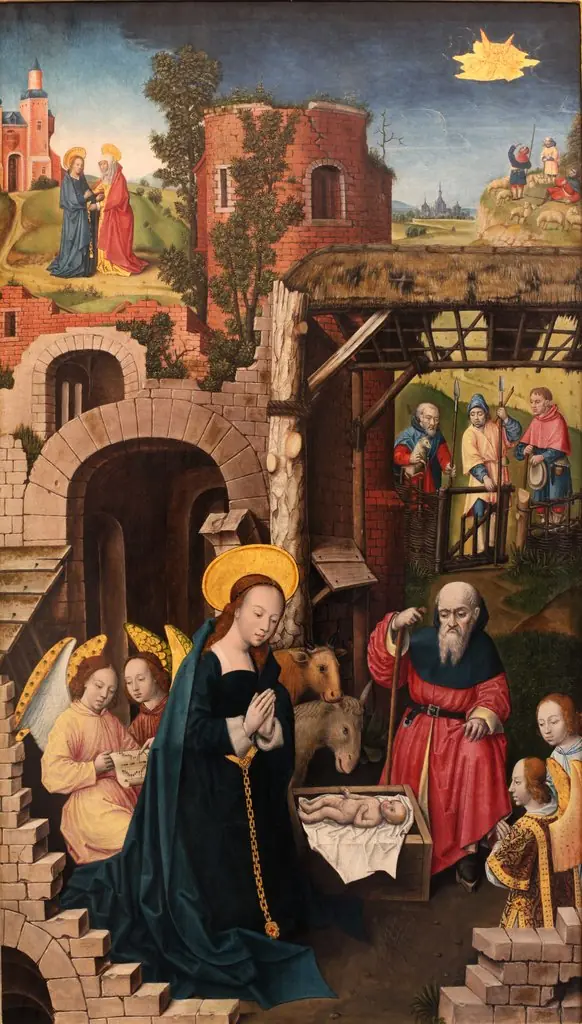 Nativity
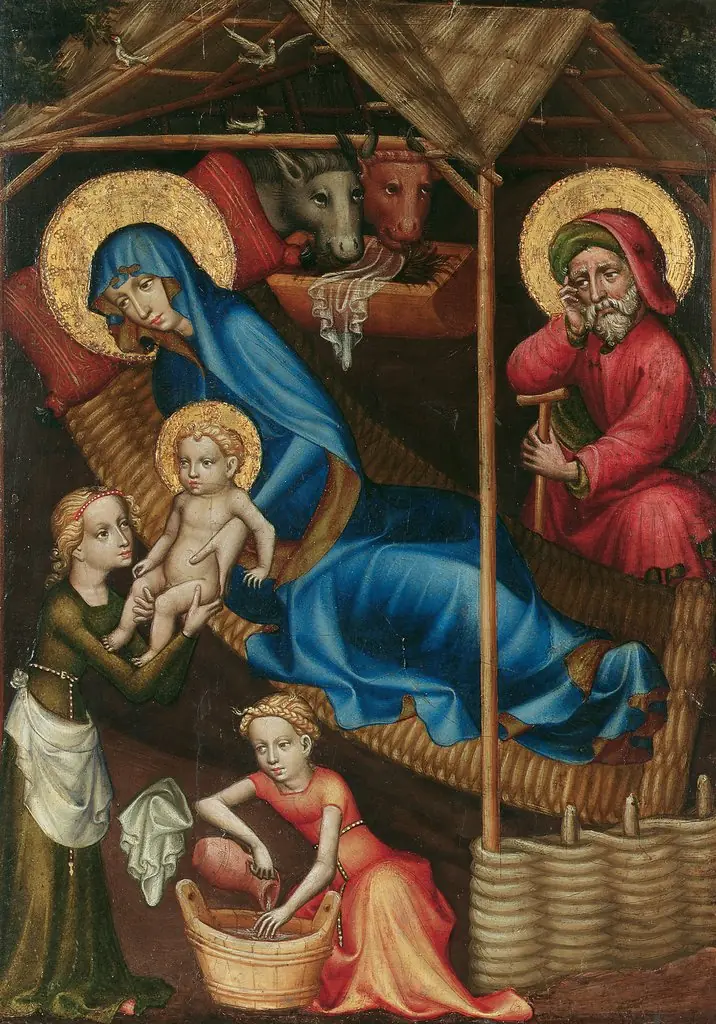 Geburt Christi
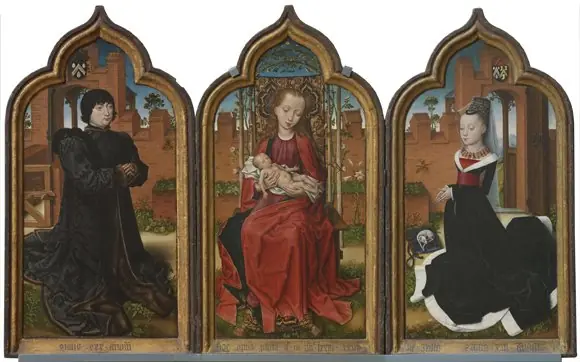 Triptych of Jean de Witte and Maria Hoose
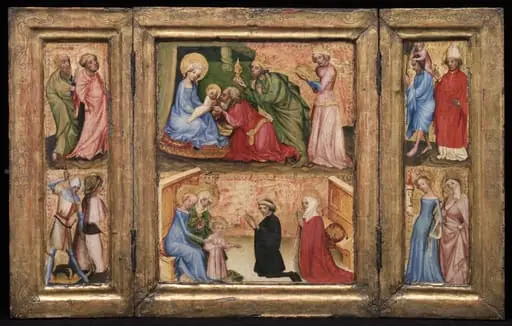 Triptych with the Adoration of the Magi
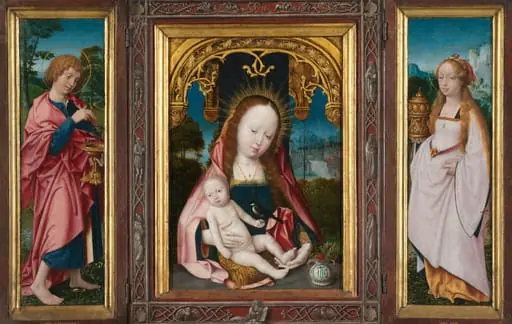 Triptych with Virgin and Child, Saint John the Evangelist (left wing) and Mary Magdalene (right wing)
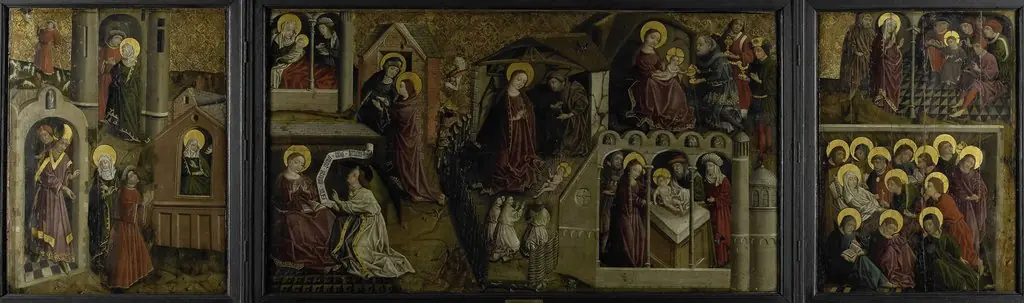 Triptych with Scenes from the Life of the Virgin