Artwork
The Favourites of the Ballet.
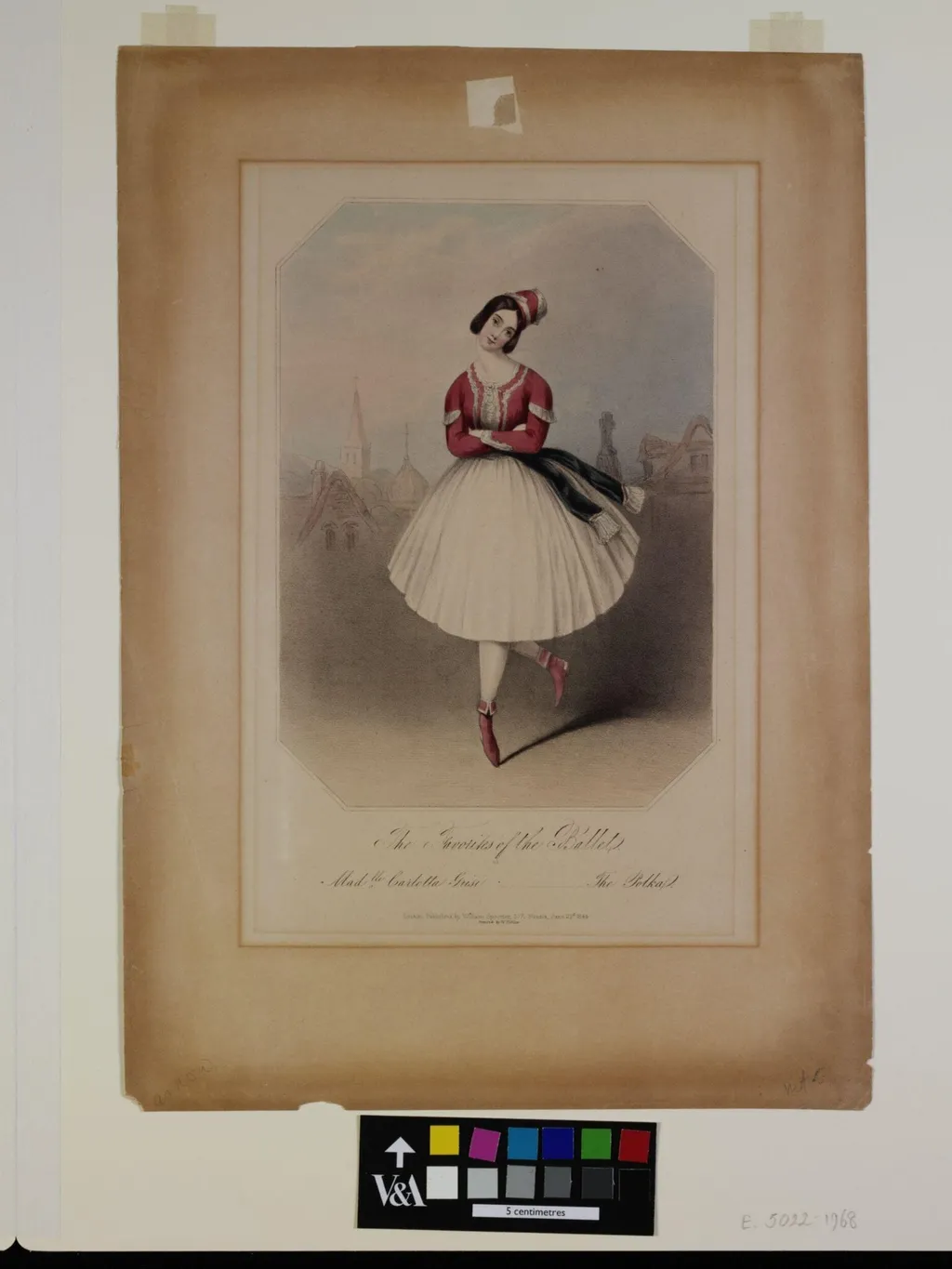
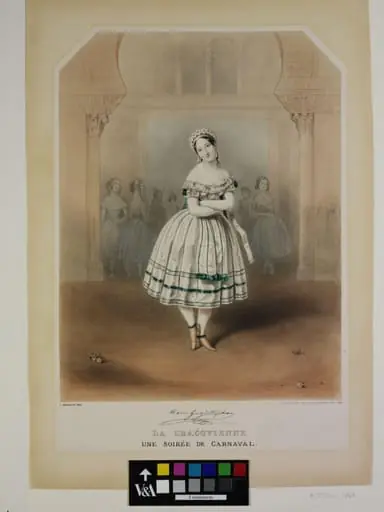
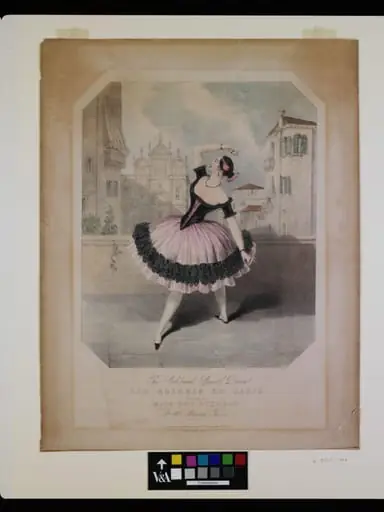
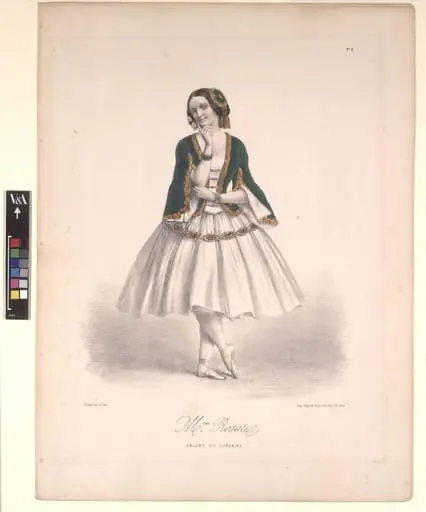
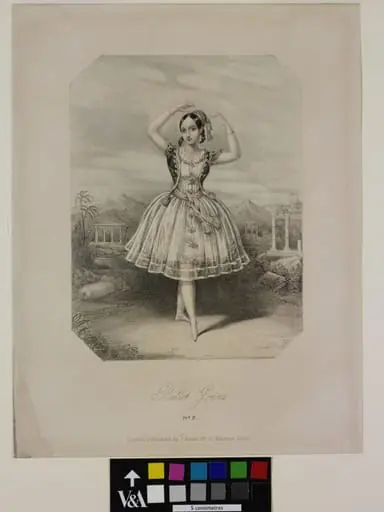
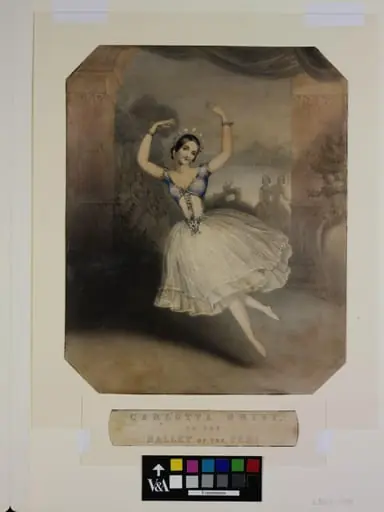
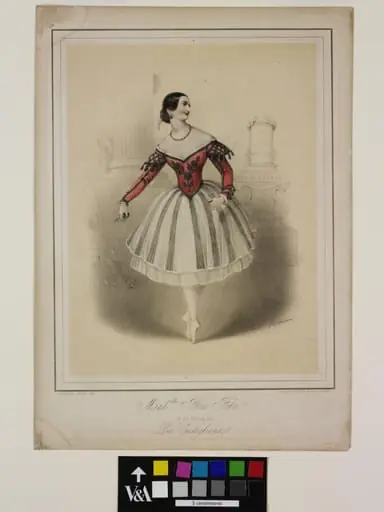
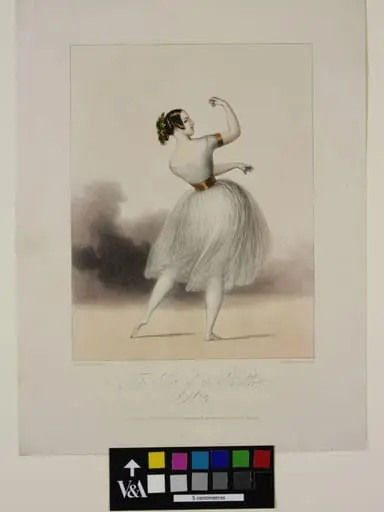
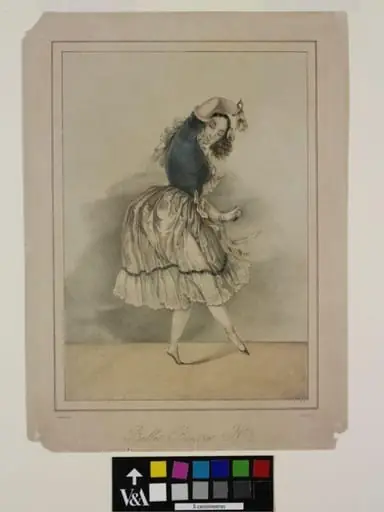
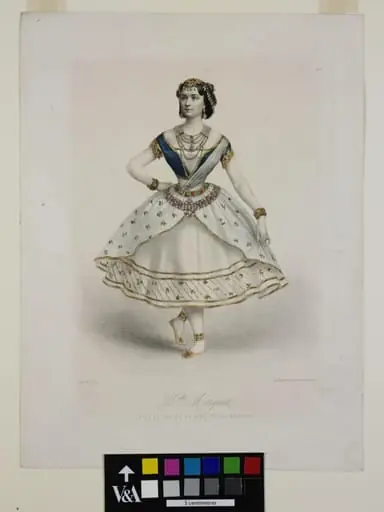
The Favourites of the Ballet. is a print by the Romanticist artist William Spooner. It dates from 21 and is held in the collection of the Victoria and Albert Museum. This print depicts Carlotta Grisi, a celebrated 19th-century ballerina, performing the polka in theatrical costume.
About this work
Overview
Grisi’s pose and attire reflect the fusion of ballet technique with folk dance elements, signaling a broader cultural moment in European entertainment.
This print depicts Carlotta Grisi, a celebrated 19th-century ballerina, performing the polka in theatrical costume. The image is one of a series highlighting popular dancers of the era, capturing a moment when stage performance and social fashion converged. Grisi’s pose and attire reflect the fusion of ballet technique with folk dance elements, signaling a broader cultural moment in European entertainment.
Subject & Meaning
Grisi is shown in red and white garments, colors associated with Poland, though the polka originated in Bohemia. Her folded arms and stylized stance distinguish the performance from classical ballet, anchoring it in folk tradition. The metal tabs on her heels produce rhythmic clicks, mimicking the percussive footwork of Eastern European dances. The image celebrates her role in popularizing a folk form on the metropolitan stage.
Technique & Style
The print employs fine line work and tonal contrasts to render texture and movement. Grisi’s costume is rendered with precision, emphasizing the sharp lines of the bodice and skirt, while the metallic heel accents are subtly indicated by small highlights. The background is minimal, focusing attention on the dancer’s posture and attire, characteristic of promotional prints designed for mass reproduction and public consumption.
History & Provenance
Created following Grisi and Jules Perrot’s 1844 London debut of the polka, the print was part of a wave of commercial imagery that capitalized on the dance’s sudden popularity. It was reproduced on ceramics, sheet music, and other everyday objects, reflecting its penetration into domestic culture. The print’s existence attests to the growing market for celebrity imagery in mid-19th-century Britain.
Context
The polka’s arrival in London coincided with a broader fascination with Eastern European folk traditions among urban elites. Its energetic rhythm and accessible steps made it a sensation in both theatrical and social settings. Unlike earlier courtly dances, the polka allowed for greater physical freedom, aligning with shifting attitudes toward movement and gender in public life during the Victorian era.
Legacy
Though the polka faded from elite ballrooms by the late 19th century, its cultural imprint endured. The dance became a shorthand for romanticized folk traditions in later theatrical works, such as The King and I. Grisi’s performance helped transform a regional folk form into a transnational phenomenon, illustrating how stage artists could influence everyday social practices across Europe and beyond.
Artist & collection
Artist
William Spooner made 19th‑century prints that caught Victorian London’s love of dance and fashion.