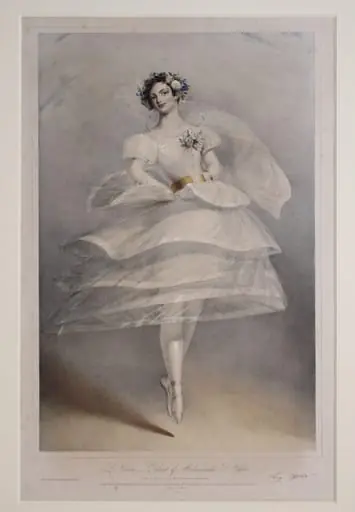
Artwork
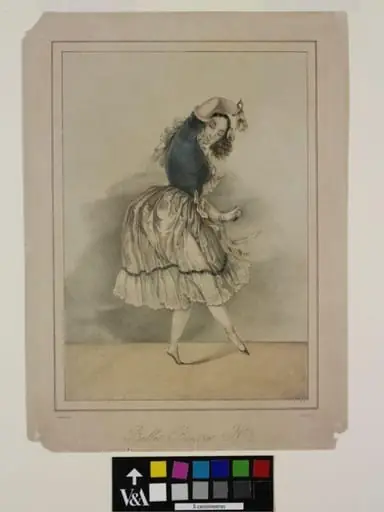
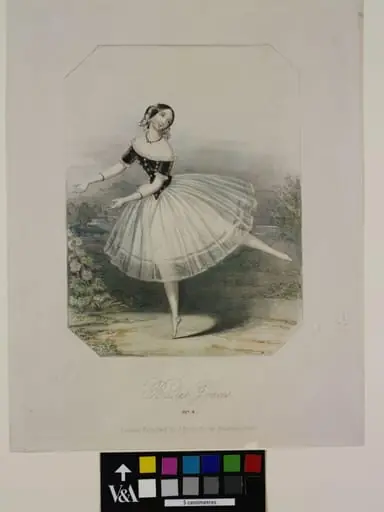
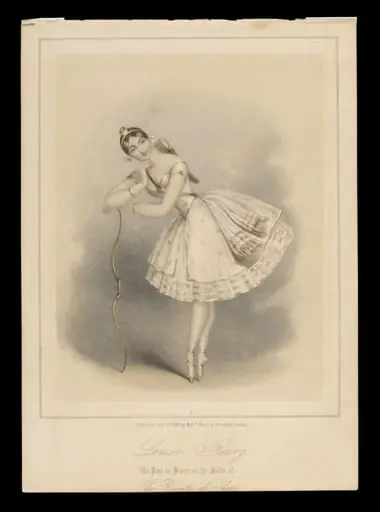
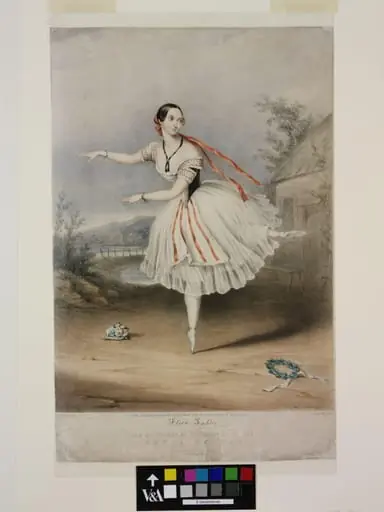
Sketches at the Ballet. Lucile Grahn.
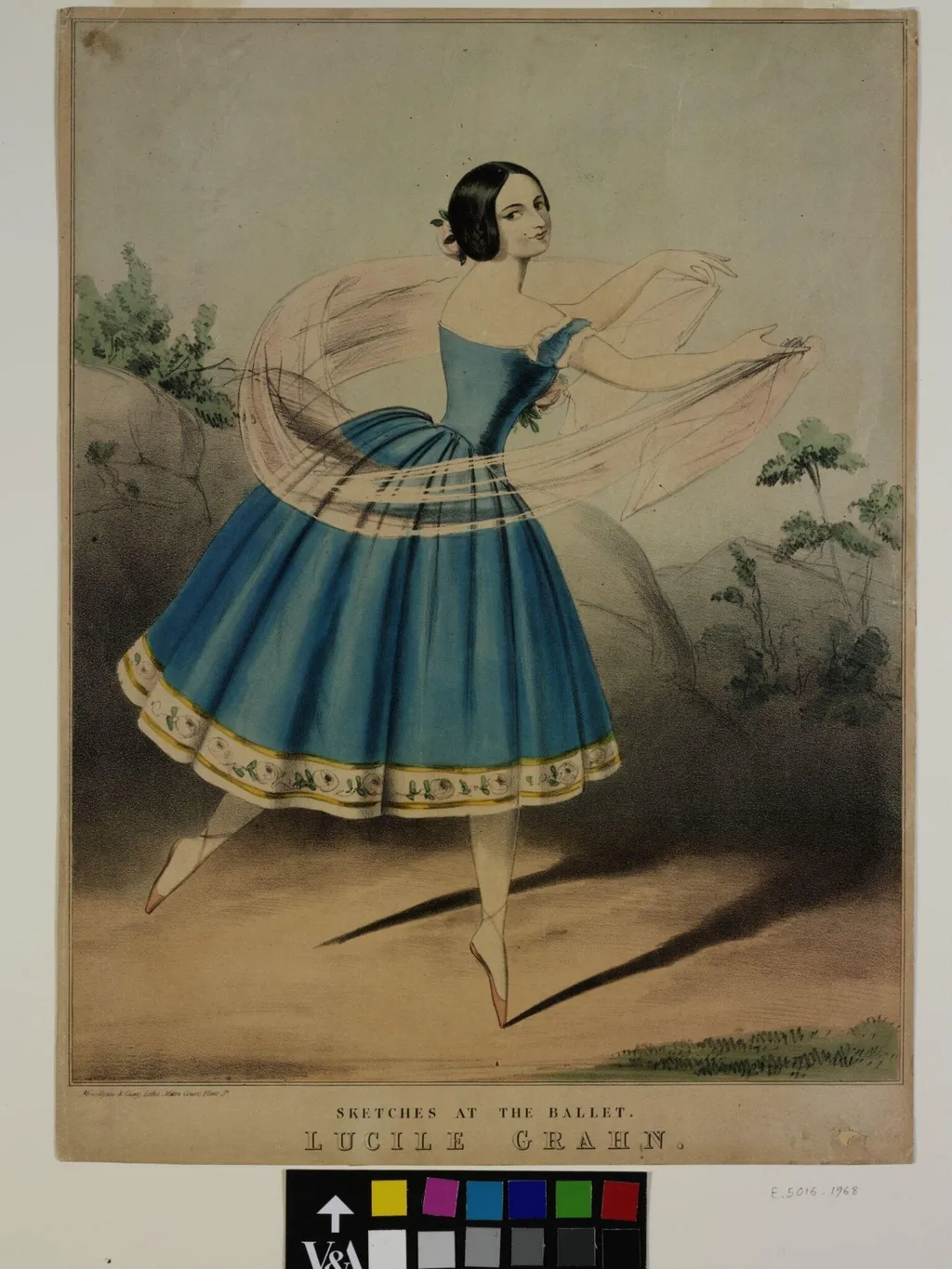
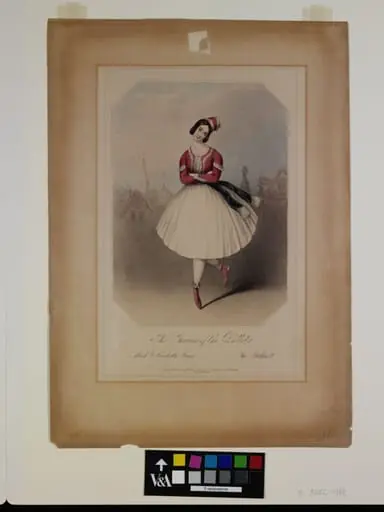
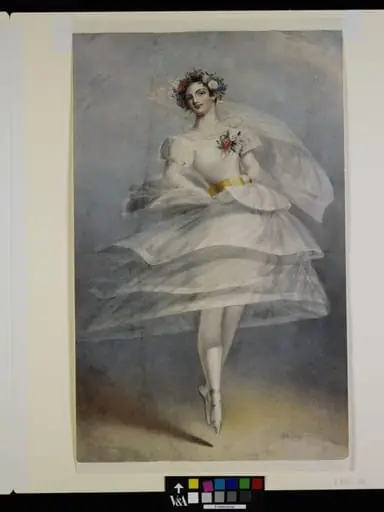
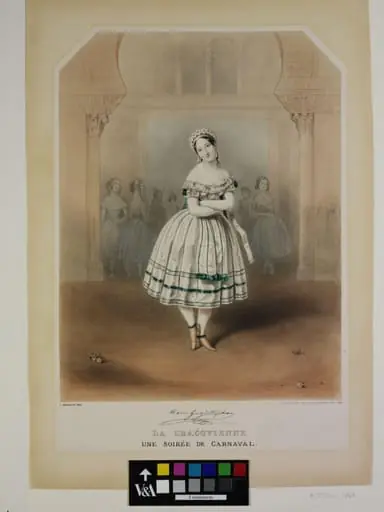
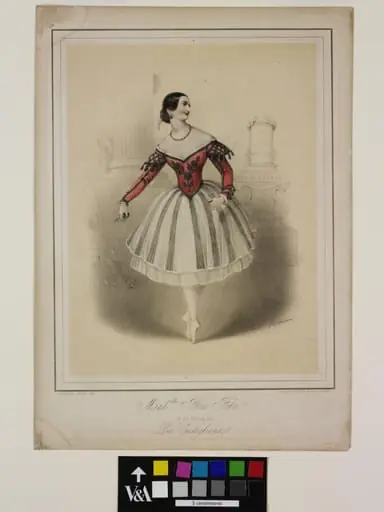
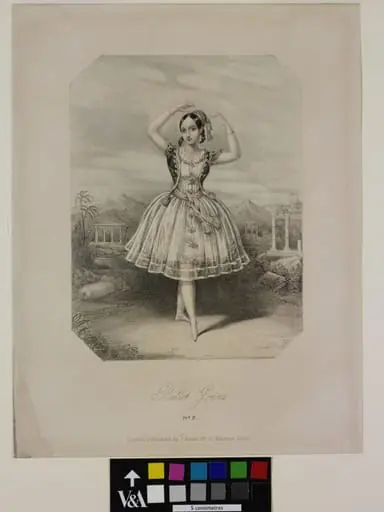
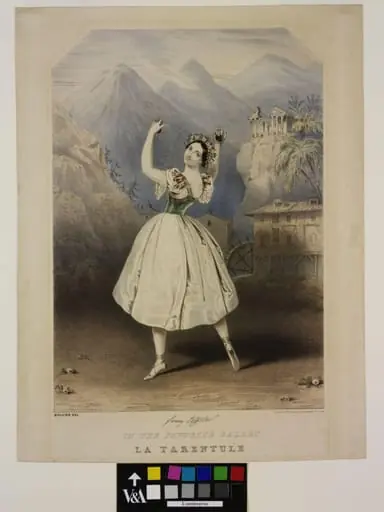
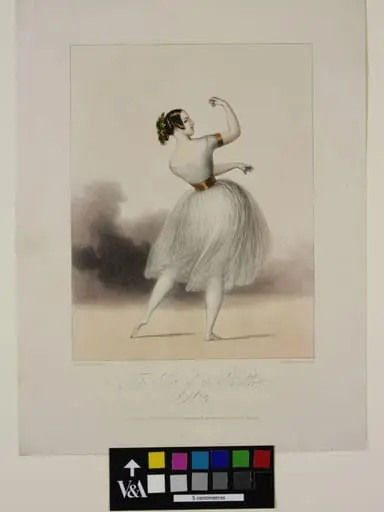
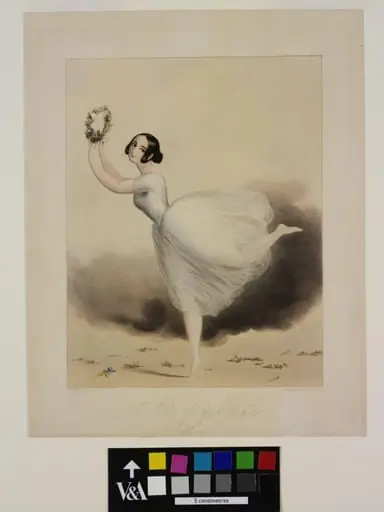
Sketches at the Ballet. Lucile Grahn. is a print by the Romanticist artist Mourilyan & Casey. It dates from 1844 and is held in the collection of the Victoria and Albert Museum. This print depicts Lucile Grahn, a Danish ballerina prominent in the 1840s, captured mid-performance on pointe.
About this work
Overview
This print depicts Lucile Grahn, a Danish ballerina prominent in the 1840s, captured mid-performance on pointe. Her pose reflects a pivotal moment in ballet history, when dancing en pointe was evolving from a novelty into a core expressive technique. The image preserves her presence during a transitional phase in dance, before the development of supportive pointe shoes.
Subject & Meaning
Grahn is shown in motion, embodying the Romantic era’s ideal of ethereal grace. Her balance on the tips of her toes conveys lightness and emotional intensity, qualities central to ballet’s narrative ambitions at the time. The image does not merely document a pose but suggests the dancer’s role as a vessel for poetic expression, aligning with broader artistic trends of the period.
Technique & Style
The print records Grahn performing on pointe using footwear with minimal structure—only slight reinforcement at the toe, no rigid box. This limited support demanded exceptional strength and control. The technique was still experimental; choreographers were beginning to use pointe work not just for spectacle but to deepen characterization, a shift evident in Grahn’s poised, deliberate stance.
History & Provenance
Grahn rose to prominence in the 1840s as the first Danish dancer to gain international recognition. After retiring from the stage, she turned to choreography, notably for Wagner’s operas. This print likely dates from her active years, preserving her image during a time when ballet was expanding beyond national boundaries and gaining new artistic legitimacy.
Context
In the early 19th century, pointe work was emerging from acrobatic display into a refined expressive tool. By the 1830s, it had become standard for female dancers, particularly in Romantic ballets that emphasized otherworldly themes. Grahn’s career coincided with this transformation, placing her at the center of ballet’s evolving aesthetic and technical language.
Legacy
Grahn’s transition from performer to choreographer reflects a broader shift in how dancers engaged with ballet’s creative process. Her work on Wagner’s operas helped integrate dance into larger musical dramas. Though her pointe shoes offered little support, her artistry contributed to the technical and artistic foundations that would later define classical ballet.
Artist & collection
Artist
They spent their days sketching in the back row of the Paris Opera, where the cheap tickets let them watch the dancers close up.