Artwork
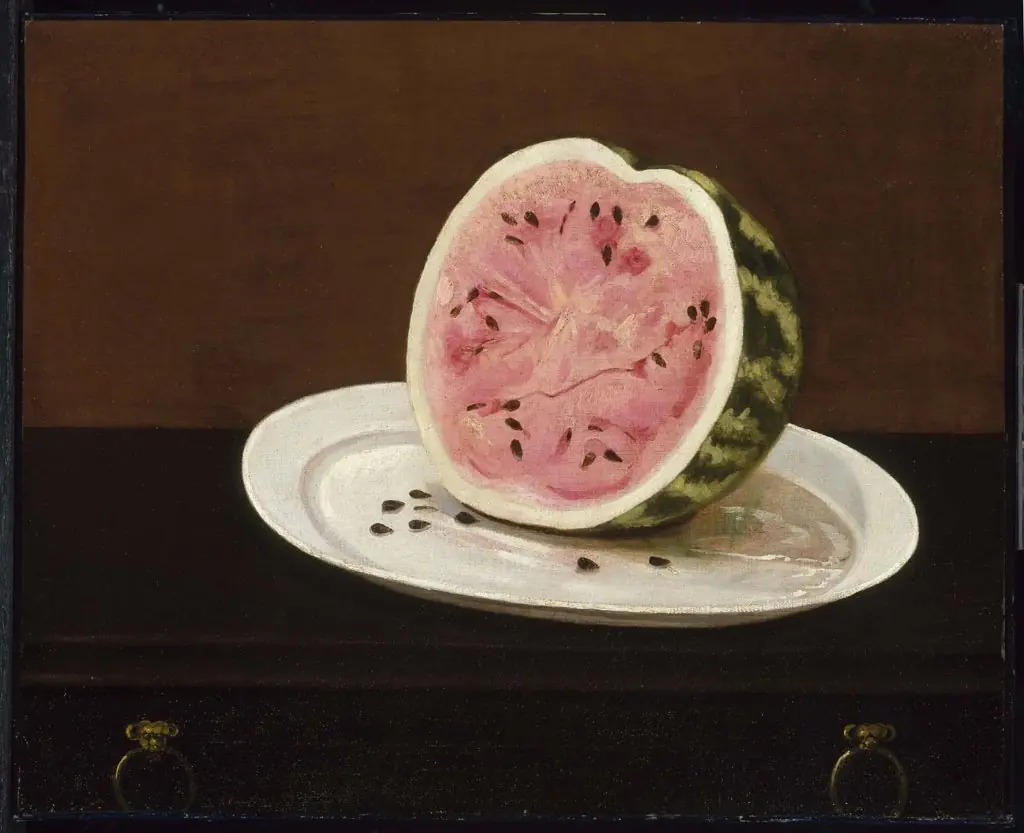
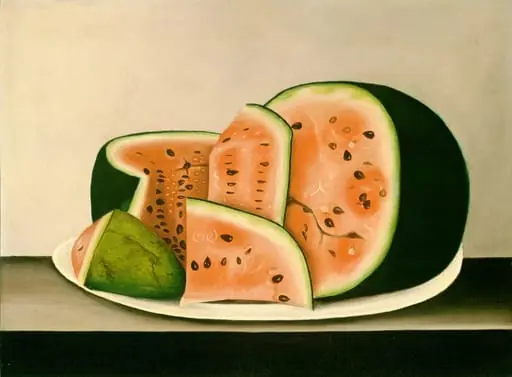
Pepene verde (Harbuz, jumătate cu două bucăți alăturate)
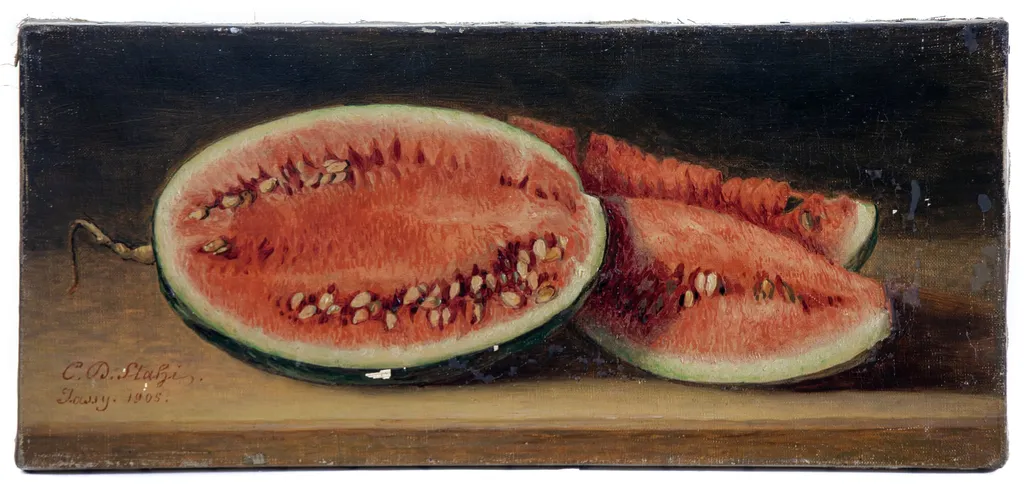
Pepene verde (Harbuz, jumătate cu două bucăți alăturate) is an unspecified painting by Stahi D. Constantin. It dates from 1905 and is held in the collection of the Moldova National Museum Complex. Stahi D.
About this work
Overview
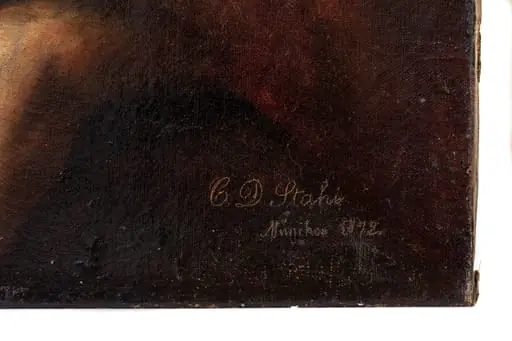
Stahi D. Constantin’s still‑life, titled Pepene verde (Harbuz, jumătate cu două bucăţi alăturate), dates from the early twentieth century, circa 1905. The composition is limited to two halved watermelons placed on a dark, textured wooden surface. The artist’s signature appears in the lower corner, while the date is only partially legible, leaving the exact year ambiguous.
Subject & Meaning
The work concentrates on the interior of the fruit, exposing the vivid red flesh and the speckled black seeds against the contrasting green rind. By isolating the cut melons from any surrounding objects, the painting emphasizes the tactile qualities of the fruit—its juiciness, freshness, and the play of light across its surfaces.
Technique & Style
Rendered in oil on canvas, the piece employs a restrained palette that highlights the natural colors of the watermelon. The artist uses chiaroscuro to model the forms, creating a subtle shadow beneath one half that suggests a single light source. Brushwork is smooth in the flesh, while the wooden base is depicted with a rough, impasto texture.
History & Provenance
Created around 1905, the painting entered the artist’s oeuvre during a period when Romanian painters were exploring domestic still‑life subjects. The work bears Constantin’s signature, confirming authorship, but documentation of its ownership history is limited, and no exhibition records have been identified to date.
Artist & collection
Artist
Stahi D. Constantin printed quiet portraits and gentle scenes in 19th-century Romanian ink and paint. Look for his family studies like Preotul Dimitrie Stahi (Tatăl artistului) and tender figures such as June (șovăind)…