Artwork
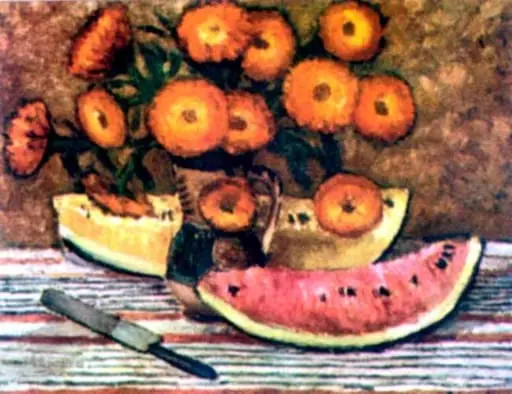
Natură moartă cu pepeni
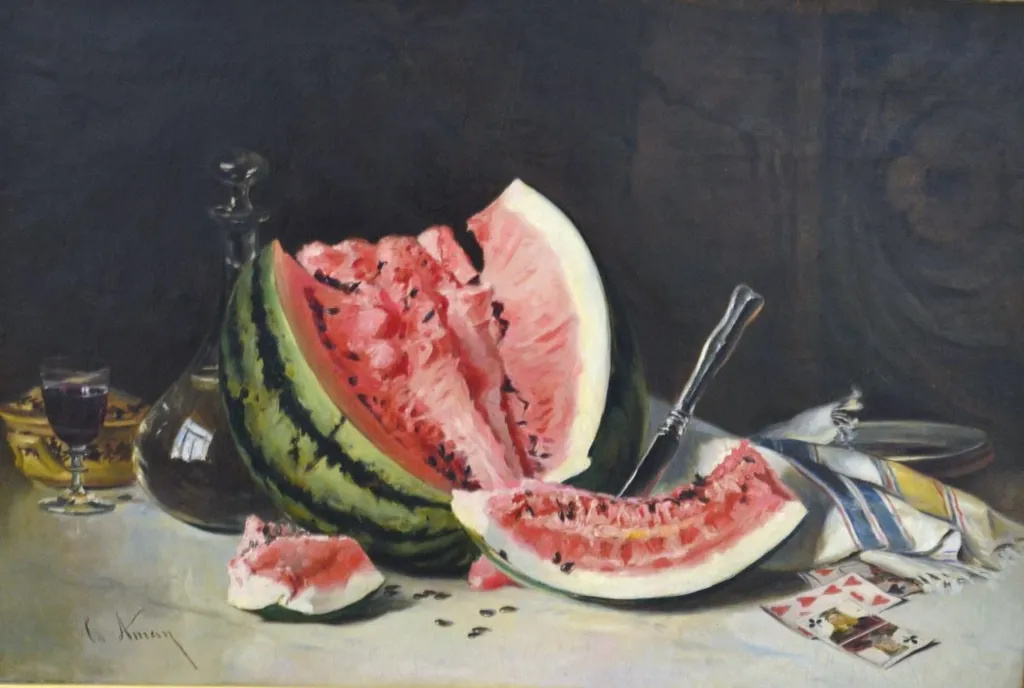
Natură moartă cu pepeni is a print by Theodor Aman. It dates from 1871 and is held in the collection of the Art Museum of Constanta.
About this work
Overview
The composition avoids theatricality, favoring restrained arrangement and close observation of ordinary items arranged on a surface under subdued lighting.
Theodor Aman’s *Natură moartă cu pepeni*, dated around 1871, is a quiet still life composed of watermelons and everyday table objects. Though Aman is better known for historical and genre paintings, this work reveals his engagement with the formal traditions of still life. The composition avoids theatricality, favoring restrained arrangement and close observation of ordinary items arranged on a surface under subdued lighting.
Subject & Meaning
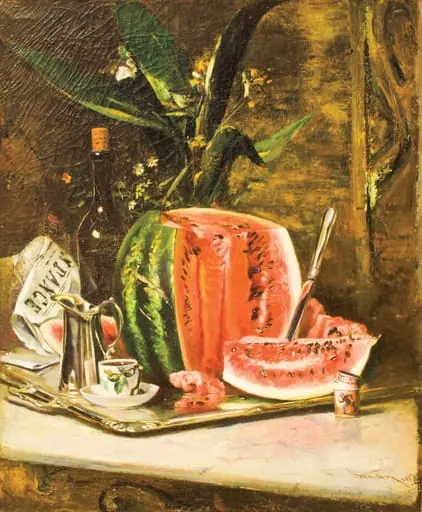
The painting centers on sliced watermelons, their vivid flesh contrasted with rough rinds and scattered seeds. A knife rests in one slice, a dark bottle and glass sit nearby, and a striped cloth folds subtly beneath. These elements suggest a moment after consumption, grounding the image in domestic routine. There is no overt symbolism; meaning arises from the dignity given to humble, transient objects.
Technique & Style
Aman employs careful modulation of light to model the watermelon’s surface, enhancing its wet, fleshy texture. The dark background isolates the fruit and tableware, heightening their presence without dramatic contrast. Brushwork is controlled, avoiding flourish; details like the knife’s reflection or the cloth’s weave are rendered with quiet precision, reflecting a preference for observational realism over embellishment.
History & Provenance
Created during Aman’s tenure as a professor at the Bucharest School of Fine Arts, the painting reflects the academic training environment of 19th-century Romania. While no documented early ownership is recorded, its survival within Romanian collections suggests it was valued by contemporaries as a study in form and light. It remains part of the national artistic record, though not widely exhibited.
Context
In 1870s Romania, still life was not the dominant genre, overshadowed by historical and national themes. Aman’s choice to focus on a simple fruit arrangement aligns with broader European trends but stands apart locally. The work hints at a quiet interest in Western still life conventions, adapted through a Romanian lens—unadorned, attentive, and devoid of allegory.
Legacy
Though not central to Aman’s public reputation, *Natură moartă cu pepeni* illustrates his versatility and commitment to technical discipline. It serves as a quiet example of how Romanian artists engaged with European pictorial traditions without overt imitation. The painting endures as a modest but thoughtful record of everyday observation in a period otherwise focused on grand narratives.
Artist & collection
Artist
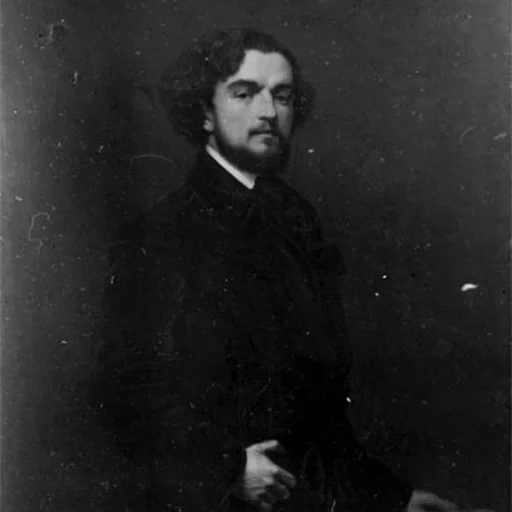
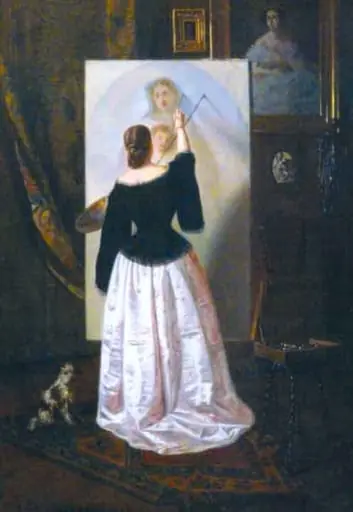
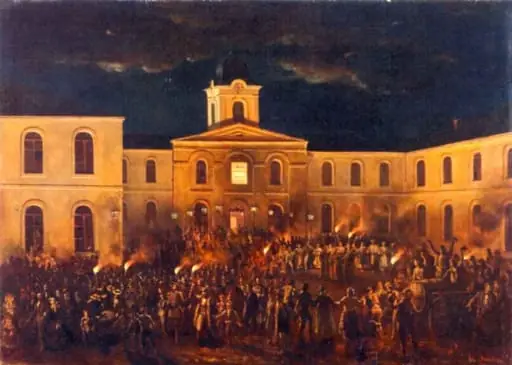
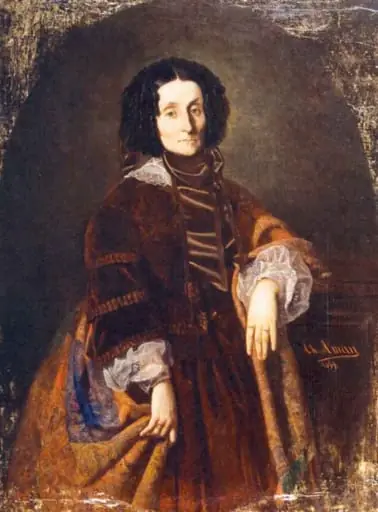
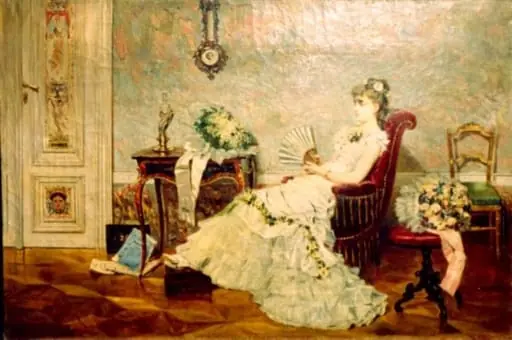
Theodor Aman (20 March 1831 – 19 August 1891) was a Romanian painter, engraver and art professor. He mostly produced genre and history scenes.

 Pepene roșu
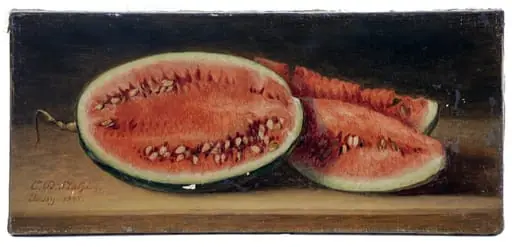 Pepene verde (Harbuz, jumătate cu două bucăți alăturate)
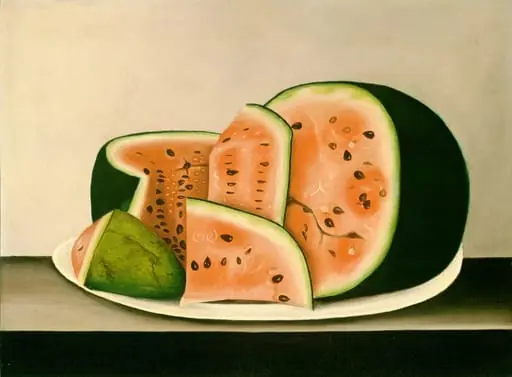 Watermelon on a Plate
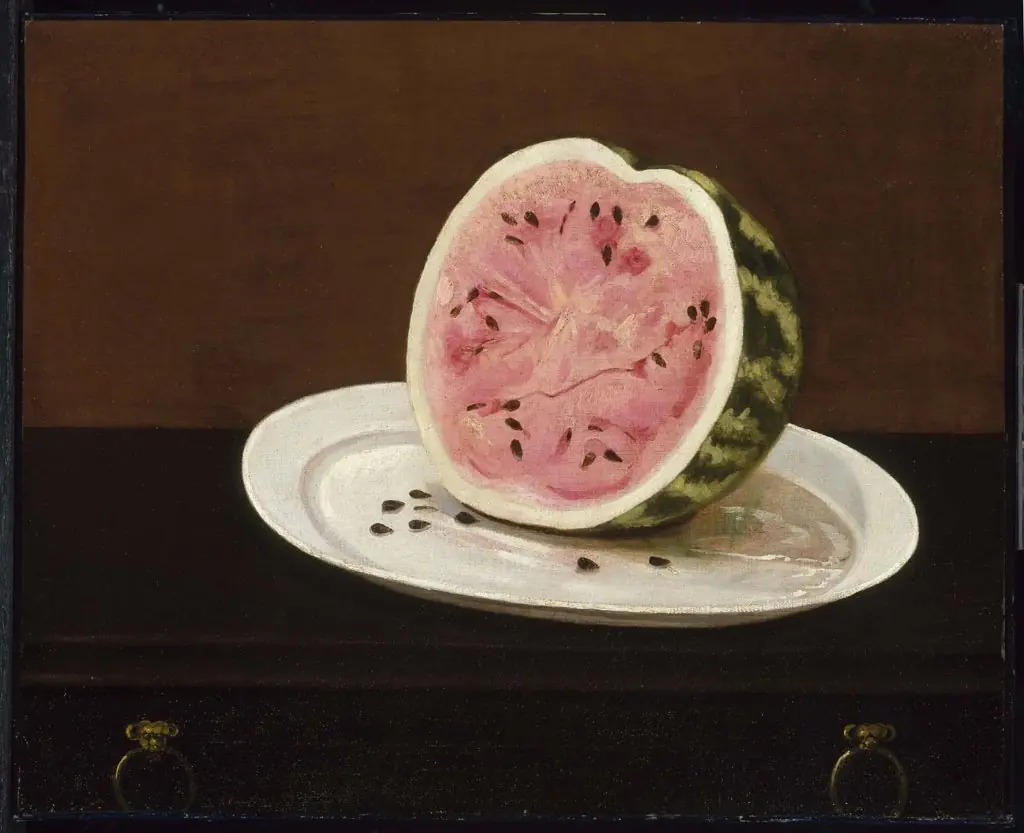 Watermelon
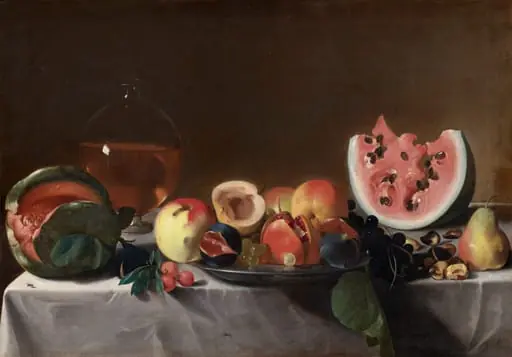 Still Life with Fruit and Carafe
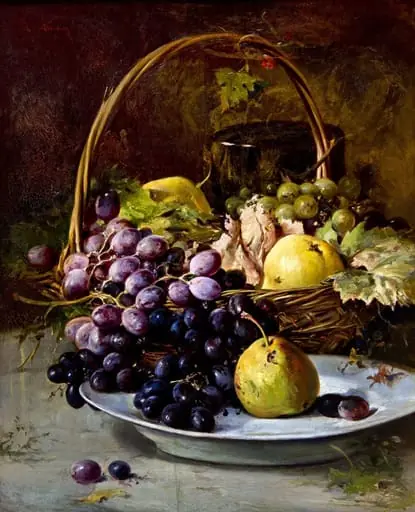 Coș cu fructe
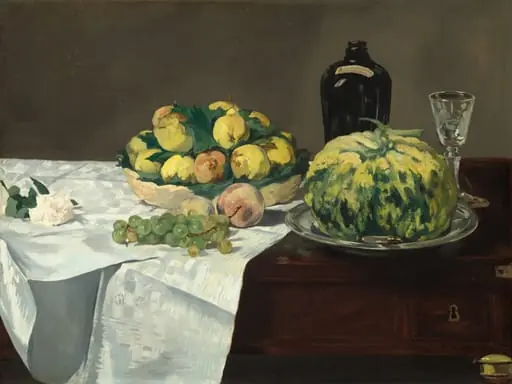 Still Life with Melon and Peaches
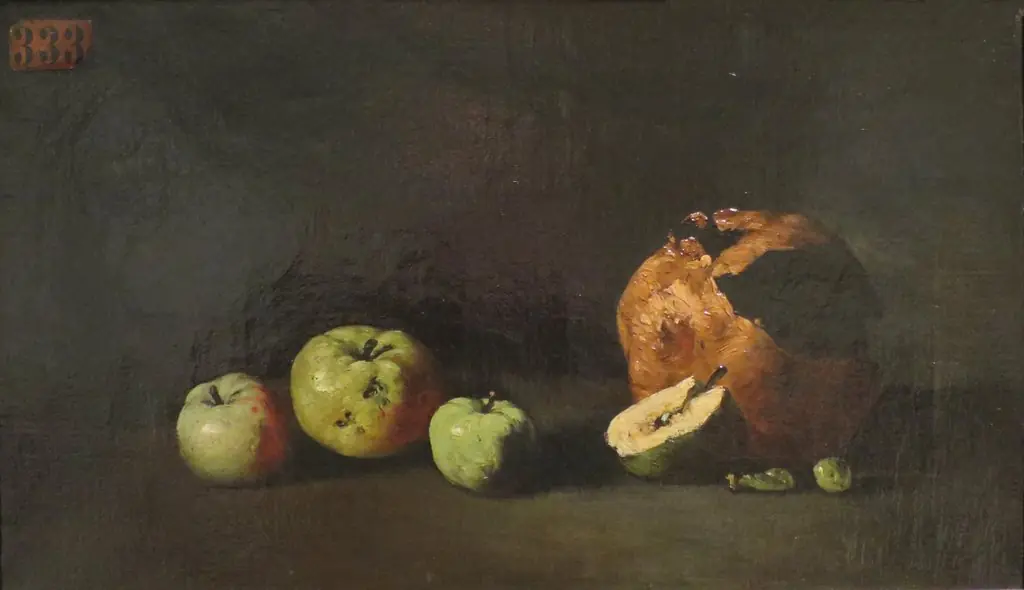 Still Life with Apples and a Pomegranate
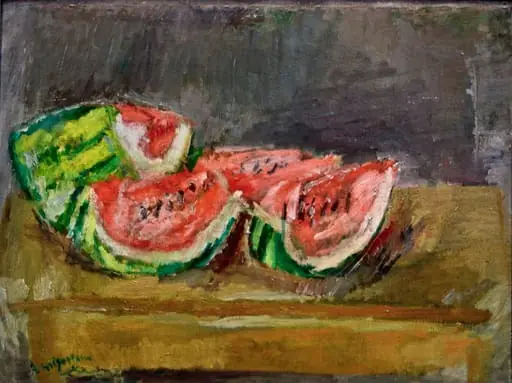 Natură statică cu pepene verde
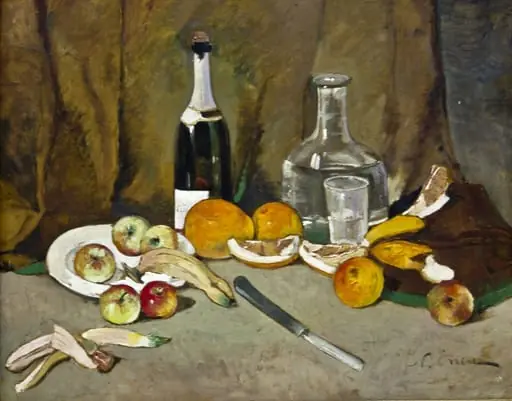 Natură statică
 Natură moartă cu pepene
 Natură moartă cu mere