Artwork
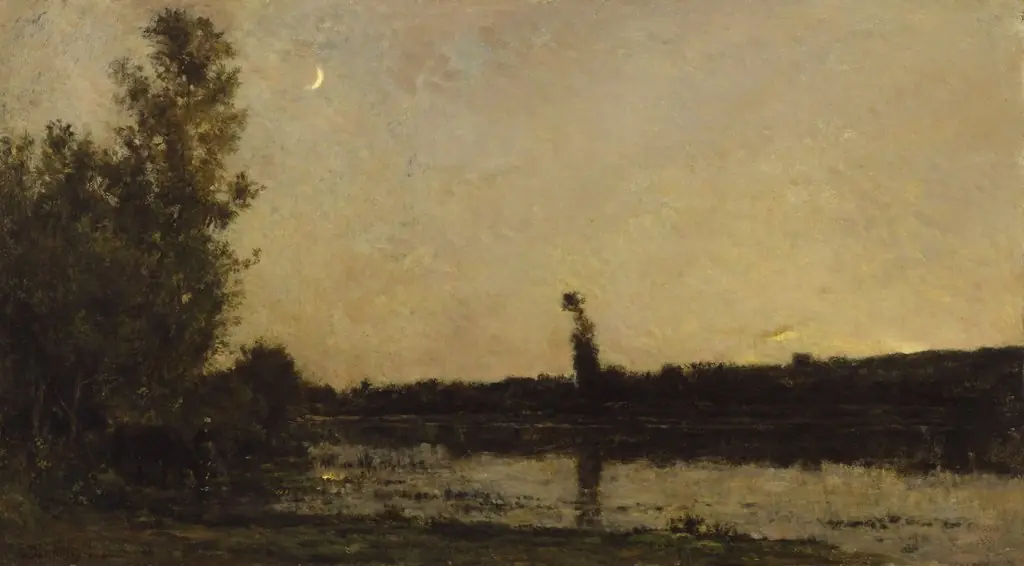
Moonlit River
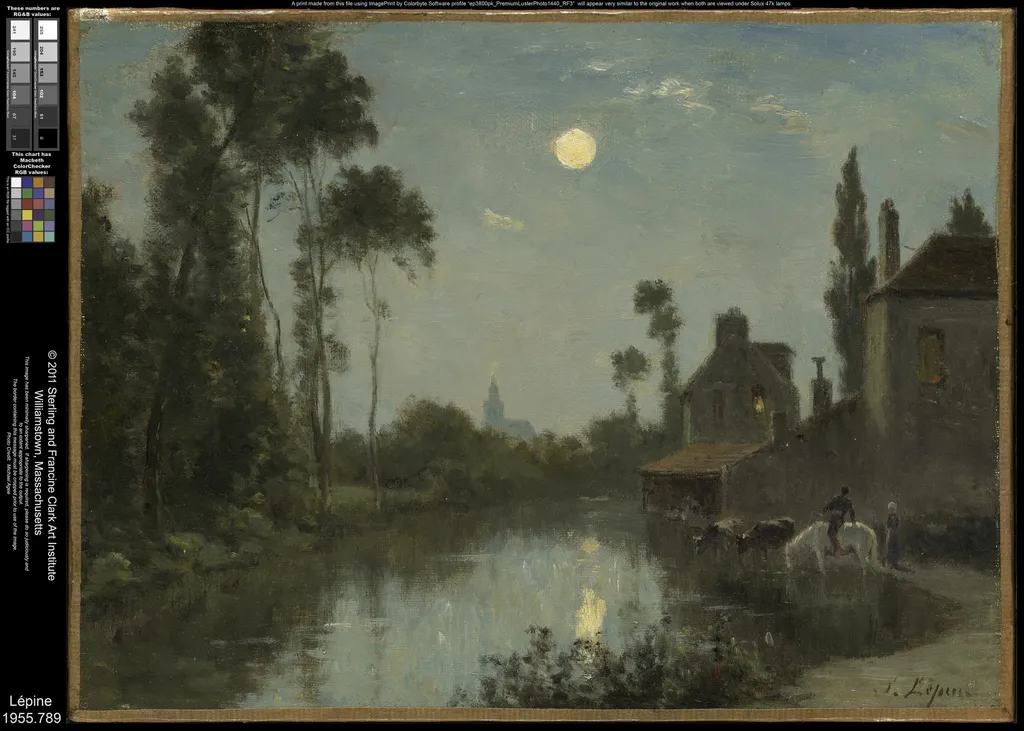
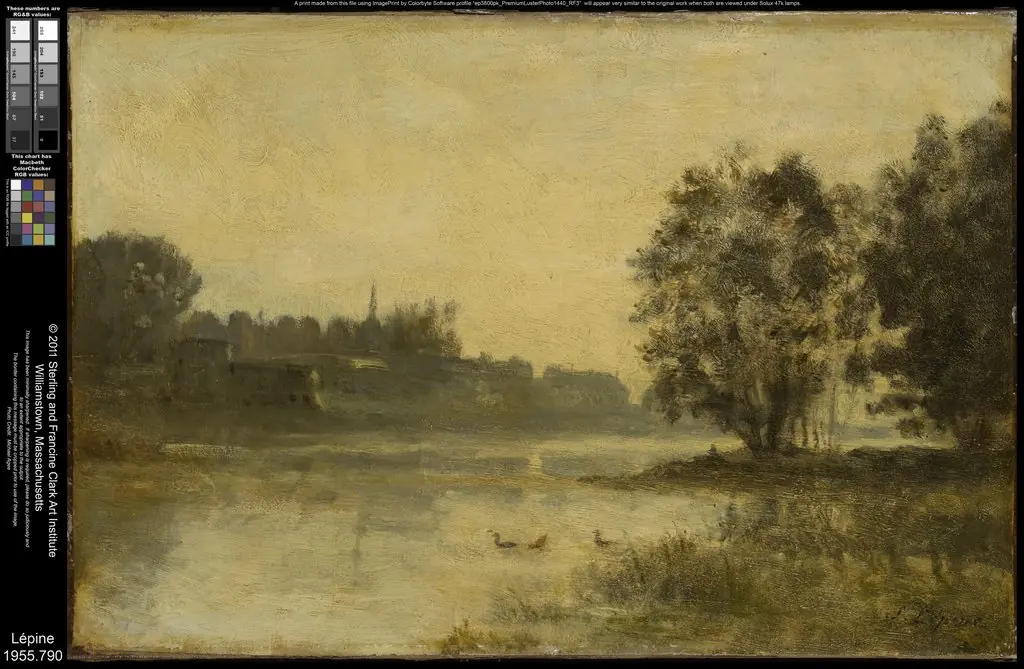
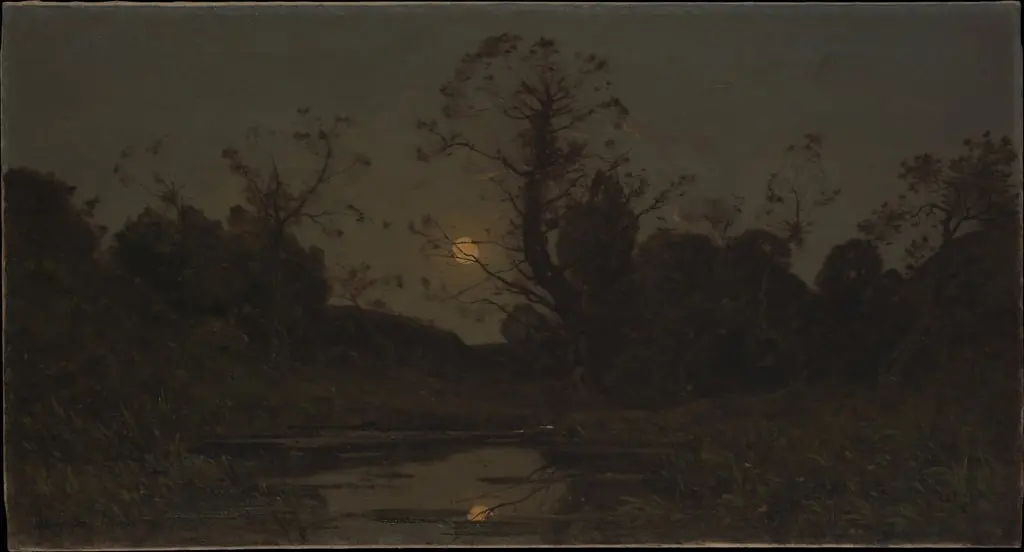
Moonlit River is an oil painting by the Realist artist Stanislas Lépine. It dates from 1868 and is held in the collection of the Clark Art Institute.
About this work
Overview
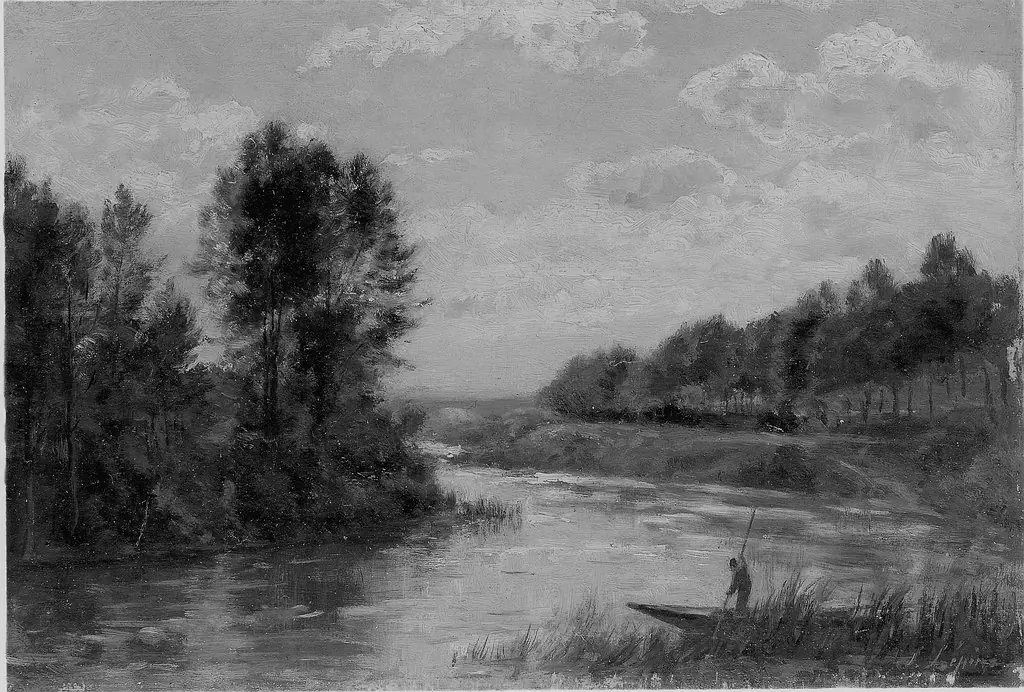
Moonlit River, executed in oil in 1868, presents a nocturnal landscape where a quiet river reflects the luminous disk of a full moon. The composition balances water, sky, and a modest settlement, inviting the viewer into a scene of subdued illumination and stillness.
Subject & Meaning
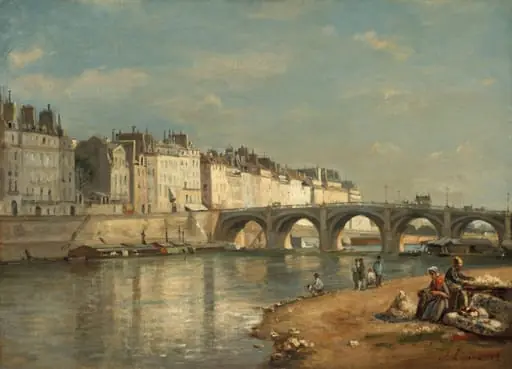
The painting portrays a riverbank lined with trees and shrubs, beyond which a cluster of houses rests on the right. Figures gathered near the water’s edge suggest a moment of quiet activity, while the moonlit surface conveys a sense of calm contemplation within the night environment.
Technique & Style
Lépine employs a muted palette of blues, grays, and soft earth tones, allowing the moon’s pale light to dominate the visual field. Delicate brushwork captures the reflective quality of the water, and subtle gradations in the sky convey atmospheric depth, characteristic of mid‑nineteenth‑century French landscape painting.
History & Provenance
Created in 1868, Moonlit River entered the collection of the Clark Art Institute, where it remains on display. The work reflects the artist’s interest in nocturnal scenes and contributes to the institute’s holdings of 19th‑century European oil paintings.
Artist & collection
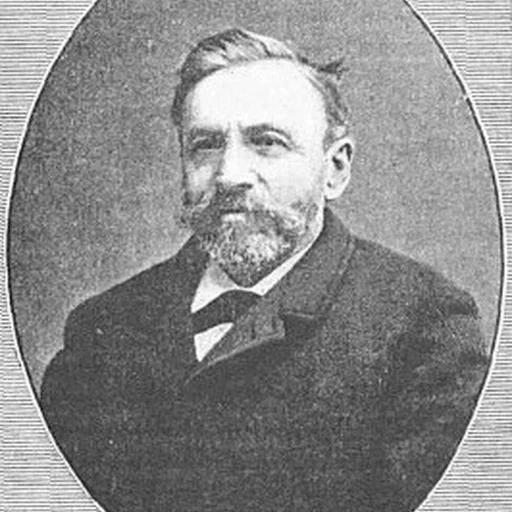
Artist
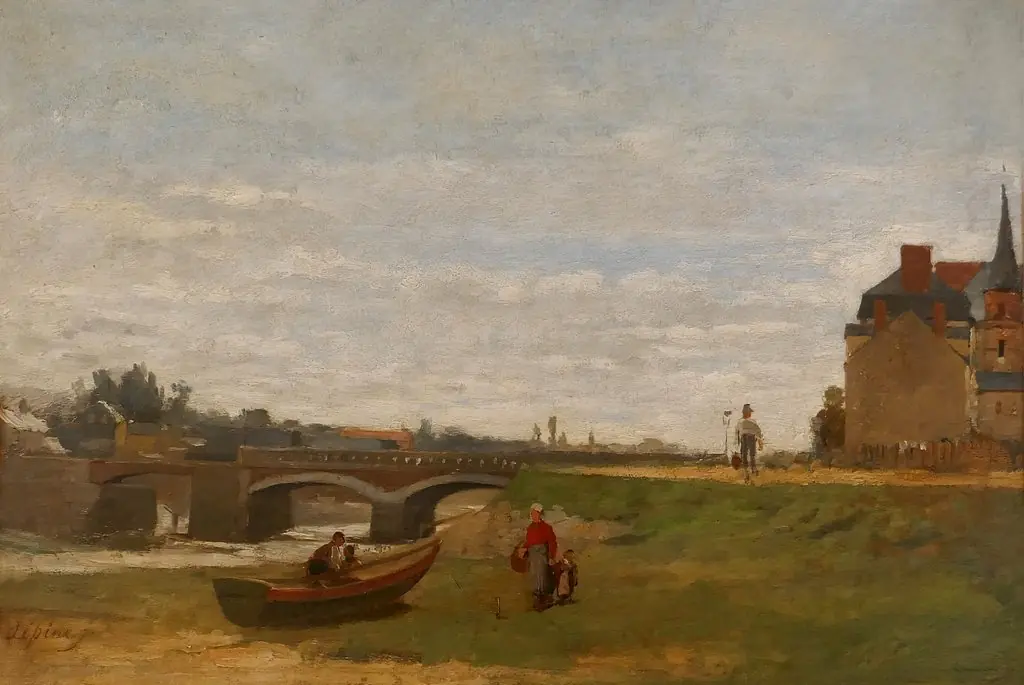
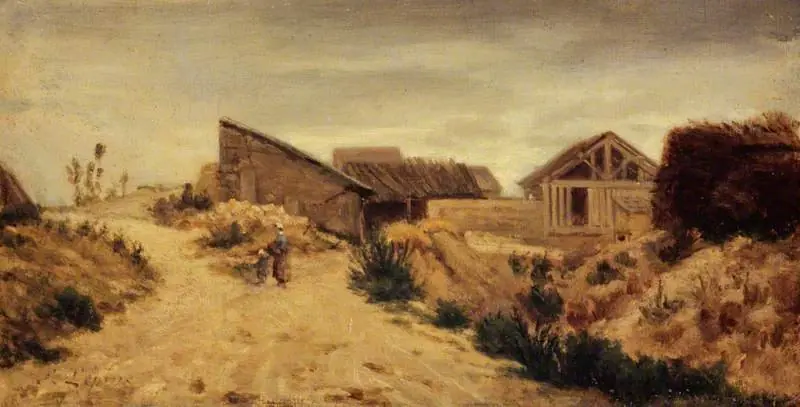
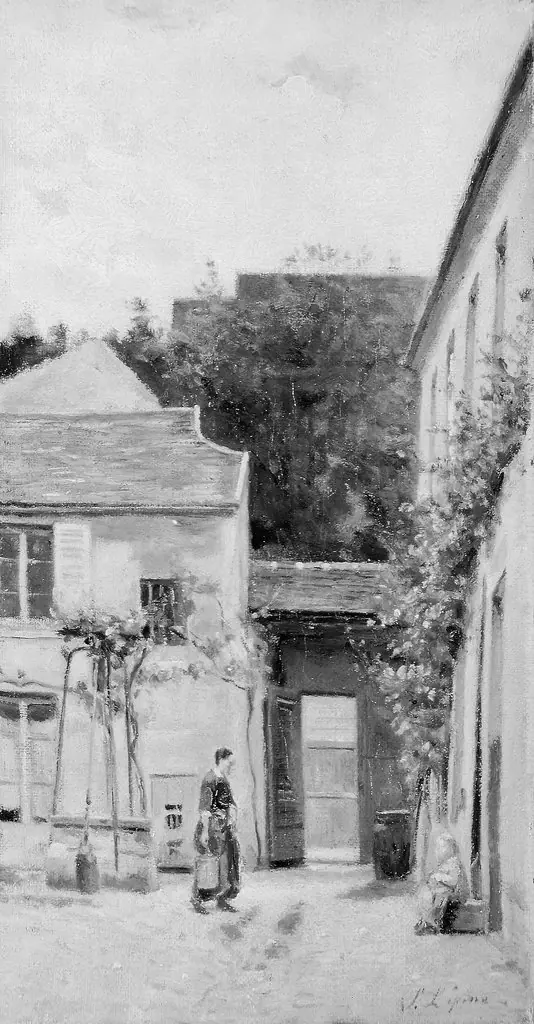
Stanislas Victor Edouard Lépine (October 3, 1835 – September 28, 1892) was a French painter who specialized in landscapes, especially views of the Seine.