Artwork
Jacob de Gheyn
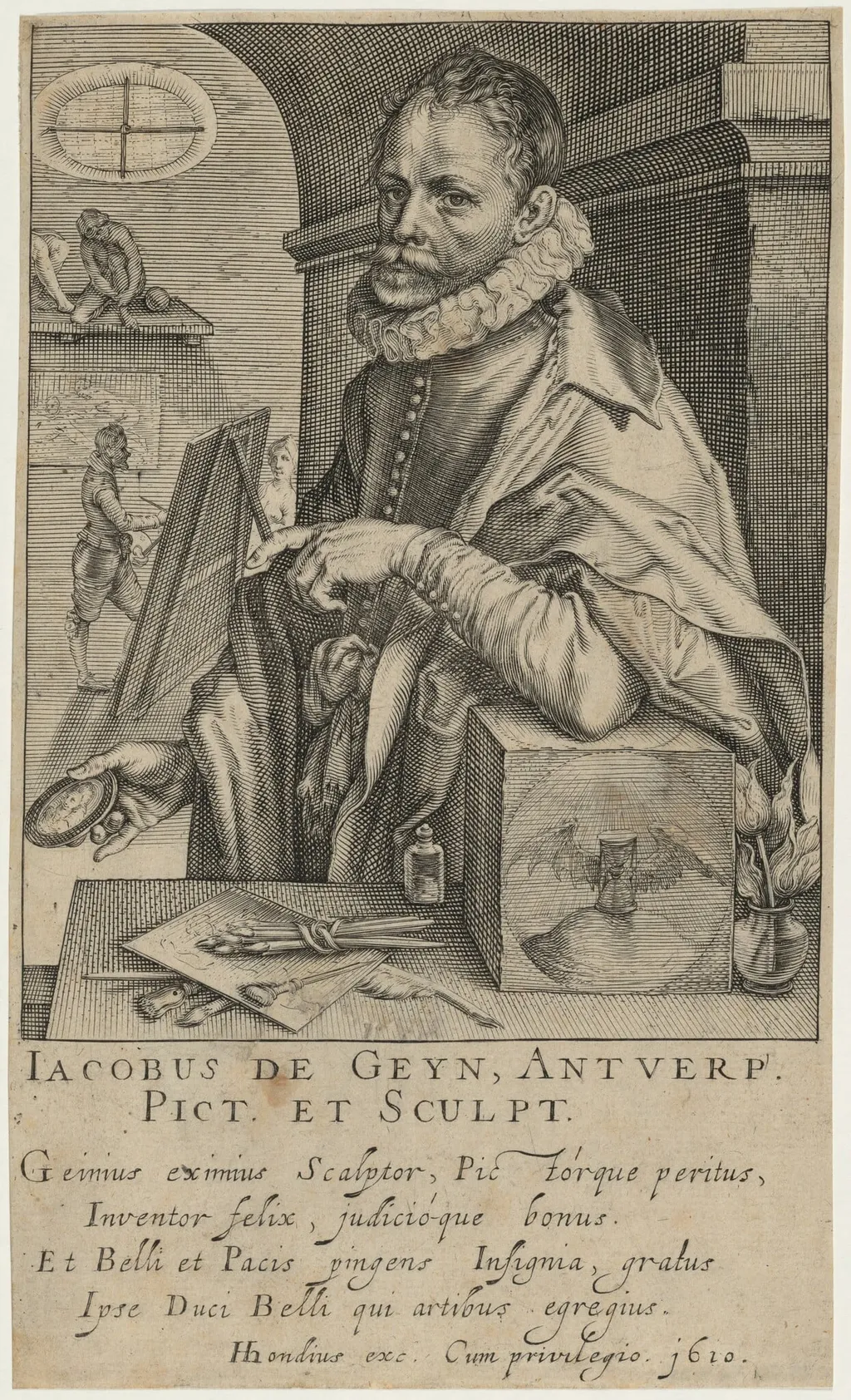
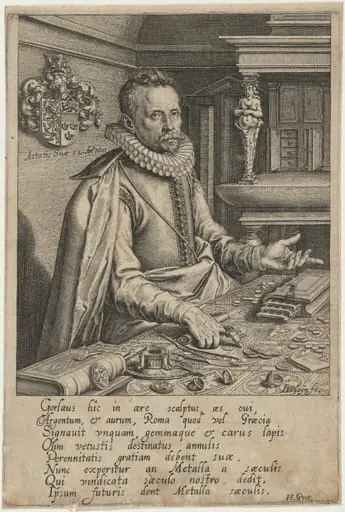
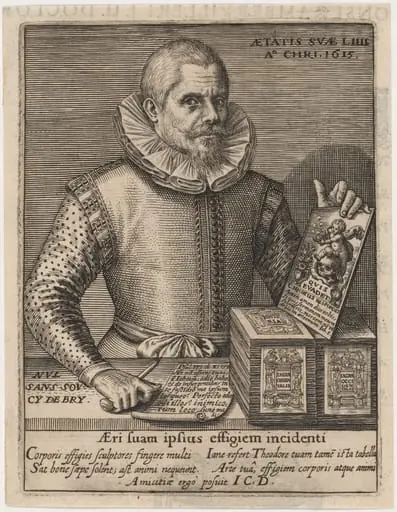
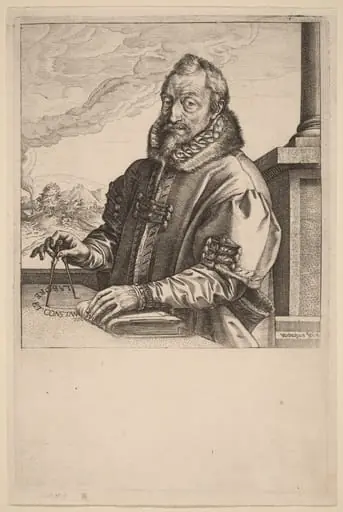
Jacob de Gheyn is an ink print by the Baroque artist Andries Jacobsz Stock. It dates from 1610 and is held in the collection of the National Gallery of Art.
About this work
Overview
The composition emphasizes personal identity through carefully arranged objects and attire, reflecting the sitter’s professional and intellectual life.
This 1610 engraving by Andries Jacobsz Stock depicts Jacob de Gheyn, a Dutch artist and printmaker, seated at a desk. Rendered in fine linear detail, the portrait captures a moment of quiet concentration. The composition emphasizes personal identity through carefully arranged objects and attire, reflecting the sitter’s professional and intellectual life. The medium, copperplate engraving, allowed for precise line work characteristic of early 17th-century Northern European printmaking.
Subject & Meaning
Jacob de Gheyn is portrayed not as a nobleman but as a scholar-artisan, his identity defined by his tools and surroundings. The compass, papers, and other instruments suggest engagement with measurement, design, and knowledge. His ruffled collar and composed posture convey dignity without ostentation. The image functions as a visual testament to the value placed on craftsmanship and intellectual labor in the Dutch Republic during the early Baroque period.
Technique & Style
Stock employed fine, controlled engraving lines to model form and texture. Cross-hatching builds subtle gradations of light and shadow, giving volume to fabric, metal, and paper. The intricate rendering of the ruff, the grain of wood on the desk, and the metallic sheen of tools demonstrates mastery of the medium. The composition avoids theatricality, favoring quiet realism through meticulous attention to surface detail and spatial arrangement.
History & Provenance
Created in 1610, the engraving was likely produced as part of a series documenting contemporary figures in the arts. Jacob de Gheyn, known for his own engravings and botanical illustrations, was a respected figure in Haarlem’s artistic community. The print circulated among collectors and artists, serving both as a portrait and a reference for technical skill. Its survival in multiple institutional collections attests to its early recognition and preservation.
Context
In early 17th-century the Netherlands, engraved portraits of artists and intellectuals were increasingly common, reflecting a growing interest in individual achievement and the status of the professions. Unlike earlier religious or aristocratic imagery, these works celebrated secular expertise. Stock’s portrait aligns with this trend, positioning the sitter within a domestic, intellectual space rather than a public or ceremonial one.
Legacy
The engraving remains a significant example of Dutch portrait printmaking from the period. It influenced later artists interested in depicting the intellectual life through material detail. While not widely reproduced in popular culture, it is studied for its technical precision and its representation of the artist as a thoughtful, working individual — a theme that resonated in Northern European art for generations.
Artist & collection