Artwork
The Fortune Teller
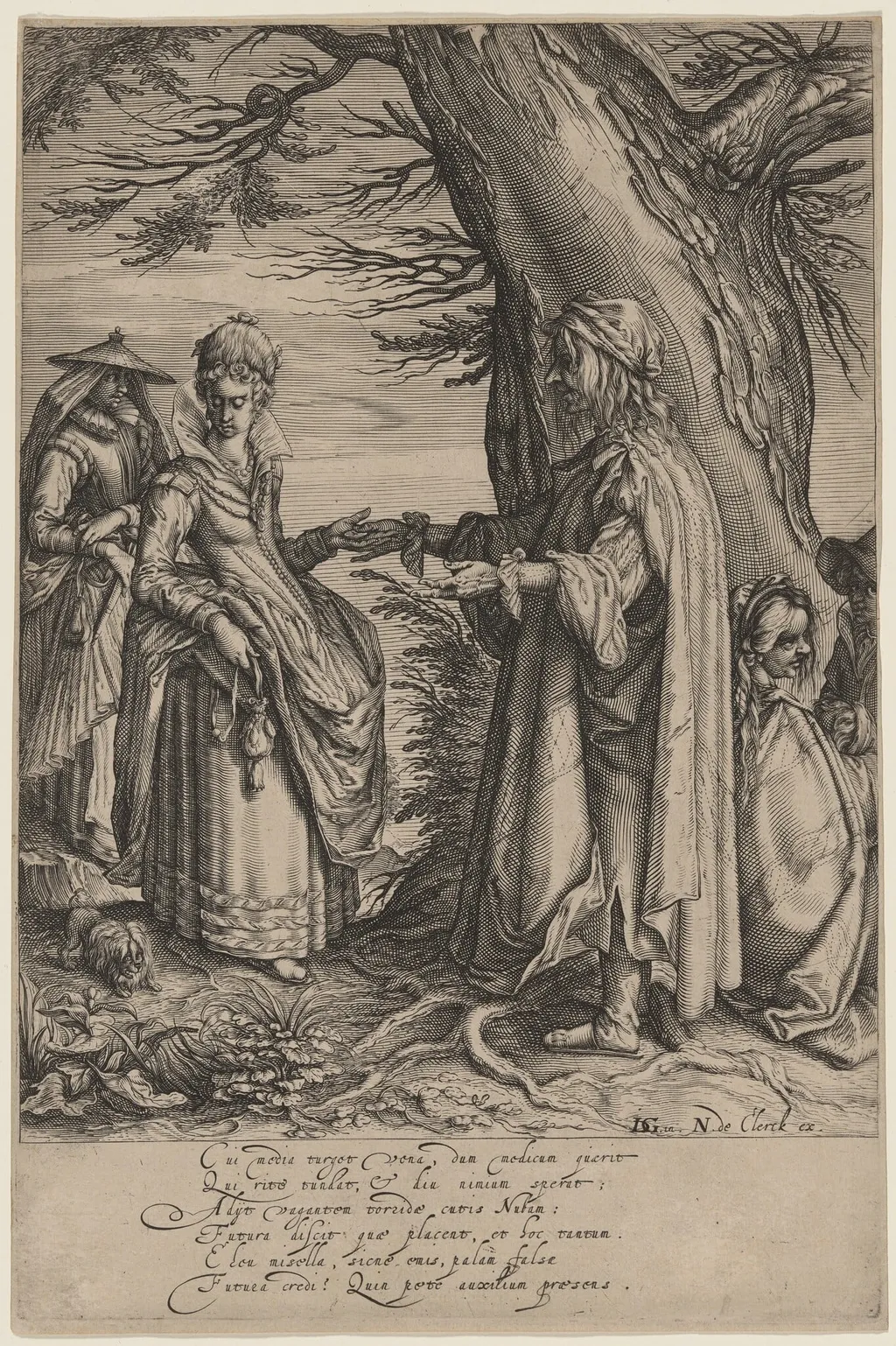
The Fortune Teller is an ink print by the Renaissance artist Andries Jacobsz Stock. It dates from 1608 and is held in the collection of the National Gallery of Art.
About this work
Overview
The Fortune Teller is an engraving on laid paper, dated around 1608, by the Dutch artist Andries Jacobsz Stock. It presents a quiet, intimate scene of a woman reading fate for a group of onlookers in an outdoor setting. Rendered with fine linear precision, the work reflects the Northern Renaissance tradition of detailed figural composition and naturalistic environment.
Subject & Meaning
A seated woman, dressed in a long gown, holds a small object—possibly a crystal or palm fragment—as she addresses three male figures and a child. The men, clad in robes and turbans, suggest exoticism or allegory, while the child’s upward gaze implies innocence or anticipation. The scene evokes themes of fate, curiosity, and social hierarchy, common in early 17th-century genre imagery.
Technique & Style
Stock employed fine, controlled lines typical of Renaissance engraving to model forms and textures: the folds of fabric, the bark of the tree, and scattered leaves are rendered with meticulous attention. The composition uses subtle tonal gradations and spatial depth, achieved through overlapping figures and a receding background, characteristic of Northern European printmaking of the period.
History & Provenance
The engraving is attributed to Andries Jacobsz Stock, active in Amsterdam during the early 1600s. Few of his works survive, and this piece is among the known examples of his output. It was likely produced for a private or scholarly audience, as engravings of this type were circulated as collectible images rather than mass-produced prints.
Context
In early 17th-century Northern Europe, depictions of fortune tellers were popular in prints and paintings, often blending moral caution with fascination for the occult. Stock’s work aligns with broader trends in Dutch and Flemish art that explored everyday and marginal figures, reflecting contemporary interest in human behavior and social types.
Legacy
Though not widely reproduced or studied today, The Fortune Teller remains a representative example of early Dutch engraving. It contributes to the understanding of how Northern artists interpreted exoticism, gender roles, and superstition through intimate, finely crafted scenes, preserving a quiet moment of social interaction from a bygone era.
Artist & collection

 David with the Head of Goliath
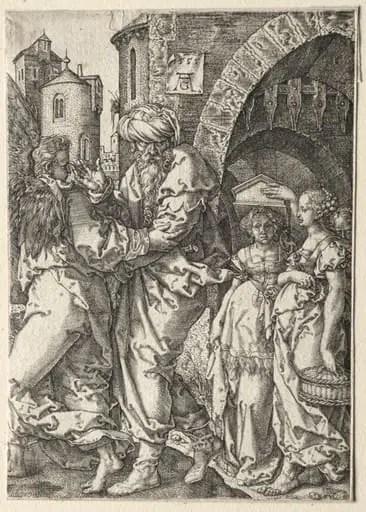 The Story of Lot: Lot and His Family Fleeing Sodom
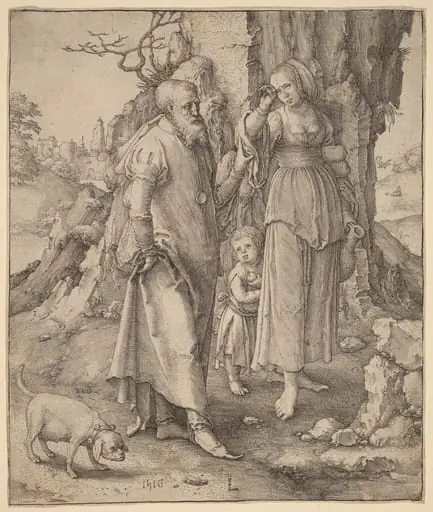 Abraham Repudiating Hagar
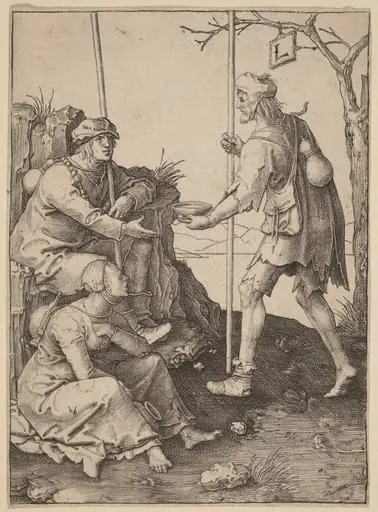 The Beggars
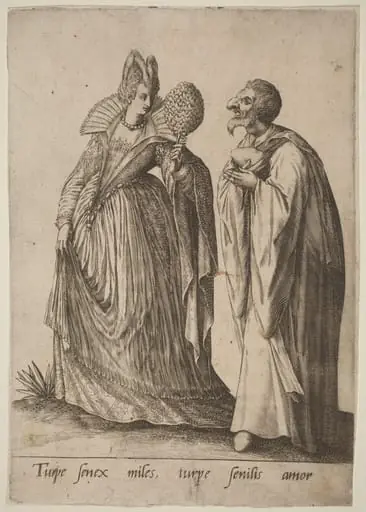 Turpe senex miles...
 Christ as a Gardener Appearing to St. Mary Magdalen
 Ahijah and Jeroboam
 Solomon's Idolatry
 Saint George Liberating the Princess
 Christ Taking Leave of his Mother
 Diogenes Casting Away His Bowl
 The Visitation