Artwork
Madonna della Sedia
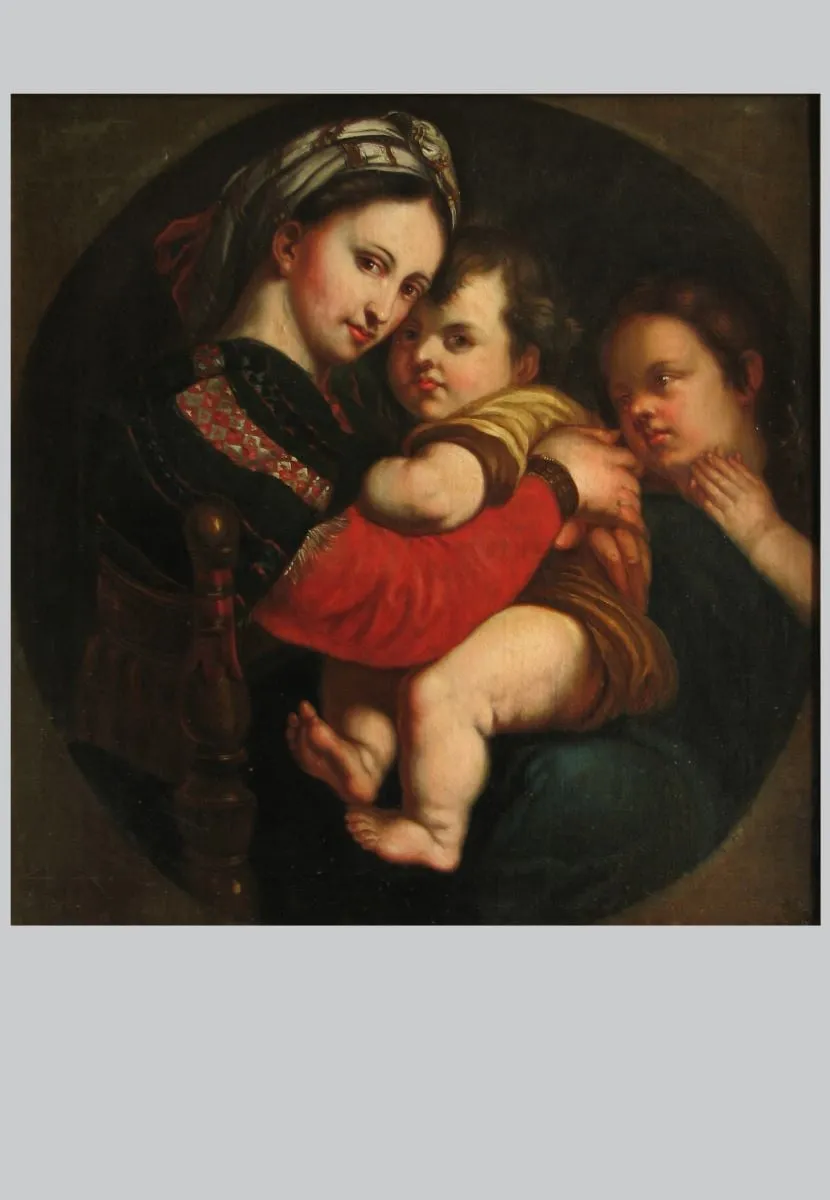
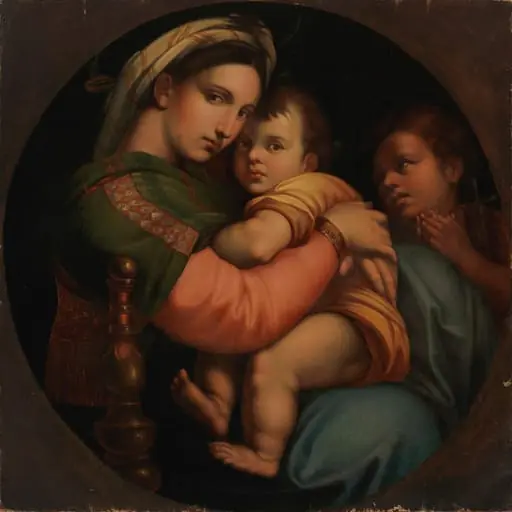
Madonna della Sedia is an unspecified painting by the Byzantine icon painting artist Johann Martin Stock. It is held in the collection of the Brukenthal National Museum. The painting depicts the Virgin Mary seated with two young children, rendered in a composition that emphasizes intimacy over grandeur.
About this work
Overview
The painting depicts the Virgin Mary seated with two young children, rendered in a composition that emphasizes intimacy over grandeur. The figures occupy a shallow space against a neutral background, drawing attention to their quiet interaction. The work is executed in oil on panel, with careful attention to the soft modeling of forms and the subtle play of light across skin and fabric.
Subject & Meaning
The scene portrays the Virgin Mary as a nurturing mother, holding one child while the other leans against her. The absence of halos or celestial symbols grounds the image in domestic tenderness, reflecting a devotional tradition that valued human emotion in sacred figures. The composition invites contemplation of maternal care as a spiritual ideal.
Technique & Style
The artist employs chiaroscuro to model the figures with gentle gradations of light and shadow, enhancing their three-dimensionality. The dark garments contrast with the softly lit faces, creating a sense of warmth and presence. Brushwork is restrained, favoring smooth transitions over texture, which contributes to the painting’s quiet, intimate atmosphere.
History & Provenance
The painting was completed in the late 18th century by Johann Martin Stock, a German artist active in southern Germany. It remained in private collections until the early 20th century, when it entered a public museum in Munich. Its attribution has been consistently verified through archival records and stylistic analysis of the period.
Context
Created during a time when Catholic devotional art emphasized personal piety, the work aligns with regional traditions that favored modest, emotionally resonant imagery over theatricality. Similar compositions appeared in altarpieces and household shrines, reflecting a broader cultural preference for accessible religious representation.
Legacy
Though not widely reproduced, the painting is recognized in scholarly circles for its restrained emotional depth and technical precision. It continues to be studied as an example of late Baroque devotional painting that prioritized quiet humanity over spectacle, influencing later regional artists seeking authenticity in sacred subjects.
Artist & collection
Artist
A late-18th-century Austrian painter, Johann Martin Stock made bold, folksy portraits and still lifes in oils, plus a few prints.


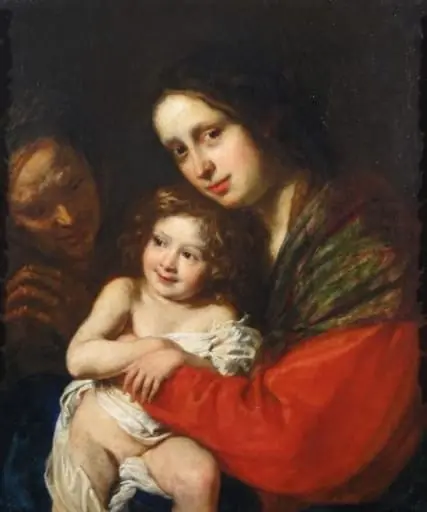 Maria cu Pruncul și Sfânta Ana
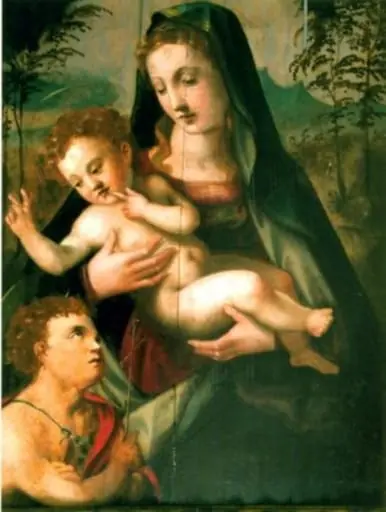 Maria cu Iisus în brațe și Ioan Botezătorul copil
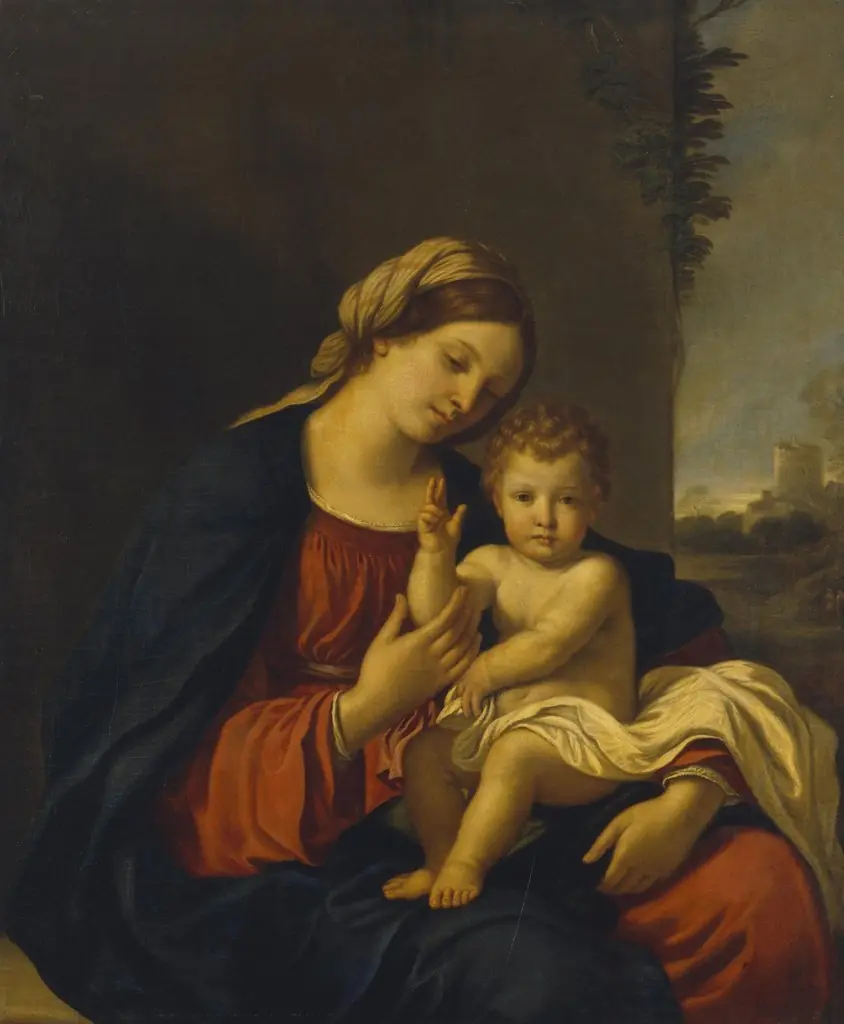 Madonna and Child
 The Holy Family with Saint John
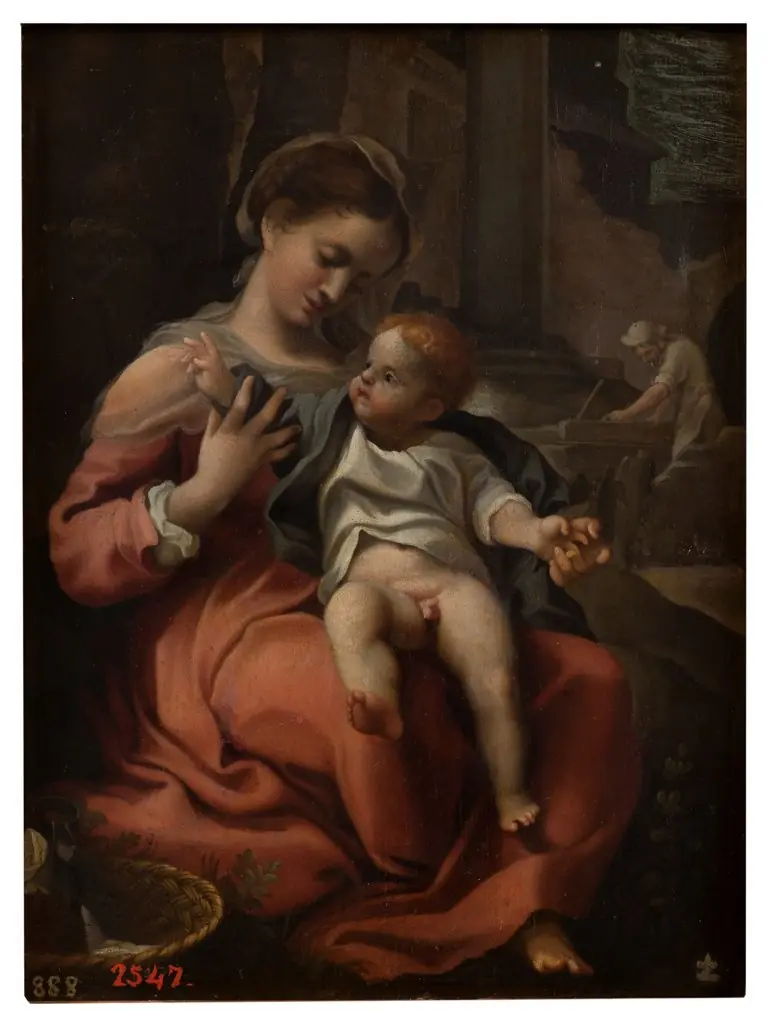 La Virgen del canastillo
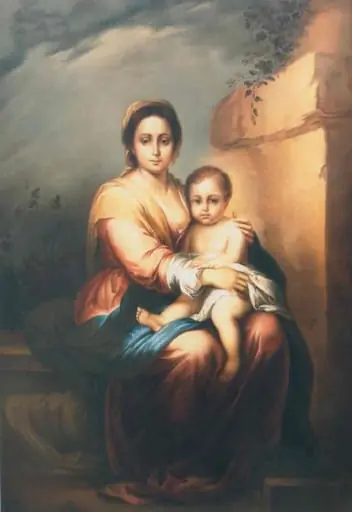 Maternitate
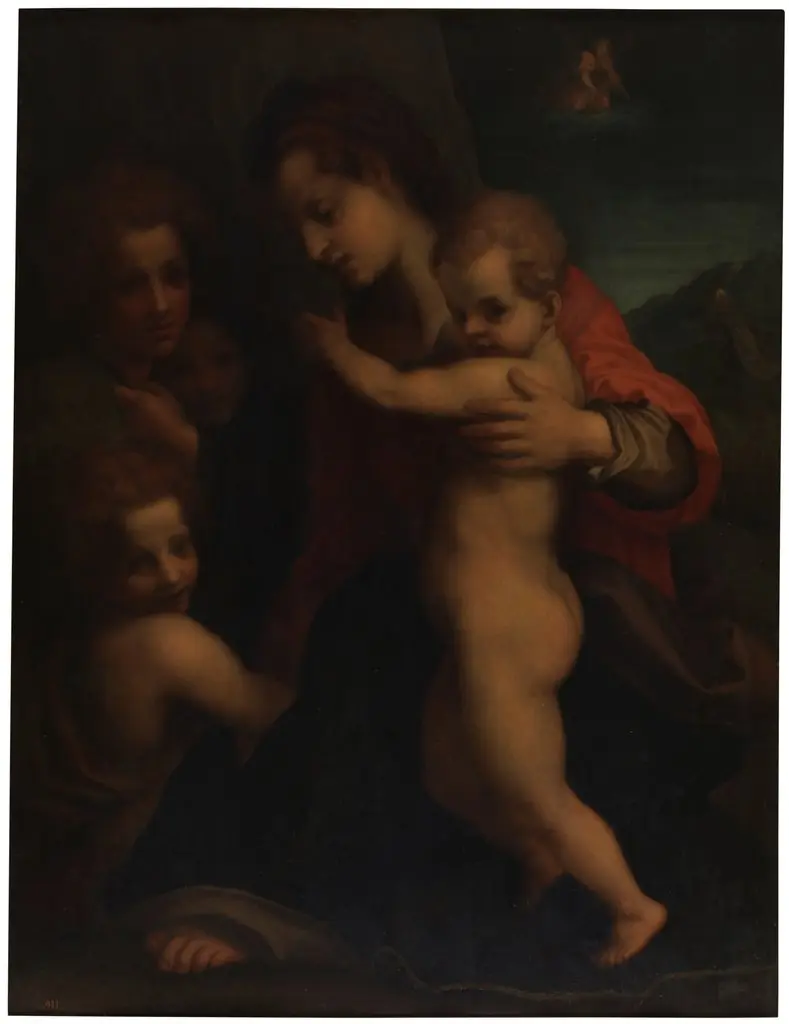 The Virgin with the Child, Saint John and Angels
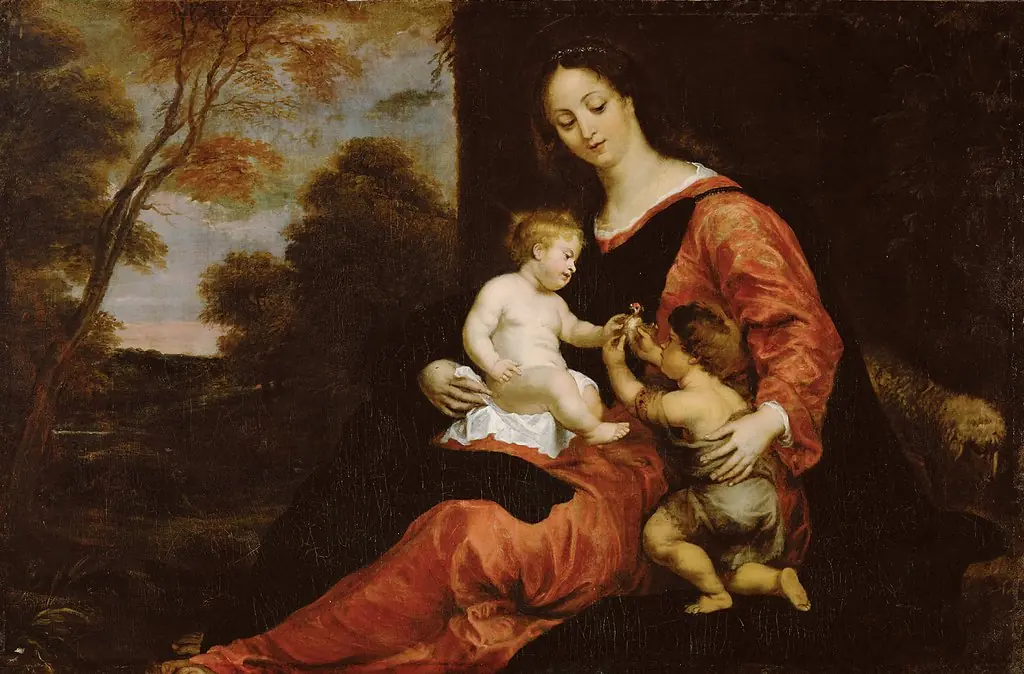 Mary and Child with John the Baptist
 Madonna della Sedia, kopio Rafaelin (Raffaello Sanzio) mukaan
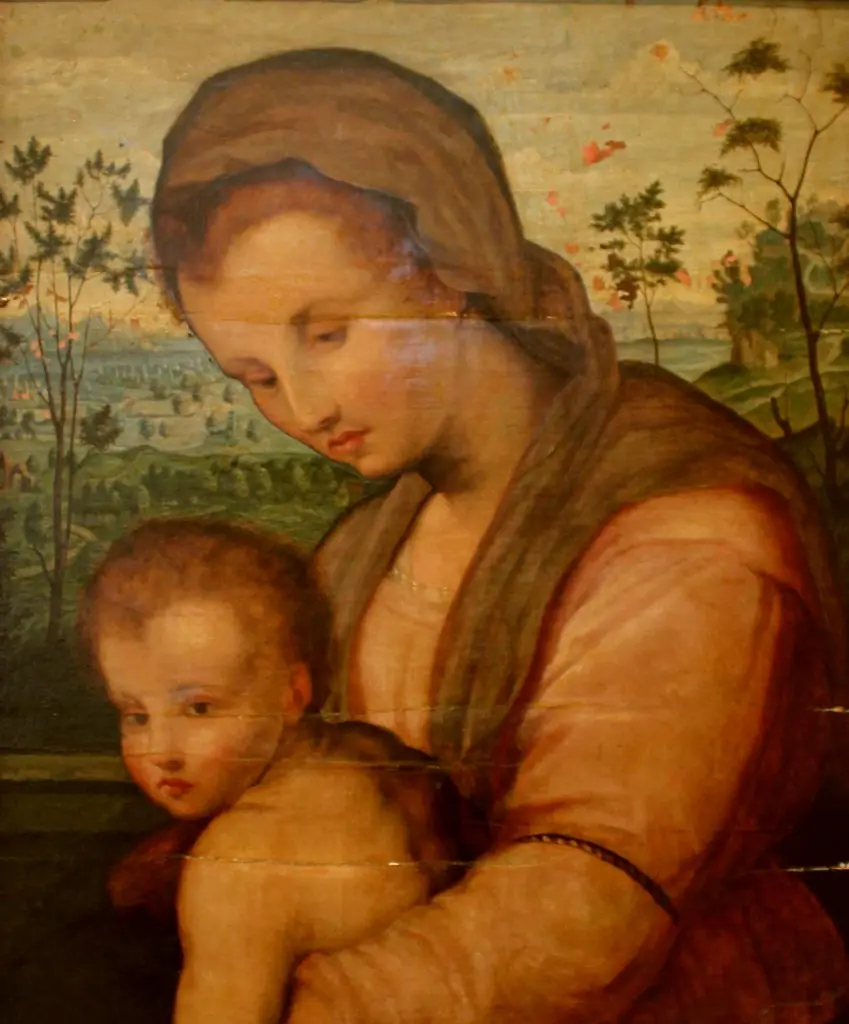 Madonna mit Kind.
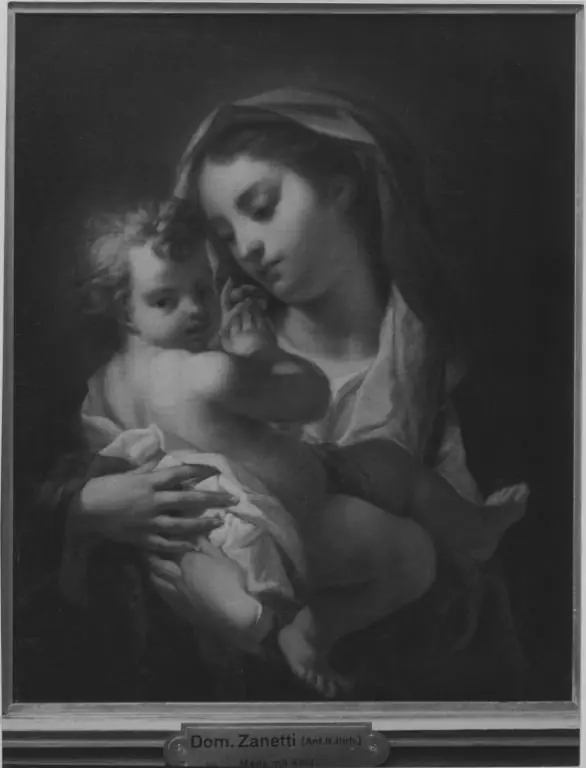 Madonna and Child
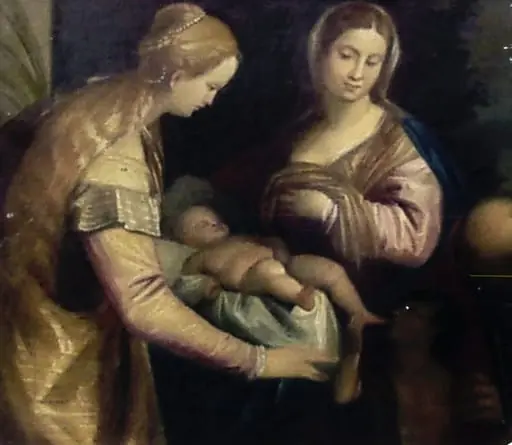 Sfânta familie