Artwork
J.M. Soterius von Sachsenheim
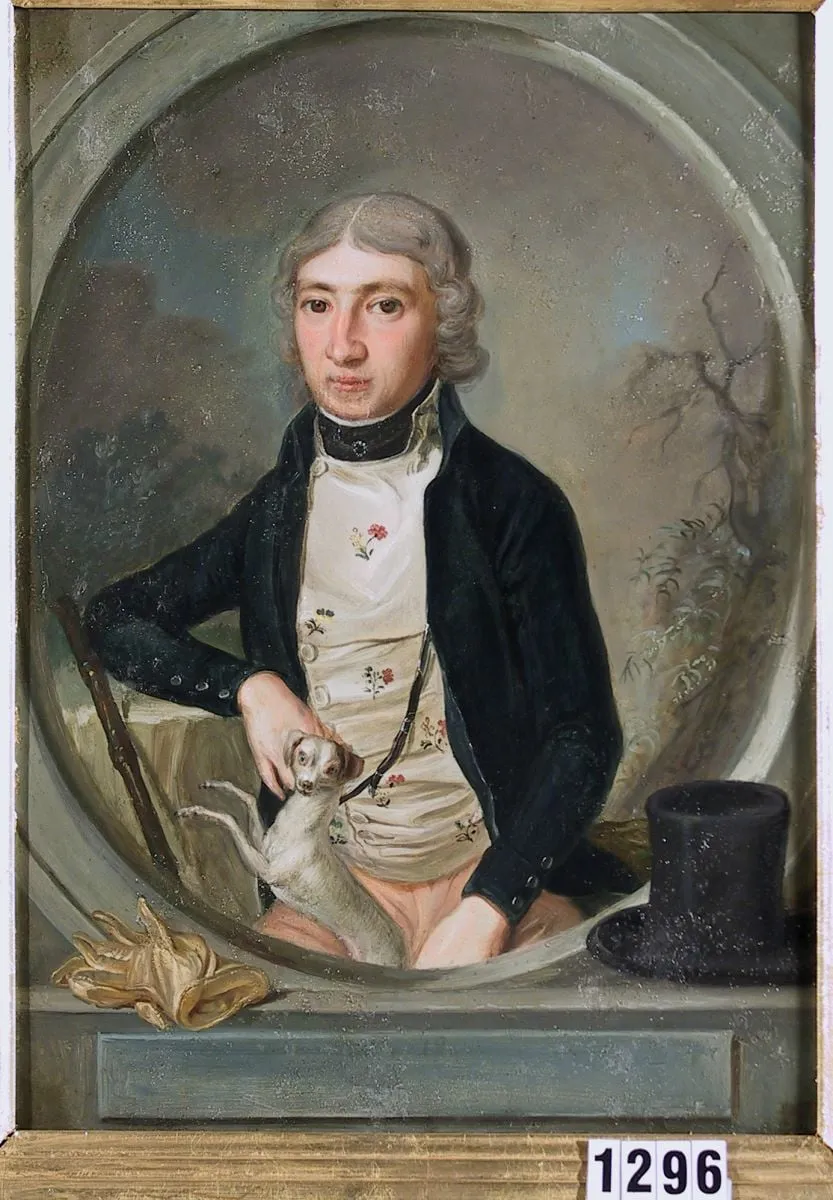
J.M. Soterius von Sachsenheim is an unspecified painting by the Baroque artist Johann Martin Stock. It is held in the collection of the Brukenthal National Museum. This portrait depicts a middle-aged man in formal 18th- or early 19th-century attire, rendered with restrained elegance.
About this work
The painting's attention to detail and the subject's dignified demeanor invite the viewer to explore more works by the artist, Stock, Johann Martin.
This painting is a portrait of a man with gray hair, dressed in a black jacket over a white shirt adorned with small red flowers. He sits with his left arm resting on a chair, holding a small white dog. To his right, a black hat and a pair of gloves are placed on a table. The background features a tree and a cloudy sky.
The man's attire and the style of the painting suggest an earlier period, possibly from the 18th or 19th century. The use of muted colors and the focus on the subject's expression and posture create a sense of intimacy and quiet contemplation.
The painting's attention to detail and the subject's dignified demeanor invite the viewer to explore more works by the artist, Stock, Johann Martin.
Overview
This portrait depicts a middle-aged man in formal 18th- or early 19th-century attire, rendered with restrained elegance. The composition centers on his calm posture and direct gaze, framed by a simple interior setting with a tree and overcast sky beyond. Muted tones and precise brushwork emphasize stillness rather than spectacle, suggesting a private moment captured with care.
Subject & Meaning
The man, identified as J.M. Soterius von Sachsenheim, holds a small white dog, a symbol often associated with loyalty or companionship. His black jacket, white shirt with floral embroidery, and the placed hat and gloves imply a recent departure or pause in routine. The absence of overt symbols of status directs focus to his composed demeanor, conveying quiet self-possession rather than social rank.
Technique & Style
The artist employs fine, controlled brushwork to render textures: the softness of the dog’s fur, the sheen of the jacket, and the delicate embroidery on the shirt. Light falls gently across the figure, modeling form without dramatic contrast. The background is softly blurred, isolating the subject and enhancing the intimate, contemplative mood of the scene.
History & Provenance
The painting is attributed to the German artist Stock, active during the late 18th and early 19th centuries. While specific details of its commission or early ownership are not widely documented, its subject’s title suggests aristocratic or upper-middle-class origins. The work likely originated in a German-speaking region, consistent with the artist’s known circles.
Context
In an era when portraiture often emphasized status through elaborate settings or heraldic elements, this work reflects a quieter trend toward psychological realism. The emphasis on personal presence over external display aligns with broader shifts in European portraiture, where inner character and subdued elegance gained favor among patrons seeking authenticity.
Legacy
Though not widely exhibited, the painting contributes to the body of work by Stock, a lesser-known but skilled portraitist of his time. Its restrained aesthetic and attention to subtle detail offer insight into the tastes of provincial elites who valued dignity and introspection over grandeur, preserving a quiet moment of individual identity from the period.
Artist & collection
Artist
A late-18th-century Austrian painter, Johann Martin Stock made bold, folksy portraits and still lifes in oils, plus a few prints.

 Baronul Michael Josef von Brukenthal
 Portrait of Sir George Wright, 2nd Baronet (c.1770-1812)
 'Mr Nicholas': A Seated Man with a Dog
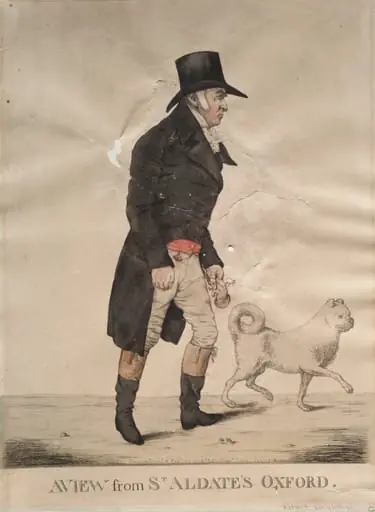 A View from St. Aldate's, Oxford
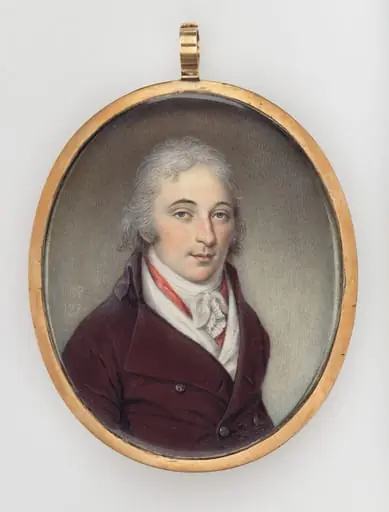 A. T. Kerr, Esquire
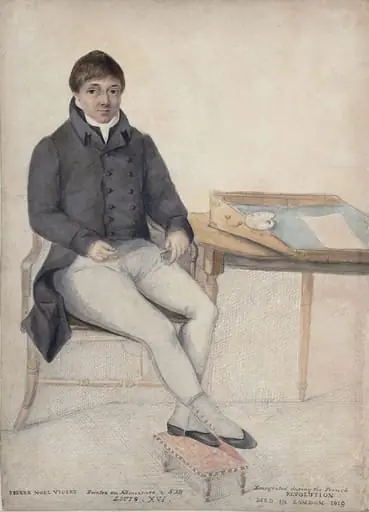 Portrait of Pierre Noel Violet
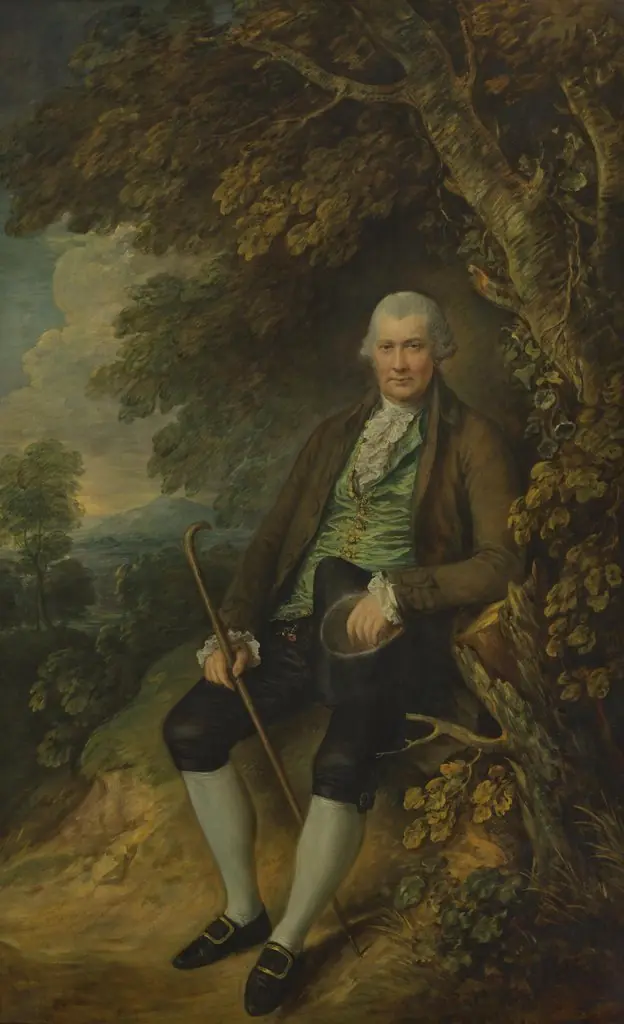 John Wilkinson
 John Myers
 Portrait of a Man with an Earring
 Poul Johan Schouw, guvernør i Ostindien
 Moses Seymour Jr.
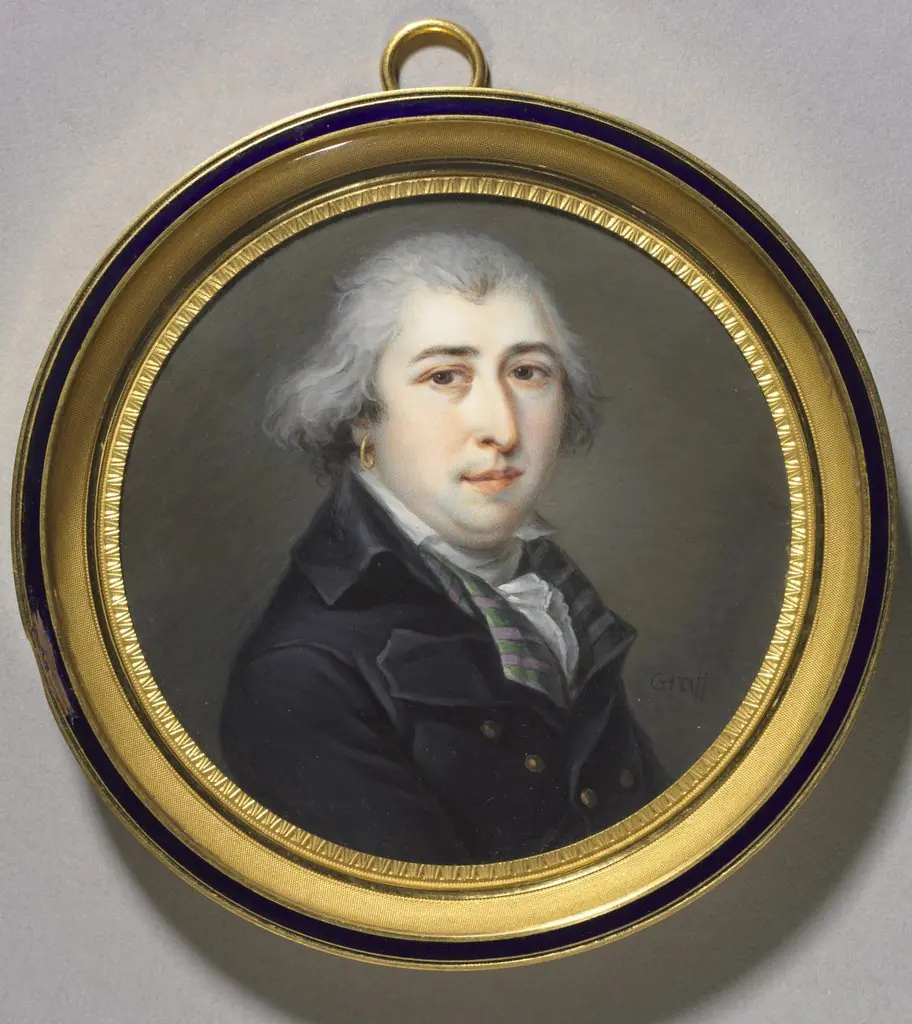 Portrait of a Man with an Earring