Artwork
Dressed for a Ball: Girl with a Mandoline
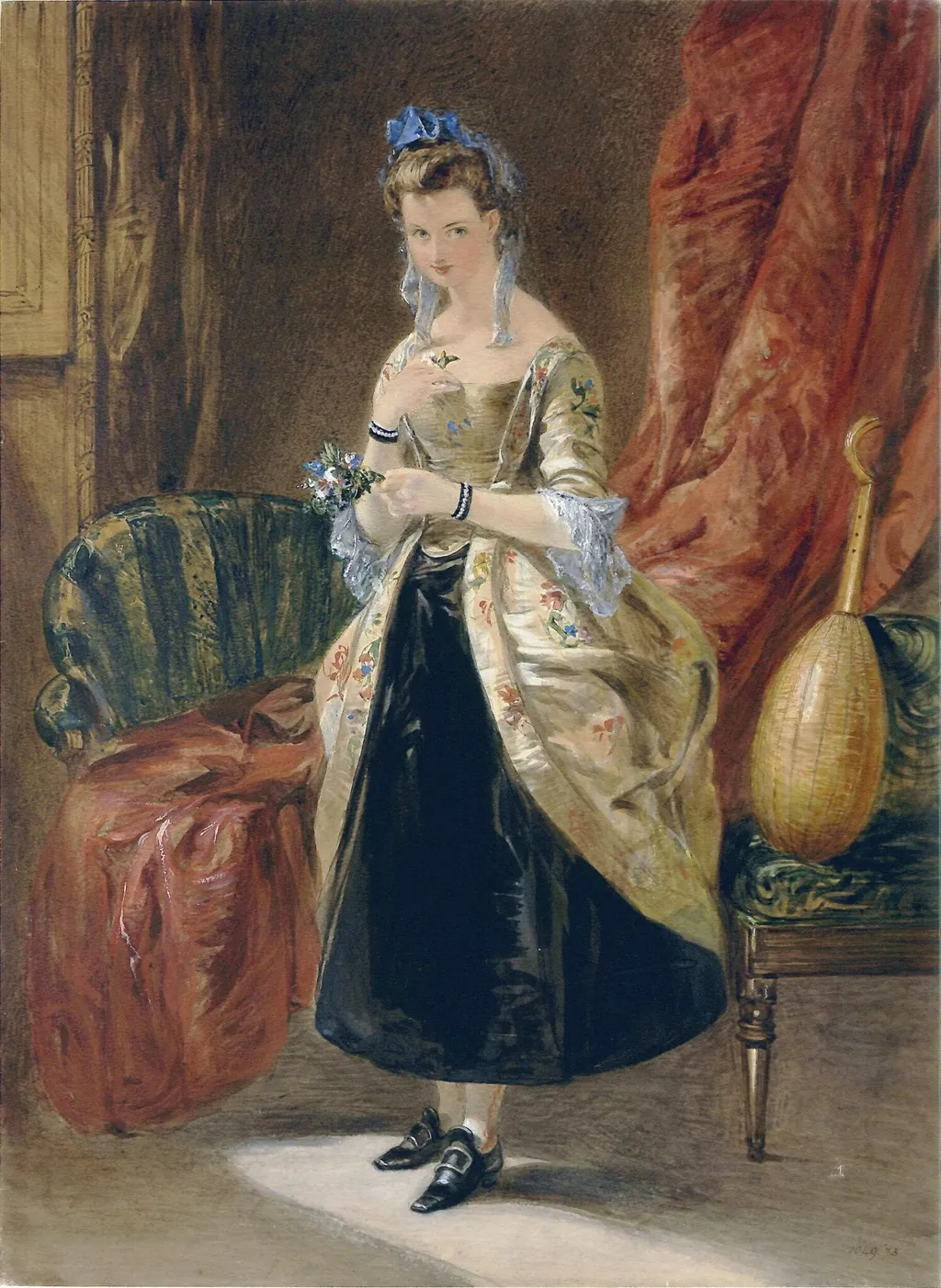
Dressed for a Ball: Girl with a Mandoline is a watercolor work on paper by the British Romanticist artist Frank Stone. It dates from 1820 and is held in the collection of the Victoria and Albert Museum. The work is a watercolour portrait that shows a young woman standing in an interior space, holding a mandolin.
About this work
Overview
The work is a watercolour portrait that shows a young woman standing in an interior space, holding a mandolin. She is dressed in attire appropriate for a formal ball, with a dark skirt, a light patterned bodice trimmed in lace, and a blue ribbon securing her hair. A bouquet of flowers rests in her hands, while a red curtain and the mandolin lie on a nearby chair.
Subject & Meaning
The figure appears poised for a musical performance or a social gathering, suggesting the cultural role of music in genteel society. The inclusion of the mandolin, a popular instrument of the period, alongside the elegant dress, underscores themes of refinement and leisure associated with ballroom events.
Technique & Style
The artist employs soft, blended brushstrokes characteristic of watercolour, allowing colours to transition gently. Light falls on the woman's face, creating a subtle highlight, while the surrounding space remains warm and muted, giving depth without harsh contrasts. The overall effect is a delicate rendering of texture and atmosphere.
Context
The painting reflects 19th‑century European interior genre scenes that often depicted women in domestic or social settings. Such works were commonly displayed in private collections and later entered museum holdings, illustrating contemporary fashions and the popularity of music as genteel entertainment.
Artist & collection
Artist
Frank Stone painted small, detailed watercolors of people getting ready for parties or concerts in the early 1800s.

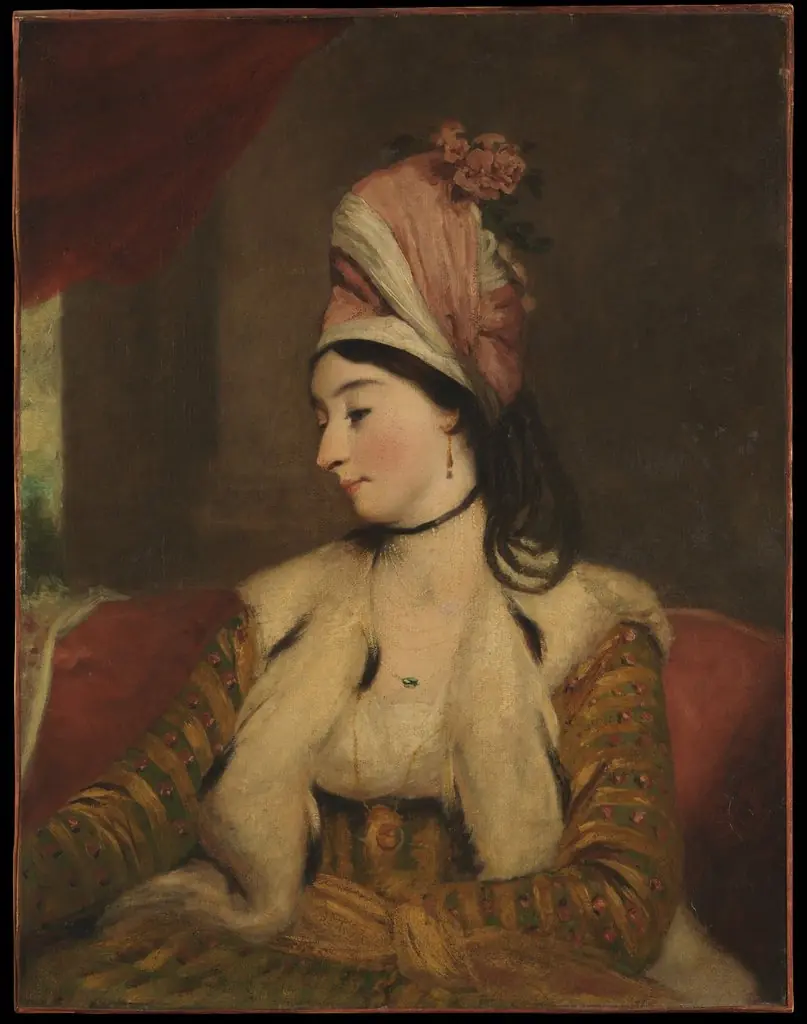 Mrs. George Baldwin (Jane Maltass, 1763–1839)
 Portrait of Madame Thomas (née Camille Boucher)
 Woman Seated in a Bower
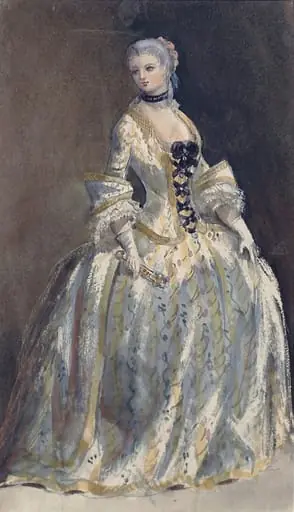 A woman in mid-18th century dress
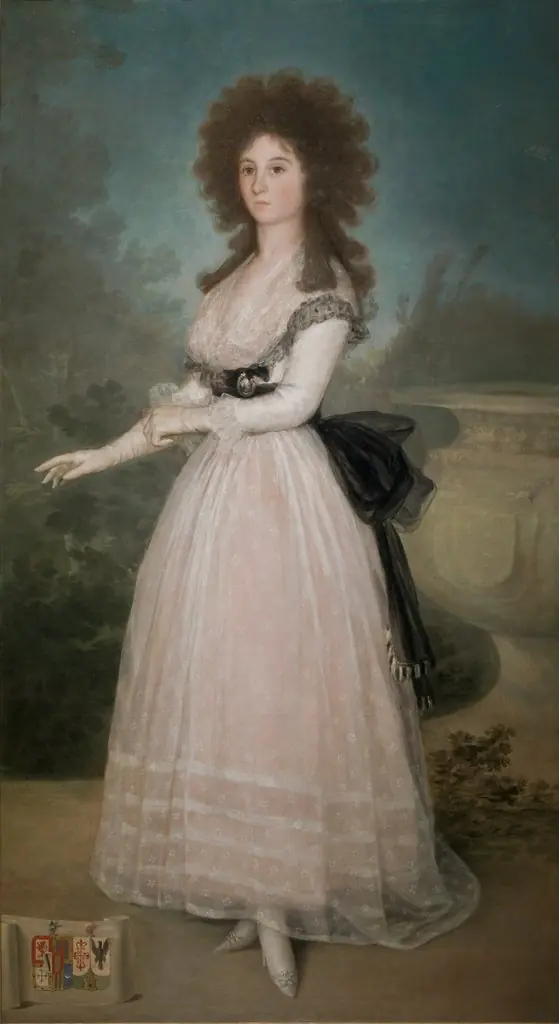 Tadea Arias de Enríquez
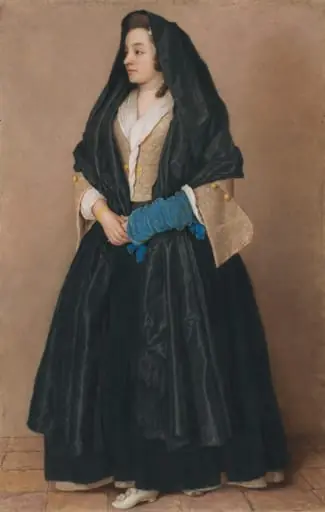 An Elegant Young Woman in Maltese Costume
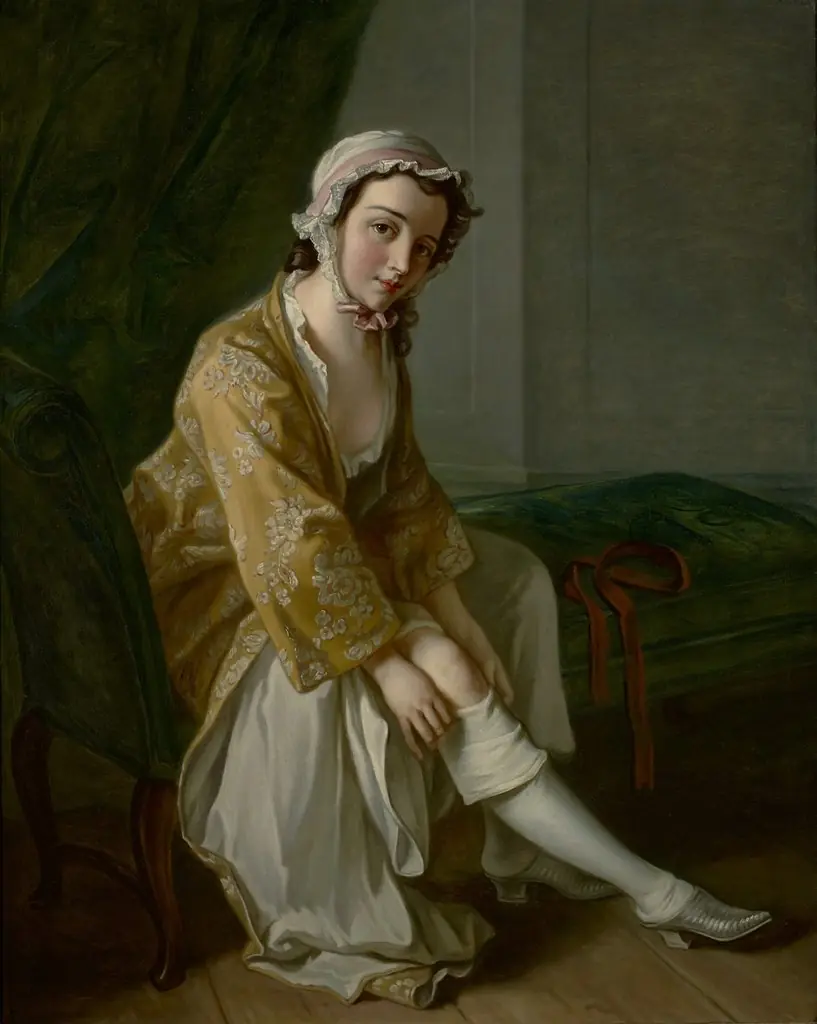 A Young Woman Pulling on Her Stocking
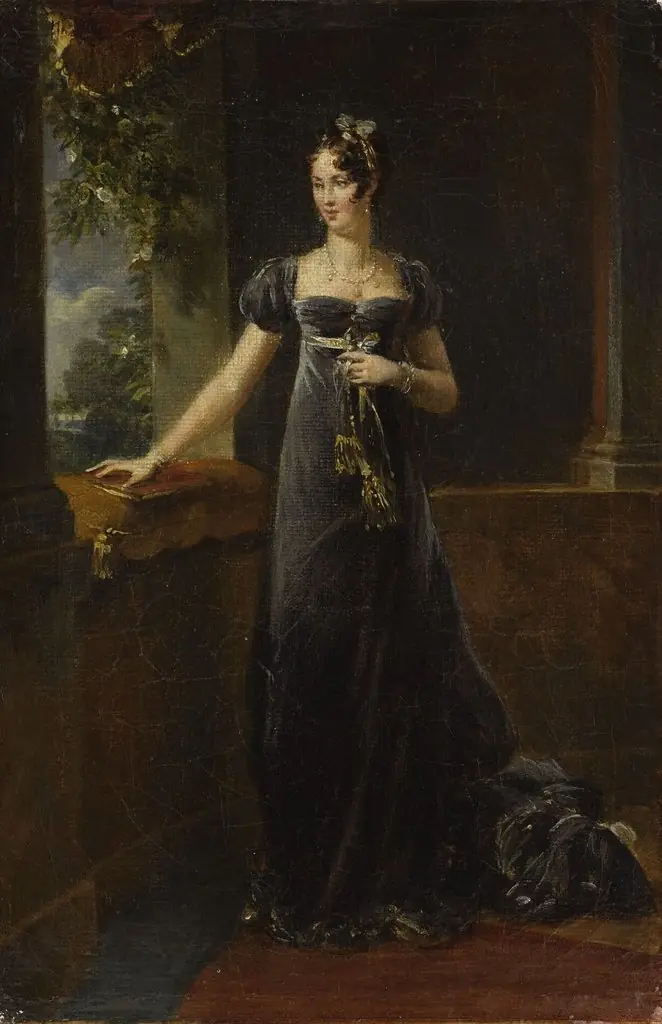 Auguste Amalia von Bayern, Vizekönigin von Italien
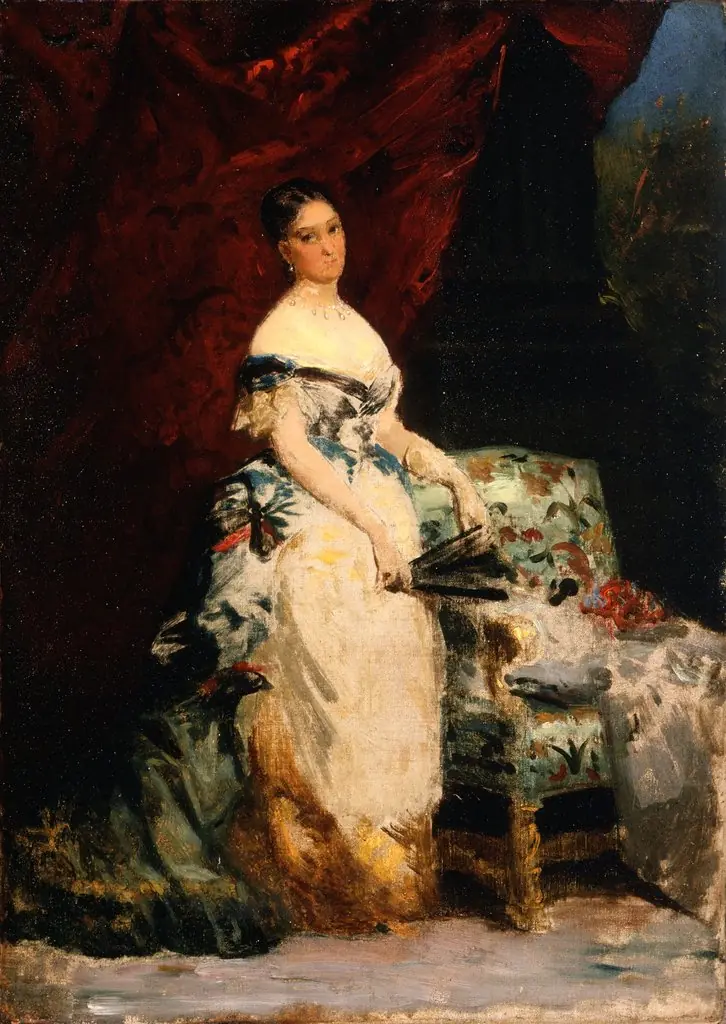 Portrait of Princess Brancaccio-Massimo
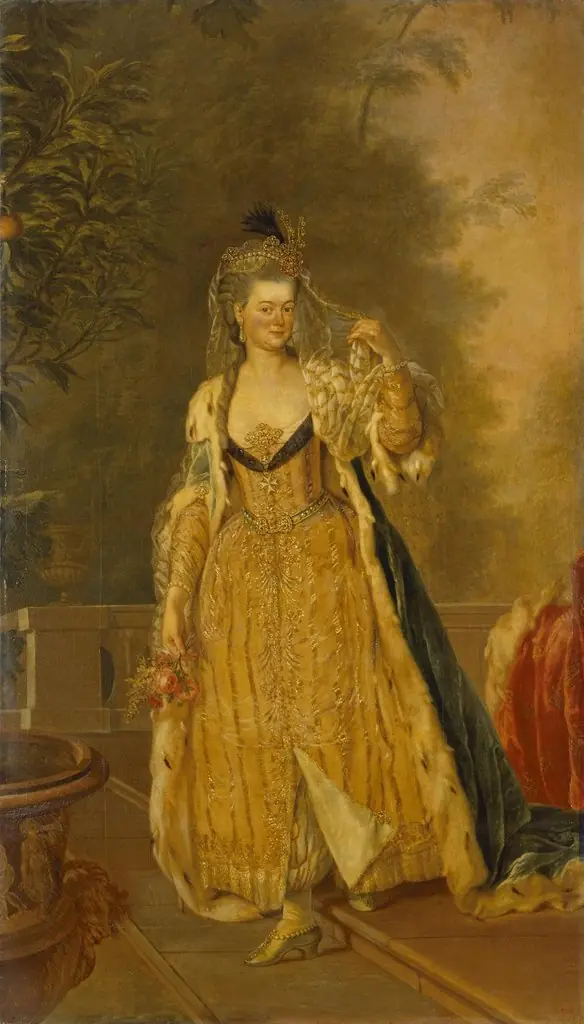 Portrait of Anna Elizabeth Louise Ferdinanda of Prussia
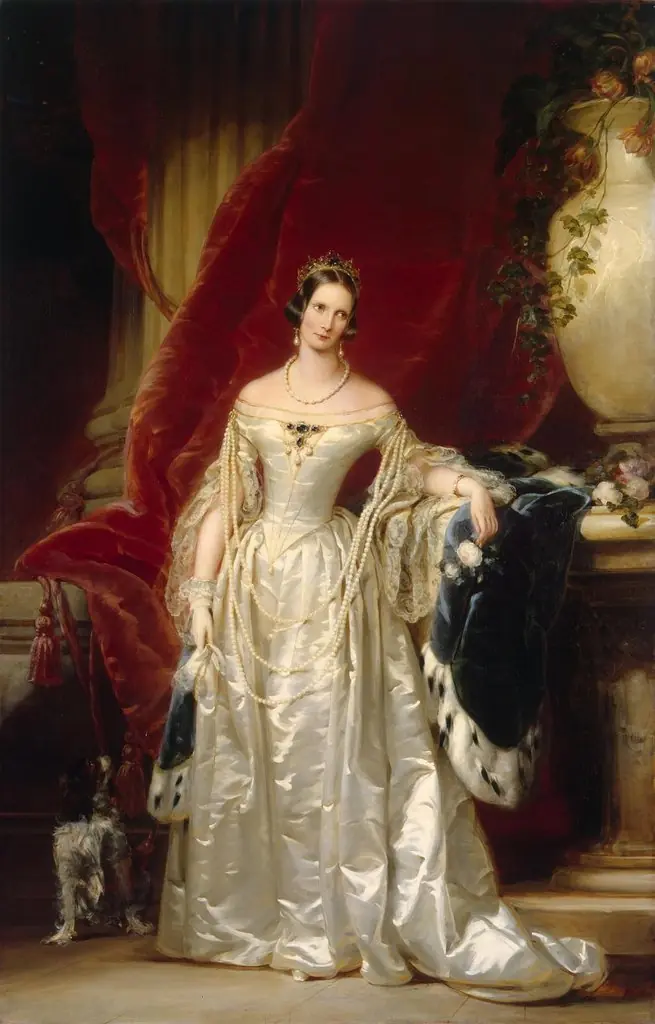 Portrait of Empress Alexandra Fyodorovna
 Woman Dressed in Yellow