Artwork
The Bar Gate, Southampton
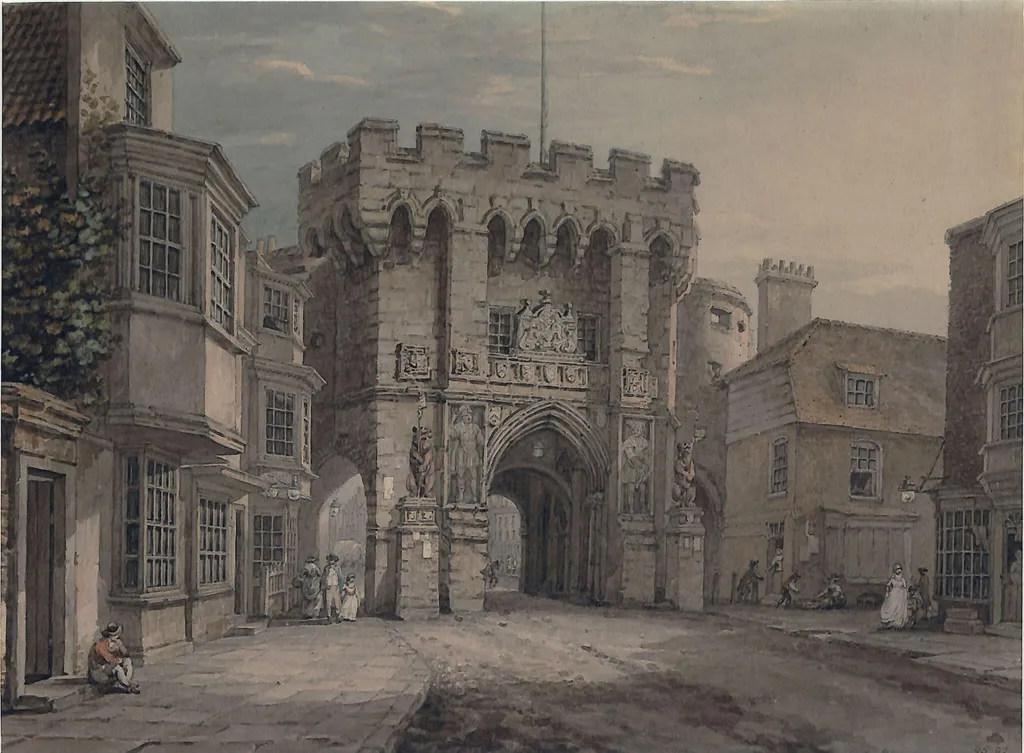
The Bar Gate, Southampton is a watercolor work on paper by the Rococo painting artist Thomas RA Stothard. It dates from 1765 and is held in the collection of the Victoria and Albert Museum. Thomas Stothard’s watercolour captures the Bar Gate in Southampton, a medieval structure once part of the town’s defensive walls.
About this work
Overview
The composition emphasizes stillness, with figures scattered along the adjacent buildings, suggesting everyday life unfolding around a historic threshold.
Thomas Stothard’s watercolour captures the Bar Gate in Southampton, a medieval structure once part of the town’s defensive walls. Executed in delicate washes, the work presents the gate as a quiet, weathered monument rather than a bustling landmark. The composition emphasizes stillness, with figures scattered along the adjacent buildings, suggesting everyday life unfolding around a historic threshold.
Subject & Meaning
The Bar Gate served as a controlled entry point to Southampton, likely marking a boundary between urban and external spaces. Its carved heraldry and arched form signify civic authority, while the modest human activity around it reflects daily routines in a port town. The absence of grandeur or drama shifts focus from spectacle to endurance — the gate as a silent witness to time and transit.
Technique & Style
Stothard employed transparent watercolour layers to suggest atmospheric depth and soft daylight. Subtle tonal gradations define the stone surfaces, while minimal linework outlines architectural details. The palette is restrained — muted ochres, greys, and pale greens — enhancing the sense of quiet antiquity. The brushwork avoids theatricality, aligning with early 19th-century tendencies toward observational realism.
History & Provenance
The Bar Gate was demolished in the 1820s during urban expansion, making Stothard’s depiction a rare visual record of its appearance. Painted likely in the 1790s, the work predates its destruction by decades. Its survival offers insight into how local landmarks were documented before industrial modernization erased them from the landscape.
Context
Created during the rise of Romanticism, the painting reflects a growing interest in historical architecture and vernacular scenes. Unlike grand historical narratives, Stothard’s focus on a modest civic structure aligns with a broader cultural shift toward valuing local heritage and the poetry of decay. The work resonates with contemporaneous antiquarian efforts to preserve visual records of vanishing medieval structures.
Legacy
Though not widely exhibited, the watercolour remains a valuable document of Southampton’s pre-industrial urban fabric. It contributes to regional art history by illustrating how topographical accuracy and quiet observation coexisted in early Romantic landscape practice. Its preservation aids architectural historians in reconstructing lost civic features of medieval English towns.
Artist & collection
Artist
Thomas Stothard painted scenes in watercolor and print, working in England during the late 1700s and early 1800s.

 Untitled
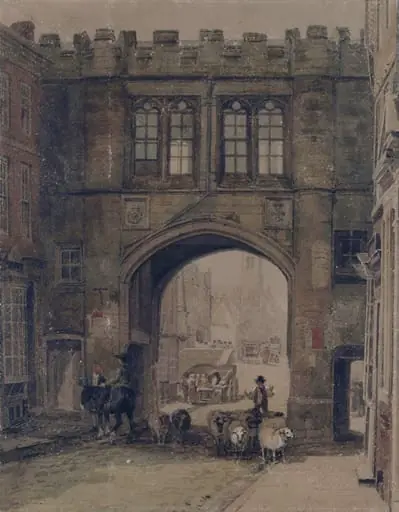 The Stonebrow : Gateway at Lincoln
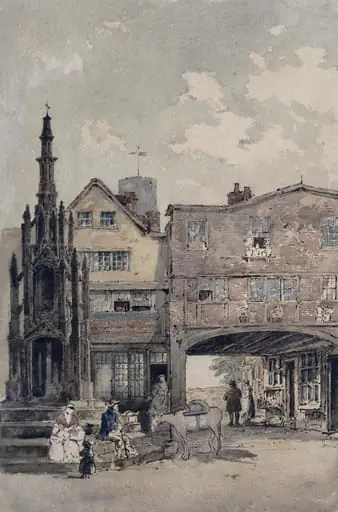 The Butter-Cross, Winchester
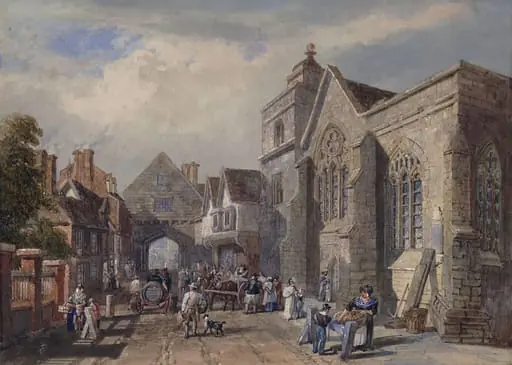 St. Nicholas Church and the College Gateway, Rochester
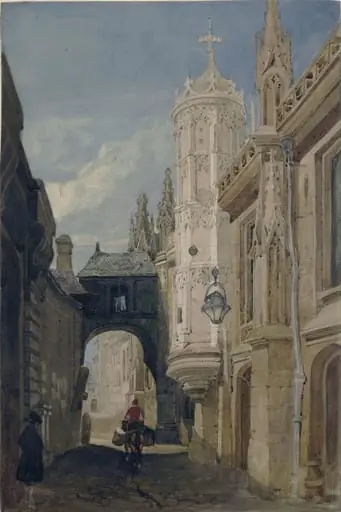 The Palais de Justice and the Rue St Lo, Rouen
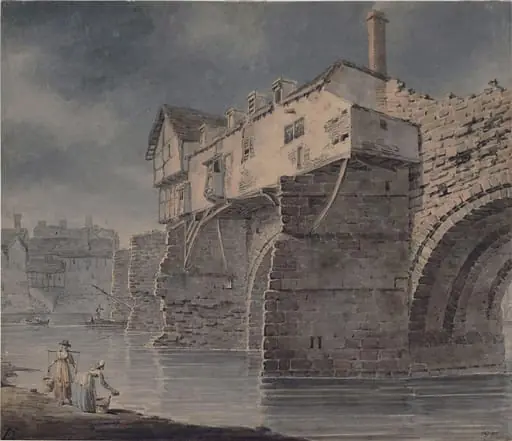 Bewdley, Worcestershire - Old Bridge with Houses
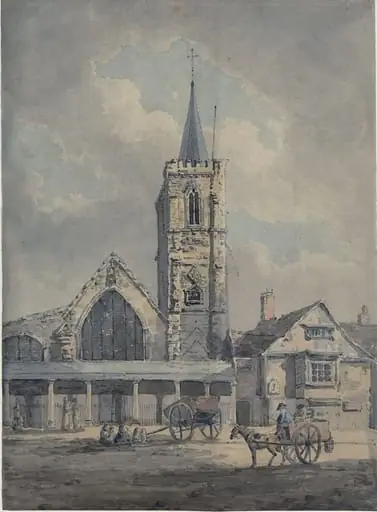 A Church in a Market Place
 The Old Council House, Salisbury
 Norman tower at Bury St. Edmunds
 View in the Rows, Chester