Artwork
Alphonse Legros Sketching
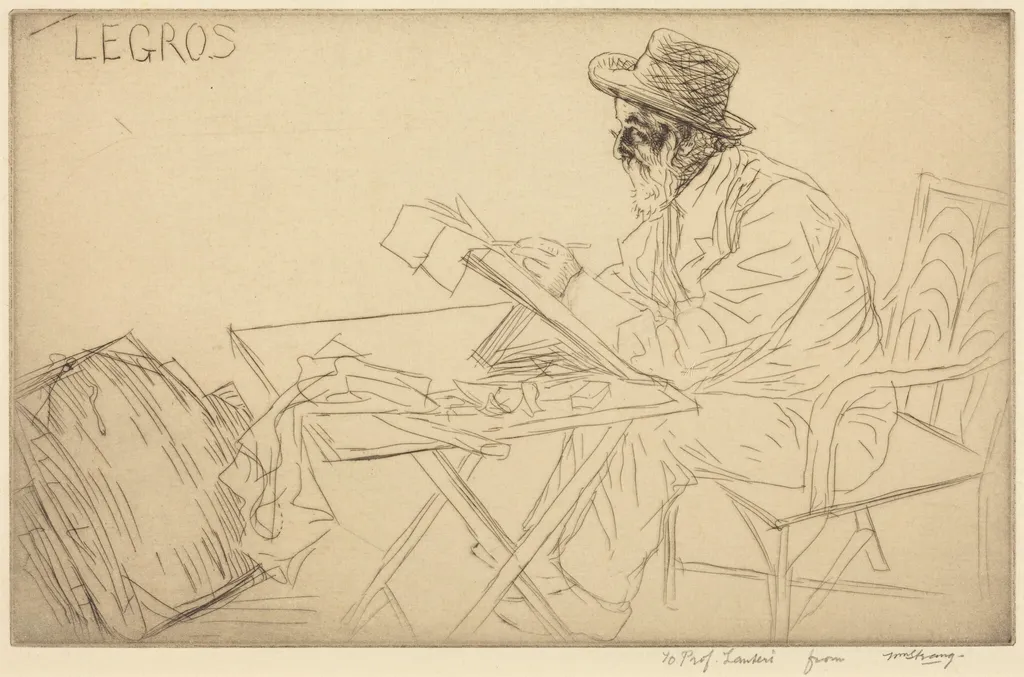
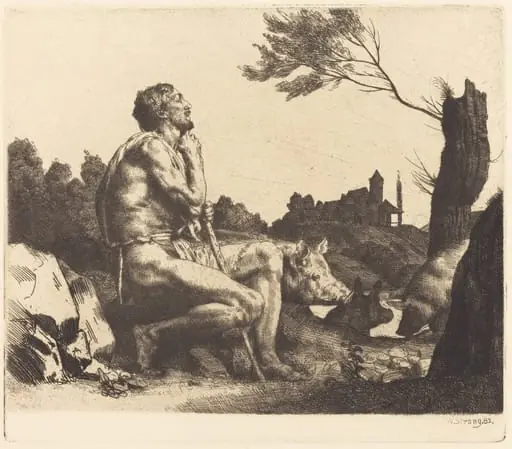
Alphonse Legros Sketching is an ink print by William Strang. It dates from 1913 and is held in the collection of the National Gallery of Art.
About this work
Overview
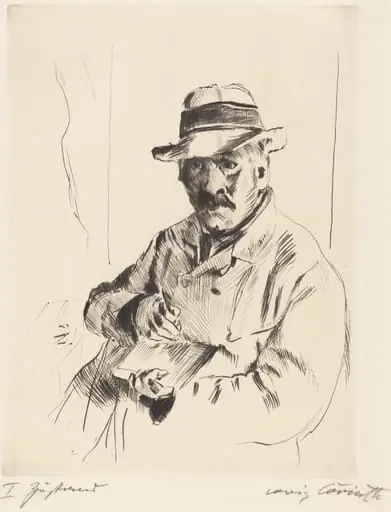
William Strang’s 1913 etching portrays Alphonse Legros, a French-born artist and educator, absorbed in his drawing.
William Strang’s 1913 etching portrays Alphonse Legros, a French-born artist and educator, absorbed in his drawing. Strang, known for his graphic work and portraiture, captured Legros in a moment of quiet focus. The scene is rendered in fine linear detail, characteristic of etching’s capacity for subtle tonal variation. The composition centers on the act of creation, emphasizing the artist’s solitude and concentration.
Subject & Meaning
The subject, Alphonse Legros, is shown seated at a table, hat and coat still on, as if pausing between engagements. Papers litter the surface, suggesting ongoing work or accumulated studies. Strang presents him not as a celebrated figure but as a working artist—humble, attentive, immersed. The image honors the discipline of drawing, valuing process over public recognition.
Technique & Style
Strang employed etching to achieve fine gradations of light and shadow, using varied line density to model form and texture. The hat’s brim, the coat’s folds, and the scattered papers are rendered with precise, deliberate strokes. The background recedes into soft washes, directing attention to the figure’s posture and the table’s clutter. The medium’s intimacy aligns with the subject’s quiet demeanor.
History & Provenance
Created in 1913, the etching emerged during Strang’s mature period, when he was deeply engaged with printmaking and portraiture. It likely originated from direct observation, possibly during Legros’s time teaching in London. The work remained within Strang’s personal collection until his death, later entering institutional holdings through bequest or acquisition.
Context
In early 20th-century Britain, etching experienced a revival among artists seeking alternatives to mass-produced imagery. Strang and Legros were part of this circle, valuing handcrafted prints and the dignity of artistic labor. Legros, a former student of Delacroix and professor at Slade, embodied the transnational artistic exchange of the era, bridging French and British traditions.
Legacy
The etching endures as a quiet testament to the artist’s daily practice. It reflects Strang’s commitment to portraying fellow artists with restraint and authenticity. Unlike grand portraits, it avoids heroism, instead capturing the unglamorous rhythm of creative work. Its preservation in museum collections underscores its value as a document of artistic life in the early modern period.
Artist & collection

Artist
William Strang (13 February 1859 – 12 April 1921) was a Scottish painter and printmaker, notable for illustrating the works of Bunyan, Cervantes, Coleridge, Kipling, and others.

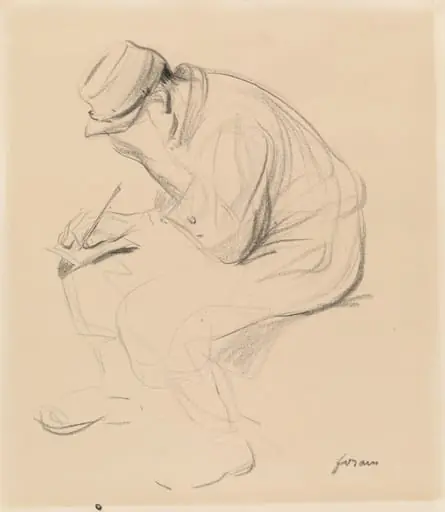 Le Poilu (French Soldier Writing Home)
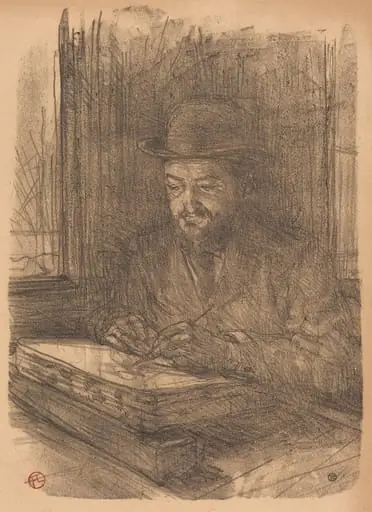 The Fine Printmaker Adolphe Albert (Le bon graveur - Adolphe Albert)
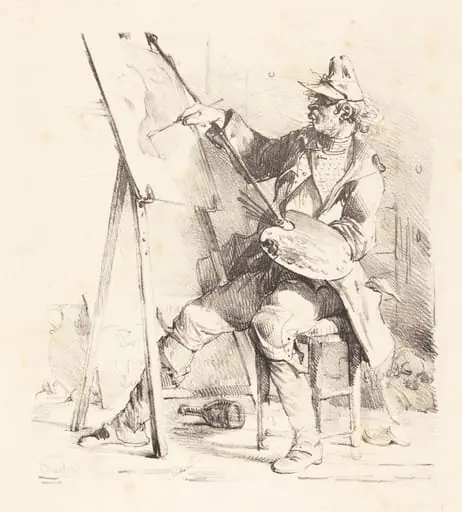 The Sign Painter (Le Peintre d'Enseignes)
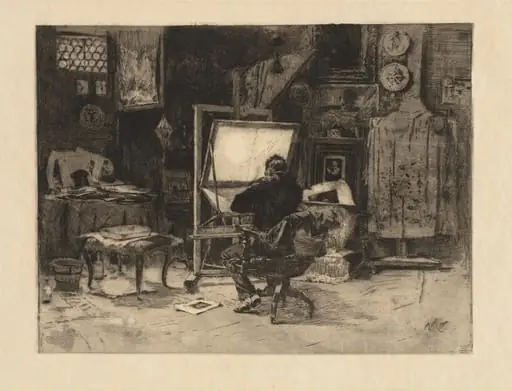 The Etcher
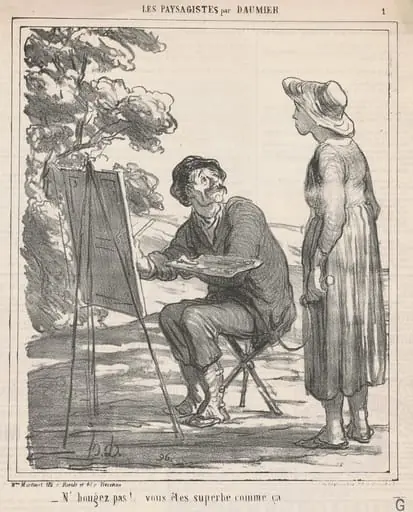 N'bougez pas! ...
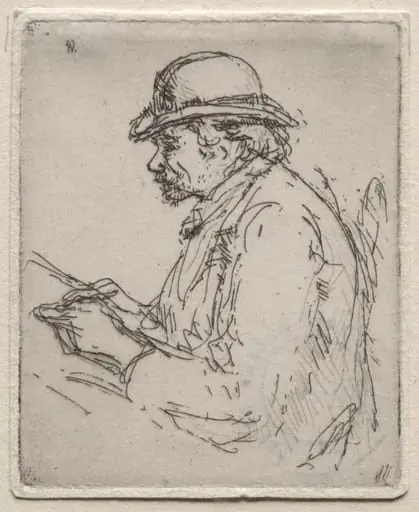 Paris: Café Artist
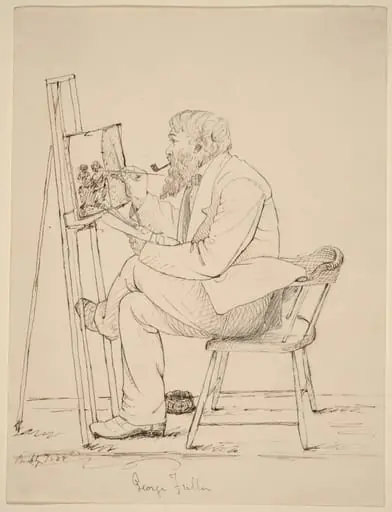 Sketching - George Fuller
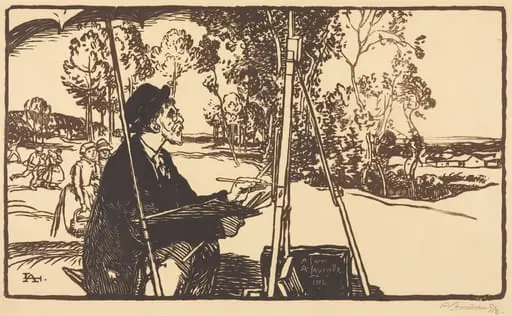 The Landscape Artist (Le paysagiste)
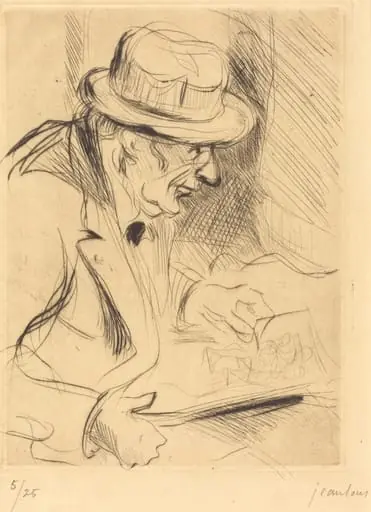 J.L. Forain
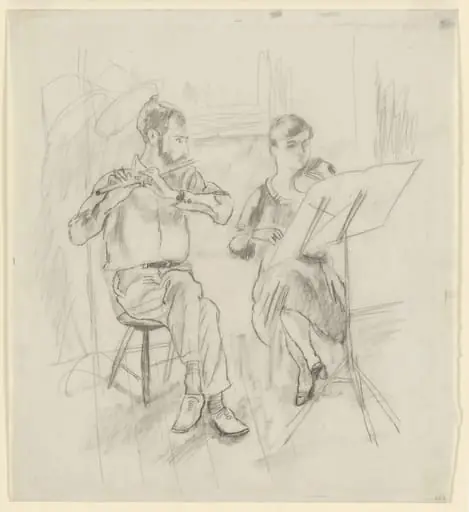 Untitled
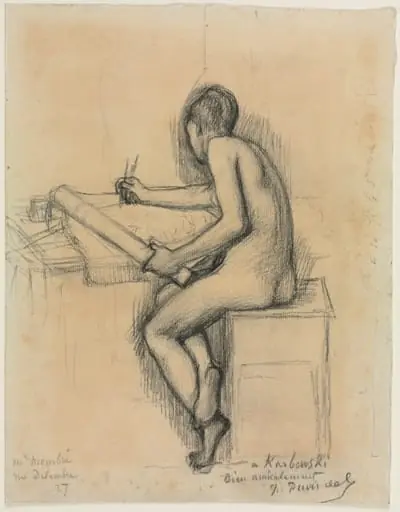 Study of a Seated Nude Female Model Drawing
 Selbstbildnis im Strohhut (Self-Portrait in a Straw Hat)