Artwork
Self-Portrait
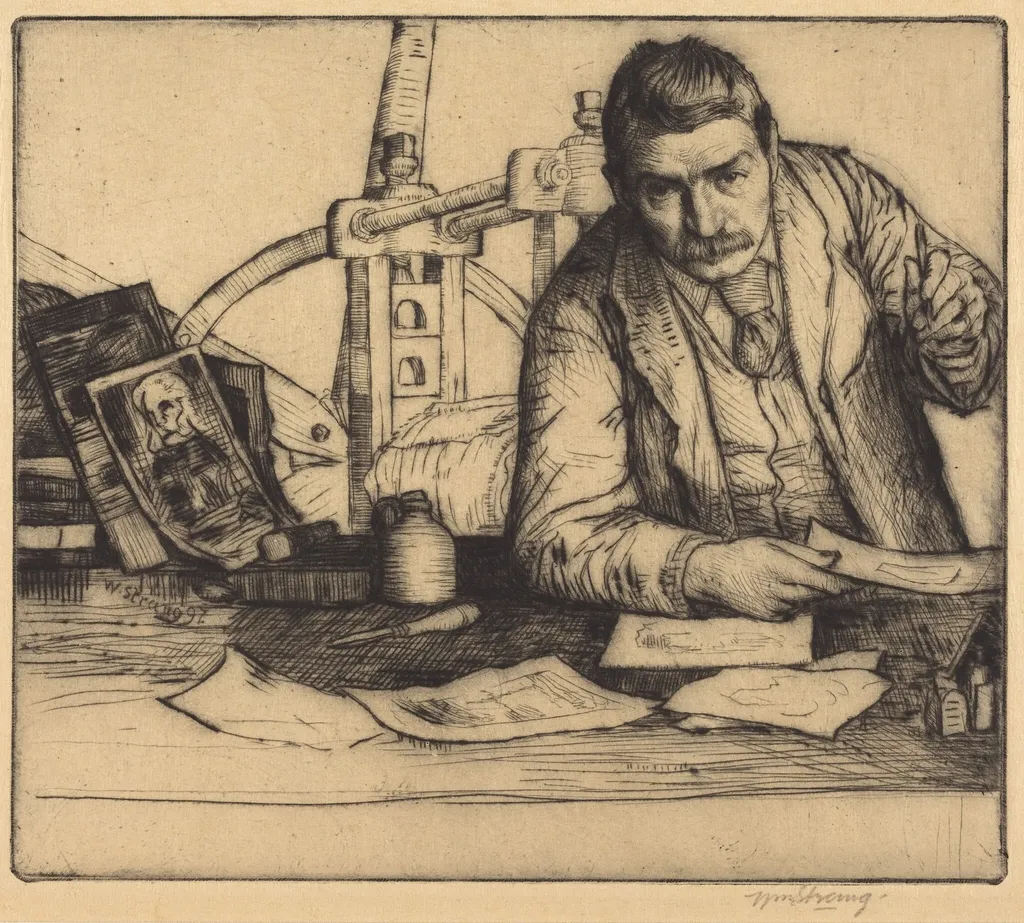
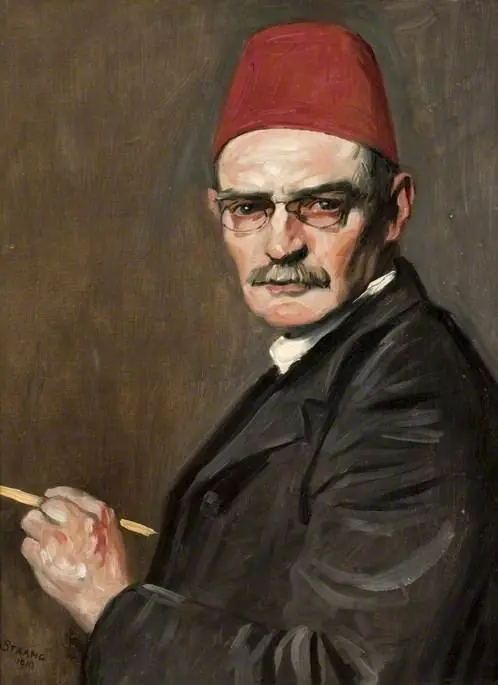
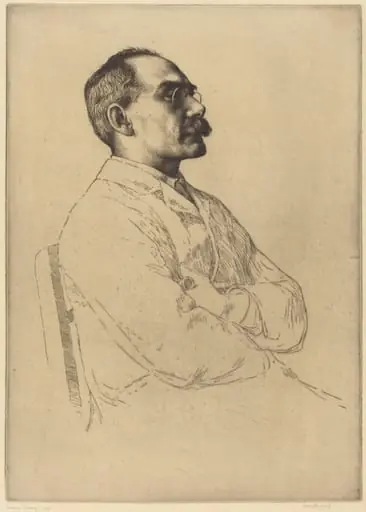
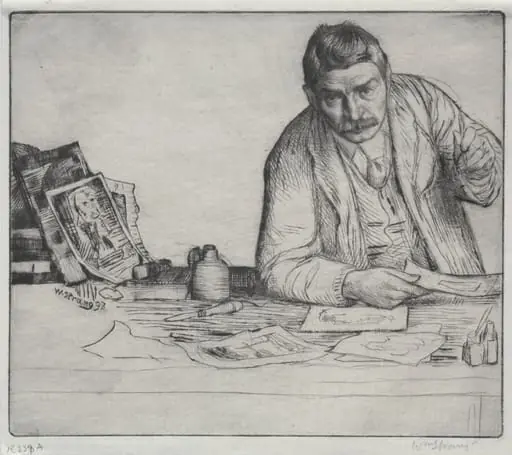
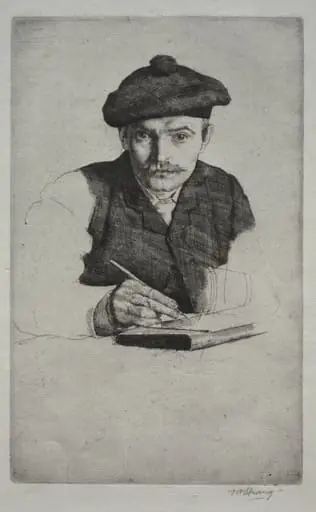
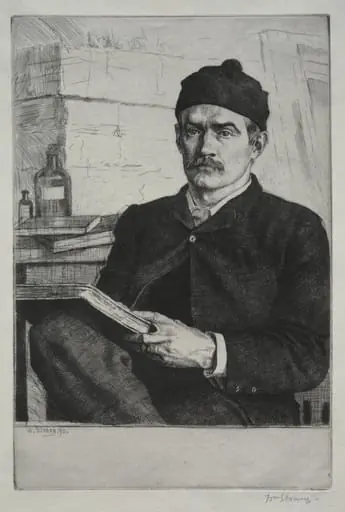
Self-Portrait is an ink print by the Impressionist artist William Strang. It dates from 1897 and is held in the collection of the National Gallery of Art.
About this work
Overview
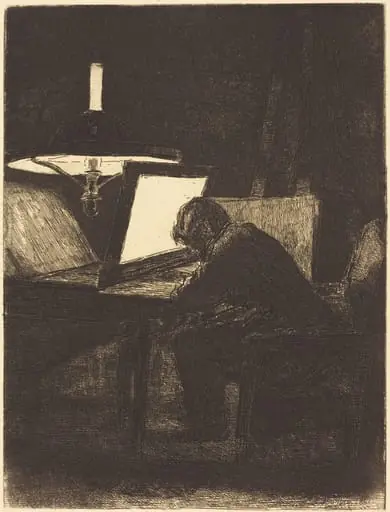
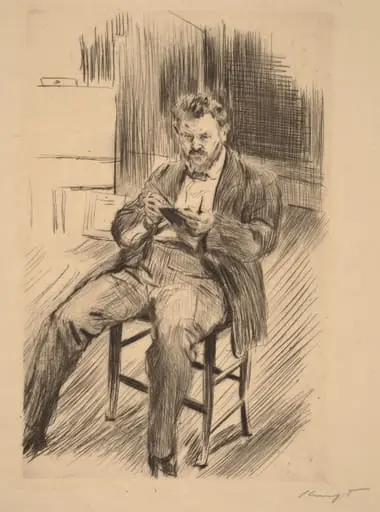
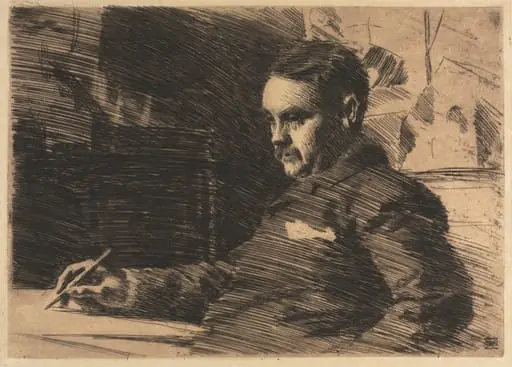
This 1897 drypoint print by Scottish artist William Strang presents a self-portrait, characterized by its textured, scratchy style and depiction of the artist in a cluttered workspace.
Subject & Meaning
The subject, Strang himself, is shown seated at a desk, appearing tired, and dressed in a coat and scarf. He holds a large pair of pliers, with a half-finished tower sketch behind him and a framed picture on the desk, suggesting a moment of pause amidst creative activity.
Technique & Style
Executed in drypoint, the print features rough, handmade lines that effectively convey light and shadow, consistent with late 19th-century printmaking techniques. The scratchy texture is inherent to the drypoint process, where the artist scratches the design onto a plate, resulting in distinctive, expressive lines.
History & Provenance
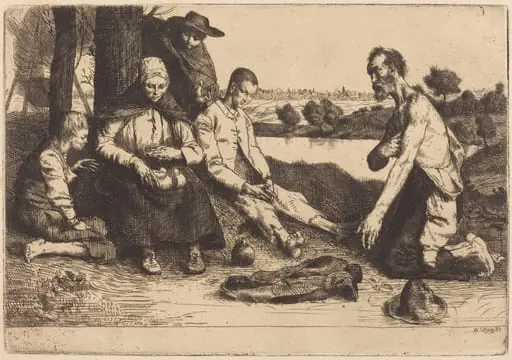
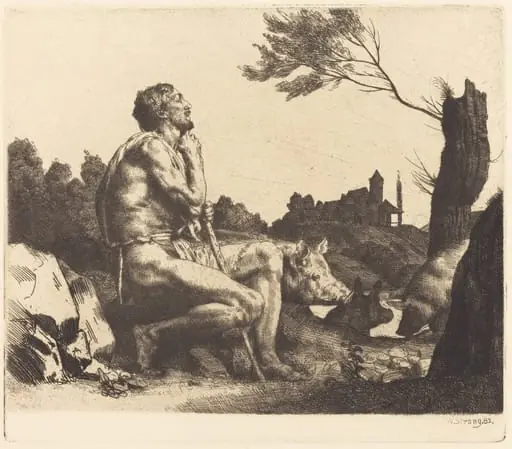
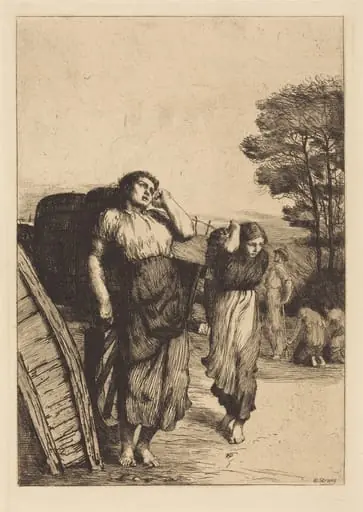
Created in 1897, this self-portrait is part of Strang's broader oeuvre as a painter and printmaker, notably recognized for illustrating works by prominent authors such as Bunyan, Cervantes, and Kipling.
Context
The piece reflects the artistic practices of its time, both in technique and in the representation of the artist's personal workspace, offering a glimpse into the late 19th-century artistic environment.
Artist & collection

Artist
William Strang (13 February 1859 – 12 April 1921) was a Scottish painter and printmaker, notable for illustrating the works of Bunyan, Cervantes, Coleridge, Kipling, and others.