Artwork
La barque
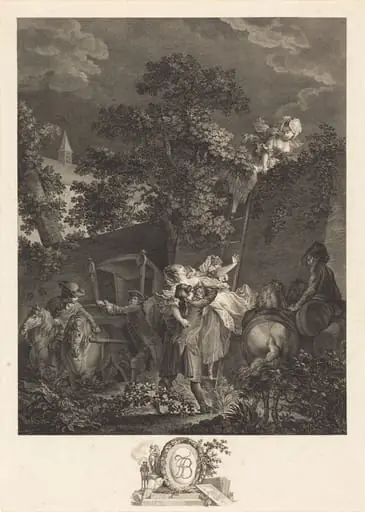
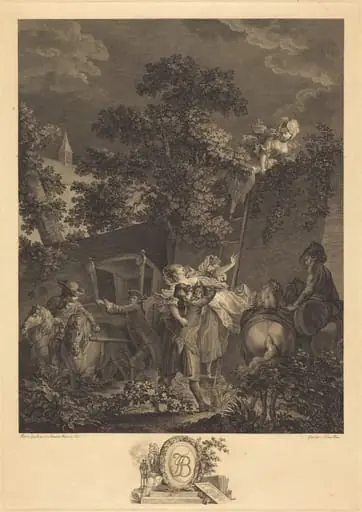
La barque is an ink print by the Baroque artist Noël Le Mire. It dates from 1762 and is held in the collection of the National Gallery of Art.
About this work
Overview
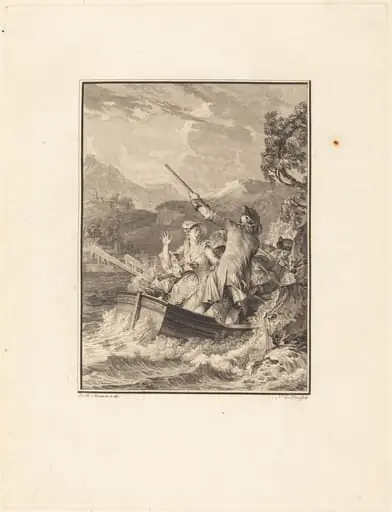
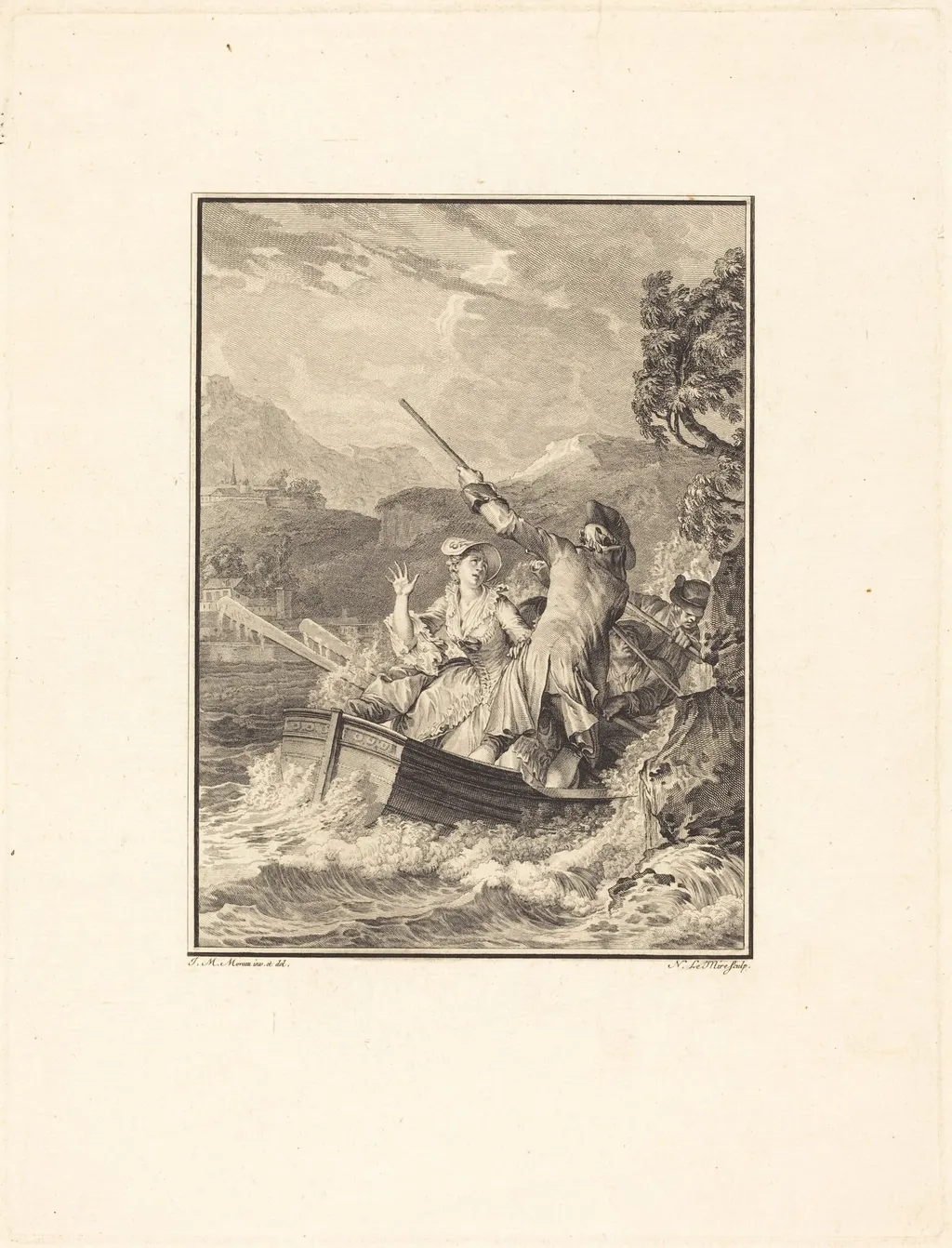
The composition centers on a woman in elaborate attire standing calmly at the prow, contrasting with the frantic movements of the crew behind her.
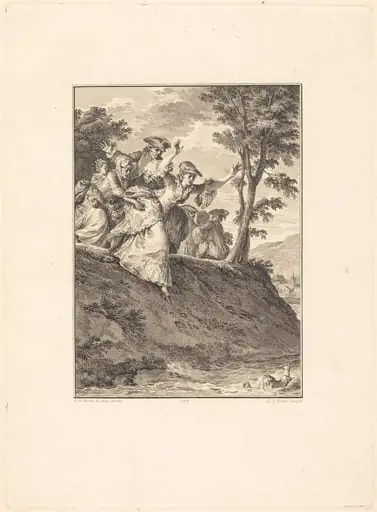
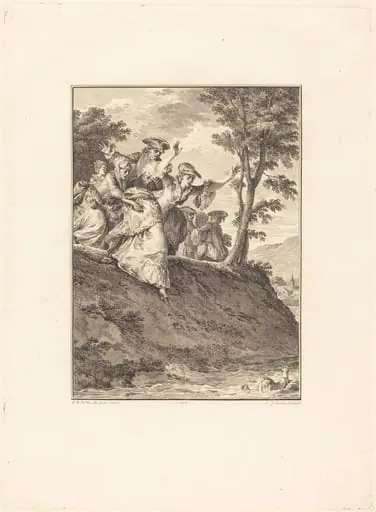
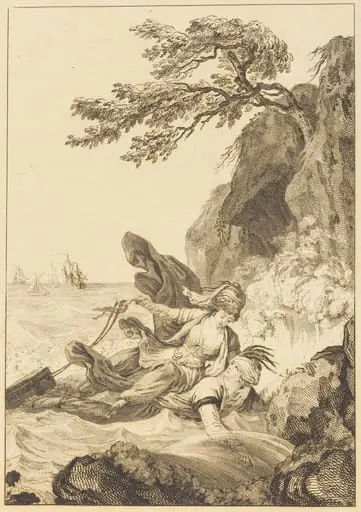
La barque is a 1762 print by French artist Noël Le Mire, executed in etching and engraving. It depicts a fragile boat caught in turbulent waters, with figures reacting to imminent danger. The composition centers on a woman in elaborate attire standing calmly at the prow, contrasting with the frantic movements of the crew behind her. A distant town and bridge anchor the scene in a recognizable landscape, grounding the drama in a specific, observable world.
Subject & Meaning
The print portrays a moment of crisis on water, where human vulnerability is underscored by the power of nature. The woman’s composed posture, despite the chaos, suggests resilience or resignation, possibly symbolizing stoicism amid adversity. The three men, engaged in desperate efforts to control the vessel, emphasize collective struggle. The town on the hill may represent safety or distant observation, heightening the sense of isolation in the moment.
Technique & Style
Le Mire employed fine, incised lines typical of engraving to render the churning water and tense musculature of the figures. The contrast between the sharp, controlled strokes of the boat and the jagged, overlapping lines of the waves creates visual tension. Delicate hatching defines fabric and facial expressions, while the distant landscape is rendered with lighter, broader strokes, guiding the viewer’s eye from immediate peril to the horizon.
History & Provenance
Created in 1762, La barque was produced during a period when French printmakers were refining narrative scenes for domestic and scholarly audiences. Though little is documented about its early ownership, it aligns with the era’s interest in maritime drama and moral allegory. The print likely circulated among collectors and artists, valued for its technical precision and emotional nuance rather than as a standalone commercial product.
Context
In mid-18th-century France, prints like La barque responded to growing public fascination with natural forces and human endurance, themes echoed in literature and painting. Le Mire’s work reflects the influence of earlier Dutch marine prints but adapts them to French sensibilities, emphasizing psychological presence over spectacle. The inclusion of fashionable dress and a recognizable landscape situates the scene within contemporary social and geographic realities.
Legacy
La barque remains a modest but notable example of French printmaking in the decades before the Revolution. It demonstrates how engraving could convey complex emotional narratives without color or large scale. While not widely reproduced in later centuries, it continues to be studied for its compositional balance and the quiet intensity of its central figure, offering insight into how crisis was visually mediated in pre-modern Europe.
Artist & collection