Artwork
The Blind Beggar
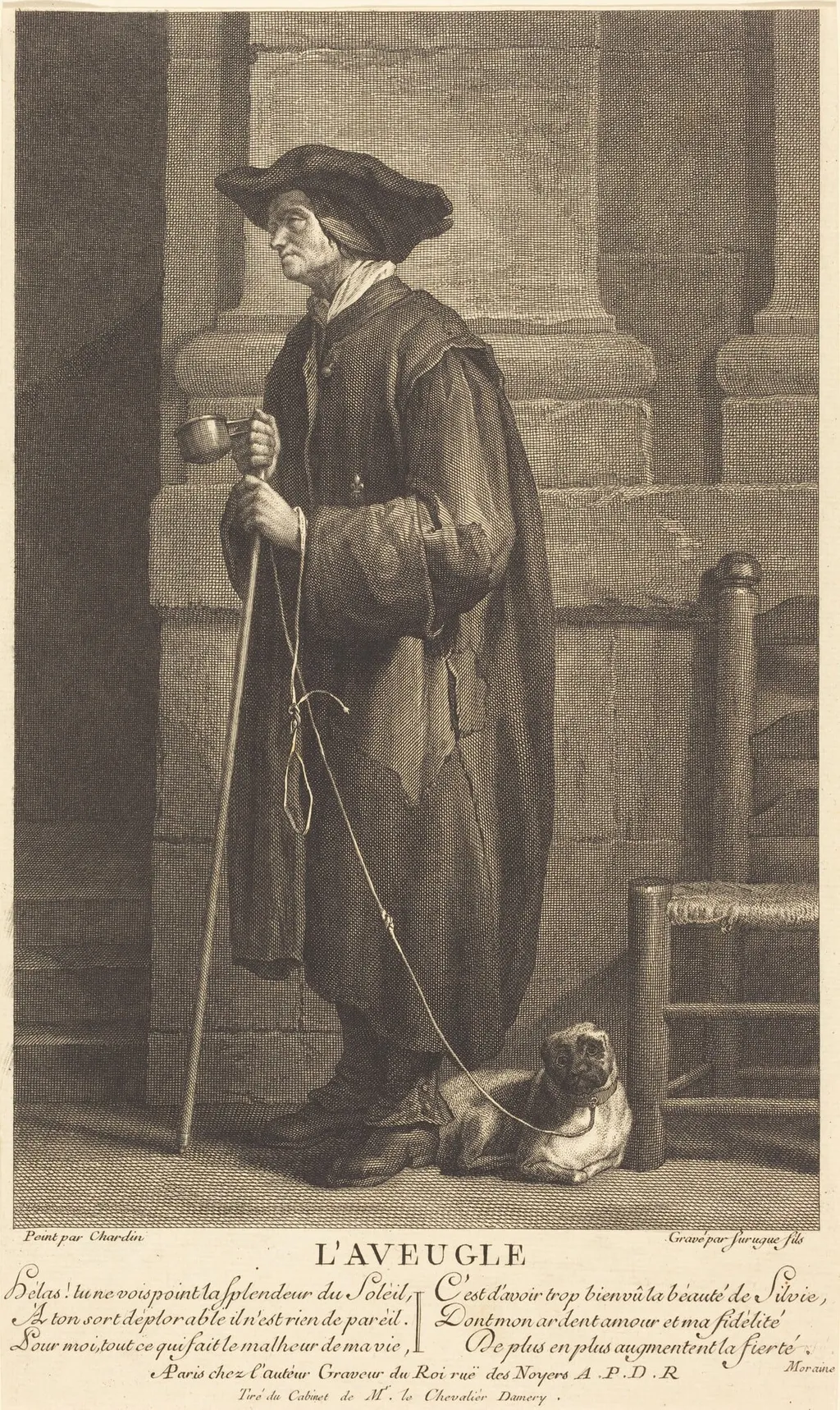
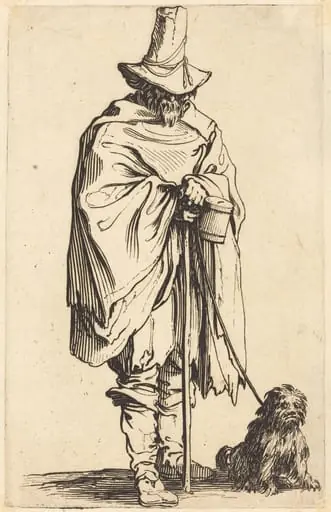
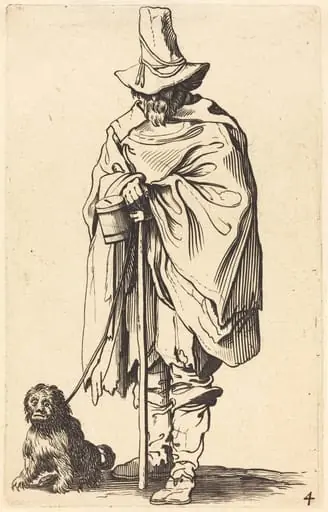
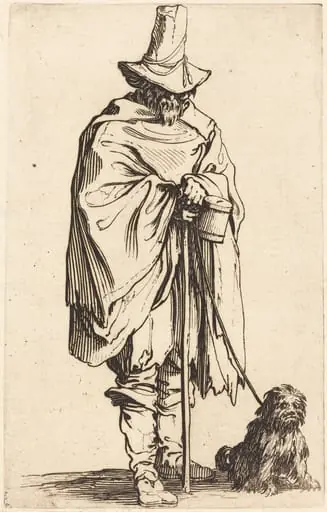
The Blind Beggar is an ink print by the Baroque artist Pierre Louis de Surugue. It dates from 1741 and is held in the collection of the National Gallery of Art.
About this work
Overview
Pierre Louis de Surugue’s 1741 engraving titled “The Blind Beggar” presents a solitary figure positioned within a modest interior. The composition centers on a man leaning on a cane, his posture suggesting both support and vulnerability, while a small leashed dog rests at his feet. The work is executed in fine line work characteristic of eighteenth‑century printmaking.
Subject & Meaning
The central figure is identified as a beggar who has lost his sight, a condition implied by the title and his reliance on a cane. His grave expression, the modest coat, and the small bag he holds for alms convey the hardships of poverty and disability in the period, inviting contemplation of social marginalization.
Technique & Style
Surugue employs precise, sharply cut lines to render textures such as the brim of the hat, the folds of the coat, and the fur of the dog. The engraving’s limited background—a dark wall, a chair, and scattered objects—focuses attention on the figure, while the controlled chiaroscuro achieved through line density creates a subtle sense of depth.
History & Provenance
Created in 1741, the print reflects the popularity of genre scenes in French engraving during the mid‑eighteenth century. Though specific ownership records are scarce, the work has been catalogued among Surugue’s oeuvre and appears in collections of European prints that document everyday life of the era.
Context
The image aligns with contemporary artistic interest in depicting lower‑class subjects, a trend seen in the works of artists such as Jean-Baptiste Greuze and the French Rococo tradition. Engravings like this served both as moralizing illustrations and as affordable images for a growing literate public.
Legacy
While not as widely reproduced as later social realist prints, “The Blind Beggar” remains a representative example of mid‑century French engraving, illustrating the technical skill and social awareness that characterized the medium’s development before the rise of lithography.
Artist & collection