Artwork
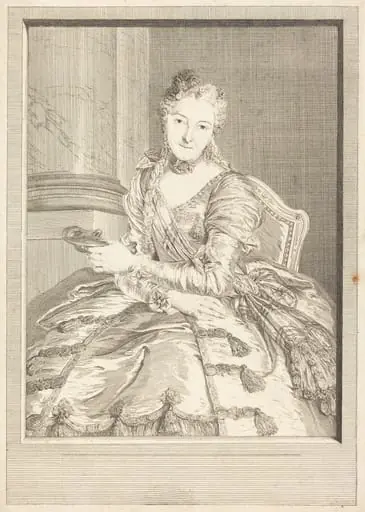
Mme. de M ... en habit de bal
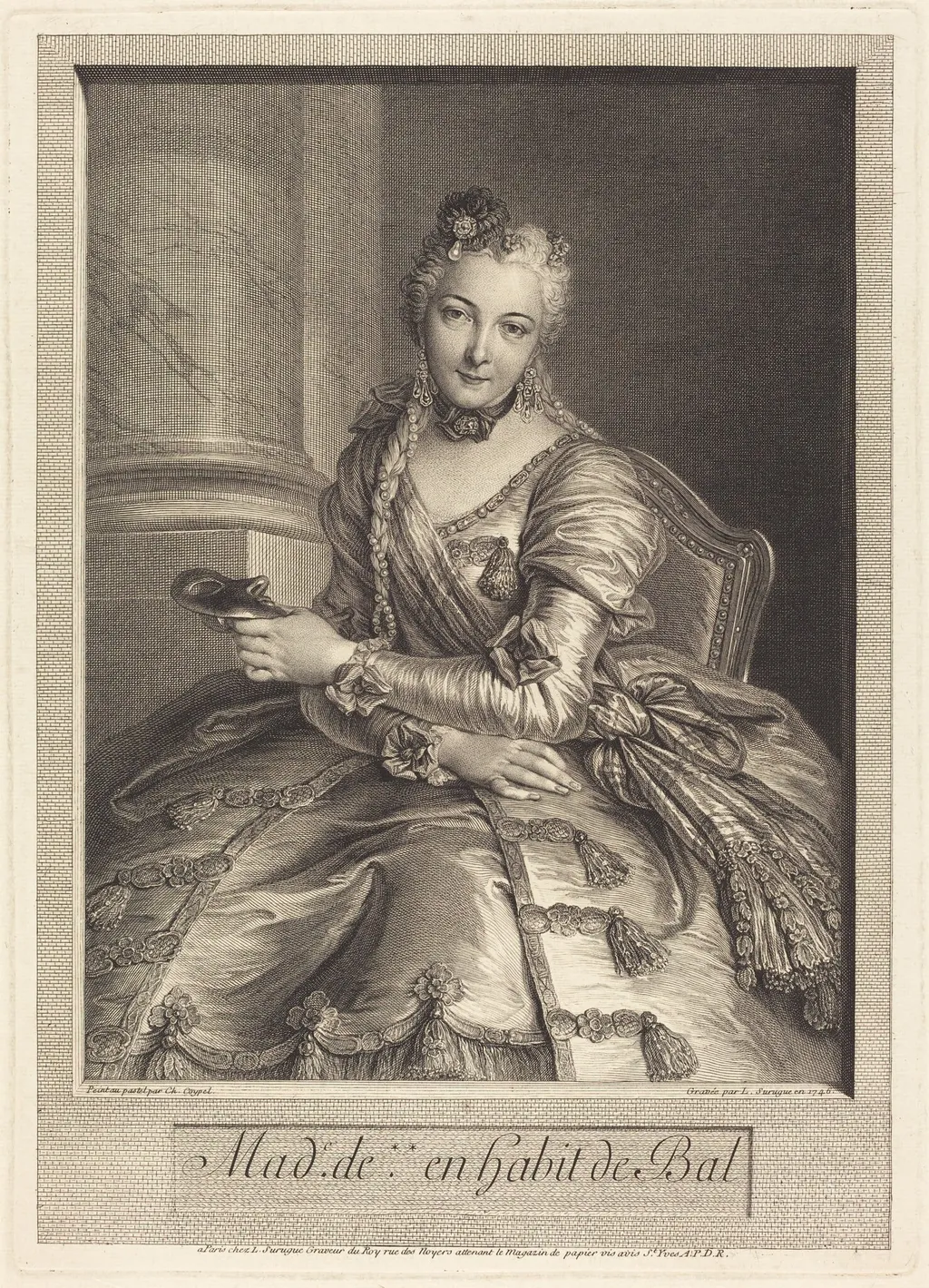
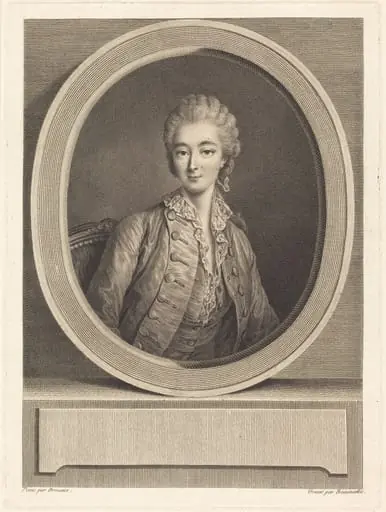
Mme. de M ... en habit de bal is an ink print by the Baroque artist Pierre Louis de Surugue. It dates from 1746 and is held in the collection of the National Gallery of Art.
About this work
Overview
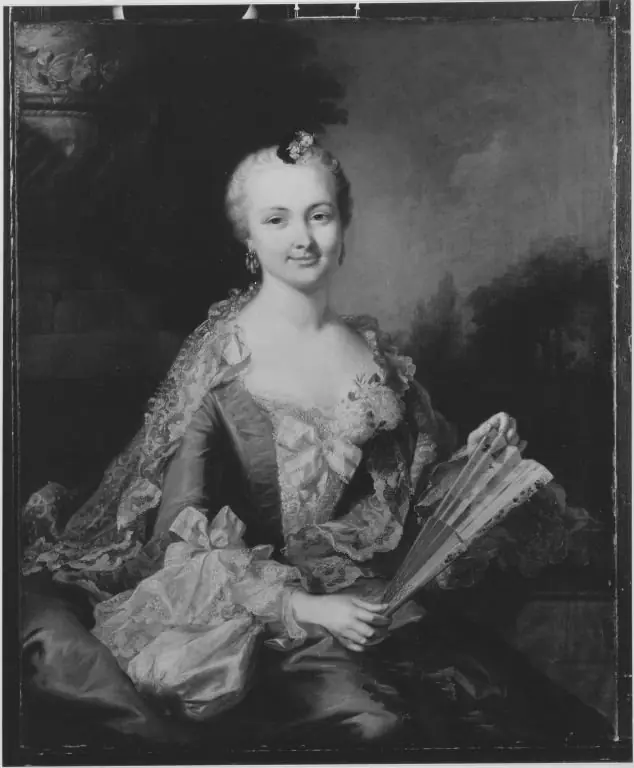
Pierre Louis de Surugue’s 1746 print, titled *Mme. de M … en habit de bal*, presents a solitary female sitter dressed for an evening affair. Executed on laid paper, the work measures the conventions of mid‑eighteenth‑century portraiture, focusing on the sitter’s attire and poise rather than narrative background.
Subject & Meaning
The composition depicts a woman seated in an elaborate ballroom costume, her posture dignified and composed. She holds a fan in one hand, a common accessory that signals refinement, while the other hand rests lightly on her lap. The plain backdrop isolates her, emphasizing the social status conveyed through dress, lace, and pearl ornamentation.
Technique & Style
Created as an etching and engraving, the image derives from a metal plate incised with fine lines that translate into delicate tonal variations on the paper. Surugue’s handling of line work renders the intricate ruffles, lace trims, and jewelry with clarity, while the contrast between dark outlines and lighter washes models the figure’s volume.
History & Provenance
The print was produced in 1746, a period when French printmakers frequently issued portrait series for aristocratic patrons. Although specific ownership records are scarce, the work survives in several museum collections, indicating its circulation among collectors of decorative portrait prints during the Enlightenment.
Context
In the mid‑1700s, portrait prints served both as personal mementos and as fashionable décor. Surugue’s choice to depict a solitary lady in formal attire reflects contemporary tastes for elegance and the growing market for affordable, reproducible images of the elite, complementing painted portraits that were limited to wealthier patrons.
Artist & collection