Artwork
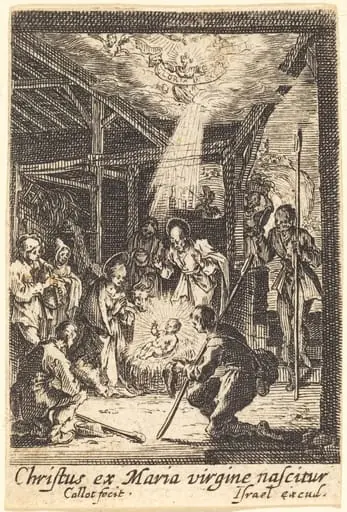
The Nativity
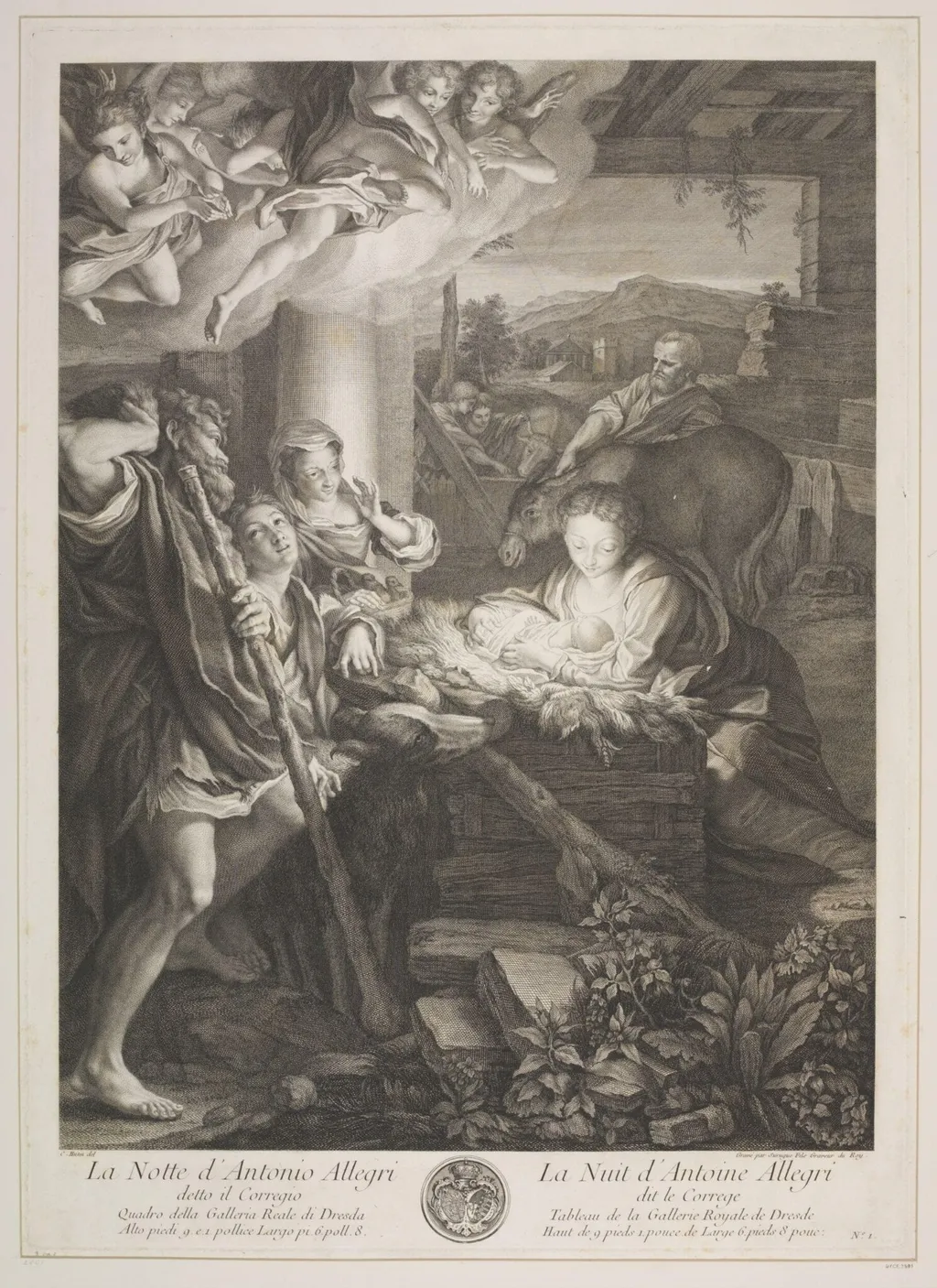
The Nativity is a print by Pierre Louis de Surugue. It dates from 1750 and is held in the collection of the Victoria and Albert Museum.
About this work
Overview
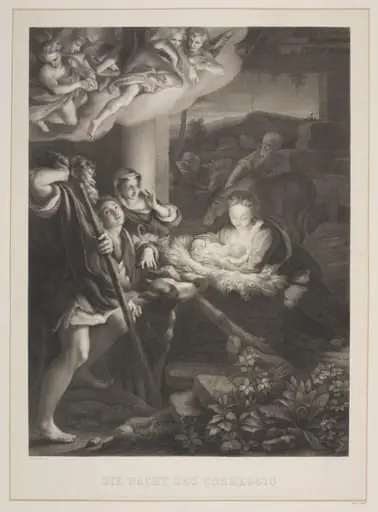
Pierre Louis de Surugue created this print in 1750 as a reproductive engraving after Antonio da Correggio’s lost painting known as *Die Nacht*. Executed on paper and marked with 'Surugue Fils,' the work translates Correggio’s nocturnal composition into the medium of print, capturing its emotional intensity through careful tonal contrasts and fine linework.
Subject & Meaning
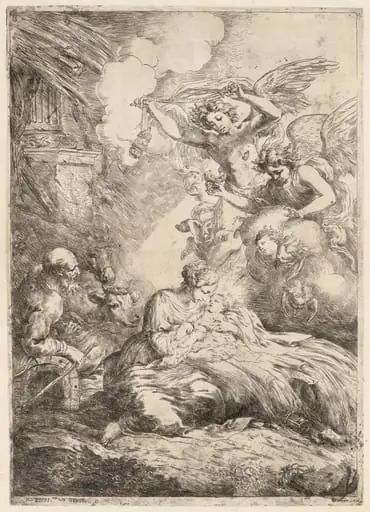
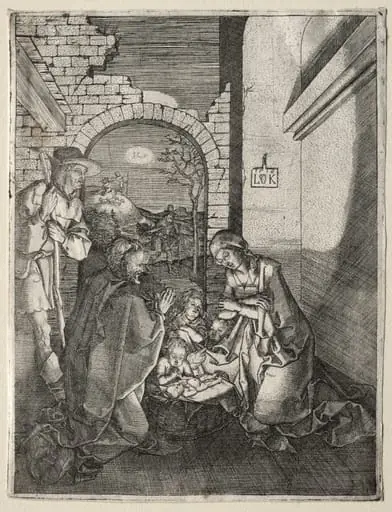
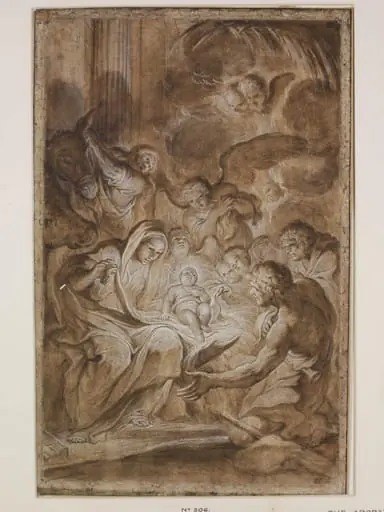
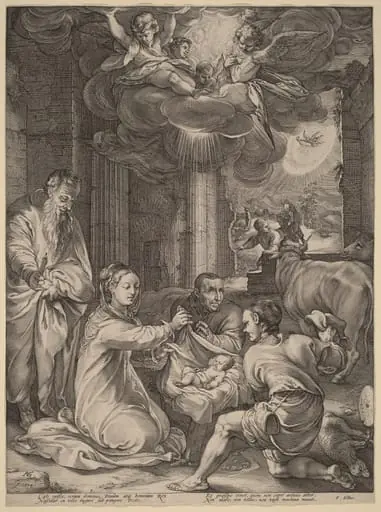
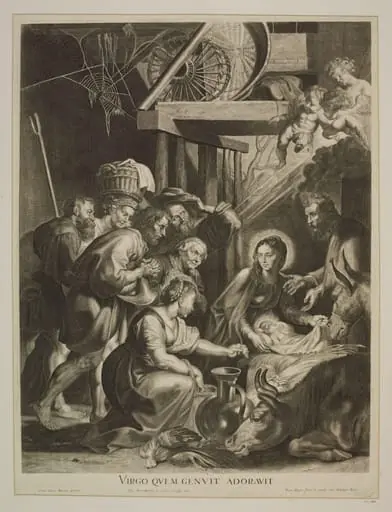
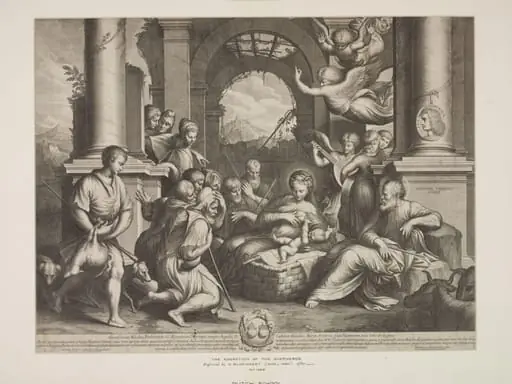
The scene depicts the birth of Christ in a stable at night, with the infant lying in a manger, attended by the Virgin Mary and Joseph. A donkey and an ox are present, while angels hover above, holding instruments as if in celestial song. Distant figures near a modest village suggest the presence of witnesses, grounding the divine event in a quiet, earthly setting.
Technique & Style
Surugue employed chiaroscuro to model forms through stark contrasts of light and shadow, emphasizing the faces and drapery to convey warmth and volume. Delicate hatching and cross-hatching define textures, while the luminous glow around the Christ child draws the eye. The composition’s verticality and layered depth enhance the sense of sacred stillness amid movement.
History & Provenance
The print derives from Correggio’s original painting, now lost, which was known through copies and descriptions. Surugue, active in mid-18th century France, specialized in reproductive engravings after Italian Old Masters. His version circulated among collectors and artists, preserving Correggio’s composition for audiences who could not access the original.
Context
In the 1750s, reproductive prints were vital for disseminating religious imagery and artistic styles across Europe. Surugue’s work reflects the enduring influence of Renaissance masters in French artistic circles, even as Rococo aesthetics dominated. This print served both devotional and educational purposes, bridging sacred tradition with contemporary print culture.
Legacy
Though not widely exhibited today, Surugue’s *The Nativity* remains a documented example of 18th-century engraving practice and the transmission of Italian Renaissance imagery. It testifies to the enduring appeal of Correggio’s nocturnal compositions and the role of print in sustaining artistic memory beyond the original’s physical survival.
Artist & collection