Artwork
Henrietta Maria, Queen of England
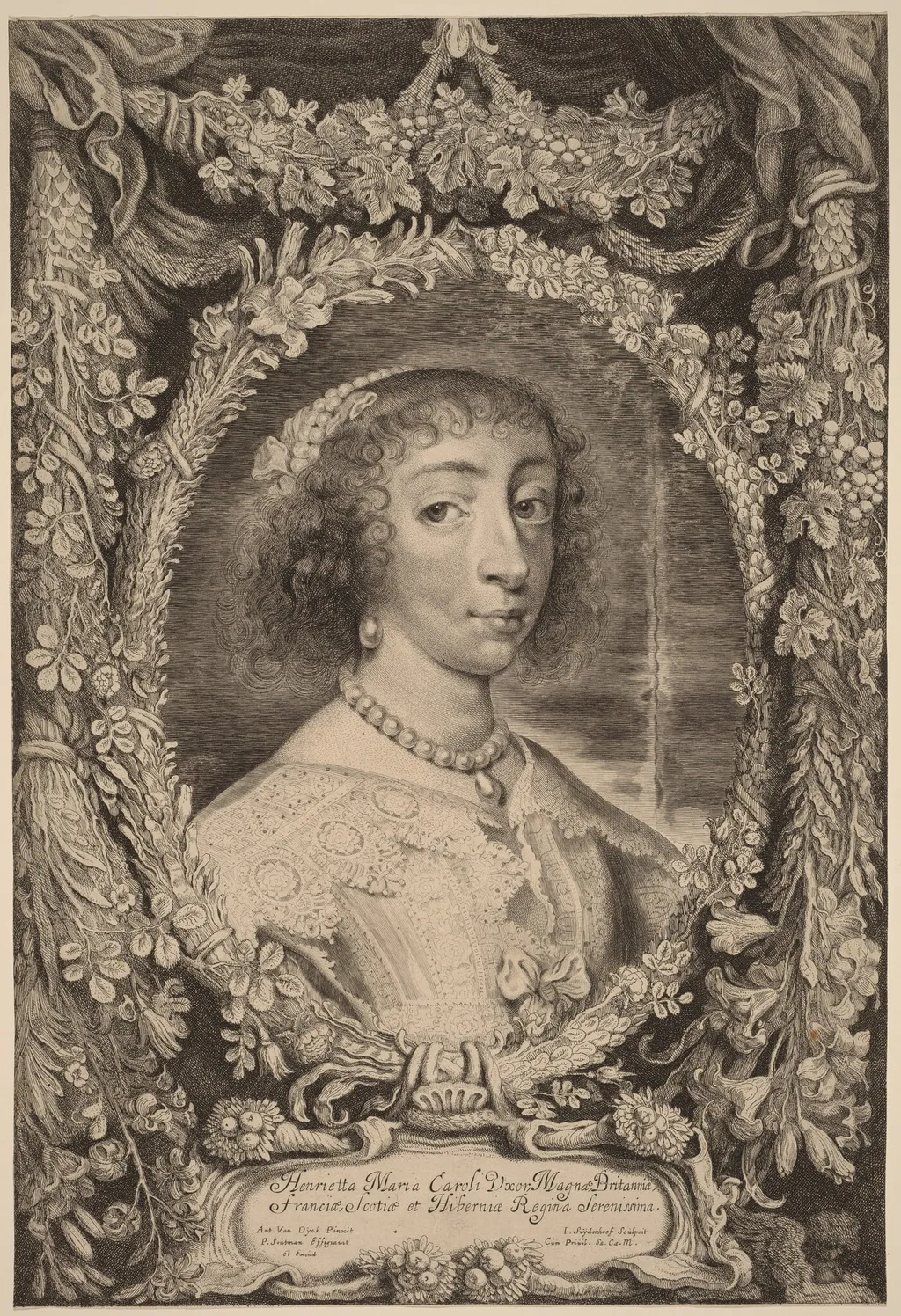
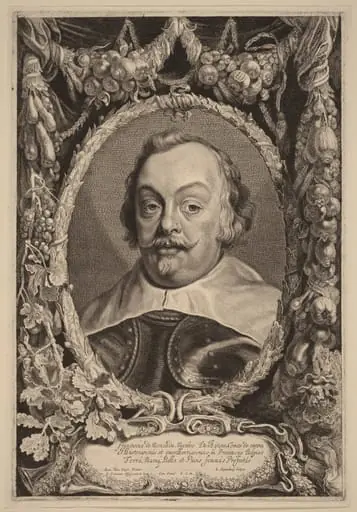
Henrietta Maria, Queen of England is an ink print by the Baroque artist Jonas Suyderhoff. It dates from 1650 and is held in the collection of the National Gallery of Art.
About this work
Overview
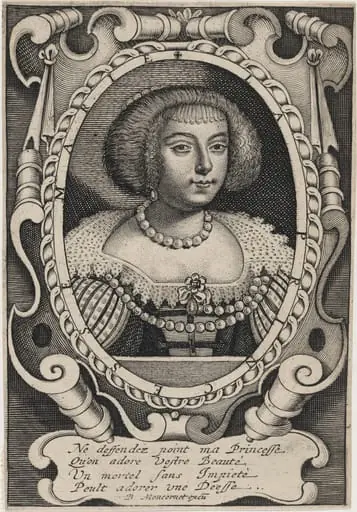
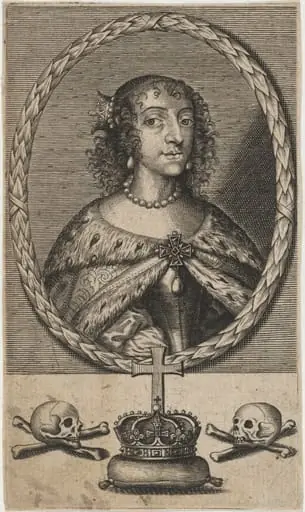
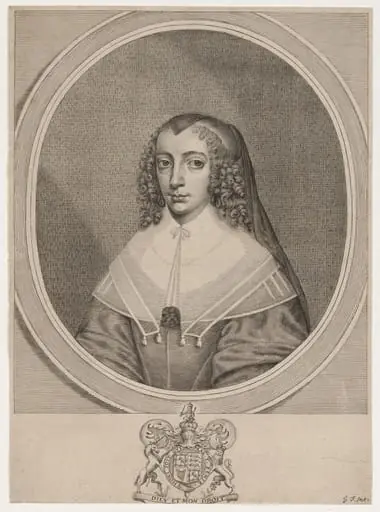
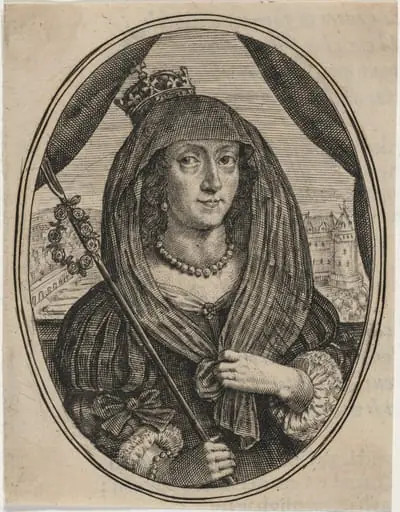
Created in 1650, this print presents Henrietta Maria, the queen consort of England, in a formal portrait rendered through etching and engraving. The image is rendered in monochrome, showing the monarch with a composed, solemn demeanor, framed by an ornamental border that encloses the figure and a caption beneath the portrait.
Subject & Meaning
The work depicts Henrietta Maria wearing a lace collar and a string of pearls, her hair neatly gathered, symbols of her royal status and the fashion of the mid‑seventeenth century. The serious expression conveys the dignity expected of a queen during a period marked by political upheaval in England.
Technique & Style
Executed by Jonas Suyderhoff, the print combines etching—where acid incises lines into a metal plate—with engraving, which deepens and refines details by hand. The decorative border, resembling carved metal with scrolls, ribbons, leaves and flowers, demonstrates the artist’s attention to intricate ornamental motifs typical of the era’s printmaking.
History & Provenance
The portrait is attributed to the German engraver Jonas Suyderhoff, active in the mid‑1600s. While the original plate’s ownership history is not fully documented, the print’s date and signature place it firmly within the post‑civil‑war period, reflecting contemporary interest in royal portraiture despite the queen’s exile.
Context
Henrietta Maria’s image circulated in England and the continent as a visual assertion of monarchical legitimacy after the execution of Charles I. Prints such as this served both as political propaganda and as collectible souvenirs for supporters of the royal cause.
Artist & collection