Artwork
Henrietta Maria, Queen of Charles I
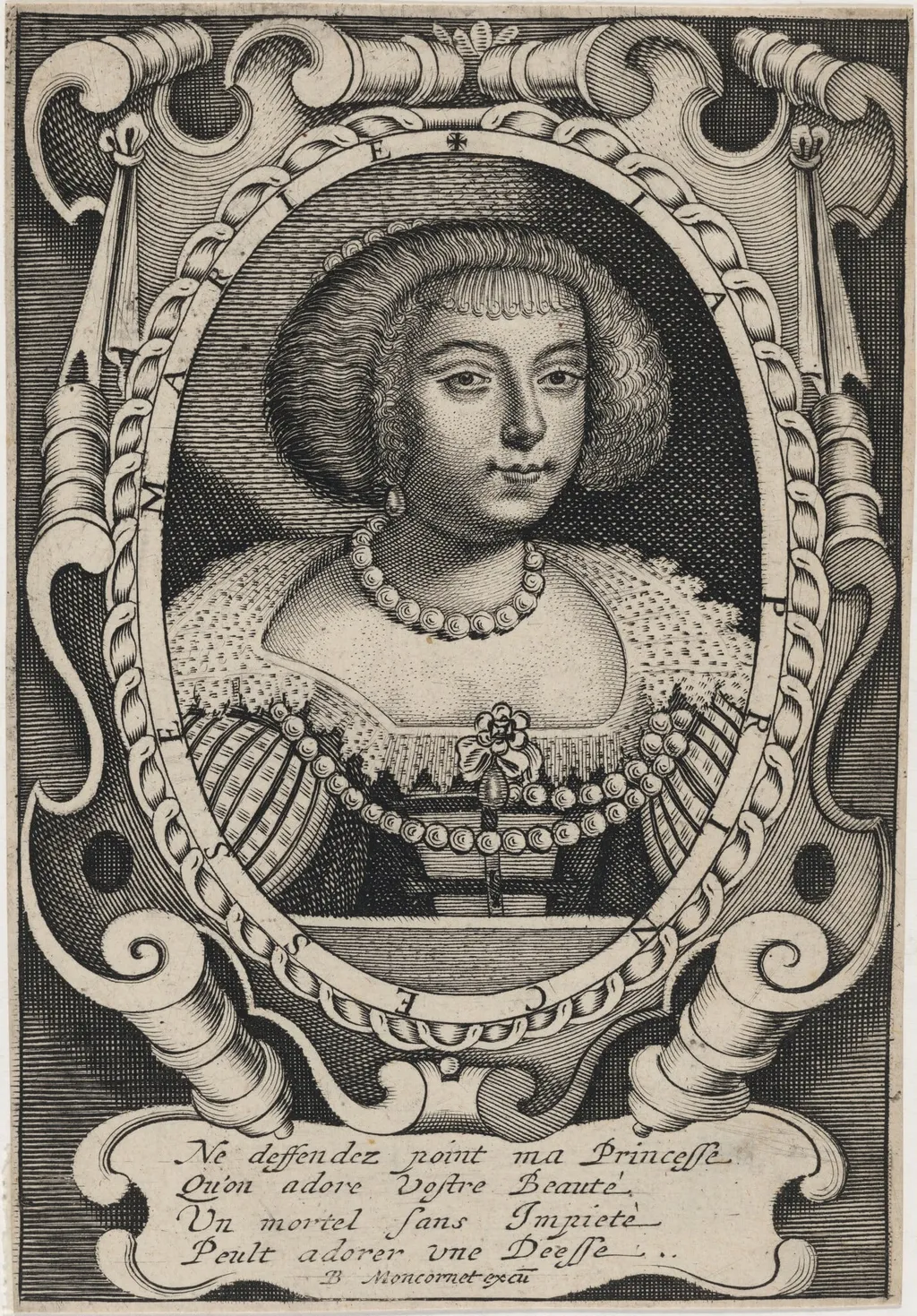
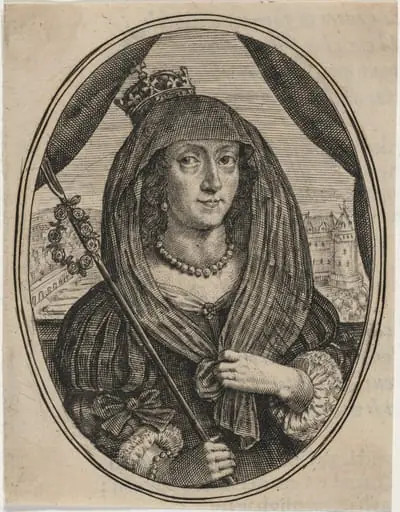
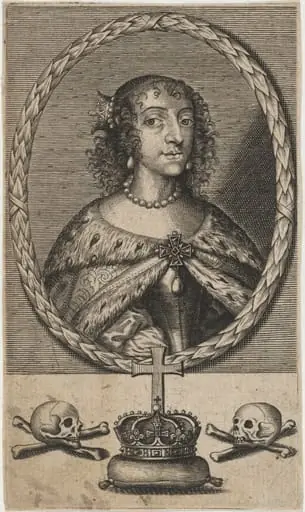
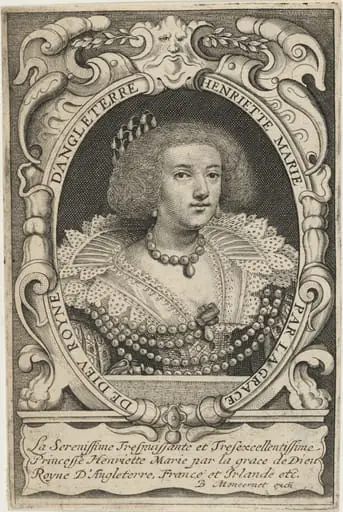
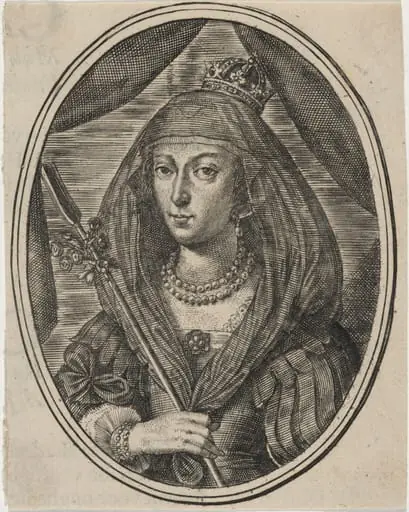
Henrietta Maria, Queen of Charles I is an ink print by the Baroque artist Balthasar Moncornet. It dates from 1634 and is held in the collection of the National Gallery of Art.
About this work
Overview
Executed in black ink on paper, the image is contained within an ornate oval border, typical of early modern print portraiture.
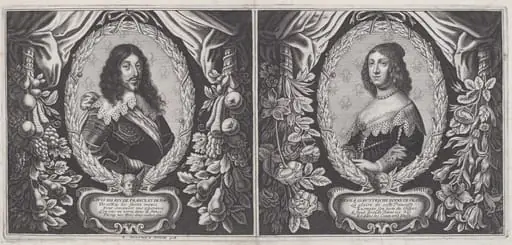
This 1634 engraving by Balthasar Moncornet presents Henrietta Maria, queen consort of England, in a formal portrait format. Executed in black ink on paper, the image is contained within an ornate oval border, typical of early modern print portraiture. Moncornet, a French artist known for his depictions of contemporary elites, used fine linear techniques to render her likeness with precision, aligning the work with the European tradition of printed likenesses for elite circulation.
Subject & Meaning
Henrietta Maria is portrayed with dignity, her face turned slightly to the viewer’s left, framed by a high ruffled collar and a delicate necklace. The absence of regalia suggests an emphasis on personal presence rather than political authority. Surrounding vines and scrollwork evoke classical ideals of beauty and continuity, while the accompanying French poem reinforces her status as a cultivated royal figure, blending personal virtue with aristocratic identity.
Technique & Style
Moncornet employed engraving—a method involving incised lines on a copper plate—to achieve fine detail and tonal gradation. Delicate cross-hatching and controlled line weight model the contours of her face and fabric, creating subtle volume. The decorative background, rich with swirling motifs, contrasts with the restrained clarity of her features, a hallmark of Baroque printmaking that balanced ornamentation with psychological presence.
History & Provenance
Created in Paris during Moncornet’s active years, the print was part of a series documenting prominent 17th-century figures. Though no early ownership records are widely documented, such prints were often collected by aristocrats and scholars across Europe. Its survival reflects the demand for accessible royal imagery, circulating beyond court circles to private collections and print dealers in France and England.
Context
In the 1630s, engraved portraits served as tools of political and cultural visibility, especially for queens who lacked formal power but wielded symbolic influence. Henrietta Maria’s image, disseminated in print, reinforced her role as a continental Catholic consort in Protestant England. Moncornet’s work fits within a broader trend of French artists documenting European nobility, bridging artistic practice and dynastic representation.
Legacy
The engraving remains a representative example of early Baroque print portraiture, illustrating how artists translated live presence into reproducible form. While Moncornet’s broader series is less studied today, this piece endures as evidence of the print’s role in shaping public perception of royalty. It contributes to the historical record of how visual culture mediated the image of monarchy in an age before photography.
Artist & collection
Artist
Balthasar Moncornet (1600, Rouen – 1668, Paris) was a French painter, engraver, and tapissier revered for his depictions of around 45 different prominent figures of the 17th century.