Artwork
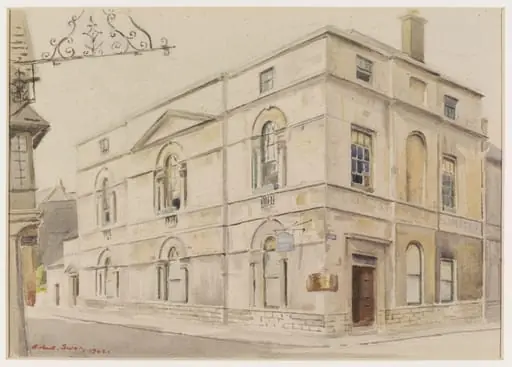
Wellesley House, Cirencester
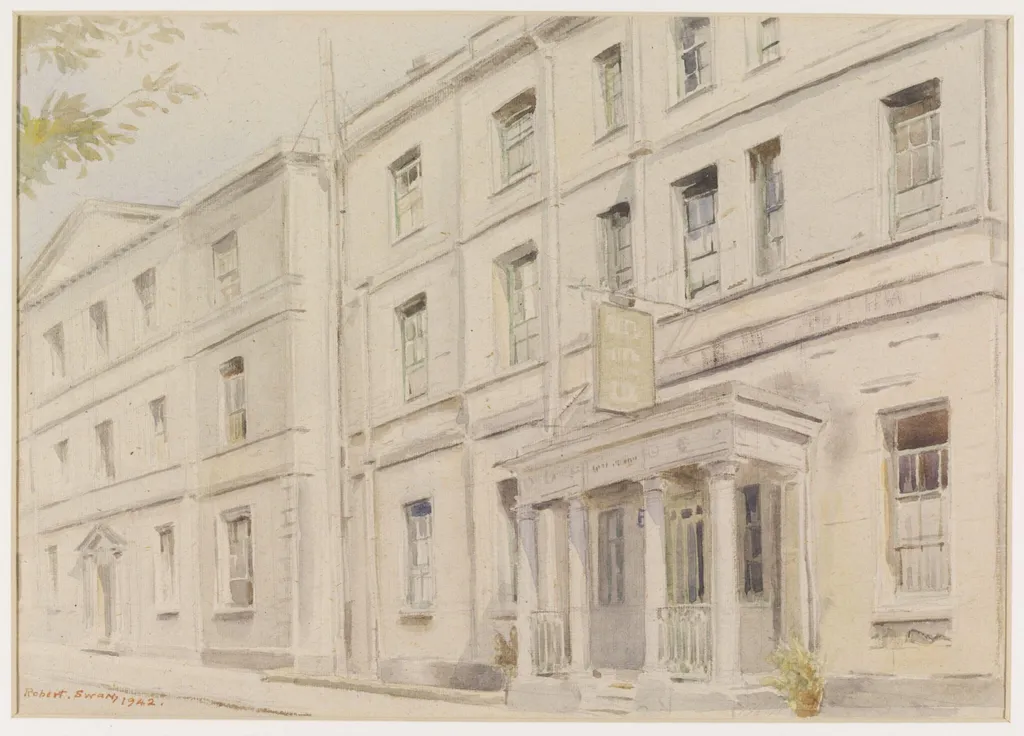
Wellesley House, Cirencester is a watercolor work on paper by Swan. It dates from 1942 and is held in the collection of the Victoria and Albert Museum.
About this work
Overview
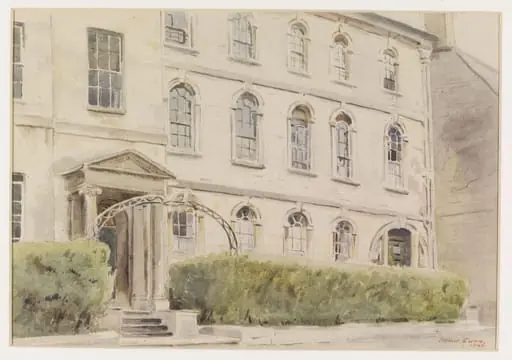
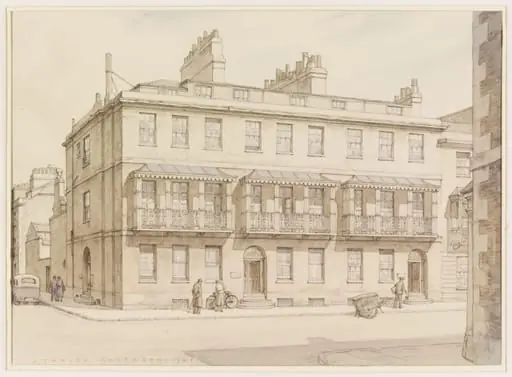
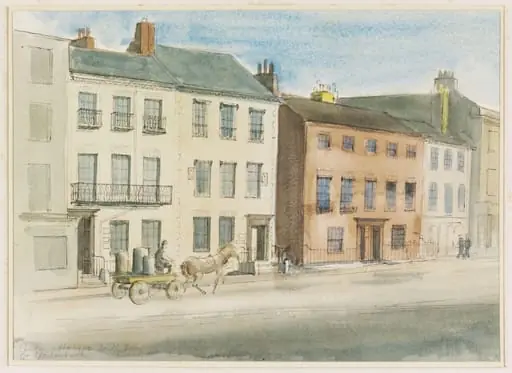
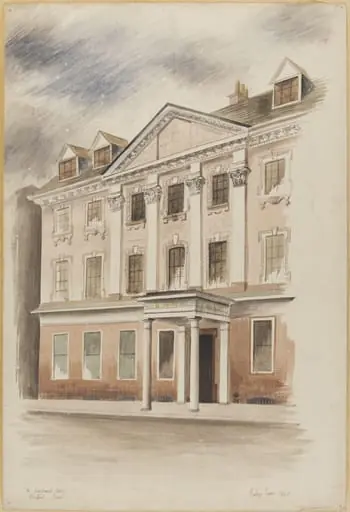
Wellesley House, Cirencester is a watercolour painting created in 1942, depicting two adjacent Georgian houses on Dyer Street in Cirencester.
Subject & Meaning
The painting shows two three-storey houses made of light-colored stone, with Wellesley House distinguished by a Doric entrance portico. The work captures the simple, unadorned architecture of the buildings, with an emphasis on their traditional character.
Technique & Style
The watercolour is executed in a soft, sketchy style, with loose brushstrokes and a focus on capturing the fleeting effects of light and atmosphere. The artist's use of watercolour creates a sense of immediacy and informality.
History & Provenance
The painting was created as part of the 'Recording Britain' project, a wartime initiative that employed artists to document the British landscape and built environment. The project was funded by the Pilgrim Trust and overseen by Sir Kenneth Clark.
Context
The 'Recording Britain' project aimed to preserve a visual record of places and structures perceived to be at risk from wartime damage or modern development, primarily focusing on English subjects.
Artist & collection
Artist
In 1942, this watercolor artist captured Cirencester and the Cotswolds in soft, detailed scenes.