Artwork
Park House, Cirencester
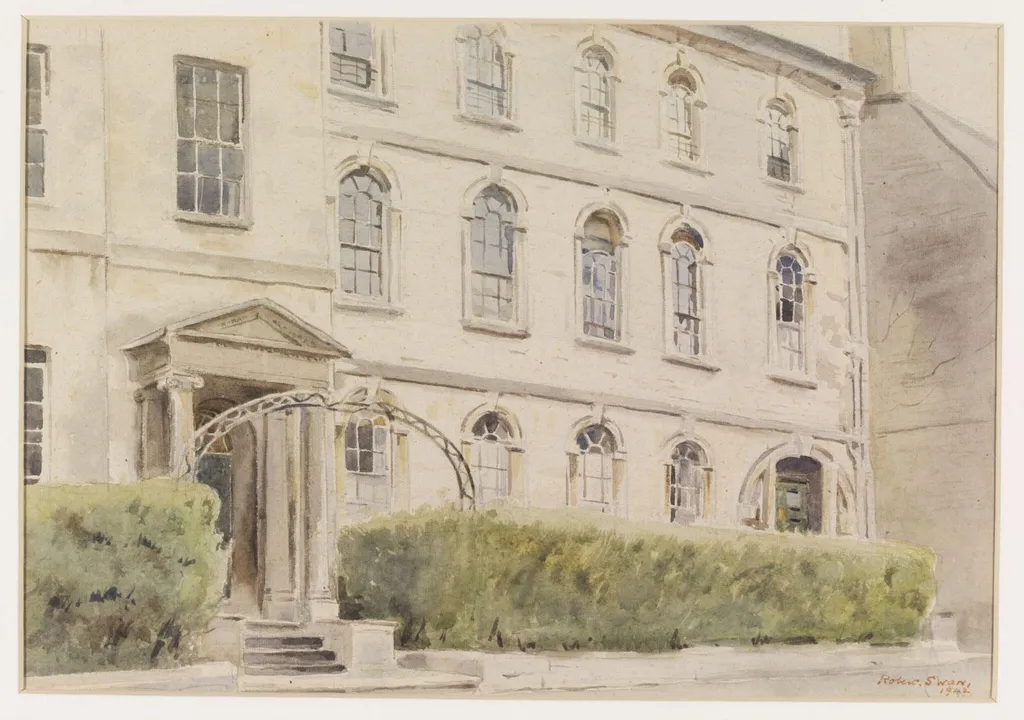
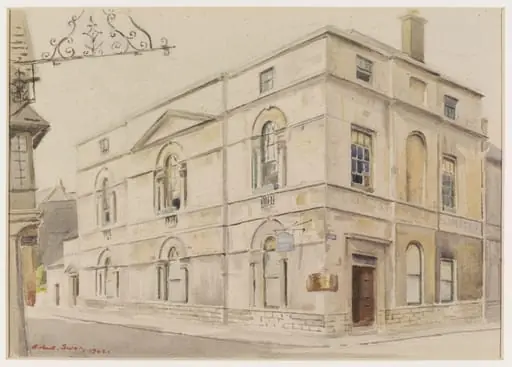
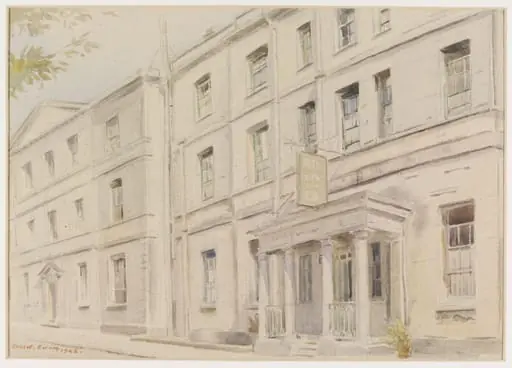
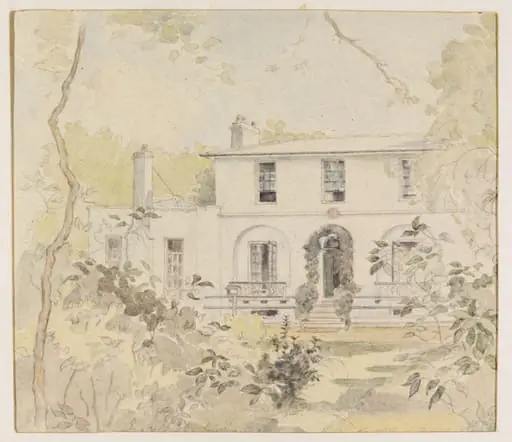
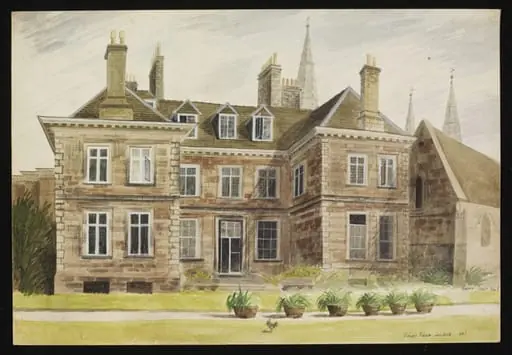
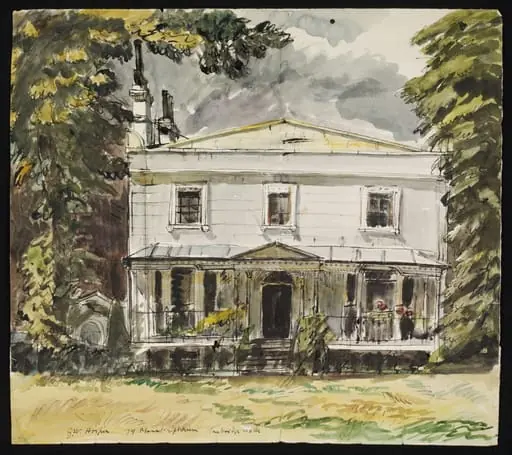
Park House, Cirencester is a watercolor work on paper by Swan. It dates from 1942 and is held in the collection of the Victoria and Albert Museum. Created in 1942, this watercolour presents a three‑storey Georgian residence in Cirencester, seen from a close range behind a low hedge.
About this work
Overview
Created in 1942, this watercolour presents a three‑storey Georgian residence in Cirencester, seen from a close range behind a low hedge. The composition emphasizes the building’s light‑coloured façade, its mixture of arched and rectangular windows, and a modest pedimented entrance beneath a curved porch roof.
Subject & Meaning
The work records a domestic architectural type typical of Georgian England, focusing on the quiet, orderly appearance of the house rather than narrative content. By portraying the structure in a calm, unembellished manner, the image underscores the intention to document rather than dramatise the built environment.
Technique & Style
Executed in watercolour, the artist employs soft, translucent washes and restrained brushwork to convey the building’s surfaces and surrounding foliage. Light is rendered with gentle gradations, avoiding strong contrasts, which lends the scene a placid, topographical quality consistent with the Recording Britain project’s visual standards.
History & Provenance
The painting was produced under the Recording Britain scheme, a wartime effort funded by the Pilgrim Trust and directed by Sir Kenneth Clark. Artists were commissioned to capture British architecture and landscapes perceived as vulnerable to wartime damage. The piece bears the artist’s signature and date, confirming its place within this systematic documentation.
Context
During the Second World War, concerns about bomb damage and post‑war redevelopment prompted the creation of a visual archive of the nation’s heritage. This watercolour contributes to that archive, offering a snapshot of a specific Georgian house at a moment when many similar structures faced potential loss.
Artist & collection
Artist
In 1942, this watercolor artist captured Cirencester and the Cotswolds in soft, detailed scenes.