Artwork
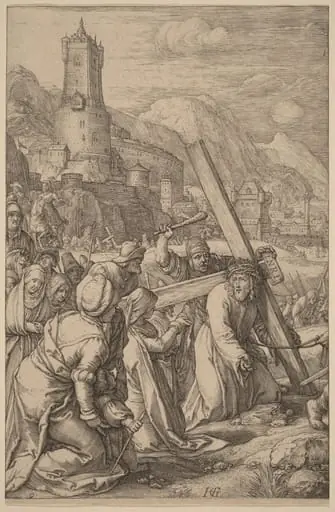
Christ Carrying the Cross
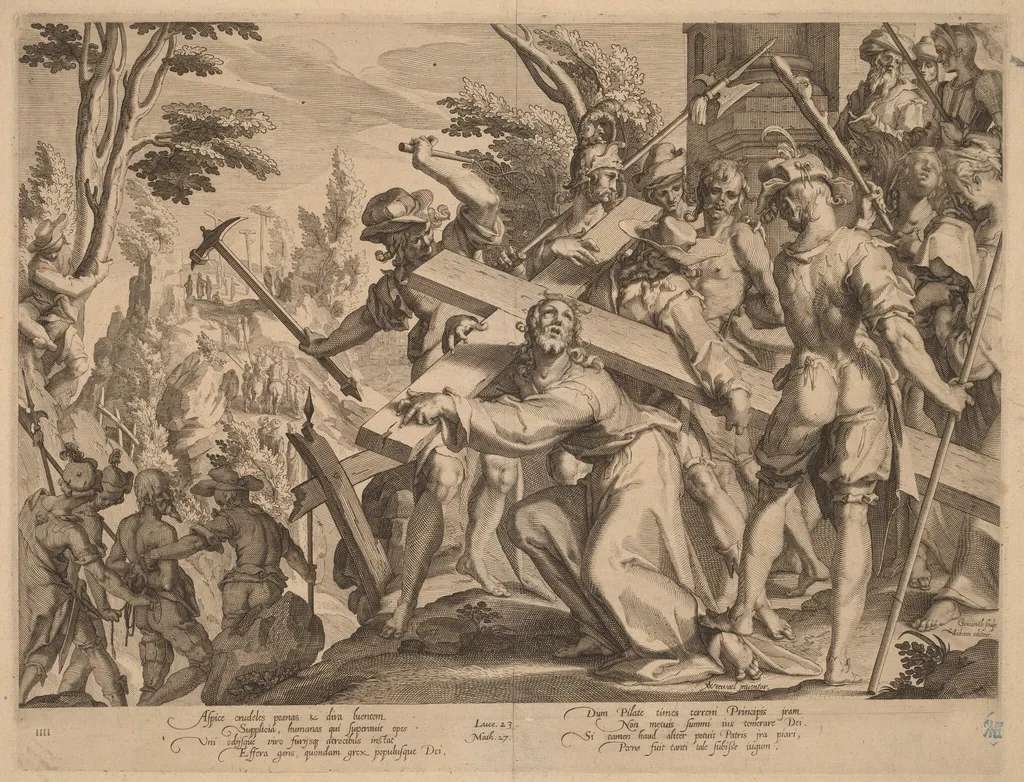
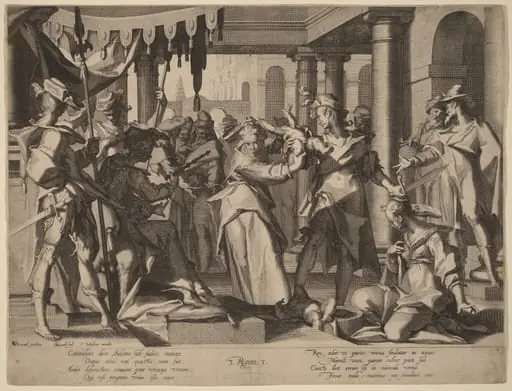
Christ Carrying the Cross is an ink print by the Baroque artist Willem van Swanenburgh. It dates from 1606 and is held in the collection of the National Gallery of Art.
About this work
Overview
Willem van Swanenburgh’s engraving titled *Christ Carrying the Cross* was produced in 1606. Executed on laid paper, the print presents a compact composition in which the figure of Christ is shown kneeling beneath a massive wooden cross, while two tormentors press him forward. The background is filled with dense, irregular lines that heighten the sense of tension and movement.
Subject & Meaning
The image depicts the moment from the Passion narrative when Jesus is forced to bear the instrument of his crucifixion. By portraying Christ in a kneeling, burdened posture, the work emphasizes his suffering and humility. The presence of the two aggressors underscores the violence of the event, inviting contemplation of the theological themes of sacrifice and redemption.
Technique & Style
Swanenburgh employed the traditional engraving process, incising fine lines into a metal plate with a burin. After inking the plate, he transferred the design onto laid paper, using cross‑hatching to achieve tonal depth and texture. The stark, jagged strokes that dominate the background contrast with the more delicate rendering of the figures, creating a dramatic chiaroscuro effect.
Context
In the early seventeenth century, prints served as an efficient means of disseminating biblical stories to a broad audience, many of whom could not read Latin texts. Engravings such as this one were circulated among devotional households and churches, reinforcing religious instruction and personal piety during a period of intense Counter‑Reformation activity.
Artist & collection