Artwork
John William, Duke of Cleves
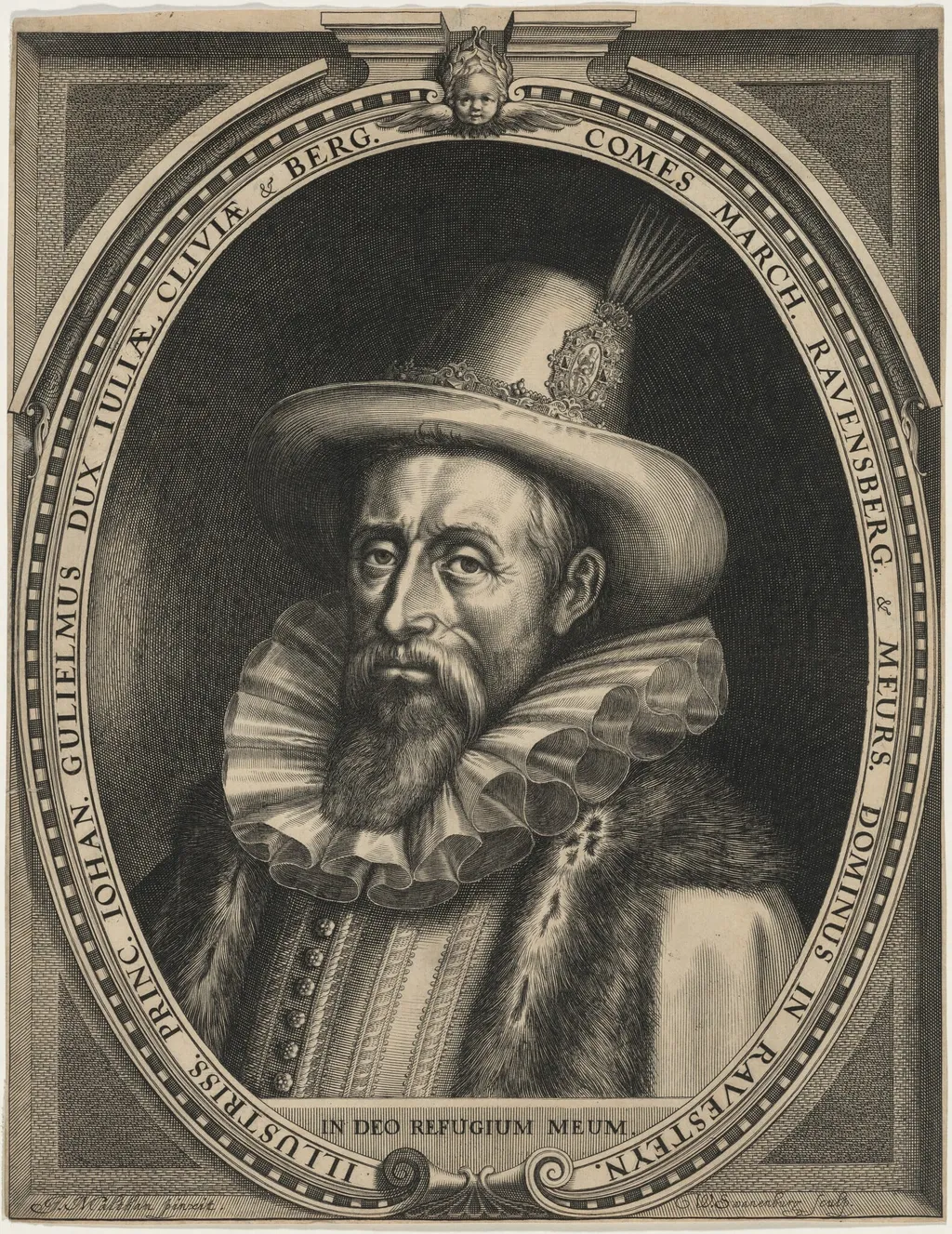
John William, Duke of Cleves is an ink print by the Baroque artist Willem van Swanenburgh. It dates from 1610 and is held in the collection of the National Gallery of Art.
About this work
Overview
A plain background focuses attention on his figure, while ornamental borders frame the composition, typical of early 17th-century print culture.
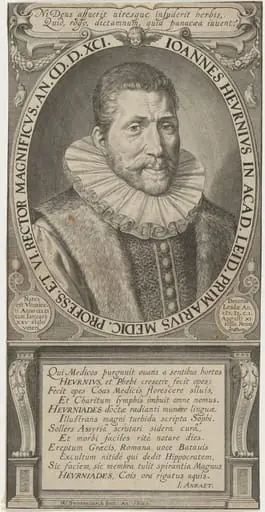
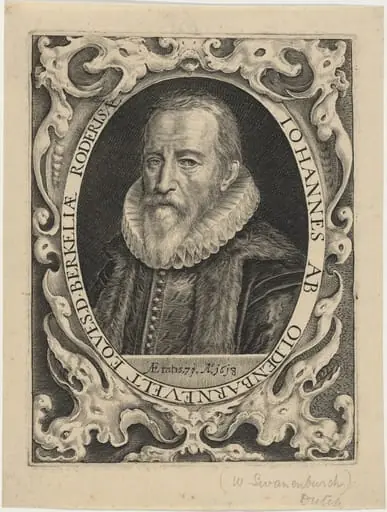
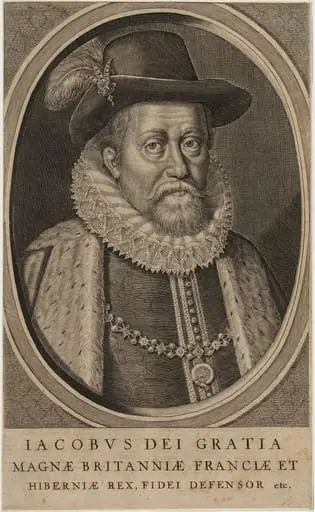
An engraving from 1610 by Willem van Swanenburgh depicts John William, Duke of Cleves, as a formal portrait in monochrome. The image captures the nobleman in profile, rendered with fine linear detail to suggest volume and texture. A plain background focuses attention on his figure, while ornamental borders frame the composition, typical of early 17th-century print culture. The work serves as a dignified representation of aristocratic identity through the medium of print.
Subject & Meaning
John William, Duke of Cleves, is portrayed with solemnity, emphasizing his status and authority. His thick beard, wide ruff collar, and feathered hat reflect contemporary noble dress, while the chain around his neck likely signifies an order of chivalry or dynastic honor. The inclusion of his full titles in the border reinforces his political and territorial standing, positioning the image as both a personal likeness and a public declaration of lineage and power.
Technique & Style
Van Swanenburgh employed precise engraving techniques, using incised lines to model light, shadow, and fabric texture. The face and clothing are rendered with meticulous cross-hatching and fine parallel strokes, creating a sense of three-dimensionality. The decorative border, with its intricate scrollwork and script, contrasts with the restrained realism of the portrait, blending artistic refinement with the conventions of heraldic portraiture common in Northern European prints of the period.
History & Provenance
Created in 1610, the engraving was likely produced for distribution among court circles or as a commemorative item following John William’s death in 1609. Van Swanenburgh, known for his reproductive prints, may have worked from a painted portrait or drawing. The work’s survival in multiple institutional collections suggests it was widely circulated, serving as a visual record of a regional ruler during a time of shifting political alliances in the Holy Roman Empire.
Context
In the early 1600s, engraved portraits were a primary means of disseminating the likenesses of nobility beyond court walls. As the Duchy of Cleves was a small but strategically located territory, such images helped maintain its visibility among neighboring states. Van Swanenburgh’s work aligns with a broader trend in the Dutch Republic and Rhineland of using print to reinforce political identity, especially in regions where painting was less accessible to the wider elite.
Legacy
The engraving remains a documented example of how noble imagery was standardized and reproduced in the early modern era. Though not widely known today, it contributes to the historical record of Cleves’ ruling family and reflects the role of printmakers in shaping public perception of aristocracy. Its technical precision and formal composition exemplify the craftsmanship of Dutch engravers working in service to regional dynasties.
Artist & collection