Artwork
Ecce Homo
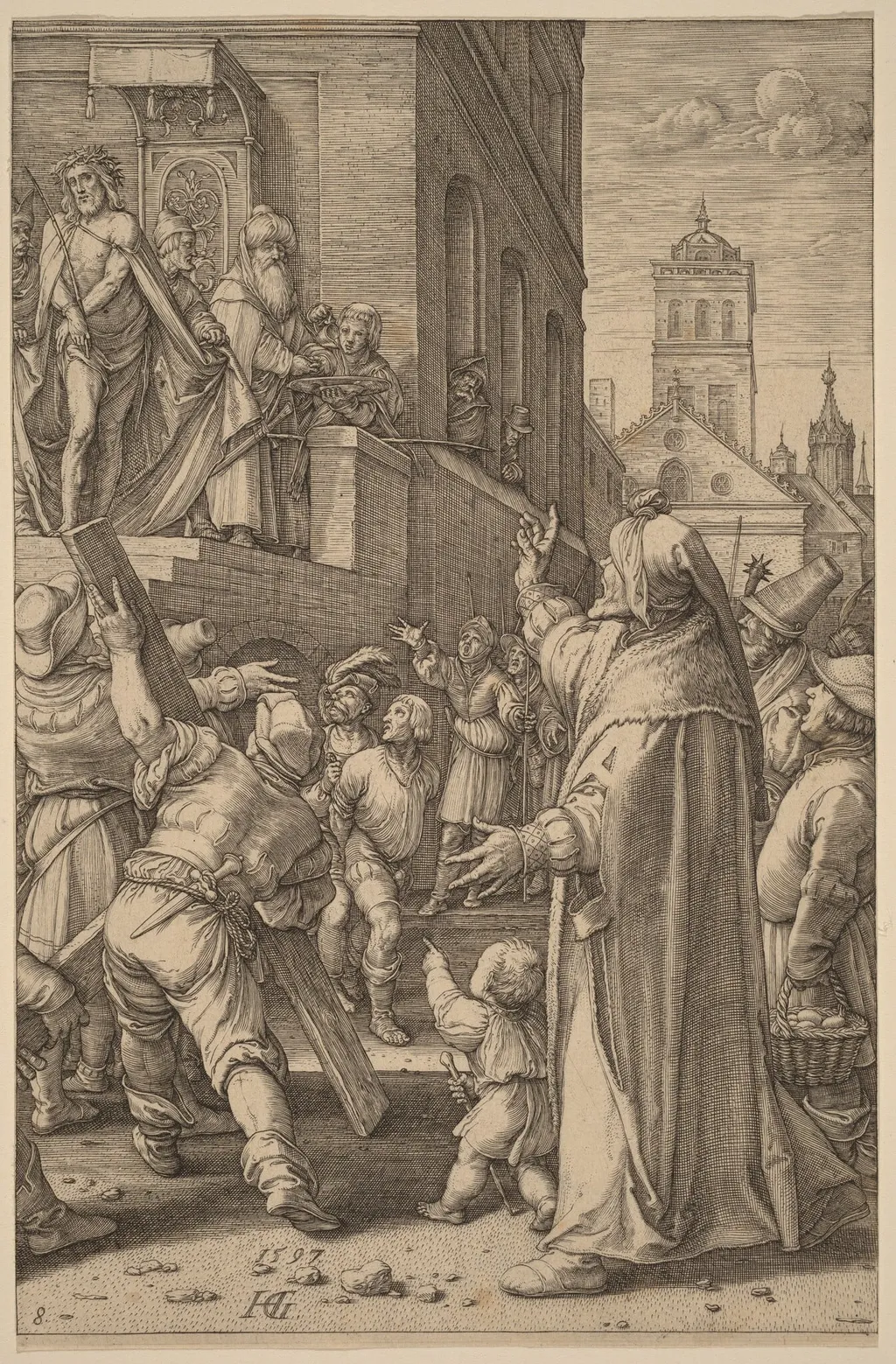
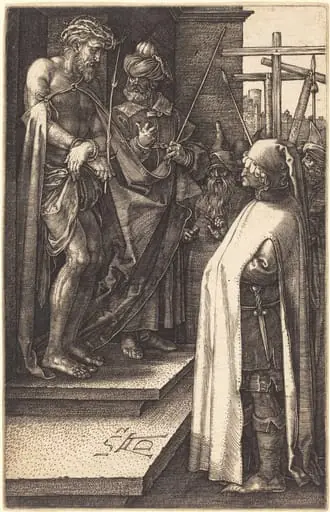
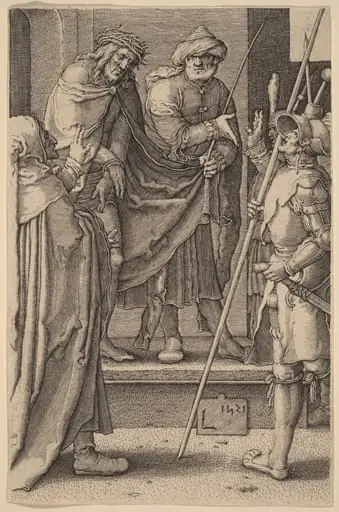
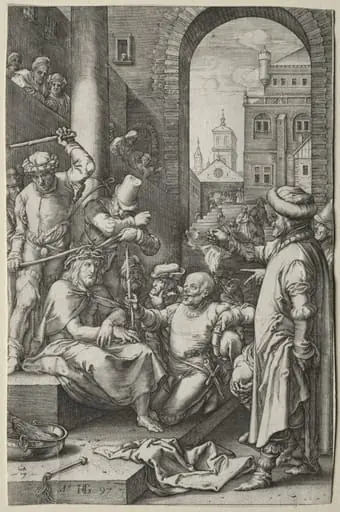
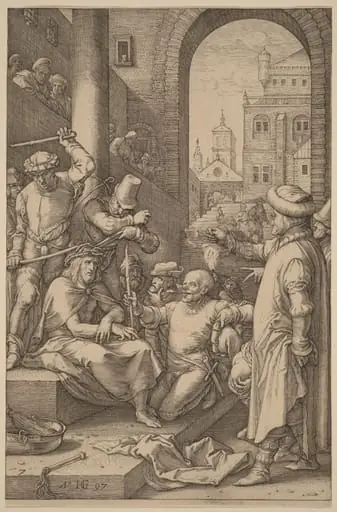
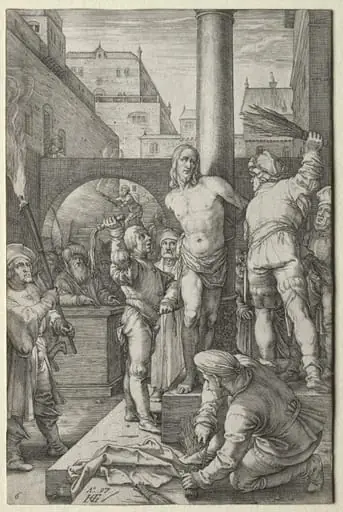
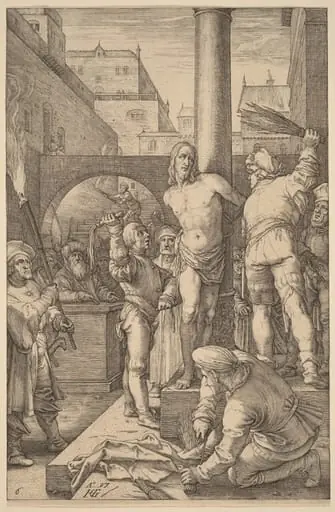
Ecce Homo is an ink print by the Renaissance artist Hendrik Goltzius. It dates from 1597 and is held in the collection of the National Gallery of Art.
About this work
Overview
Ecce Homo is an engraving created by Hendrick Goltzius, a prominent printmaker and draftsman of Northern Mannerism.
Subject & Meaning
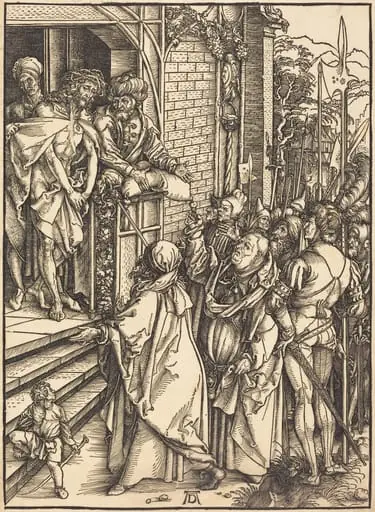
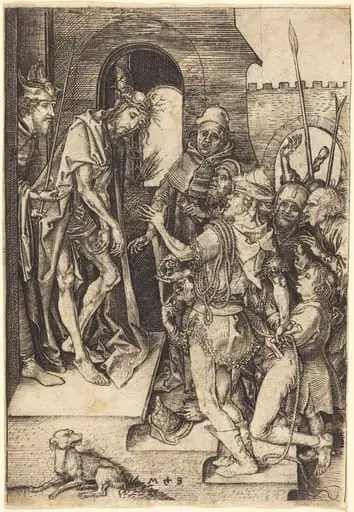
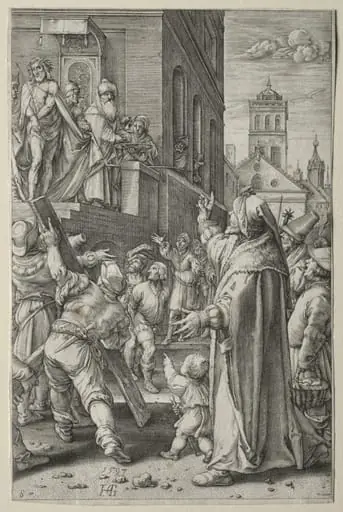
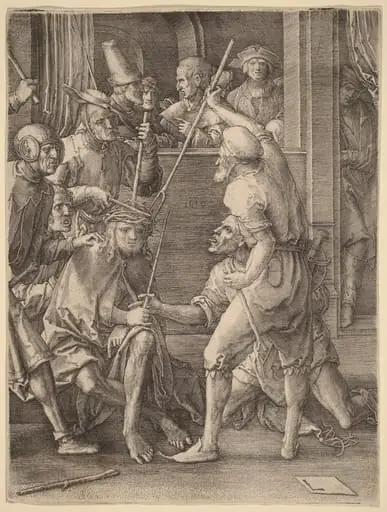
The engraving depicts a crowded scene centered around a bearded man with a crown of thorns, likely representing the biblical figure of Christ being presented to the public. The surrounding figures display a range of emotional responses, contributing to a tense atmosphere.
Technique & Style
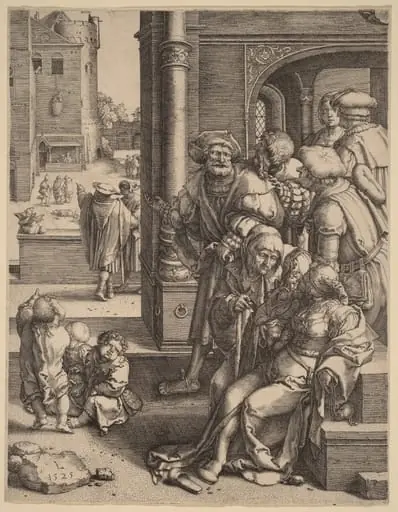
Goltzius's technical skill is evident in the use of fine lines to achieve deep shadows and detailed textures, such as the folds in clothing and the roughness of wood. The intricate composition reflects his reputation as a skilled draftsman.
History & Provenance
Created in 1558, Ecce Homo showcases Goltzius's work during the early Baroque period, a time when he was recognized as a leading Dutch engraver.
Artist & collection
Artist
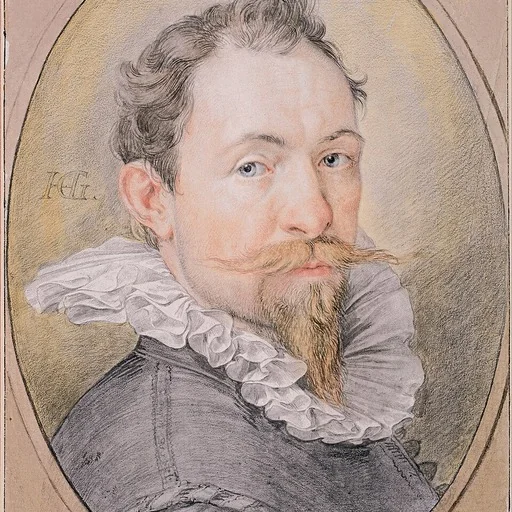
Hendrick Goltzius (German: , Dutch: ; né Goltz; January or February 1558 – 1 January 1617) was a German-born Dutch printmaker, draftsman, and painter.