Artwork
Man and Ox in a River
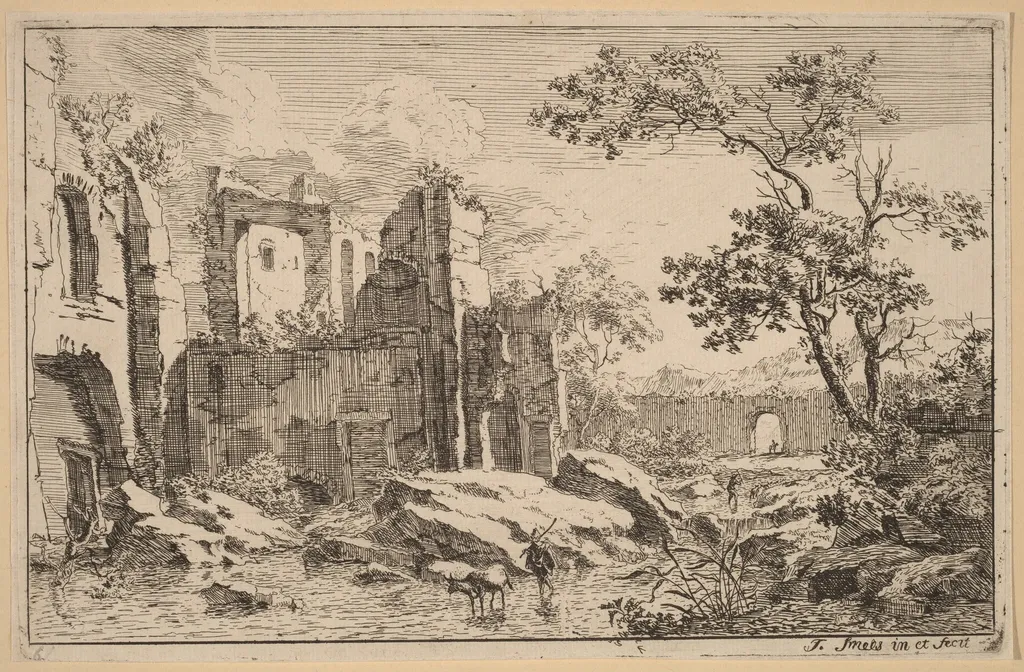
Man and Ox in a River is an ink print by the Baroque artist Jan Smees. It dates from 1707 and is held in the collection of the National Gallery of Art.
About this work
Overview
Unlike painted works, this piece relies on incised lines on a metal plate to render its imagery, a technique common in early 18th-century printmaking.
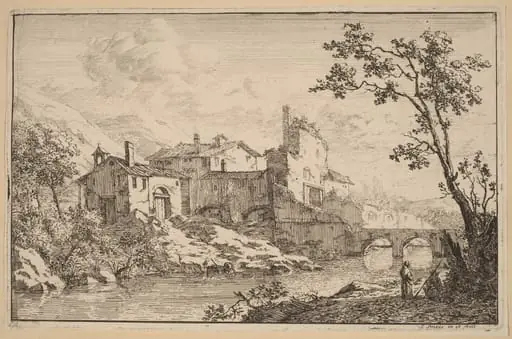
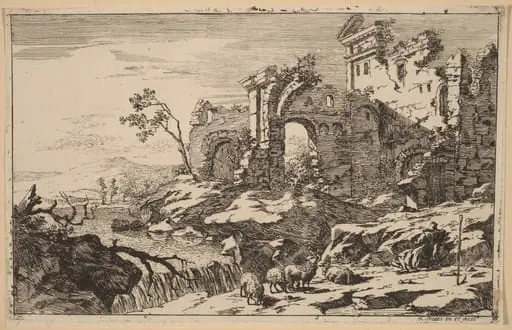
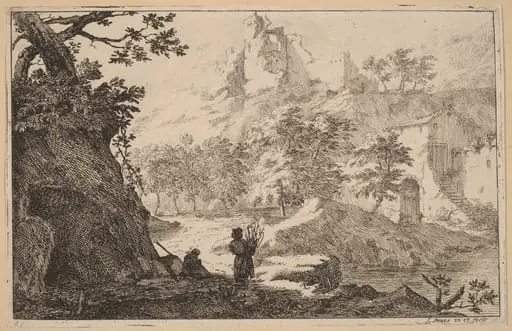
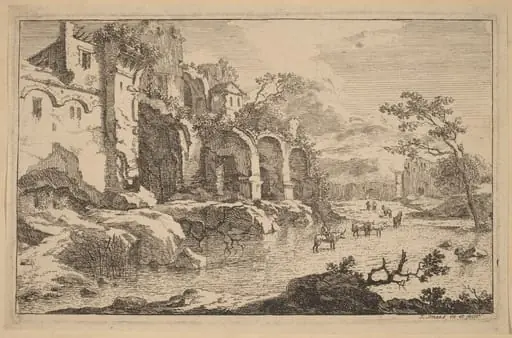
Man and Ox in a River is an etching produced by Jan Smees in 1707. Unlike painted works, this piece relies on incised lines on a metal plate to render its imagery, a technique common in early 18th-century printmaking. The composition centers on a solitary figure and a draft animal standing together in shallow water, framed by dense vegetation. The quiet intimacy of the scene reflects a pastoral ideal prevalent in Dutch and Flemish prints of the period.
Subject & Meaning
The figures—a man and an ox—appear in stillness, suggesting a pause in labor rather than its completion. Their placement within the river implies a moment of rest or transition, perhaps during a journey or agricultural task. The absence of overt narrative or symbolic elements invites interpretation as a quiet celebration of rural life, emphasizing endurance and harmony between human and animal within the natural world.
Technique & Style
Smees employed fine, controlled etching lines to model form and suggest texture—ripples in water, the coarse hide of the ox, and the softness of foliage. Subtle variations in line density create tonal gradations, mimicking the effects of light without relying on wash or color. The composition is deliberately restrained, with no dramatic contrasts or elaborate detail, reinforcing the calm, unembellished tone of the scene.
History & Provenance
The work is documented as part of Smees’s output during his active years in the early 1700s, though few of his prints survive in public collections. Its provenance traces to private European holdings, likely acquired by collectors interested in regional genre scenes. No major institutional records or exhibition histories are known, suggesting it was circulated modestly among connoisseurs rather than widely disseminated.
Context
In early 18th-century Northern Europe, etchings of rural life were valued for their realism and moral quietude. Smees’s work aligns with a tradition that included artists like Adriaen van de Velde and Jan van der Heyden, who depicted everyday moments with precision and restraint. This print reflects a broader cultural appreciation for the dignity of labor and the serenity of the natural landscape.
Legacy
Though Jan Smees is not widely recognized today, his etchings contribute to the understudied corpus of Dutch genre printmaking. Man and Ox in a River exemplifies the quiet, observational approach favored by lesser-known artisans of the period. Its survival offers insight into the visual culture of rural life beyond the grand narratives of official art, preserving a subtle, human-scale vision of the era.
Artist & collection