Artwork
View of a Ruined Building
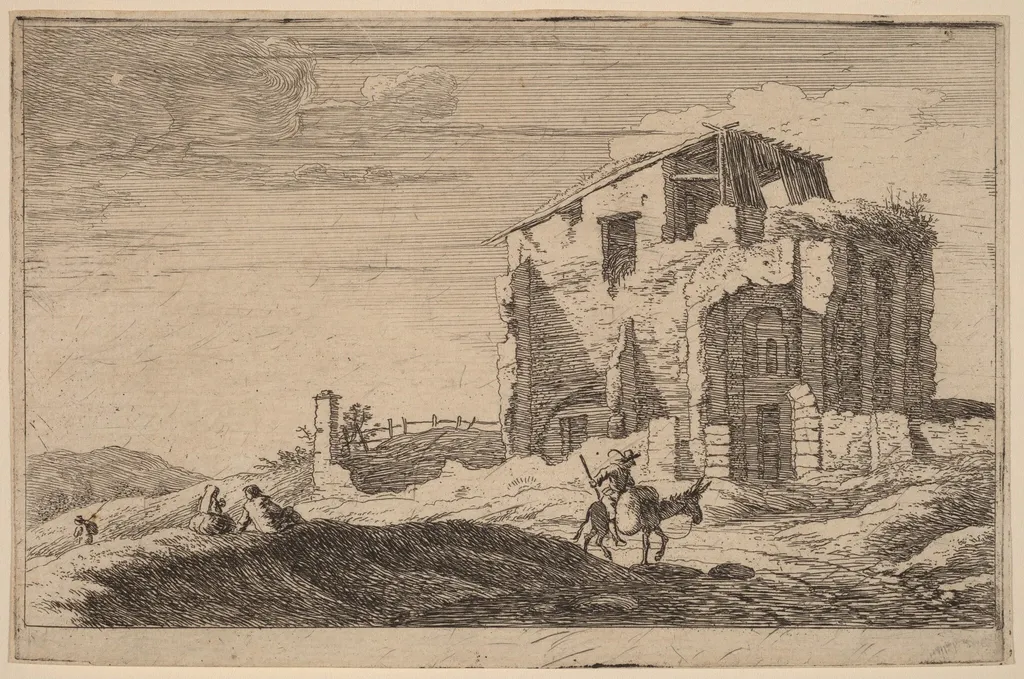
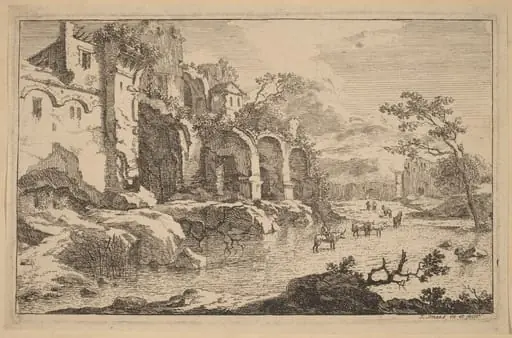
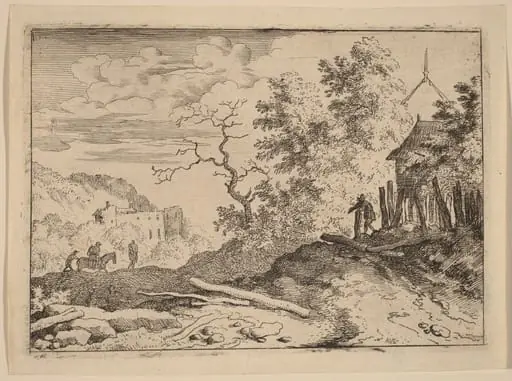
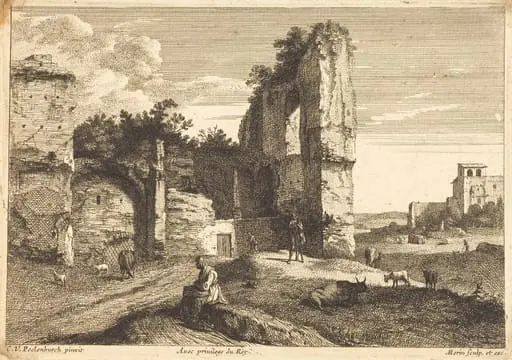
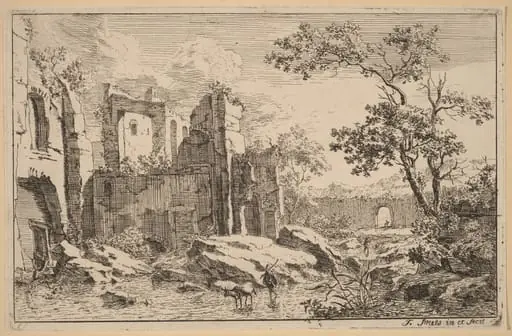
View of a Ruined Building is an ink print by the Baroque artist Herman van Swanevelt. It dates from 1628 and is held in the collection of the National Gallery of Art.
About this work
Overview
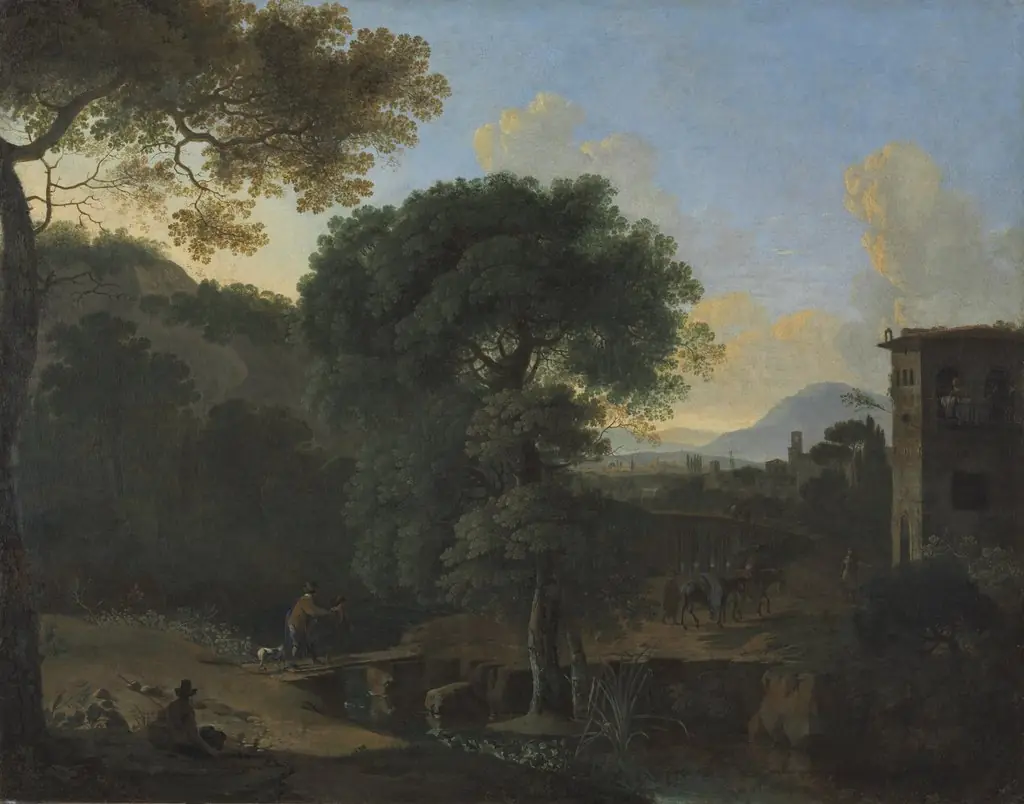
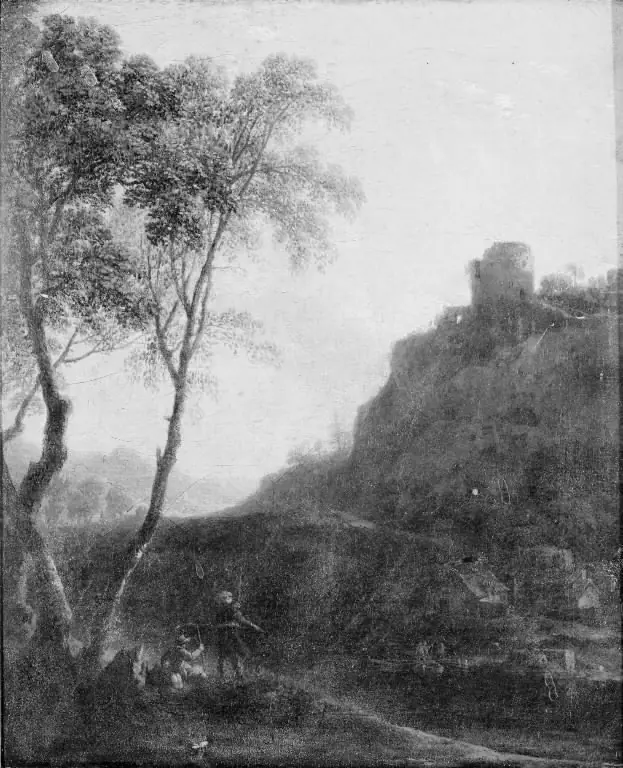
Created in 1628, this etching by Herman van Swanevelt presents a quiet, desolate landscape centered on the remains of a once-grand structure. The work belongs to a tradition of Northern European prints that blend topographical observation with poetic stillness. Van Swanevelt’s choice of medium allows for fine, controlled lines that capture both the fragility of stone and the weight of time.
Subject & Meaning
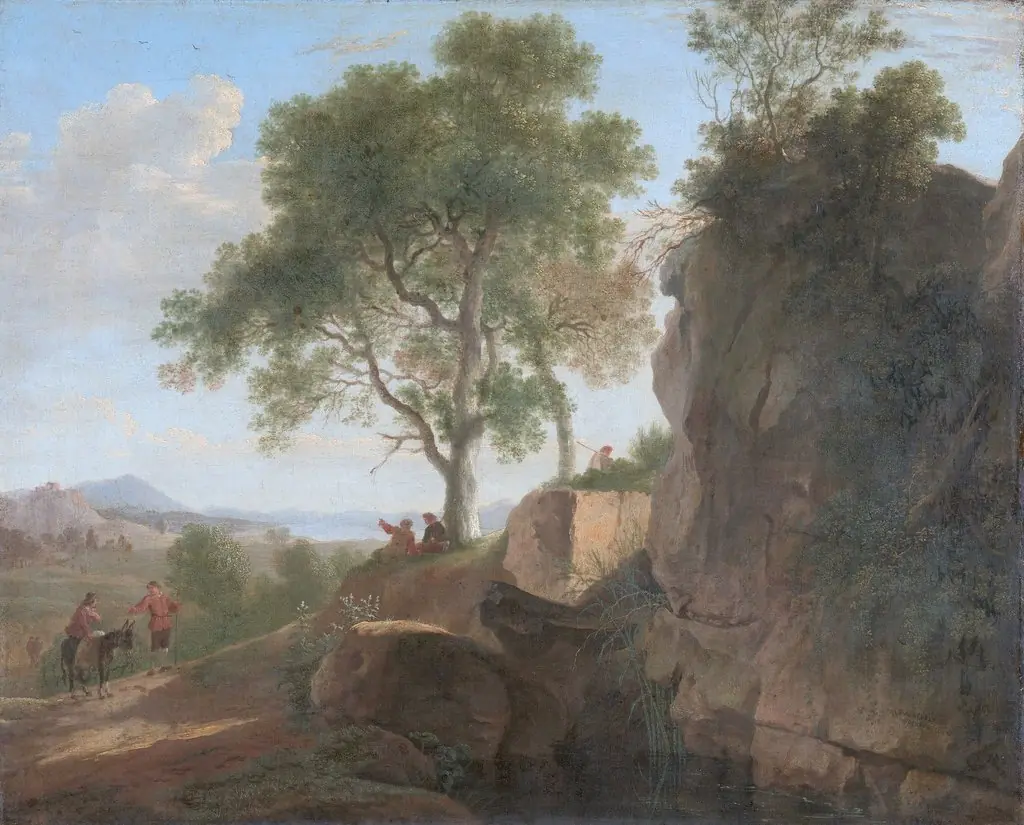
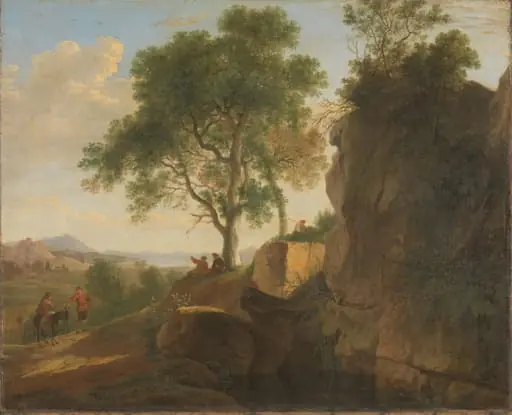
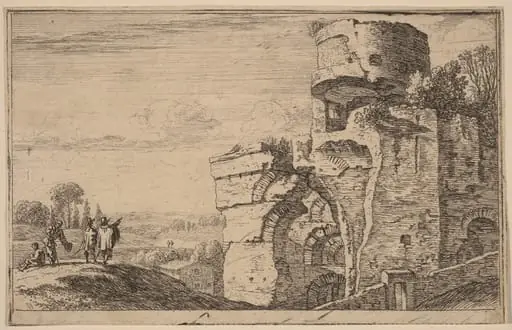
The ruined building, stripped of its roof and partially collapsed, stands as a silent witness to decay. Two figures—a rider on a donkey and a seated man gazing into the distance—introduce human presence without narrative. Their small scale emphasizes the dominance of the ruin, suggesting themes of transience and the passage of time, common in Baroque meditations on mortality and impermanence.
Technique & Style
Van Swanevelt employed etching to achieve subtle gradations of tone and texture, using fine lines to render the roughness of stone, the softness of earth, and the drift of clouds. The contrast between the jagged edges of the ruin and the fluid contours of the hills creates visual rhythm. His technique avoids dramatic chiaroscuro, favoring a restrained, atmospheric tone that invites contemplation.
History & Provenance
The etching was produced during van Swanevelt’s early career, likely in Rome, where he lived among artists drawn to the city’s ancient ruins. While its early ownership is undocumented, it aligns with a broader 17th-century interest in antiquity as subject matter for prints. The work circulated among collectors of landscape and topographical imagery in Northern Europe.
Context
In the 1620s, Roman ruins were frequently depicted by Northern artists as symbols of classical heritage and the passage of time. Van Swanevelt’s work reflects this trend, yet distinguishes itself through its quiet, unidealized approach. Unlike grand historical scenes, this etching focuses on solitude and subtle decay, resonating with emerging tastes for intimate, reflective landscapes.
Legacy
This print contributes to van Swanevelt’s reputation as a pioneer in Italianate landscape etching. Though less celebrated than contemporaries like Claude Lorrain, his work influenced later generations of printmakers who sought to convey mood through restrained composition and careful line work. The piece remains a quiet example of how ruin could be rendered not as spectacle, but as stillness.
Artist & collection