Artwork
The Baths of Caracalla
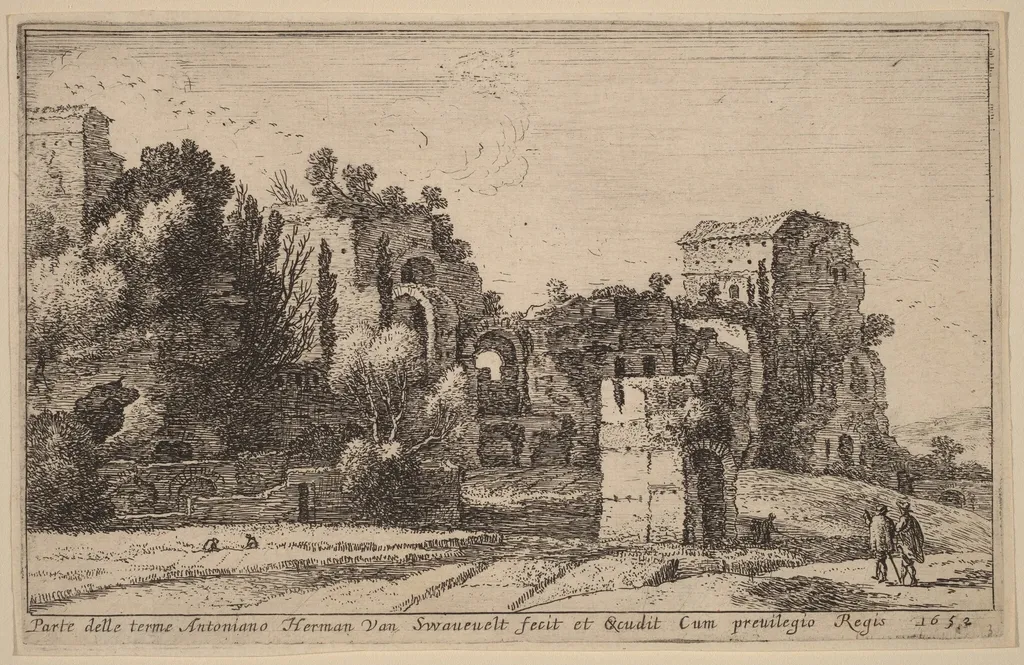
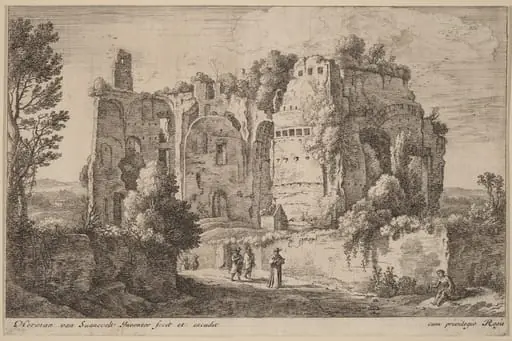
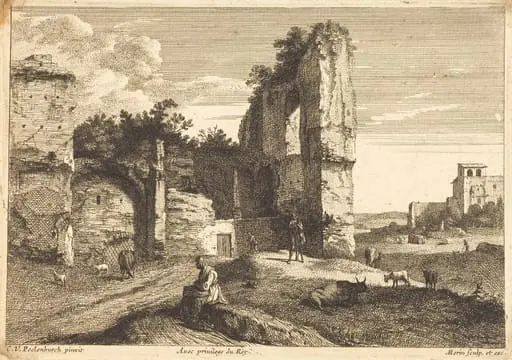
The Baths of Caracalla is an ink print by the Baroque artist Herman van Swanevelt. It dates from 1628 and is held in the collection of the National Gallery of Art.
About this work
Overview
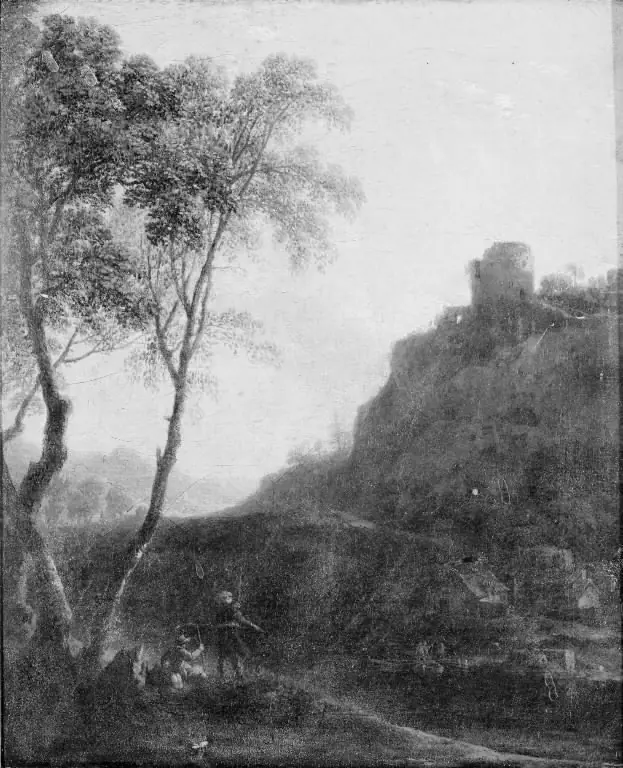
Herman van Swanevelt created this etching in 1628, capturing the vast ruins of the Baths of Caracalla in Rome. The composition emphasizes decay and quiet solitude, with towering stone fragments and tangled vegetation dominating the scene. A solitary figure carries a staff, while another tends a small fire near the base of a collapsed wall, suggesting human presence amid abandonment.
Subject & Meaning
The image portrays the Baths of Caracalla not as a functioning complex but as a silent relic of imperial grandeur. The figures, small and inconsequential against the ruins, evoke themes of transience and the passage of time. The fire may hint at temporary shelter or a humble use of ancient materials, reinforcing the contrast between past splendor and present neglect.
Technique & Style
Van Swanevelt employed fine, controlled lines to render the textures of weathered stone, foliage, and atmospheric depth. The etching’s delicate hatching and varied line weight create a sense of volume and shadow, guiding the eye through the layered ruins. Light filters diffusely through the cloudy sky, softening edges and enhancing the melancholic mood of the scene.
History & Provenance
Created during van Swanevelt’s time in Rome, the etching reflects the 17th-century European fascination with classical antiquity. It likely originated as part of a series documenting Roman ruins, intended for collectors and travelers interested in antiquarian subjects. The work entered private collections in the Netherlands and France before being acquired by public institutions.
Context
In the early 1600s, artists and scholars traveled to Rome to study ancient architecture, often recording ruins through drawing and printmaking. Van Swanevelt’s etching aligns with this tradition, blending topographical accuracy with poetic atmosphere. Unlike later romanticized depictions, his approach remains restrained, emphasizing observation over dramatic embellishment.
Legacy
This etching contributes to a broader corpus of Dutch and Flemish prints that shaped perceptions of Roman antiquity in Northern Europe. Van Swanevelt’s nuanced treatment of ruin and nature influenced subsequent generations of landscape printmakers. Though not widely exhibited today, it remains a quiet testament to early modern engagement with classical heritage.
Artist & collection