Artwork
The Septizonium and the Colosseum
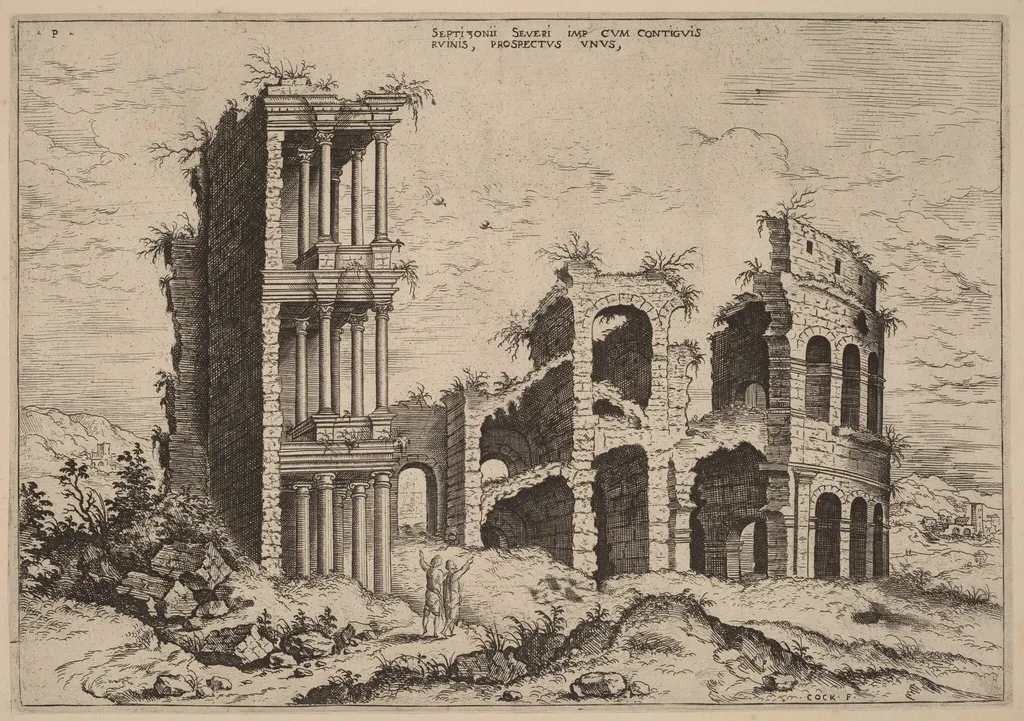
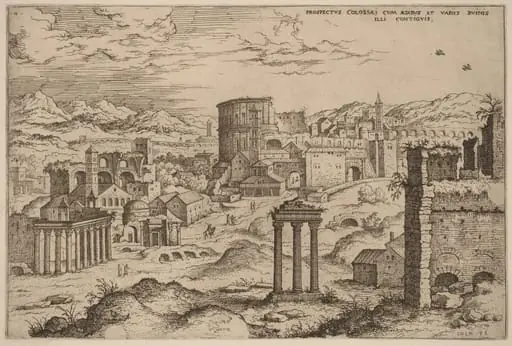
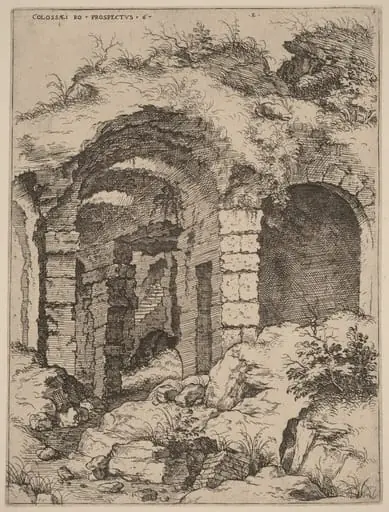
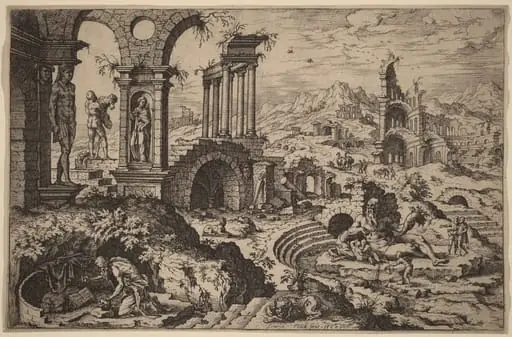
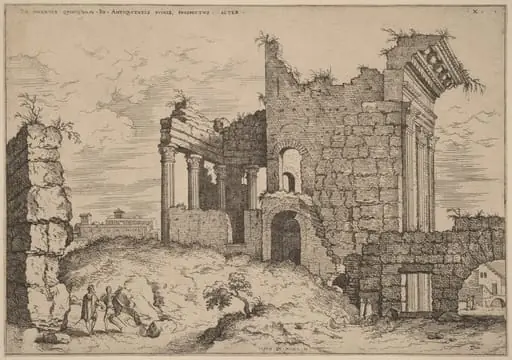
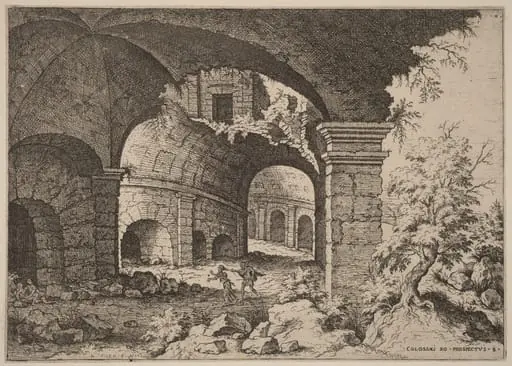
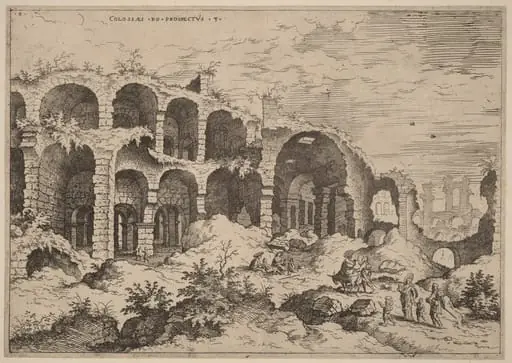
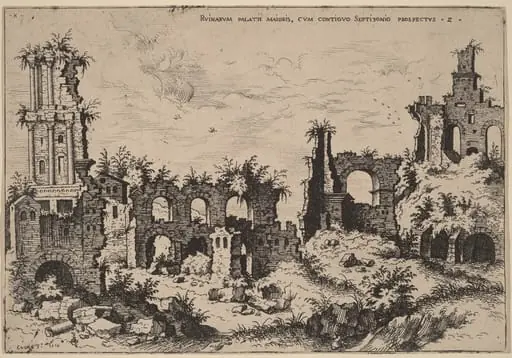
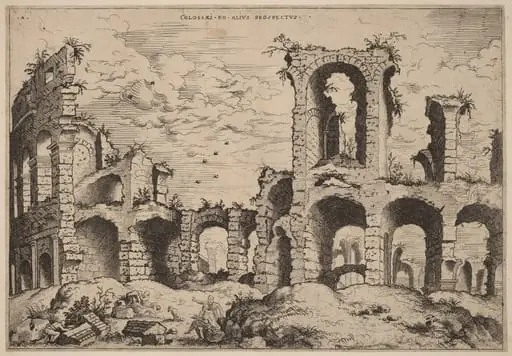
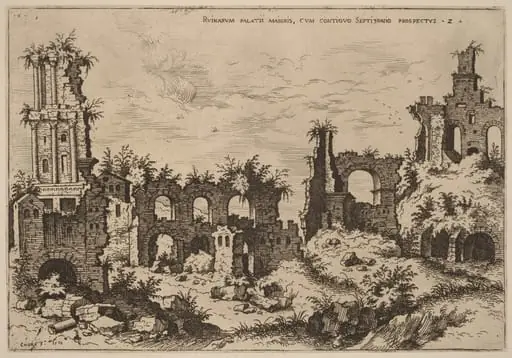
The Septizonium and the Colosseum is an ink print by the Renaissance artist Hieronymus Cock. It dates from 1550 and is held in the collection of the National Gallery of Art.
About this work
The Septizonium, a fancy three-tiered Roman facade, stands to the left.
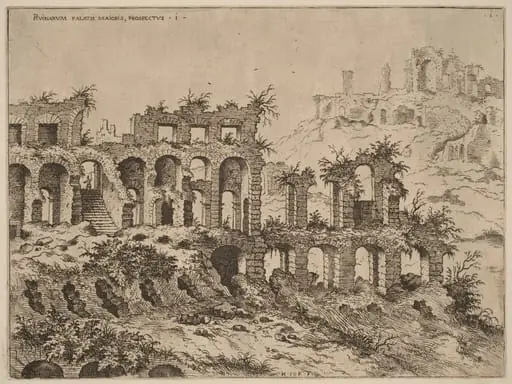
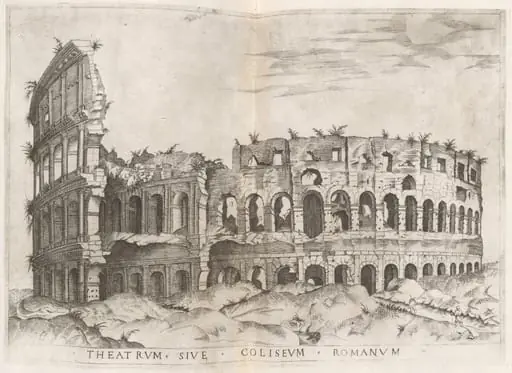
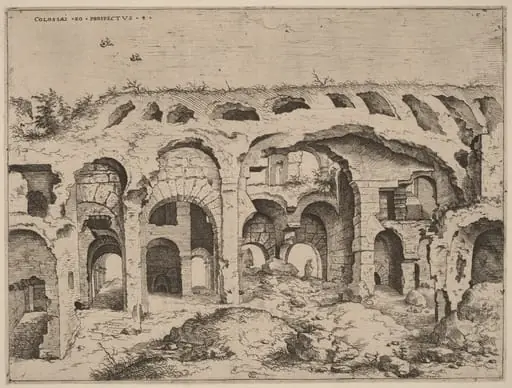
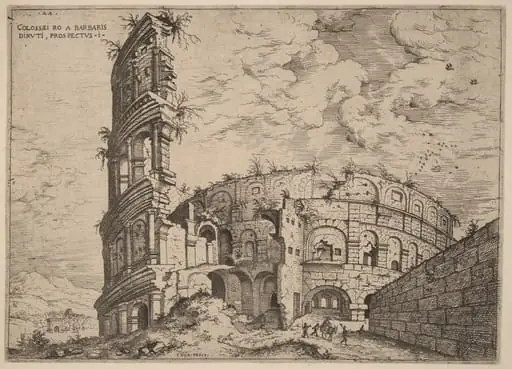
This etching shows two ancient Roman ruins side by side. The Septizonium, a fancy three-tiered Roman facade, stands to the left. The Colosseum looms behind it, its arches clear and worn.
The artist printed this in Rome around 1550. He used etched lines on paper to copy what he saw. The buildings look old even then—this was a ruin even in his day.
Look up the etching technique to see how he made those fine lines.
Overview
Created around 1550, this etching by Hieronymus Cock captures two prominent Roman ruins: the Septizonium and the Colosseum. Executed on laid paper, the work reflects Cock’s dual role as artist and publisher, emerging from his Antwerp print shop, which helped standardize and distribute topographical imagery across Europe. The print belongs to a broader trend of documenting ancient architecture through precise, observational techniques.
Subject & Meaning
The composition presents the Septizonium, a once-elaborate three-tiered structure, alongside the massive, weathered arches of the Colosseum. Both monuments, already in decay by the mid-16th century, are rendered without idealization, emphasizing their physical presence as remnants of imperial Rome. The pairing suggests a quiet meditation on time’s erosion of power and grandeur, rather than a celebration of classical glory.
Technique & Style
Cock employed etching to render fine, controlled lines that define the textures of weathered stone and the rhythmic repetition of arches. The use of laid paper, with its subtle chain lines, enhances the tactile quality of the surface. His approach is documentary: perspective is accurate, details are observed directly, and shading is minimal, relying on line density to suggest depth and age.
History & Provenance
Cock produced this print during a stay in Rome, where he made direct studies of antiquities. The work was likely part of a series of Roman views published through his Antwerp firm, which distributed prints to collectors and scholars across northern Europe. Its survival in multiple institutional collections indicates its early circulation and enduring value as a record of Renaissance antiquarian interest.
Context
In mid-16th-century Rome, the study of ancient ruins was intensifying among humanists and artists. Cock’s etching aligns with efforts to systematically record classical remains before further decay or reuse. Unlike earlier idealized reconstructions, his work reflects a growing preference for empirical observation, mirroring shifts in scholarly practice and the rise of print as a medium for disseminating knowledge.
Legacy
Cock’s etching contributed to the standardization of topographical printmaking, influencing later artists and publishers who documented antiquities. Its straightforward depiction helped establish a visual language for archaeological record-keeping. Though not widely known today, it remains a significant example of how print technology transformed the transmission of cultural heritage in the early modern period.
Artist & collection
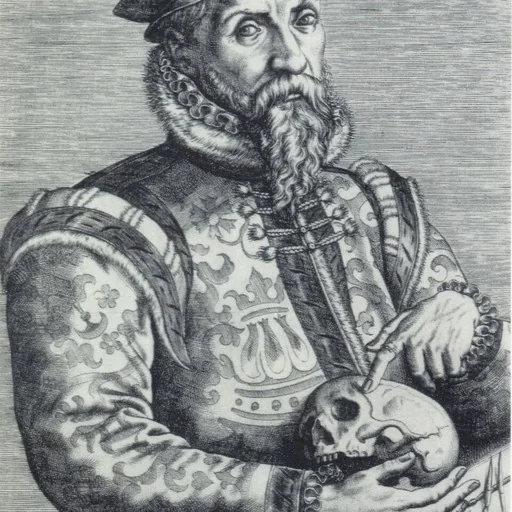
Artist
Hieronymus Cock, or Hieronymus Wellens de Cock, (1518 – 3 October 1570) was a Flemish painter and etcher as well as a publisher and distributor of prints.