Artwork
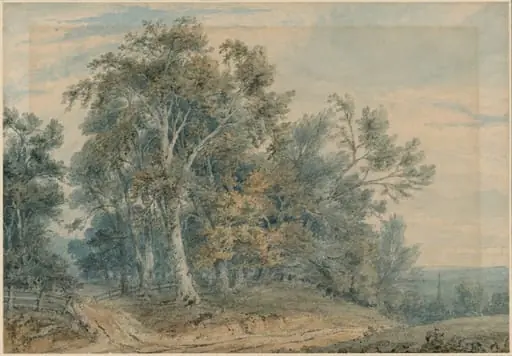
Woodland scene: Helmsley, Yorkshire
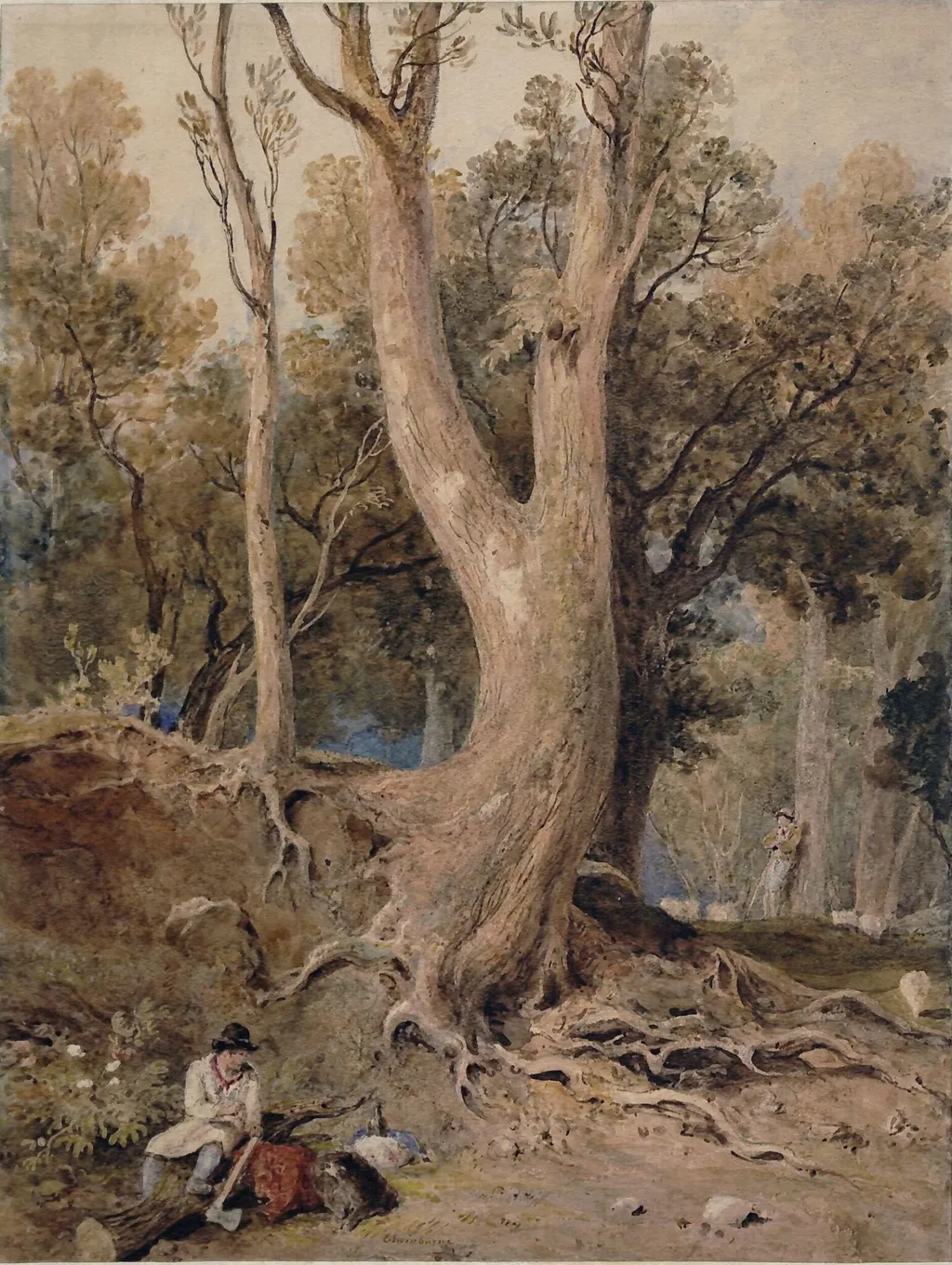
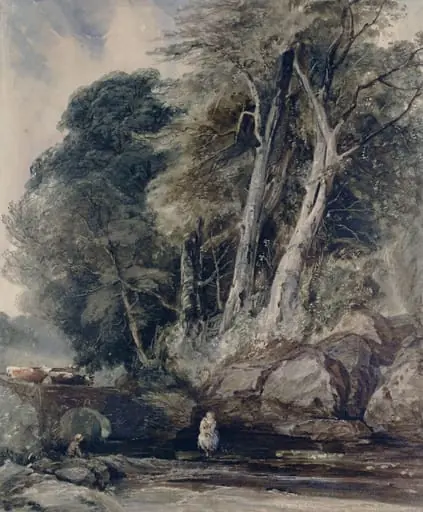
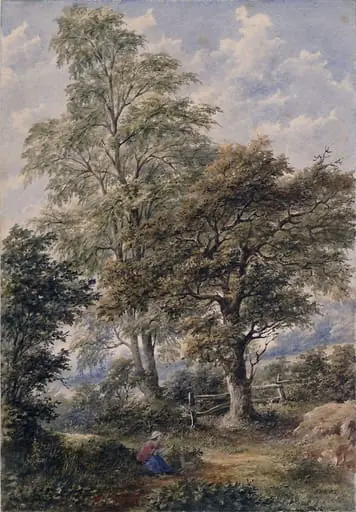
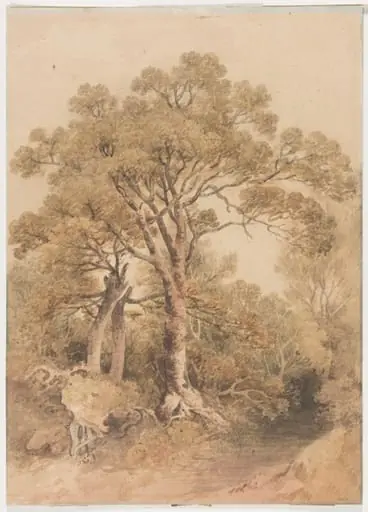
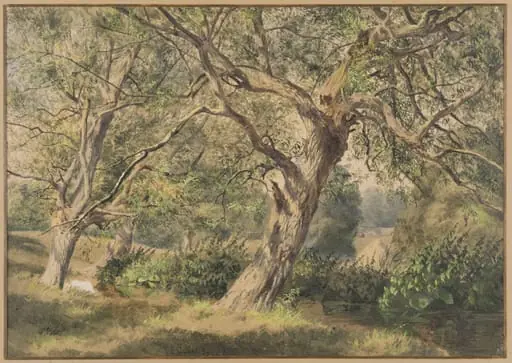
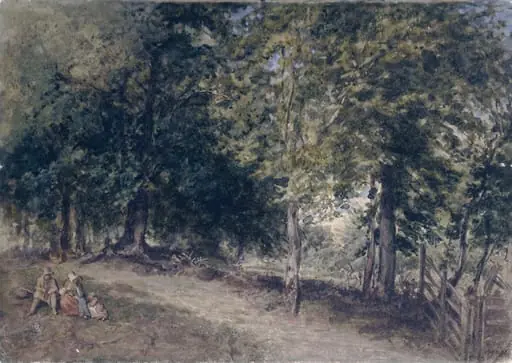
Woodland scene: Helmsley, Yorkshire is a watercolor work on paper by the Romanticist artist Edward Swinburne. It dates from 1810 and is held in the collection of the Victoria and Albert Museum. A watercolour by E.
About this work
Overview
A watercolour by E. Swinburne captures a quiet woodland near Helmsley in North Yorkshire. The work is signed by the artist and accompanied by a handwritten note on the mount confirming the location. Rendered in delicate washes, the scene conveys a sense of stillness, with natural light filtering through dense foliage and the earthy tones of the forest floor suggesting an intimate, unposed moment.
Subject & Meaning
The composition suggests contemplation and quiet engagement with nature, reflecting a personal, introspective encounter rather than a grand narrative.
A woman sits on the ground beneath a massive, twisted tree, engaged in sketching. Her dark attire and wide-brimmed hat merge with the shadows, emphasizing her role as an observer rather than a focal point. A small dog rests on a red cloth nearby, adding a subtle contrast. The composition suggests contemplation and quiet engagement with nature, reflecting a personal, introspective encounter rather than a grand narrative.
Technique & Style
Swinburne employs soft, layered watercolour strokes to suggest the play of light and shadow among the trees. The tree’s gnarled trunk and tangled roots are rendered with careful, textured brushwork, while the hillside behind is built from muted greens and browns. The absence of sharp lines and the fluid blending of tones create a hushed, atmospheric effect, characteristic of intimate landscape studies from the period.
History & Provenance
The work is inscribed on the reverse of its mount with the location, indicating the artist’s direct observation of the site. While little is documented about E. Swinburne, the piece aligns with 19th-century amateur watercolourists who recorded local scenery as personal mementos. Its preservation suggests it was valued within a private collection, likely by family or close associates.
Context
In early 19th-century Britain, watercolour sketching was a common pastime among the educated middle class, particularly for women. Artists often recorded rural landscapes as acts of leisure or study. This scene reflects a broader cultural interest in nature as a space for reflection, though it avoids overt Romantic idealism, favoring quiet realism over dramatic emotion.
Legacy
The work stands as a modest but evocative example of domestic landscape practice in Victorian England. It offers insight into how ordinary individuals engaged with nature through art—not as public statements, but as private, quiet observations. Its survival provides a tangible link to the everyday artistic habits of its time.
Own this work as a print
Artist & collection
Artist
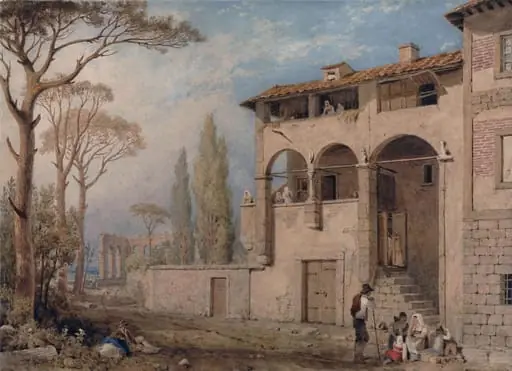
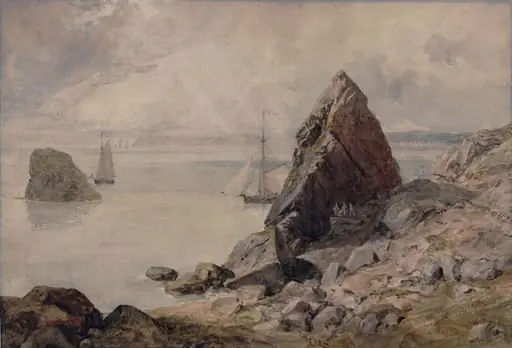
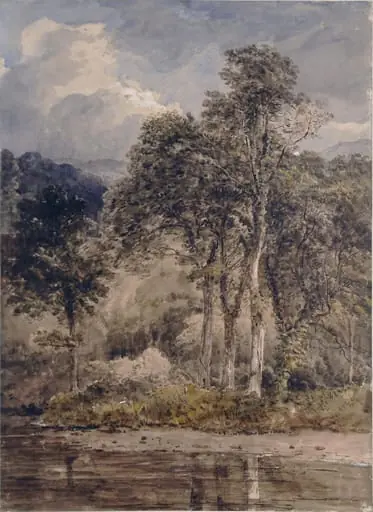
Edward Swinburne painted soft watercolours of real places. In *Buildings near Rome* you can spot sunlit arches and distant domes. His *The Shag Rock, Tor Bay* shows jagged cliffs dropping into green water. Another…