Artwork
The Glärnisch Massif in Switzerland
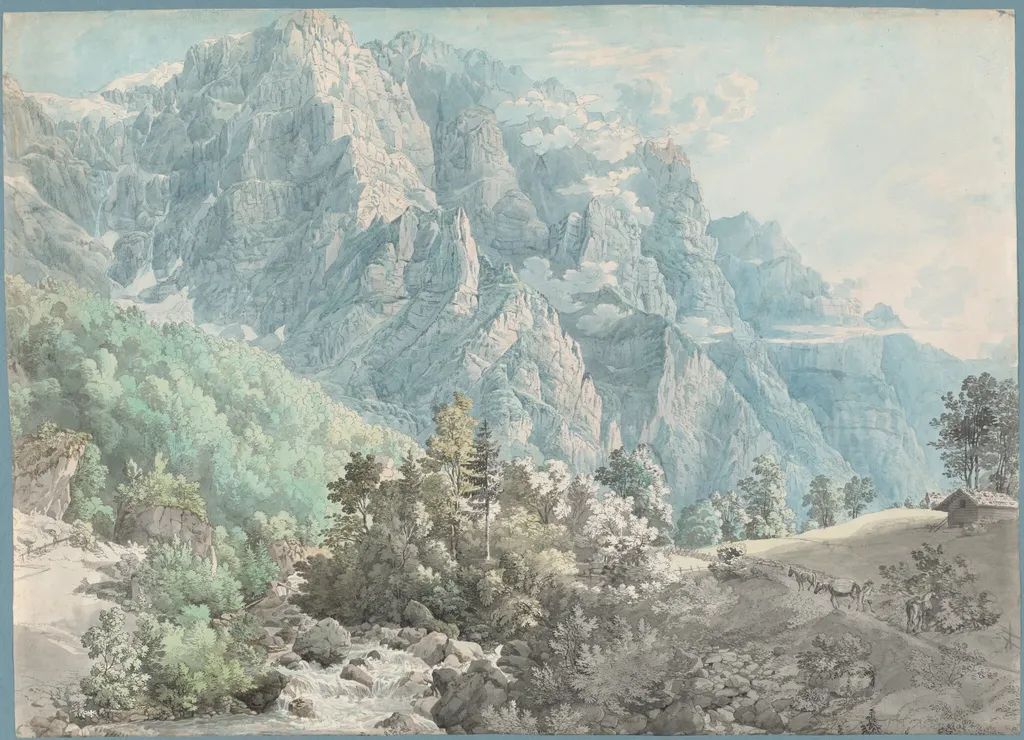
The Glärnisch Massif in Switzerland is an ink drawing by the Romanticist artist Swiss 18th Century. It dates from 1790 and is held in the collection of the National Gallery of Art.
About this work
Overview
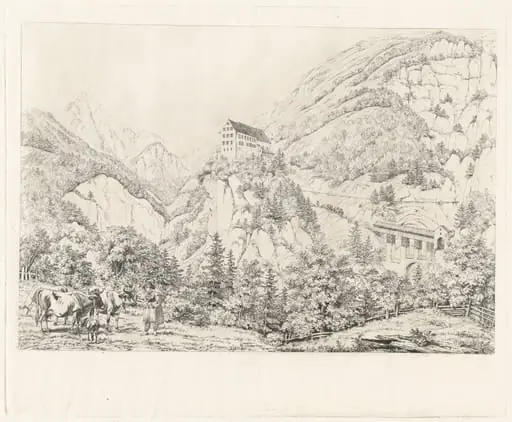
This drawing depicts the Glärnisch Massif in Switzerland, rendered in pen, black ink, and watercolor over graphite on wove paper.
This drawing depicts the Glärnisch Massif in Switzerland, rendered in pen, black ink, and watercolor over graphite on wove paper. The composition centers on a rugged alpine range rising above a quiet valley, with a winding path, scattered trees, a solitary cabin, and grazing horses grounding the scene in human presence. Soft tonal layers create a serene atmosphere, balancing intimacy with the scale of the landscape.
Subject & Meaning
The scene captures a tranquil alpine valley, where natural elements—mountains, stream, and vegetation—dominate. The lone cabin and two horses suggest quiet human habitation, not intrusion. The mountains, rendered with subtle gradients, appear as silent, enduring observers, evoking a sense of stillness and timelessness rather than drama or conquest.
Technique & Style
The artist employed thin, layered watercolor washes over precise ink lines to model form and atmosphere. Shadows on the mountains and sky were blended gently, avoiding harsh contrasts. Graphite underdrawing guided composition, while the wove paper absorbed pigment evenly, enhancing the muted, atmospheric quality of the scene.
History & Provenance
The work is a preparatory or independent study from the early 19th century, likely made during a sketching trip in the Swiss Alps. Its intimate scale and detailed observation align with the tradition of topographical drawing favored by travelers and naturalists of the period, though the artist’s identity remains unconfirmed.
Context
During the early 1800s, Swiss landscapes gained attention among European artists and scientists drawn to their geological grandeur and perceived purity. This drawing reflects a shift from idealized vistas to observed, quiet realism, influenced by Romantic sensibilities that valued nature’s quiet majesty over theatricality.
Legacy
The work exemplifies how watercolor was used to capture subtle atmospheric effects in landscape studies, influencing later generations of topographical and plein air artists. Its restrained palette and observational precision contributed to a broader shift toward naturalism in 19th-century European drawing practices.
Own this work as a print
Artist & collection

Artist
Switzerland’s late 1700s artists loved crisp mountain views. This hand drew one of the most famous peaks, the Glärnisch, using fine lines and soft color washes. The paper still shows faint pencil under the ink and…

 An Alpine Valley
 Cedar Forest & Snowy Peak on Mount Lebanon
 The Valley of Chamouni (Chamonix)
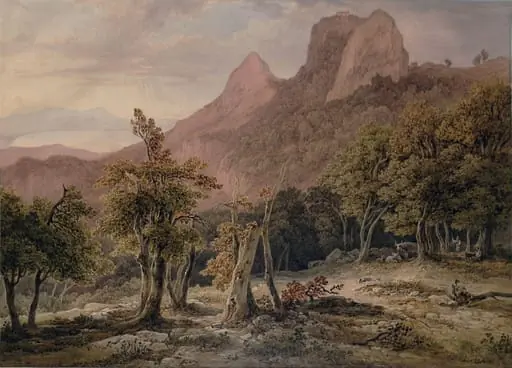 Rocky landscape
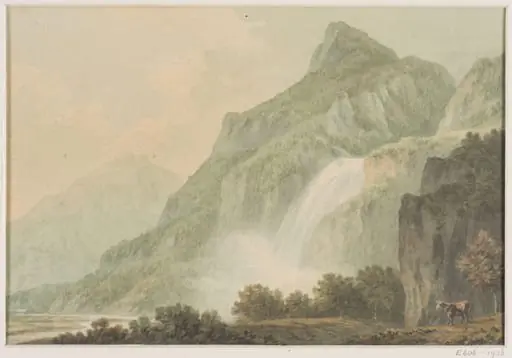 Landscape with waterfall
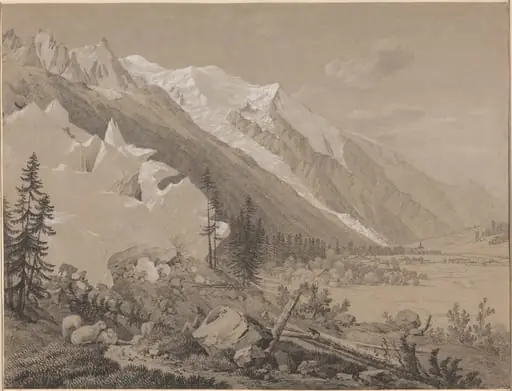 Vue du Mont Blanc
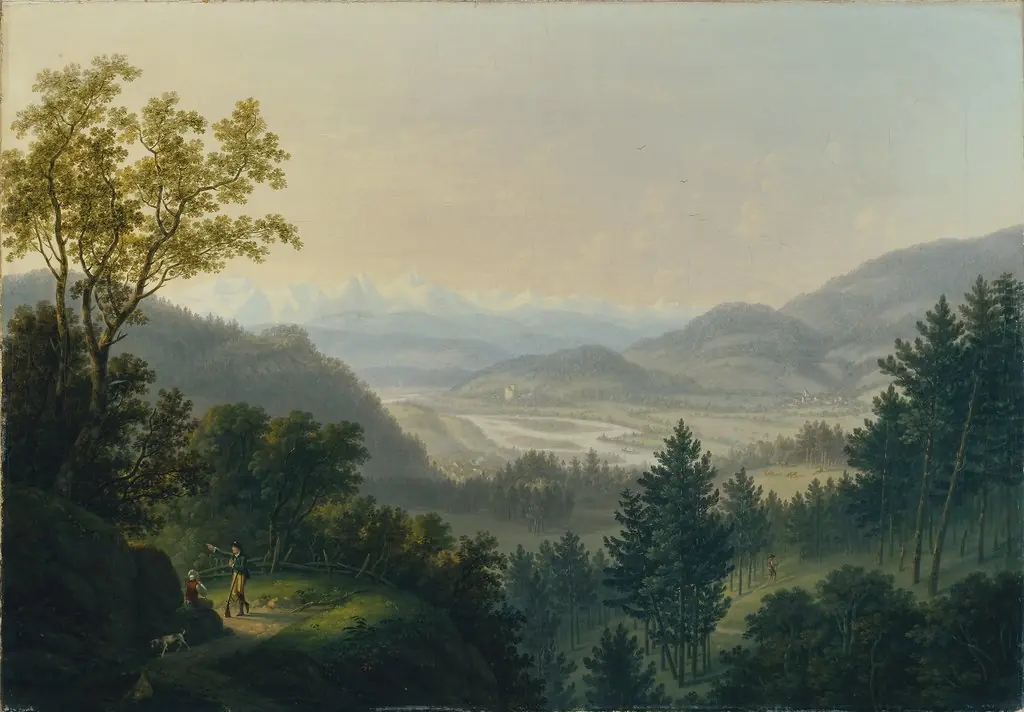 Surroundings of the Habsburg ruins
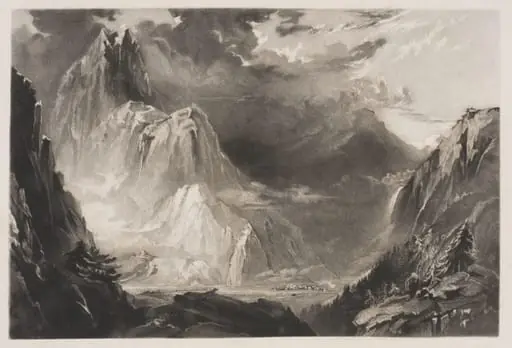 The Pass Between Dale and Dalsjed
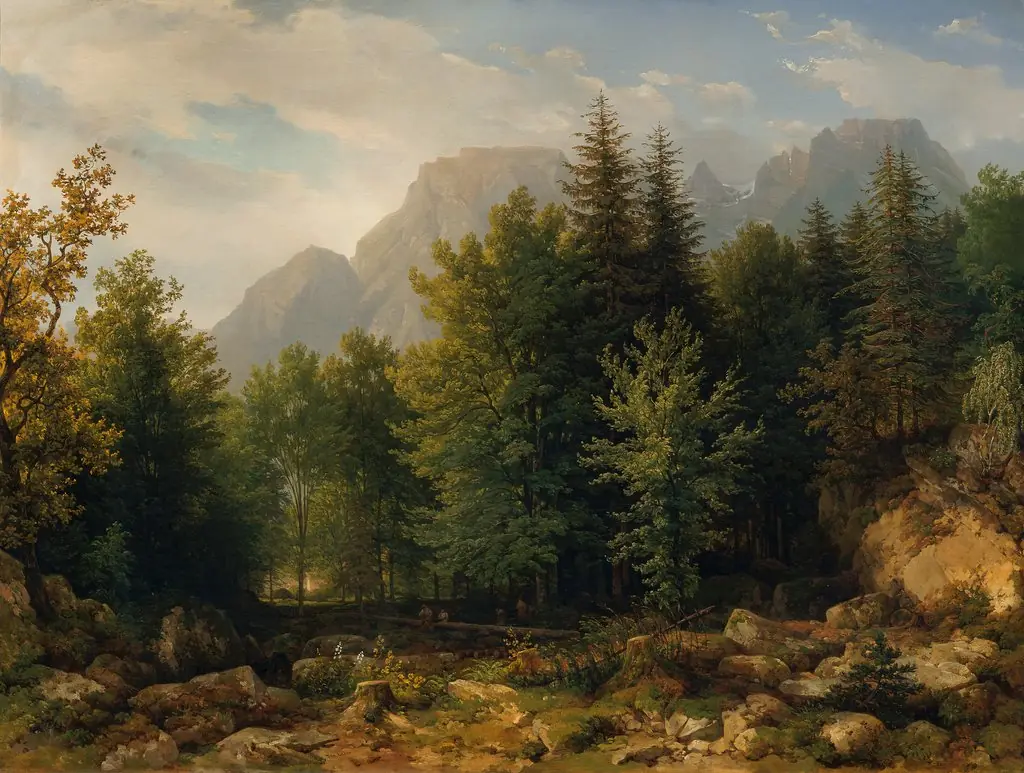 Forest Landscape in the High Mountains
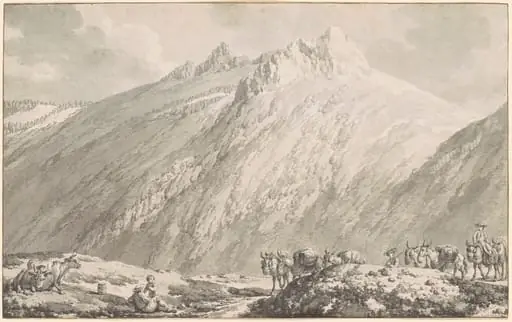 The Grimsel Pass
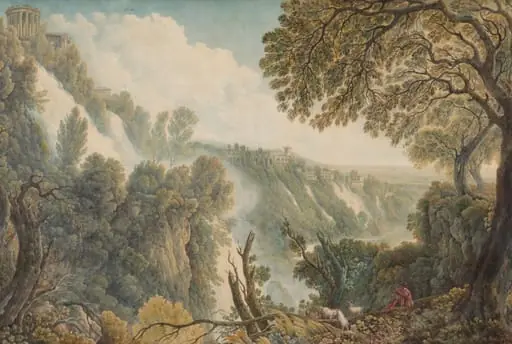 The Waterfalls at Tivoli
 The Georgenberg in the Tyrol