Artwork
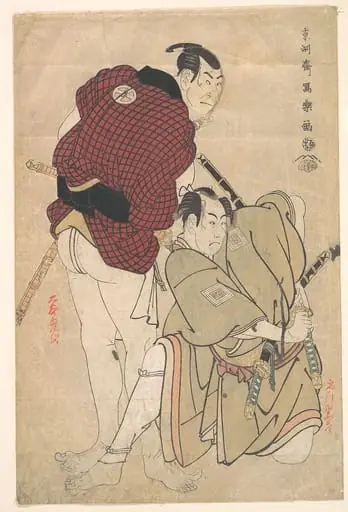
東洲斎写楽画 初代市川男女蔵の奴一平 『恋女房染分手綱』|Ichikawa Omezō I in the Role of Yakko Ippei from the Play "Koinyōbō somewake tazuna"
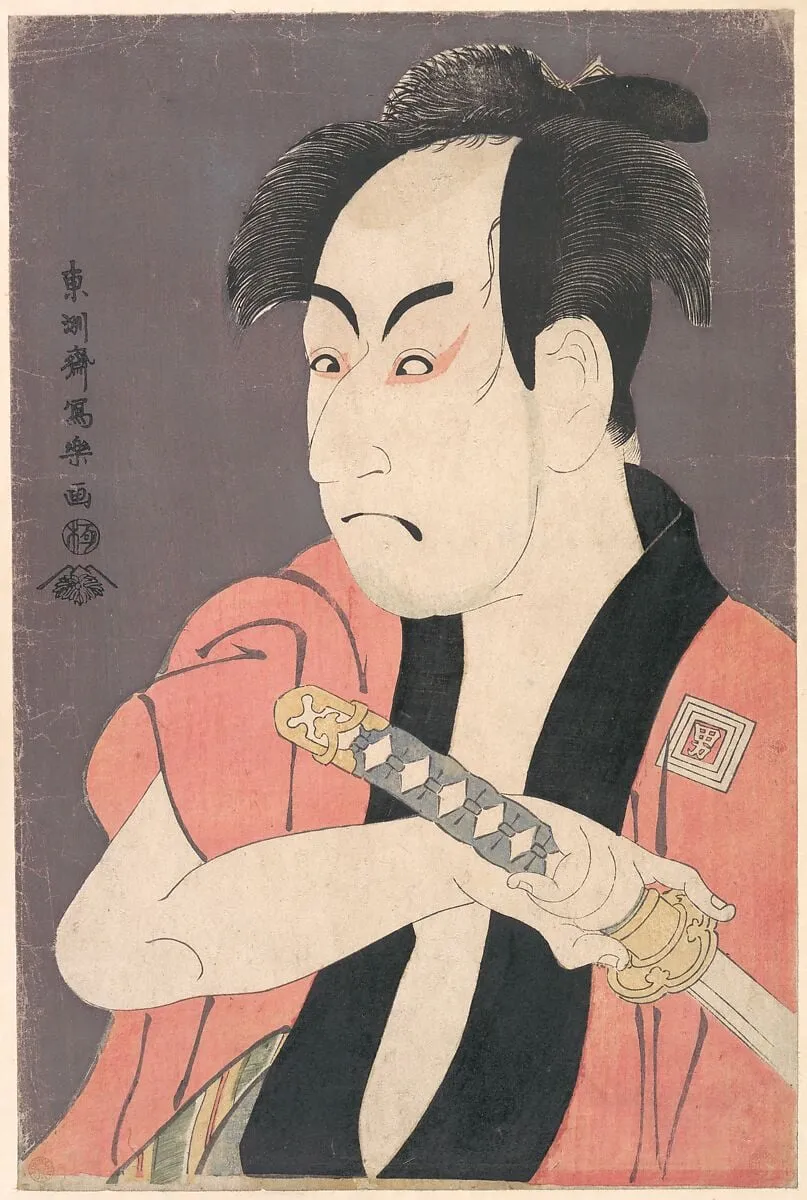
東洲斎写楽画 初代市川男女蔵の奴一平 『恋女房染分手綱』|Ichikawa Omezō I in the Role of Yakko Ippei from the Play "Koinyōbō somewake tazuna" is an ink print by the Romanticist artist Tōshū. It dates from 1794 and is held in the collection of the Metropolitan Museum of Art.
About this work
Overview
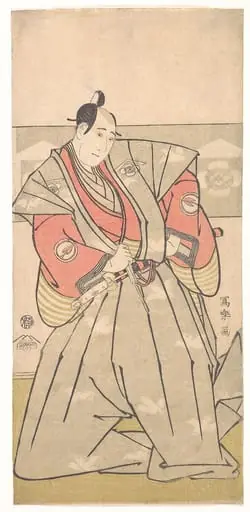
Tōshūsai Sharaku’s 1794 woodblock print captures the actor Ichikawa Omezō I in the role of Yakko Ippei from the kabuki drama Koinyōbō somewake tazuna. Rendered in ink and color with a striking white mica background, the image presents a sharply dressed figure gripping a sword, his face half‑shadowed, conveying a moment of tension on stage.
Subject & Meaning
The print portrays a servant character, Yakko Ippei, known for his forceful demeanor. By emphasizing the narrowed eyes and pressed lips, Sharaku highlights the actor’s intense concentration, suggesting either a spoken rebuke or a readiness to act. The composition underscores the dramatic intensity typical of kabuki’s heightened emotional expression.
Technique & Style
Executed as a multicolor woodblock (nishiki-e), the work combines black ink outlines with vivid pigments and a layer of white mica that catches light, giving the figure a luminous edge. Sharaku’s bold line work and stark contrast align with the ukiyo‑e tradition, while the mica background enhances the theatrical presence of the subject.
History & Provenance
Created during Sharaku’s brief but prolific period of activity in 1794‑1795, the print was produced quickly as part of a series of actor portraits. The artist’s sudden disappearance from the publishing world after just ten months leaves the work’s provenance largely tied to contemporary Edo print houses.
Context
The portrait belongs to the late‑Edo era’s vibrant kabuki culture, when actors were celebrated as celebrities and their likenesses circulated widely. Sharaku’s focus on realistic, sometimes unflattering, depictions set his work apart from the more idealized portraits of his peers, offering a candid glimpse into theatrical performance.
Artist & collection