Artwork
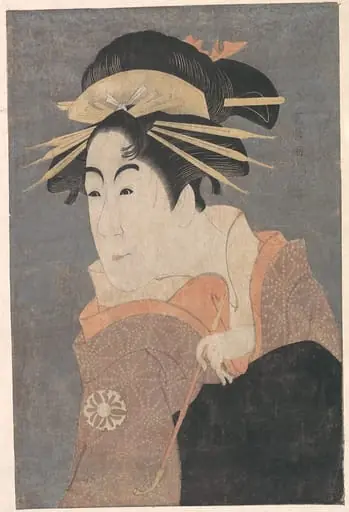
東洲斎写楽画 四代岩井半四郎の重の井 『恋女房染分手綱』|Iwai Hanshirō IV as Shigenoi in the Play "Koinyōbō Somewake Tazuna"
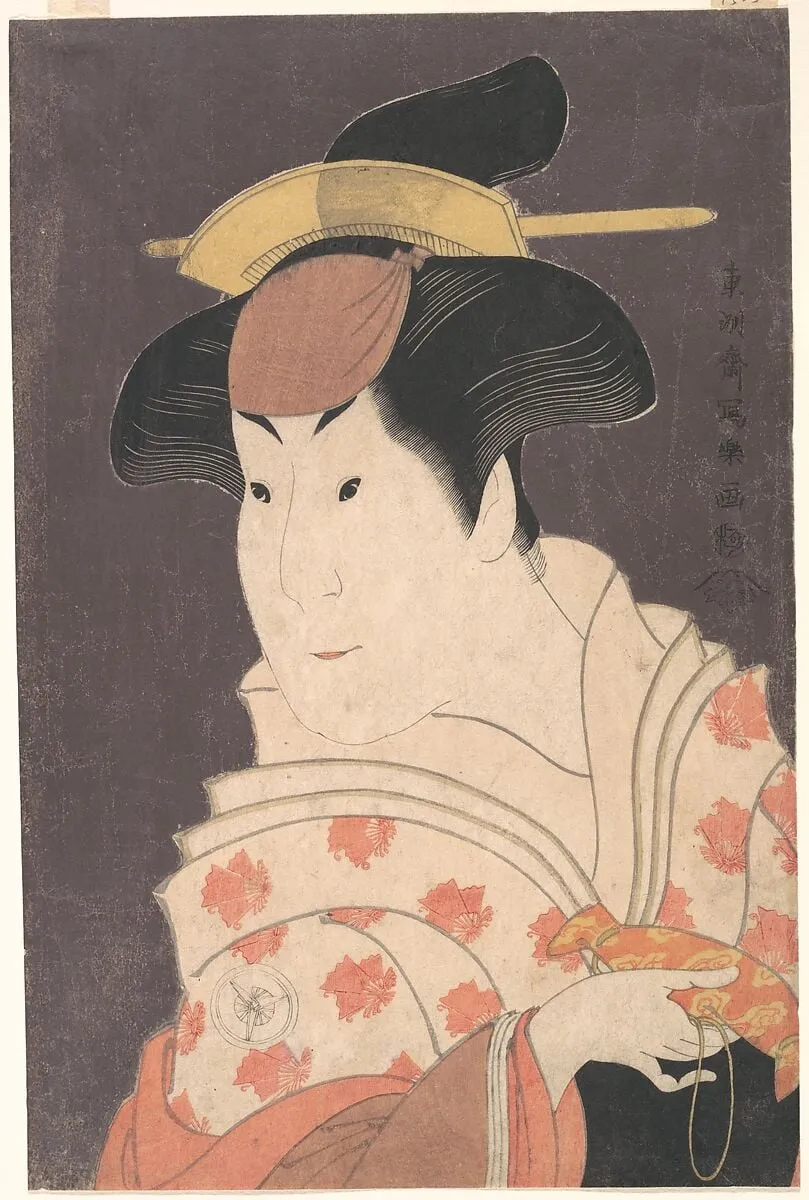
東洲斎写楽画 四代岩井半四郎の重の井 『恋女房染分手綱』|Iwai Hanshirō IV as Shigenoi in the Play "Koinyōbō Somewake Tazuna" is an ink print by the Romanticist artist Tōshū. It dates from 1794 and is held in the collection of the British Museum.
About this work
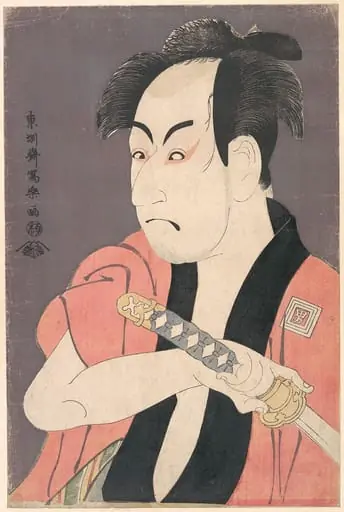
You see a sharp-faced actor in a red-and-white robe, one eyebrow raised, lips pressed tight.
You see a sharp-faced actor in a red-and-white robe, one eyebrow raised, lips pressed tight. The background shimmers with tiny flecks of mica that catch the light like glitter.
Sharaku made these prints for only ten months in 1794, then vanished. No one knows why he stopped or where he went. The actor’s exaggerated features feel almost like a modern close-up—unusual for the time.
If you like this bold style, look up *actors* next.
Overview
This 1794 woodblock print by Tōshūsai Sharaku portrays the actor Iwai Hanshirō IV in the role of Shigenoi from the kabuki drama *Koinyōbō Somewake Tazuna*. Executed with ink, color and a sprinkling of white mica on paper, the image captures a moment of theatrical intensity, highlighted by a glittering background that catches ambient light.
Subject & Meaning
The composition centers on the actor’s sharply defined face, his raised eyebrow and tightly pressed lips suggesting a blend of concentration and emotional restraint. As Shigenoi, the character is a figure of authority within the play, and Sharaku’s emphasis on exaggerated physiognomy underscores the heightened expressiveness typical of kabuki performance.
Technique & Style
Sharaku employed traditional ukiyo‑e carving methods but pushed the visual language toward stark realism. The use of white mica creates a subtle sparkle that contrasts with the bold red‑and‑white costume, while the crisp line work and exaggerated facial features anticipate later close‑up portraiture, distinguishing the print from contemporaneous works.
History & Provenance
Sharaku’s career was remarkably brief, spanning only ten months in 1794 before he vanished from the publishing scene, leaving the origins of his identity and disappearance uncertain. This print, like his other surviving works, was produced for commercial distribution and now resides in museum collections that document the fleeting yet influential output of the enigmatic artist.
Artist & collection