Artwork
A Music party
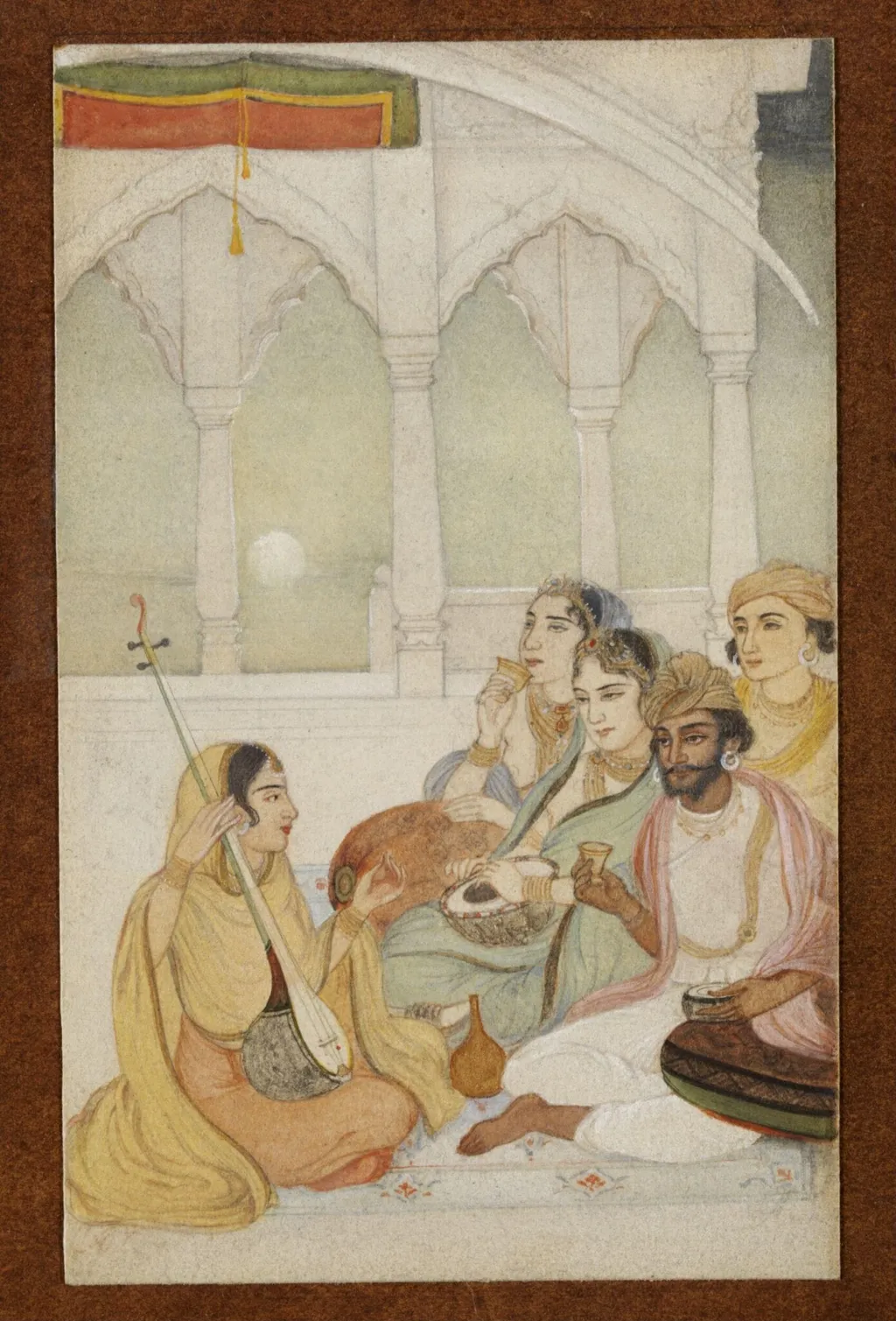
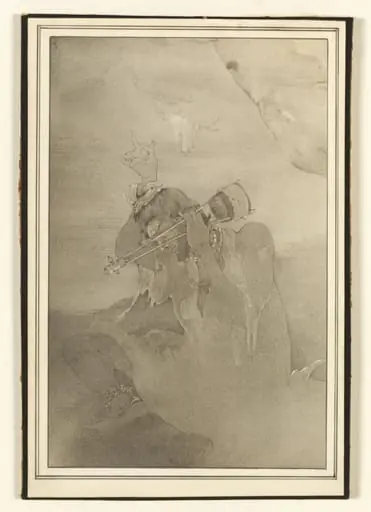
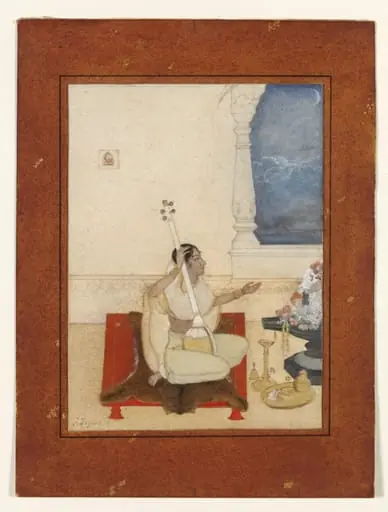
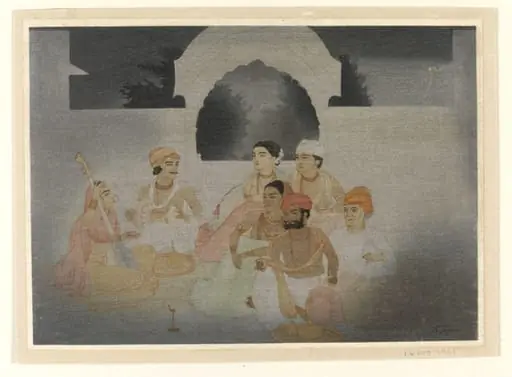
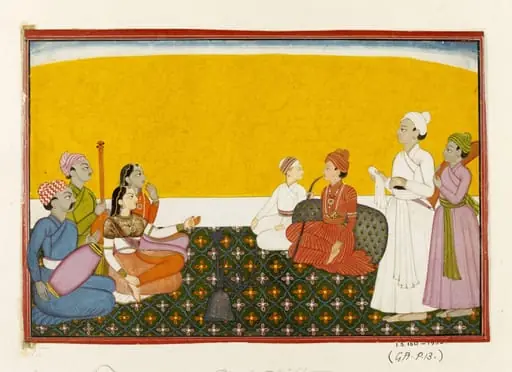
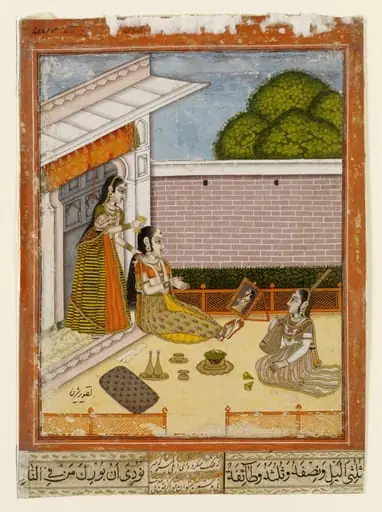
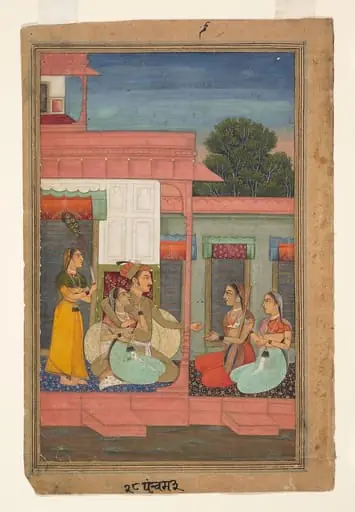
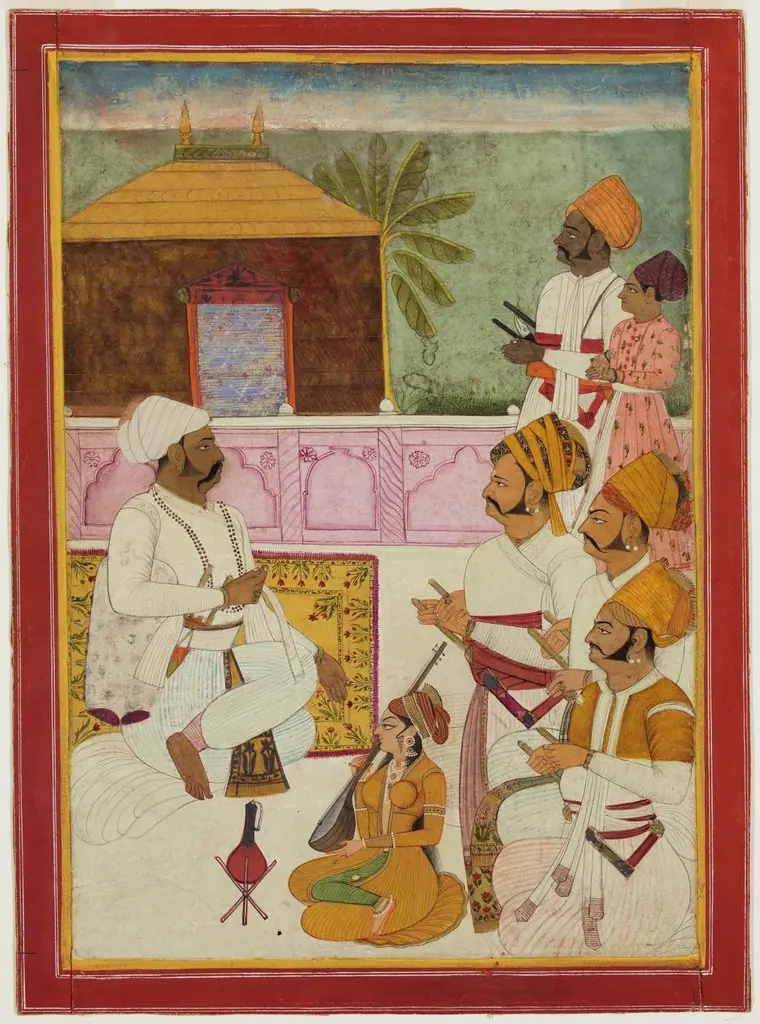
A Music party is a paint painting by the Indian Miniature artist Abanindranath Tagore. It dates from 1905 and is held in the collection of the Victoria and Albert Museum.
About this work
Overview
A Music Party is a painted scene depicting an intimate gathering in a Mughal-era court, where a woman plays the sitar while others listen attentively.
A Music Party is a painted scene depicting an intimate gathering in a Mughal-era court, where a woman plays the sitar while others listen attentively. Created by Abanindranath Tagore, the work reflects his effort to revive Indian artistic traditions in opposition to Western academic styles promoted under British rule. The composition blends classical Indian aesthetics with a quiet modern sensibility, emphasizing atmosphere over dramatic action.
Subject & Meaning
The painting centers on a moment of quiet cultural contemplation: a female musician performing for an attentive audience within a royal setting. The choice of the sitar and the serene gathering evokes indigenous musical traditions, positioning art as a vessel of cultural identity. The absence of overt spectacle suggests a deliberate shift from imperial grandeur toward introspective, personal expression rooted in Indian heritage.
Technique & Style
Tagore employed soft washes and delicate linework inspired by Mughal and Rajput miniatures, rejecting the oil-based realism taught in British-run art schools. The background arches and fading sunlight are rendered with subtle gradations, creating a hazy, poetic mood. Color is restrained, favoring earth tones and muted hues, reinforcing the work’s contemplative tone and its alignment with pre-colonial Indian aesthetics.
History & Provenance
Painted during the early 20th century, the work emerged from the Bengal School’s broader movement to reclaim Indian artistic autonomy. Tagore, as its leading figure, cultivated a visual language that resonated with nationalist sentiment. While specific early ownership records are sparse, the painting became emblematic of a new Indian artistic identity, later entering institutional collections as a representative work of the era.
Context
In the wake of the 1905 Partition of Bengal, cultural revival became a form of quiet resistance. Tagore’s work responded to colonial education systems that marginalized indigenous techniques. By reinterpreting Mughal and Rajput styles through a modern lens, he offered an alternative to Western naturalism, aligning art with a broader project of cultural self-definition during the Indian independence movement.
Legacy
Tagore’s approach influenced generations of Indian artists to look inward for inspiration rather than outward to Europe. A Music Party exemplifies how traditional forms could be adapted to express contemporary identity without overt political rhetoric. His legacy lies in establishing a visual vocabulary that became foundational to modern Indian art, recognized for its sensitivity and cultural depth.
Artist & collection

Artist
Abanindranath Tagore was an Indian painter who was the principal artist and creator of the Indian Society of Oriental Art in 1907.