Artwork
Beauty Receiving a Visitor
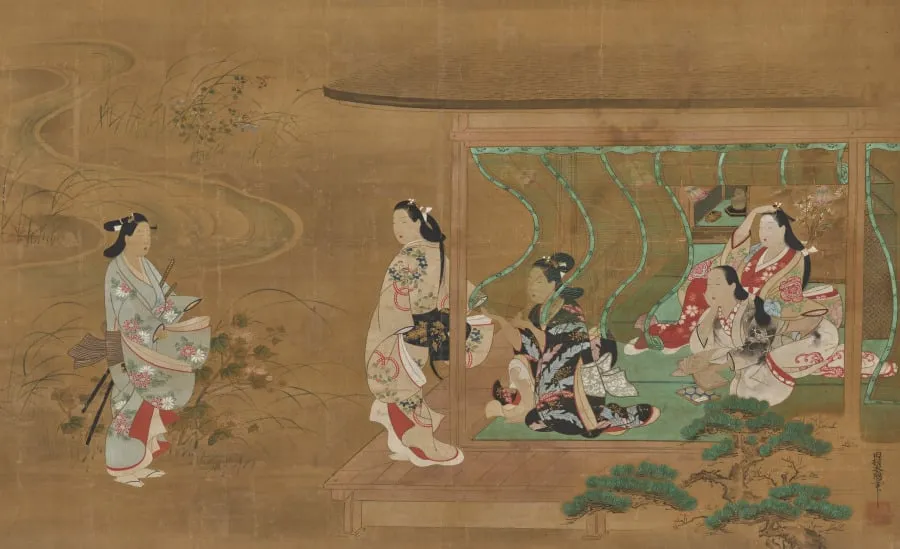
Beauty Receiving a Visitor is an unspecified painting by the Baroque artist Tamura Suio. It is held in the collection of the Cleveland Museum of Art.
About this work
It’s a quiet moment, but the breeze and the raised curtain make it feel alive, like we’re peeking into a private world.
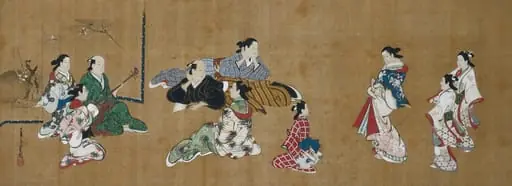
A woman in a flowing robe steps onto a wooden porch to greet a visitor, while others watch from inside. The wind lifts their sleeves and the sheer curtains around them. Two swords at the visitor’s side and rich fabric patterns show their high status.
The scene is set in an *engawa*—a narrow veranda that wraps around traditional Japanese homes. It’s a quiet moment, but the breeze and the raised curtain make it feel alive, like we’re peeking into a private world.
To see more of these everyday yet elegant scenes, look up japan, edo period (1615–1868).
Overview
This painting captures a quiet moment of social ritual in an Edo-period residence, where a woman steps onto the engawa to greet an arriving guest. Others observe from within the interior space, their presence suggested rather than fully revealed. The scene balances stillness and motion: wind animates fabric and blinds, while the setting remains composed and deliberate, reflecting the refined etiquette of the era.
Subject & Meaning
The encounter depicts a formal yet intimate greeting between individuals of elevated status. The visitor’s paired swords indicate samurai rank, while the elaborate patterns on their robes and those of the observers signal wealth and social standing. The raised blind and carefully arranged objects—lacquer box, incense burner—suggest a space curated for both hospitality and aesthetic contemplation, emphasizing the cultural value placed on subtle, meaningful gesture.
Technique & Style
The artist employs fine brushwork to render the textures of silk, wood, and lacquer with precision. Translucent curtains are painted with delicate washes to suggest movement and light, while gold powder highlights on the lacquer box catch the eye without overt ornamentation. The composition frames the scene through the partial opening of the blind, inviting the viewer into a private interior, a hallmark of ukiyo-e’s interest in domestic intimacy.
History & Provenance
Created during the Edo period, this work aligns with the rise of ukiyo-e prints and paintings that depicted everyday life among the urban elite. Though the artist’s identity is unrecorded, the subject matter reflects the cultural preoccupations of the time: the aesthetics of restraint, the performance of social roles, and the quiet dignity of domestic spaces. It likely originated in a collector’s circle in Kyoto or Edo.
Context
In Edo-period Japan, the engawa served as a liminal space between public and private realms, where social rituals unfolded with strict decorum. The presence of swords, incense, and lacquerware points to the samurai and merchant classes who cultivated refined tastes amid political stability. Such scenes were not merely records of daily life but expressions of cultural identity, where environment and attire conveyed hierarchy and sensitivity.
Legacy
This painting contributes to a broader tradition of Japanese art that finds significance in the ordinary. Its emphasis on atmosphere, subtle detail, and spatial ambiguity influenced later generations of artists, both in Japan and abroad, who sought to convey emotion through restraint. It remains a quiet testament to the elegance embedded in everyday social rituals of the early modern period.
Artist & collection

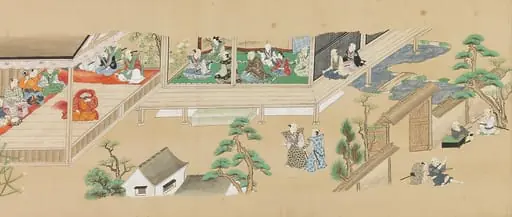 能楽風俗図絵巻|Six Noh Performances in Scenes from Daily Life
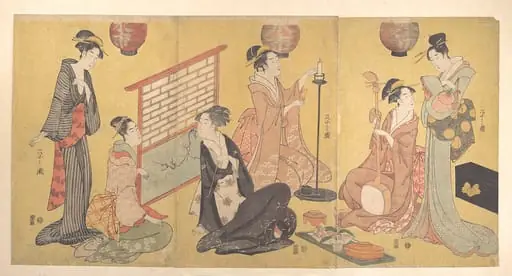 Untitled
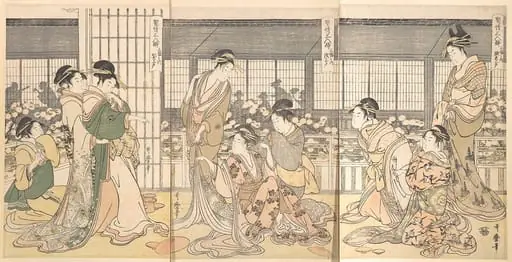 契情三人酔 三幅之内 腹立上戸 泣上戸 笑上戸|Three Intoxicated Courtesans
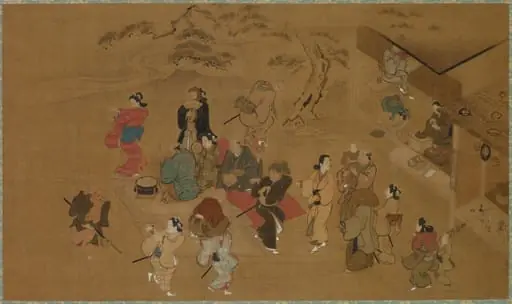 Spring Dance Scene
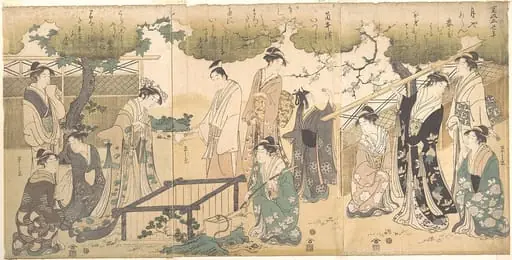 Untitled
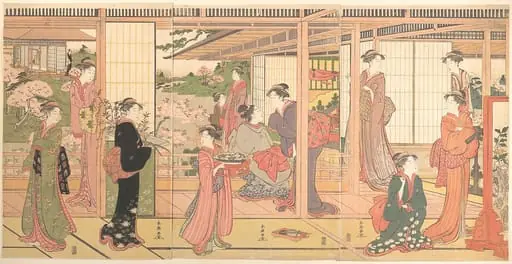 Untitled
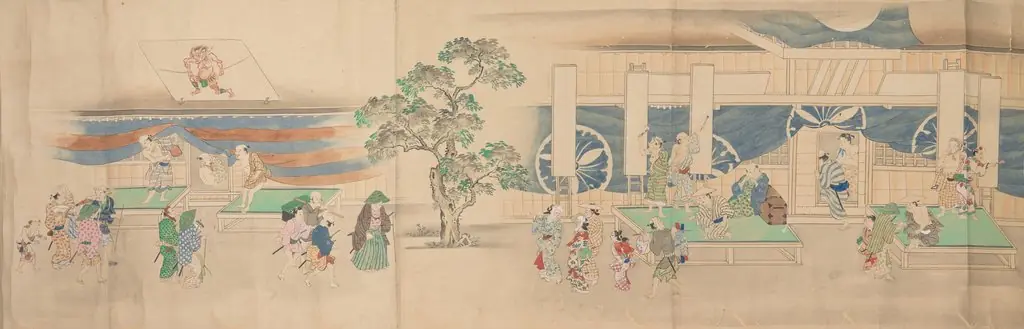 Kabuki Theater
 三囲神社の御開帳|Display of Treasures at Mimeguri Shrine (Mimeguri jinja no onkaichō)
 Scene from A Long Tale for an Autumn Night
 鳥文斎栄之画 和歌三神図|Honoring the Three Gods of Poetry: Women Composing Poems
 Untitled
 Entertainment Scene