Artwork
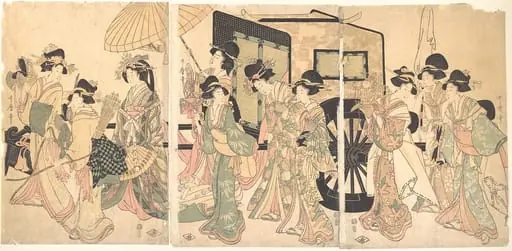
三囲神社の御開帳|Display of Treasures at Mimeguri Shrine (Mimeguri jinja no onkaichō)
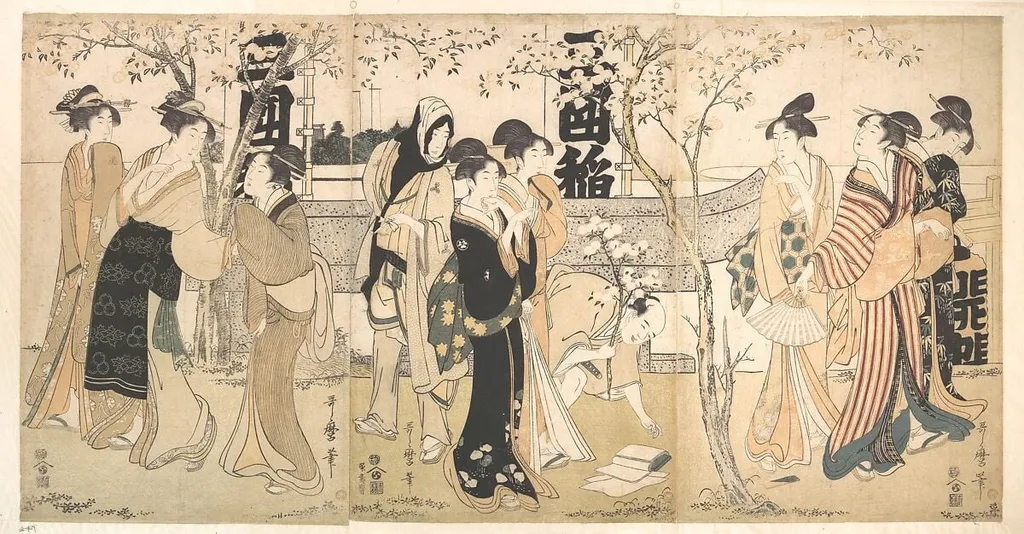
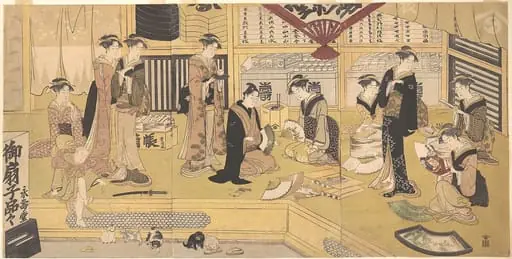
三囲神社の御開帳|Display of Treasures at Mimeguri Shrine (Mimeguri jinja no onkaichō) is an ink print by the Romanticist artist Kitagawa Utamaro. It dates from 1799 and is held in the collection of the Metropolitan Museum of Art.
About this work
Overview
Created in 1799 by the ukiyo-e master Kitagawa Utamara, this three‑panel woodblock print depicts a procession of women moving along a tree‑lined path. The work, now part of the Metropolitan Museum of Art’s collection, belongs to the genre‑scene tradition that recorded everyday activities in Edo‑period Japan.
Subject & Meaning
The panels show a group of women dressed in long kimono and wide‑brimmed hats, some holding fans or parasols while others accompany infants or small children. Their composed yet purposeful expressions suggest a communal outing, likely linked to a religious or ceremonial event at Mimeguri Shrine, as indicated by the title’s reference to a shrine’s treasure display.
Technique & Style
Executed as a triptych, the image combines ink outlines with subtle color washes of brown, black and pale blue. Utamaro’s characteristic attention to facial detail is evident in the nuanced expressions of each figure, while the soft palette and delicate line work convey a tranquil atmosphere typical of his later genre prints.
History & Provenance
Printed in Edo (modern Tokyo) during the height of Utamaro’s career, the work entered the Metropolitan Museum of Art’s holdings through a 20th‑century acquisition of Japanese prints. Its preservation in paper format allows contemporary viewers to study both the artistic techniques of the period and the social customs depicted.
Artist & collection


 Untitled
 Untitled
 実競色乃美名家見 三浦屋小紫 白井権八|The Lovers Miura-ya Komurasaki and Shirai Gonpachi.
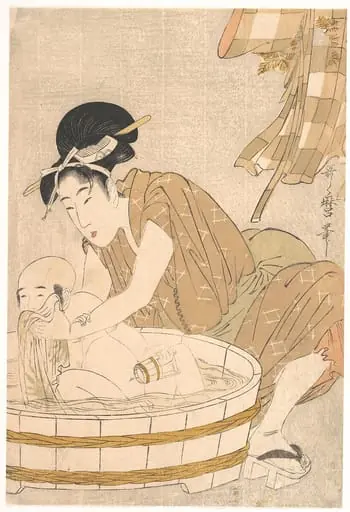 行水|Bathtime (Gyōzui)
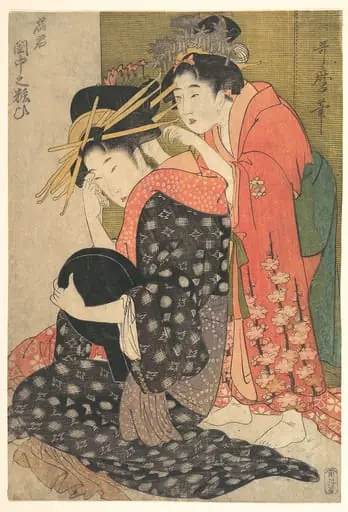 名君 閨中の粧ひ|The Oiran Yoso-oi Seated at Her Toilet
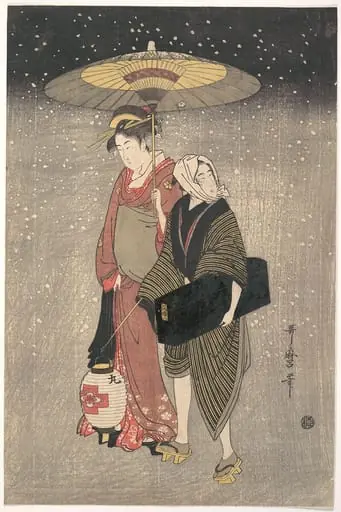 Untitled
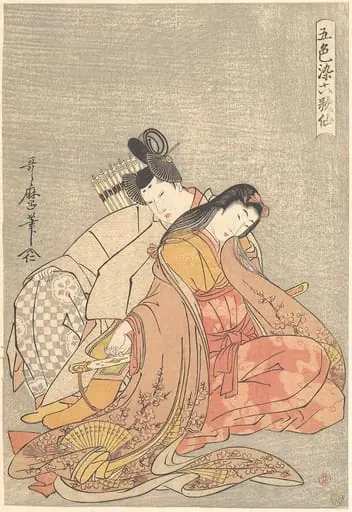 『五色染六歌仙』 在原業平と小野小町|“The Poet Ariwara no Narihira (825–880) and Ono no Komachi,” from the series Five Colors of Love for the Six Poetic Immortals (Goshiki-zome rokkasen)
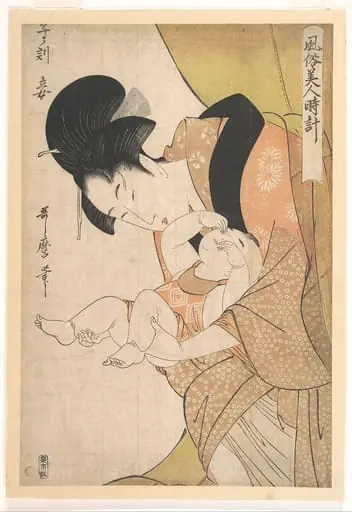 風俗美人時計 子ノ刻 妾|Midnight: Mother and Sleepy Child
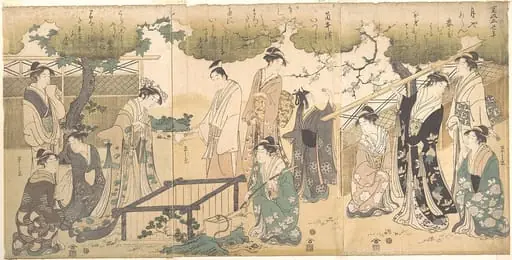 Untitled
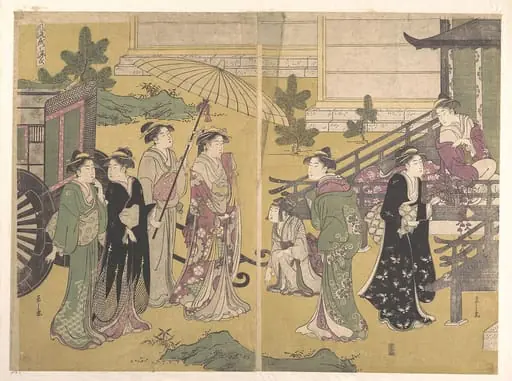 Untitled
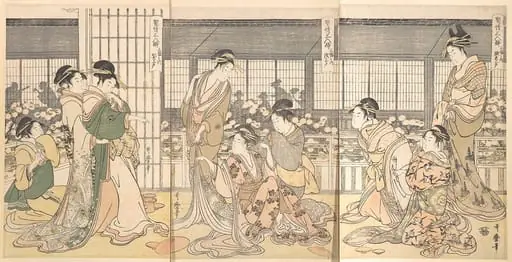 契情三人酔 三幅之内 腹立上戸 泣上戸 笑上戸|Three Intoxicated Courtesans
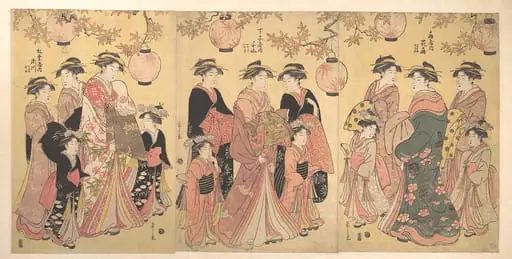 Untitled
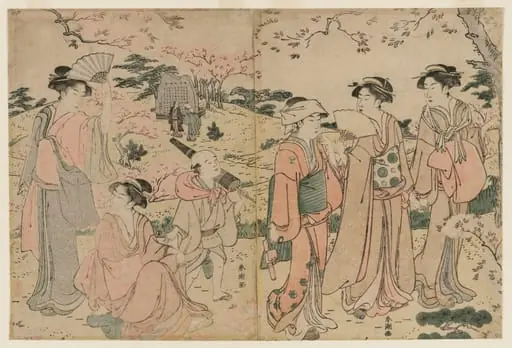 Women Viewing Cherry Blossoms at Asukayama
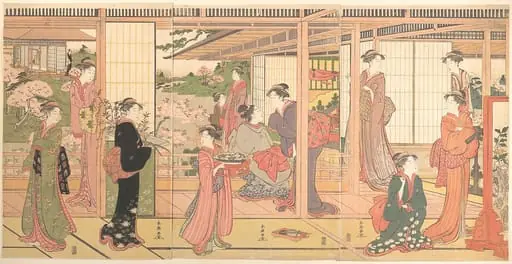 Untitled
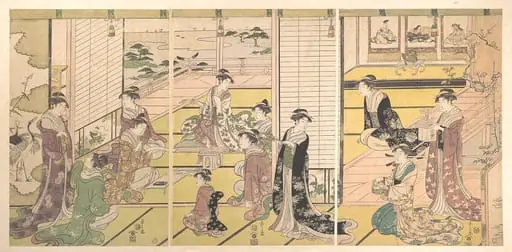 鳥文斎栄之画 和歌三神図|Honoring the Three Gods of Poetry: Women Composing Poems
 Untitled
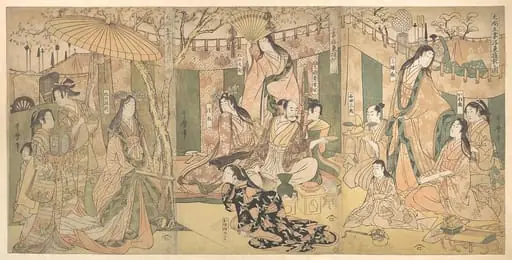 太閤五妻洛東遊観之図|A View of the Pleasures of the Taiko and His Five Wives at Rakutō
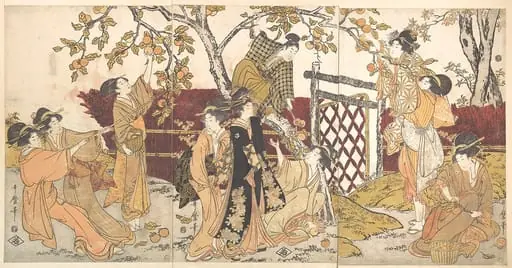 喜多川歌麿画 柿捥ぎ|Picking Persimmons (Kaki-mogi)
 Untitled
 御影堂扇屋図|The Mieidō Fan Shop