Artwork
Entertainment Scene
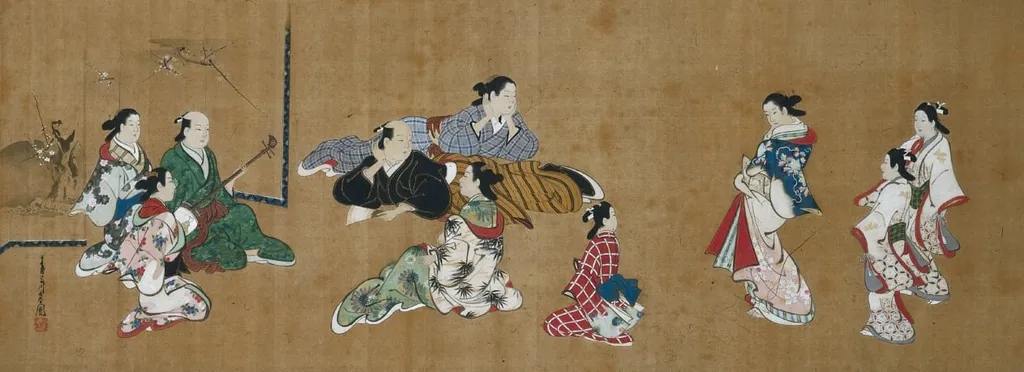
Entertainment Scene is an unspecified painting by the Baroque artist Miyagawa Chōshun. It dates from 1732 and is held in the collection of the Cleveland Museum of Art.
About this work
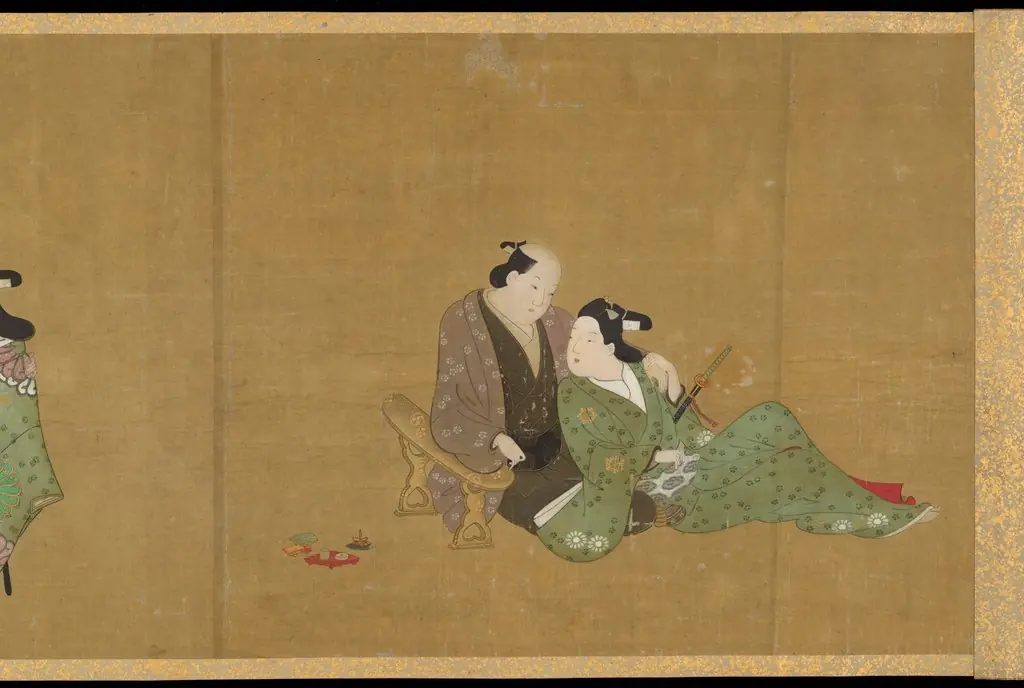
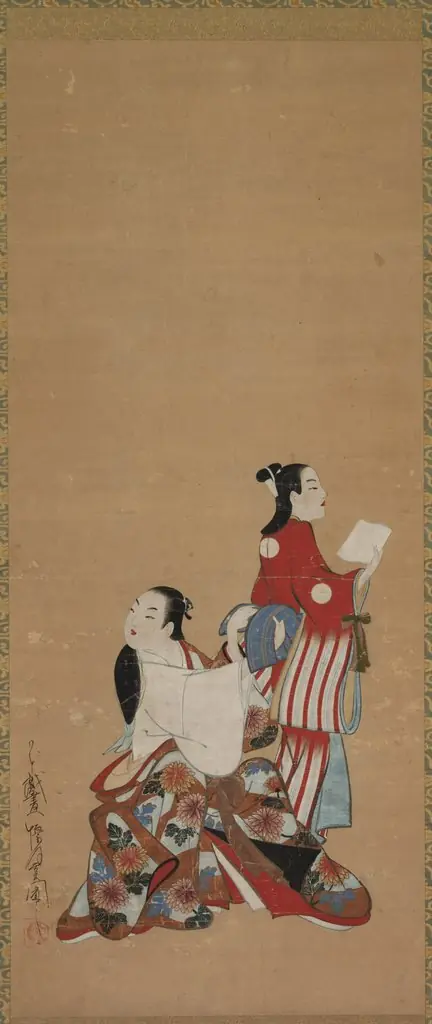
You see a courtesan in a bright kimono entering a room full of musicians, dancers, and a lounging samurai.
You see a courtesan in a bright kimono entering a room full of musicians, dancers, and a lounging samurai.
The painting shows how power worked in Edo-period Japan. The courtesan isn’t just performing—she controls the money and attention in the room. The samurai’s wealth flows through her, then to the other entertainers. It’s a quiet snapshot of social rules most viewers today wouldn’t notice.
Look up *Japan, Edo period (1615–1868)* to see more scenes like this.
Overview
The painting 'Entertainment Scene' depicts a moment of high social significance in a salon, capturing the dynamics between a high-ranking courtesan, her attendants, and a samurai guest.
Subject & Meaning
The scene revolves around the courtesan's grand entrance, which commands the attention of the samurai and other entertainers, illustrating the flow of power and wealth in the room.
Context
Created during the Edo period (1615–1868), the work reflects the social hierarchies and economic dependencies within Japan's pleasure quarters at the time.
Technique & Style
The artist has rendered the scene with attention to the courtesan's elaborate kimono and the samurai's relaxed demeanor, highlighting the contrast between their roles and the social dynamics at play.
Artist & collection


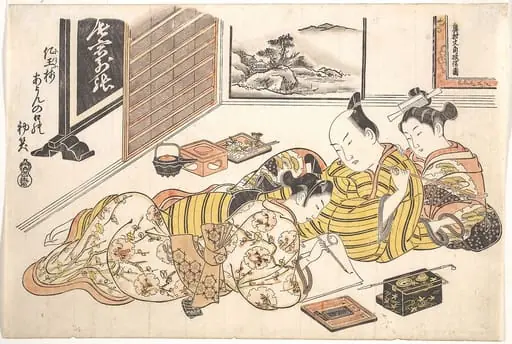 『閨の雛形』 正月|Plate from the Erotic Book Mounds of Dyed Colors: A Pattern Book for the Boudoir (Someiro no yama neya no hinagata), First Month
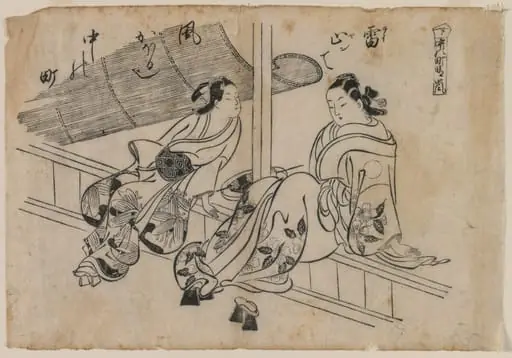 Twilight at Nakanocho
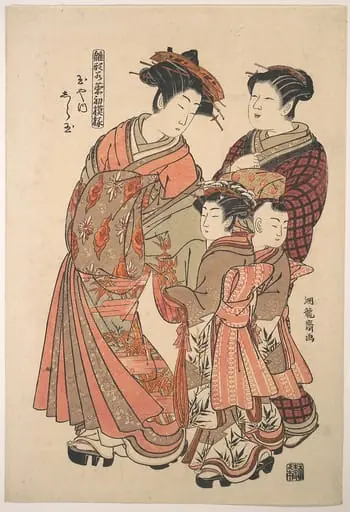 『雛形若菜初模様 玉や内 しら玉』|The Courtesan Shiratama of the Tamaya Brothel, from the series “A Pat-tern Book of the Year’s First Designs, Fresh as Spring Herbs” (“Hinagata wakana hatsu moyō”)
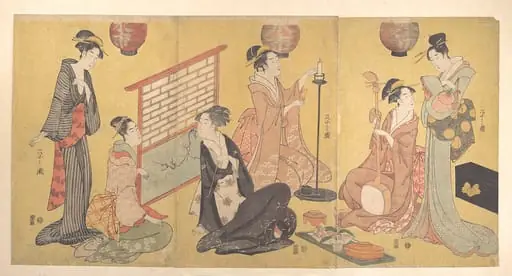 Untitled
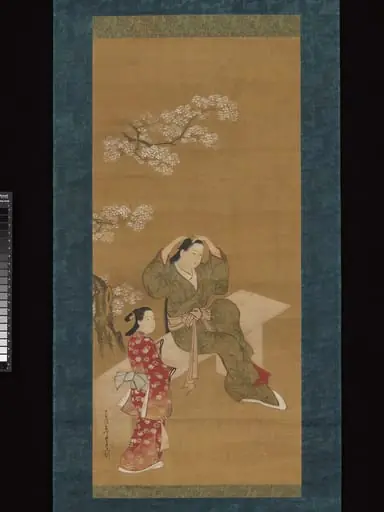
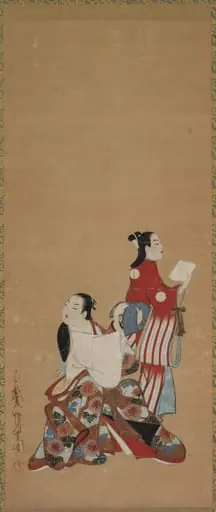 Courtesan and Attendant
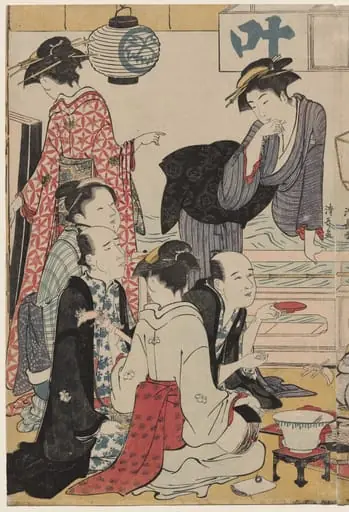 Entertainment on a Balcony by the Water at Nakasu, from the series, A Collection of Beautiful Modern Women of the Pleasure Quarters
 能楽風俗図絵巻|Six Noh Performances in Scenes from Daily Life
 Untitled
 Courtesan and Attendant
 No Title
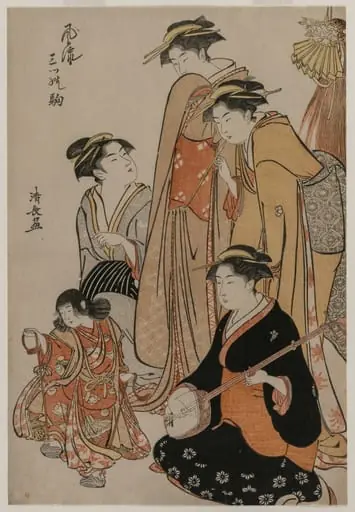 Women Watching a Girl Dance on Shells (From the series Fashionable Presentations of Three Horses)
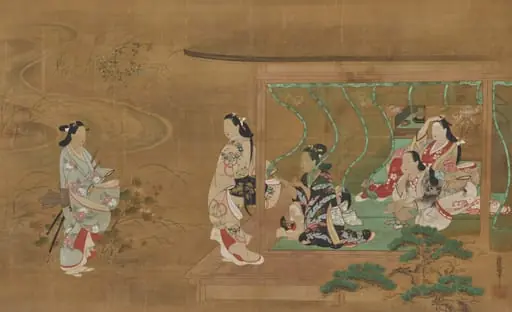 Beauty Receiving a Visitor