Artwork
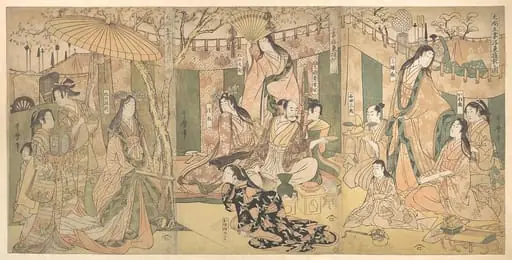
鳥文斎栄之画 和歌三神図|Honoring the Three Gods of Poetry: Women Composing Poems
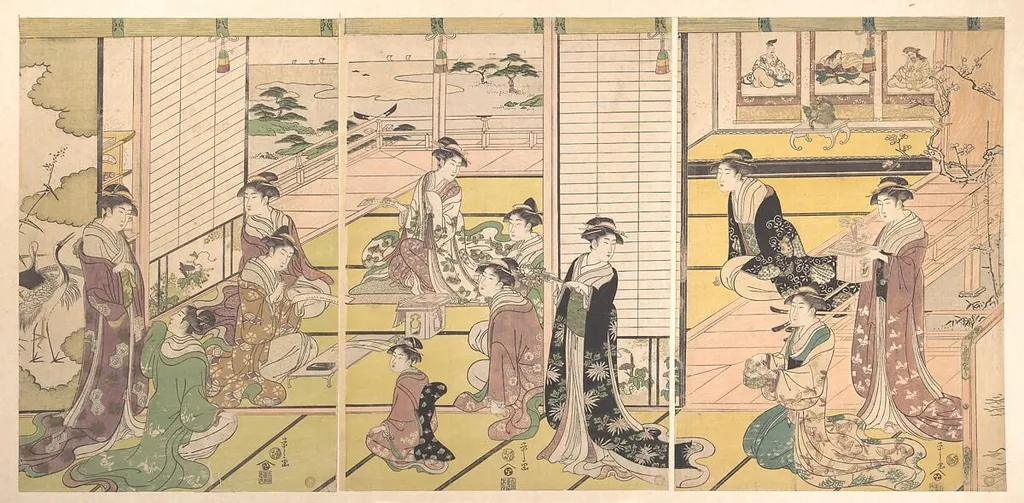
鳥文斎栄之画 和歌三神図|Honoring the Three Gods of Poetry: Women Composing Poems is an ink print by the Romanticist artist Chôbunsai Eishi. It dates from 1792 and is held in the collection of the Metropolitan Museum of Art.
About this work
Overview
Created circa 1792, this triptych of woodblock prints by Chōbunsai Eishi presents three interior scenes in which women are engaged in poetic activity. Rendered in ink and subtle colour on paper, each panel is framed by sliding doors that open onto a tranquil garden, linking the domestic interior with a calm natural landscape.
Subject & Meaning
The composition celebrates the traditional Japanese concept of the three poetic deities, portraying female figures in elegant attire as they write, read, or hold fans and scrolls. Their poised gestures and the presence of writing implements underscore the cultural esteem for literary refinement and the feminine role in cultivating poetry.
Technique & Style
Eishi employed the ukiyo‑e woodblock method, combining fine line work with delicate colour washes to delineate the women’s patterned kimonos and the surrounding architecture. The soft palette and careful delineation of folds and foliage reflect his training in the Kano school, while his characteristic emphasis on slender, graceful figures aligns with his bijin‑ga oeuvre.
History & Provenance
Born into a samurai family that provided a stipend of 500 koku, Eishi abandoned his official duties to pursue a career in printmaking, eventually gaining renown for his portraits of beautiful women. The triptych entered the collection of The Metropolitan Museum of Art, where it remains part of the museum’s ukiyo‑e holdings.
Context
During the late eighteenth century, ukiyo‑e prints catered to a burgeoning urban audience interested in fashion, literature, and the pleasures of the pleasure quarters. Eishi’s work reflects this milieu, merging the aesthetic of courtly elegance with the popular genre of bijin‑ga, and illustrating the period’s fascination with poetic symbolism.
Artist & collection

Artist
Chōbunsai Eishi (鳥文斎 栄之; 1756–1829) was a Japanese ukiyo-e artist. His last name was Hosoda (細田). His first name was Tokitomi (時富). His common name was Taminosuke (民之丞) and later Yasaburo (弥三郎). Pupil of Kano Eisen'in…

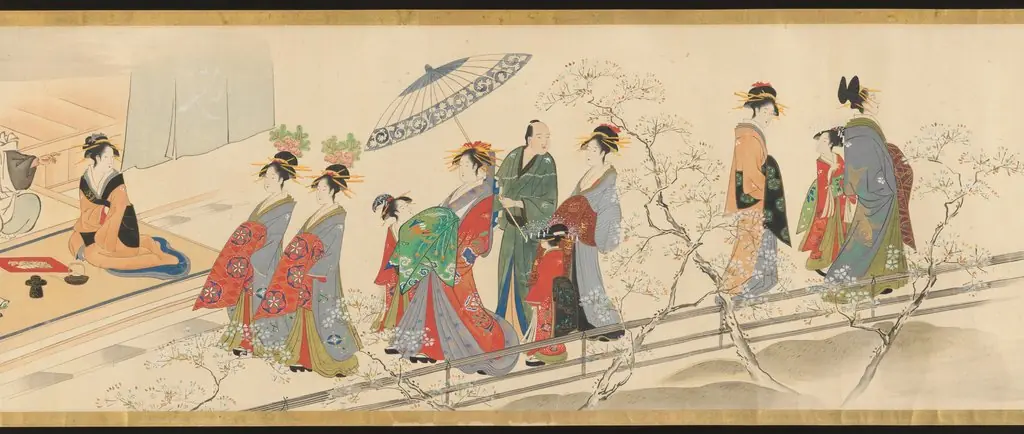 Three Gods of Good Fortune Visit the Yoshiwara; or “Scenes of Pleasure at the Height of Spring”
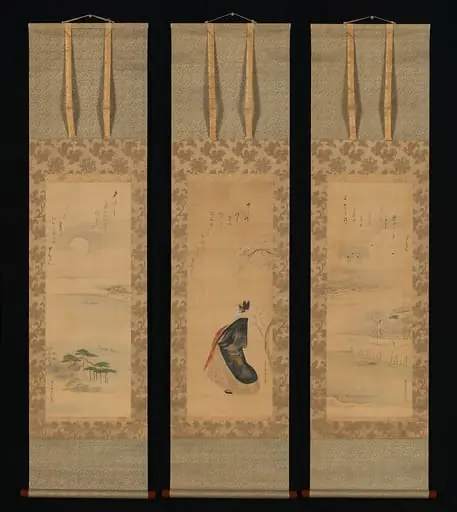 蜀山人(大田 南畝)賛 雪・月・花図 |Snow, Moon, and Cherry Blossoms (Yoshiwara in Three Seasons)
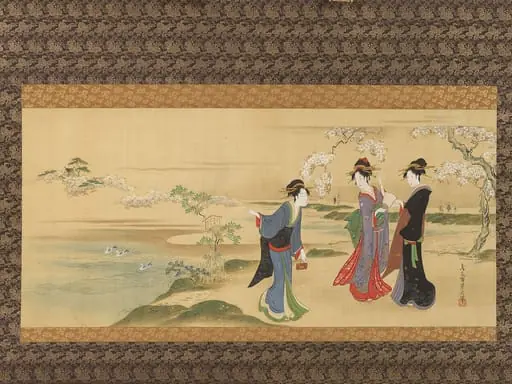 Untitled
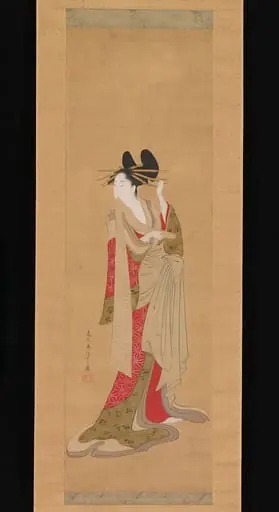 Untitled
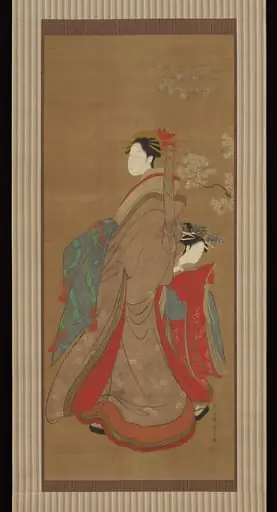 Untitled
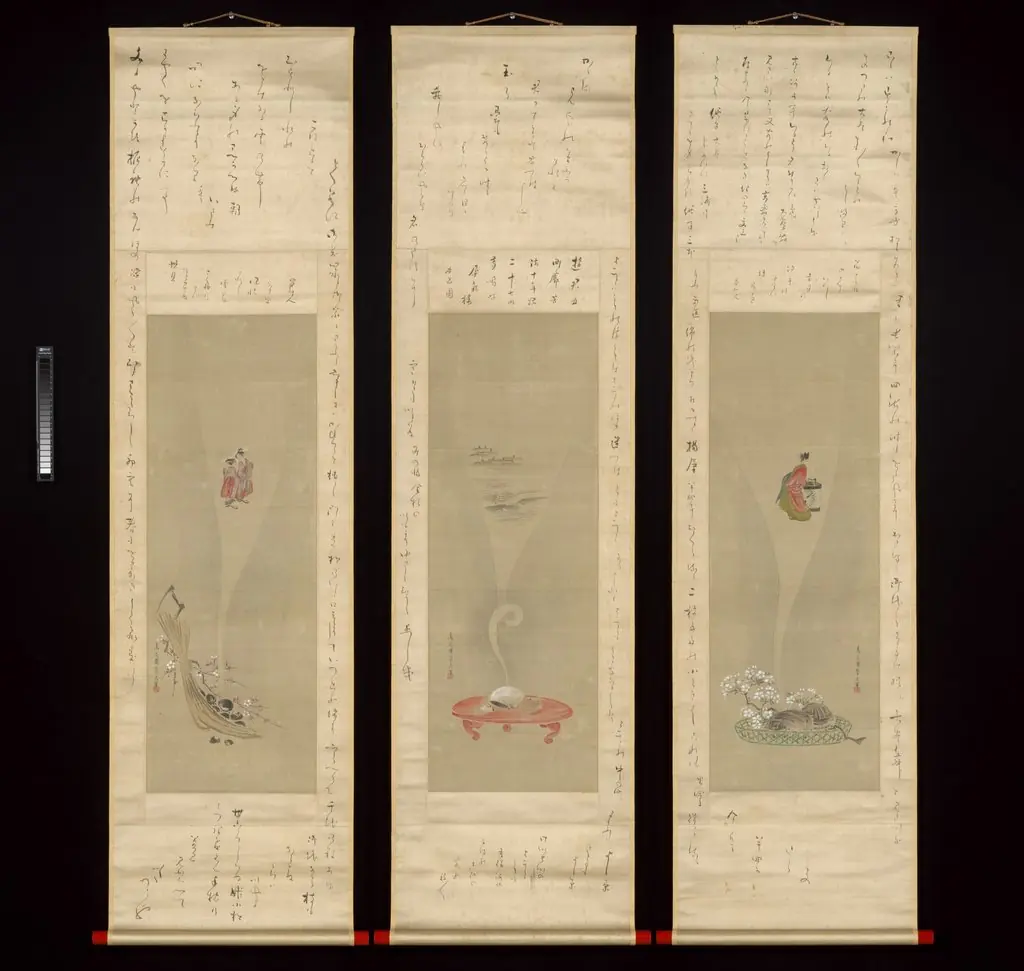 Shellfish and Apparitions of the Yoshiwara Pleasure Quarter
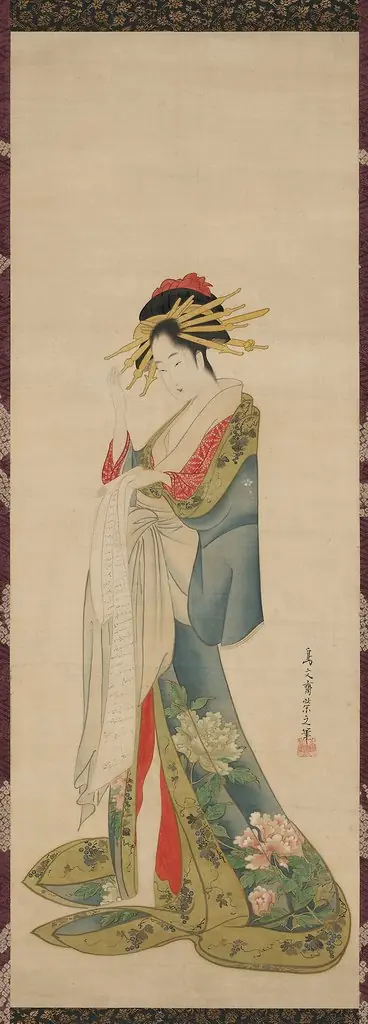 A Courtesan Reading a Letter
 Beauty Replacing Her Hairpin
 契情三人酔 三幅之内 腹立上戸 泣上戸 笑上戸|Three Intoxicated Courtesans
 Untitled
![南四季 夏景|The Four Seasons in Southern Edo: A Summer Scene (Minami shiki; Natsu [no] kei), by Utagawa Toyokuni I](https://artifactworldgallery.com/img/utagawa-toyokuni-i--the-four-seasons-in-southern-edo-a-summer-scene-minami-shiki--de8110e8ab2ddcb5-w320.webp) 南四季 夏景|The Four Seasons in Southern Edo: A Summer Scene (Minami shiki; Natsu [no] kei)
南四季 夏景|The Four Seasons in Southern Edo: A Summer Scene (Minami shiki; Natsu [no] kei) Untitled
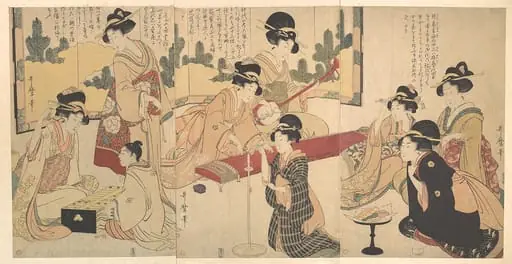 Untitled
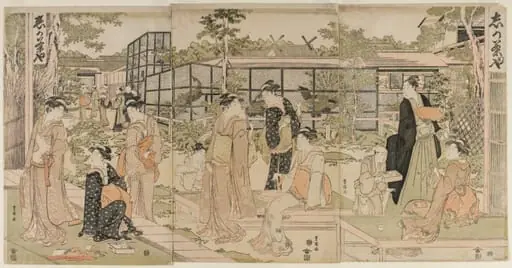 The Shika Teahouse
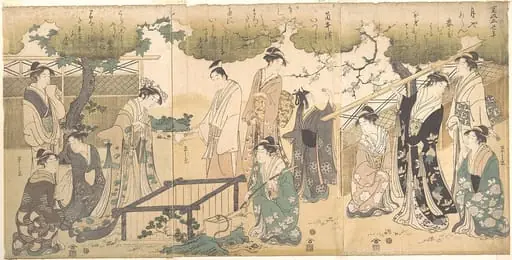 Untitled
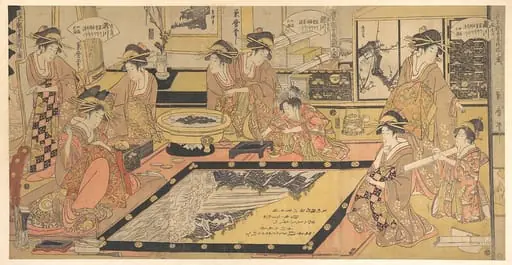 『浅草観音奉掛額之 図』 「扇屋内滝川 富川、粂川、玉川、津川、歌川、清川 め浪、お浪」|A Votive Picture to Be Donated to the Kannon of Asakusa (Asakusa Kannon hō kakegaku no zu), by Takigawa of the Ōgiya, Kamuro Menami and Onami, with Tomikawa, Kumegawa, Tamagawa, Tsugawa, Utagawa, and Kiyokawa
 太閤五妻洛東遊観之図|A View of the Pleasures of the Taiko and His Five Wives at Rakutō
 Untitled