Artwork
Puppy
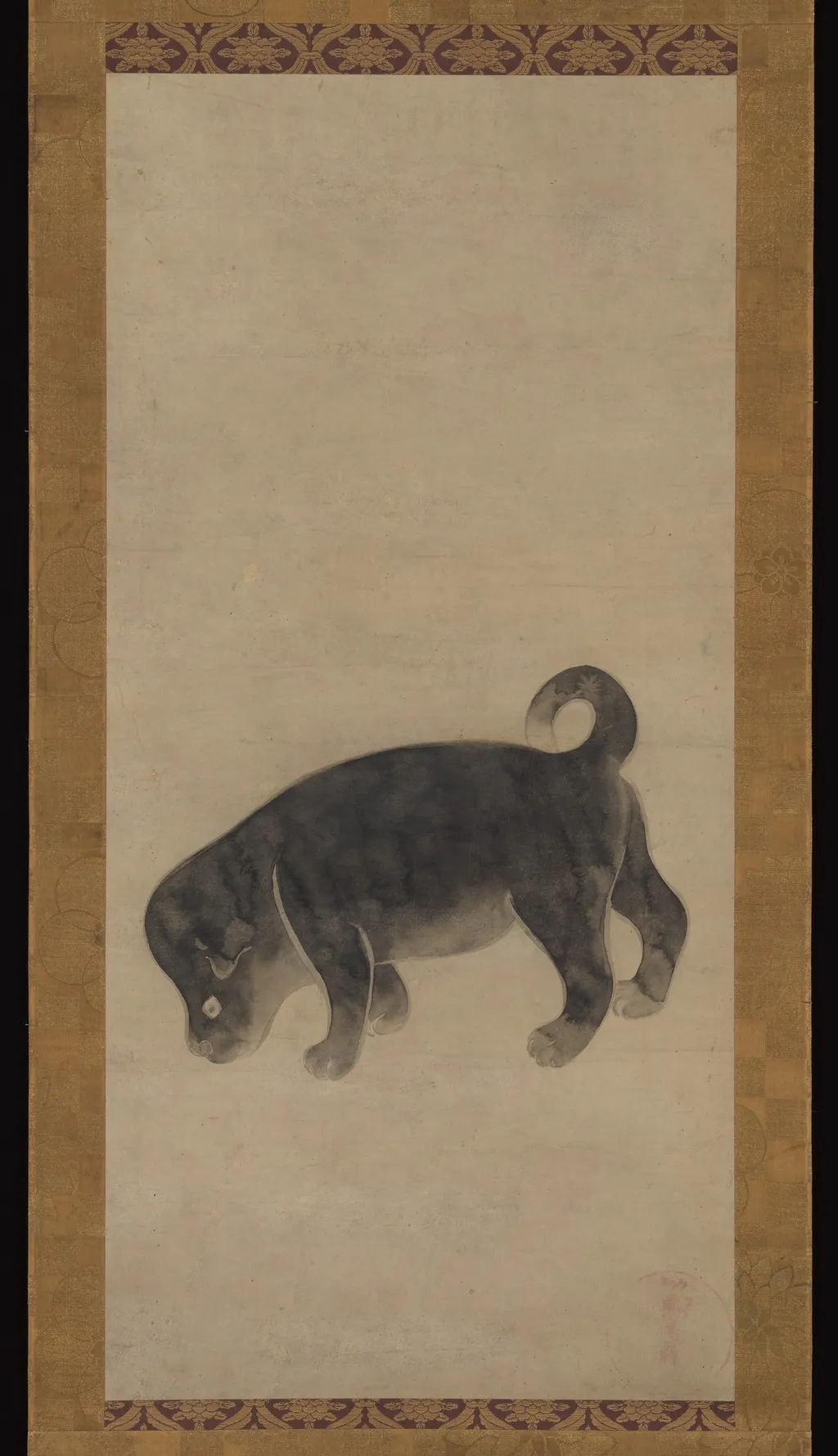
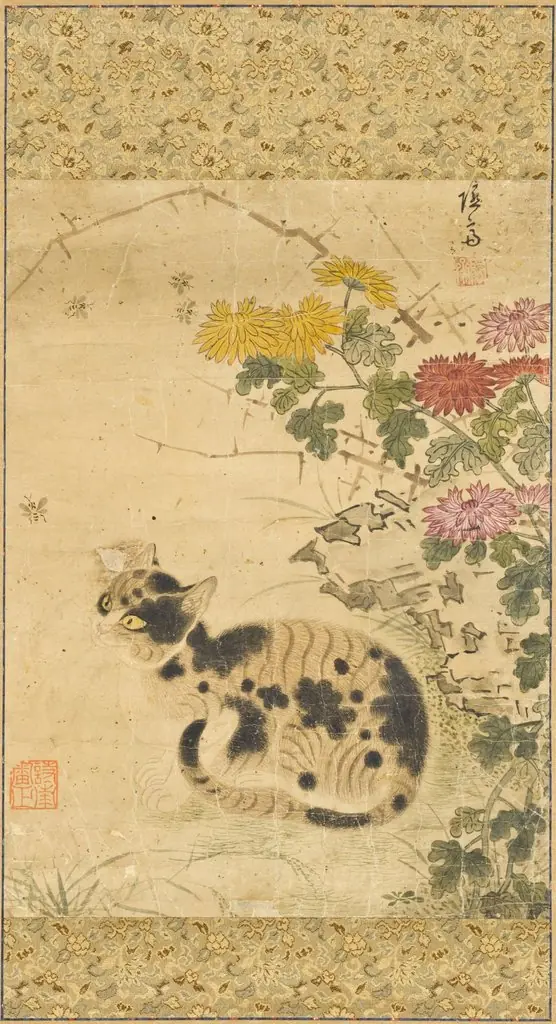
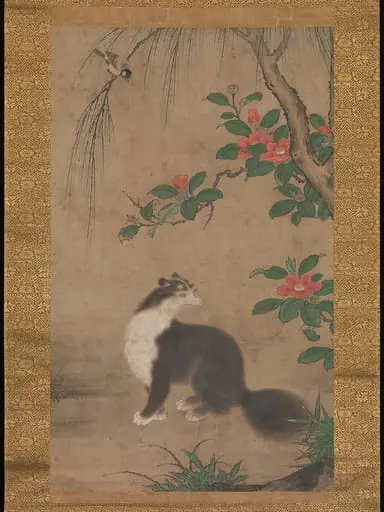
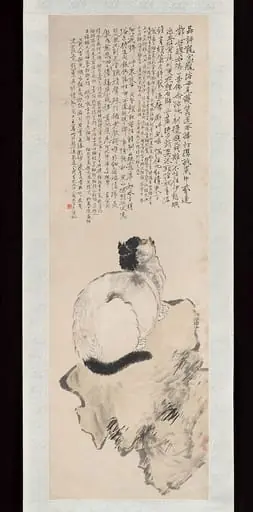
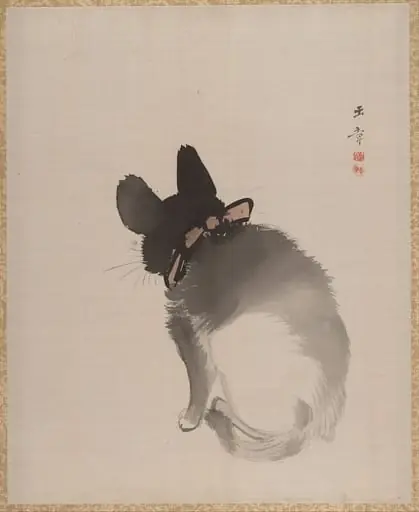
Puppy is an unspecified painting by Tawaraya Sōtatsu. It dates from 1616 and is held in the collection of the Metropolitan Museum of Art.
About this work
Overview
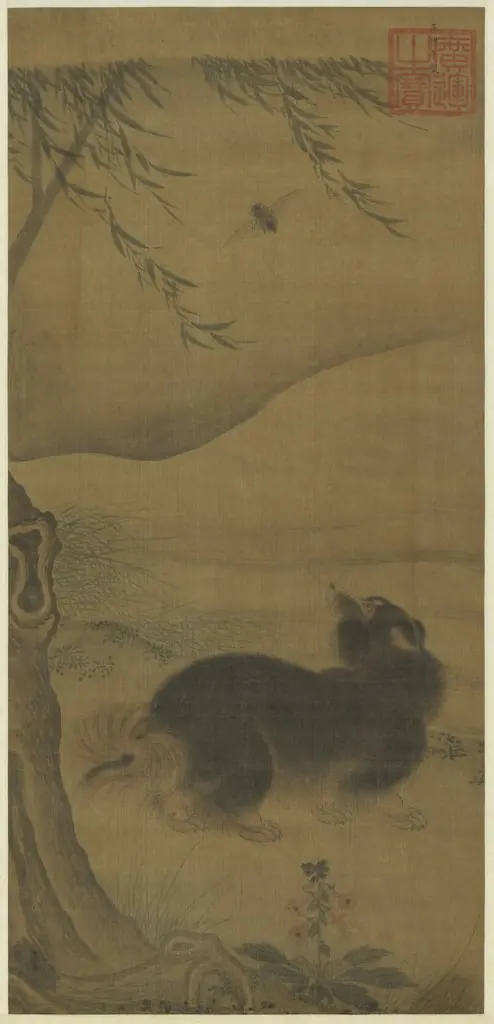
Created around 1616 by Tawaraya Sōtatsu, this small painting captures a single puppy in quiet repose. Though modest in scale, it exemplifies the Rinpa school’s focus on refined aesthetic harmony. Sōtatsu, known for large-scale screens and collaborations with calligraphers, here applies his decorative sensibility to an intimate subject, blending naturalism with stylized elegance.
Subject & Meaning
The puppy, head bowed and tail curled, conveys a sense of stillness and vulnerability. Its solitary presence invites contemplation rather than narrative. In Rinpa tradition, such intimate animal depictions were not merely literal but carried an understated poetic resonance, aligning with ideals of transient beauty and quiet observation found in classical Japanese aesthetics.
Technique & Style
This approach reflects the tarashikomi technique—layering wet pigments to create soft, blended transitions—used to achieve depth with minimal strokes.
Sōtatsu employs subtle gradations of ink to model the puppy’s form, with darker tones fading toward the lower body. Visible brushwork suggests the texture of fur without overt detail, relying on suggestion. The pale background enhances the figure’s silhouette, emphasizing negative space. This approach reflects the tarashikomi technique—layering wet pigments to create soft, blended transitions—used to achieve depth with minimal strokes.
History & Provenance
The painting’s early history is undocumented, but it aligns with Sōtatsu’s known output from the early 17th century, a period when he worked closely with Hon'ami Kōetsu and produced works for elite patrons. Its survival as a standalone piece, rather than part of a screen or scroll, suggests it may have been a private study or gift, preserved for its delicate execution rather than public display.
Context
In early Edo-period Japan, Rinpa artists moved away from the rigid forms of earlier schools, favoring expressive abstraction and decorative rhythm. Sōtatsu’s focus on a humble subject like a puppy reflects a broader cultural shift toward appreciating quiet, everyday moments. This work stands alongside other Rinpa pieces that elevate nature through stylized simplicity, distinct from the realism of contemporary Chinese-influenced painting.
Legacy
Though not widely reproduced, this painting exemplifies Sōtatsu’s influence on later Rinpa masters like Ogata Kōrin, who adopted his use of tonal gradation and compositional restraint. Its quiet intensity helped define a mode of Japanese painting that valued emotional nuance over spectacle, shaping the aesthetic direction of decorative arts well into the 18th century.
Artist & collection
Artist
Tawaraya Sōtatsu (俵屋 宗達; c. 1570 – c. 1640) was a Japanese furniture designer and painter of the Rinpa school. Sōtatsu is best known for his decorations of calligraphic works by his partner Hon'ami Kōetsu (1558–1637),…

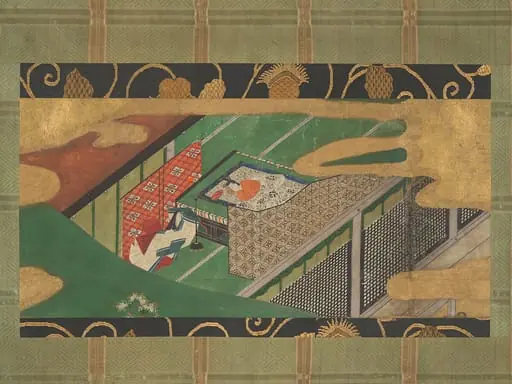 伝俵屋宗達筆 源氏物語図「宿木」 |“Trees Encoiled in Vines of Ivy” (Yadorigi)
 Untitled
 Untitled
 Selections from the New Collection of Japanese Poems from Ancient and Modern Times (Shinkokin wakashū) with Printed Designs of Chinese Lions and Crab Finger Grass
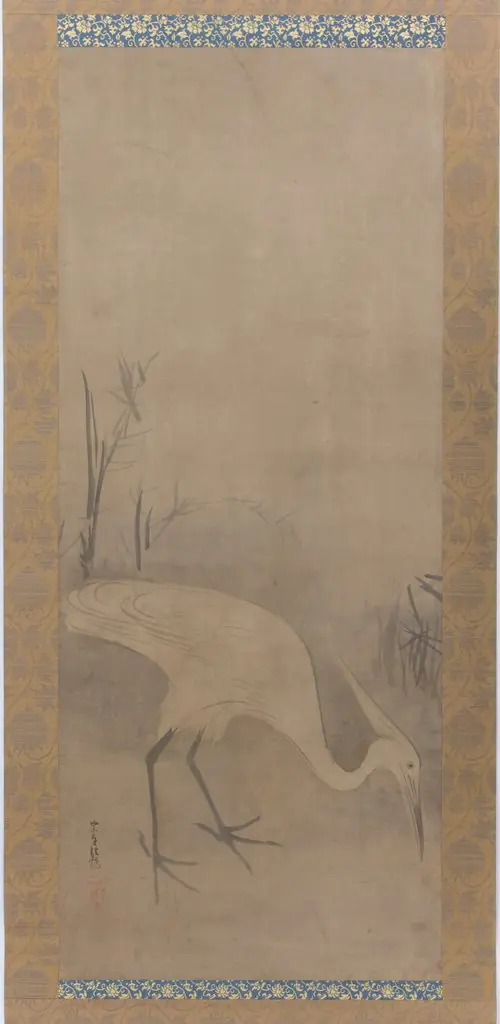 White Heron (Shirosagi zu)
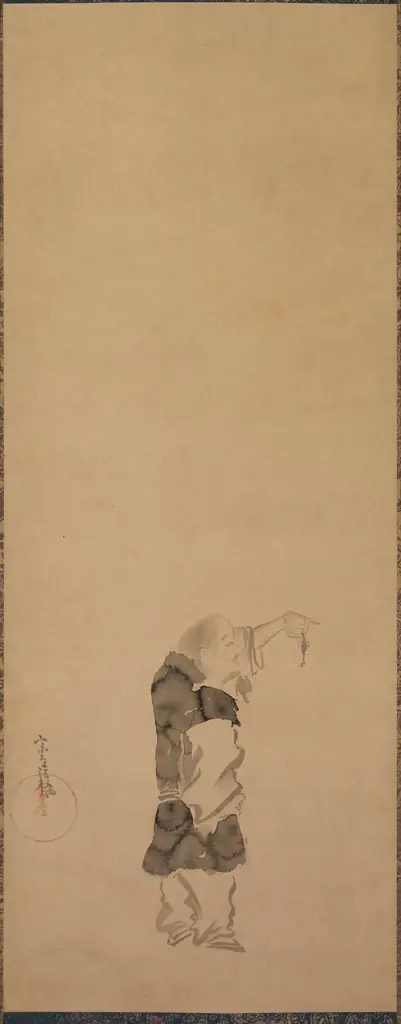 Kenshu, Monk with Shrimp
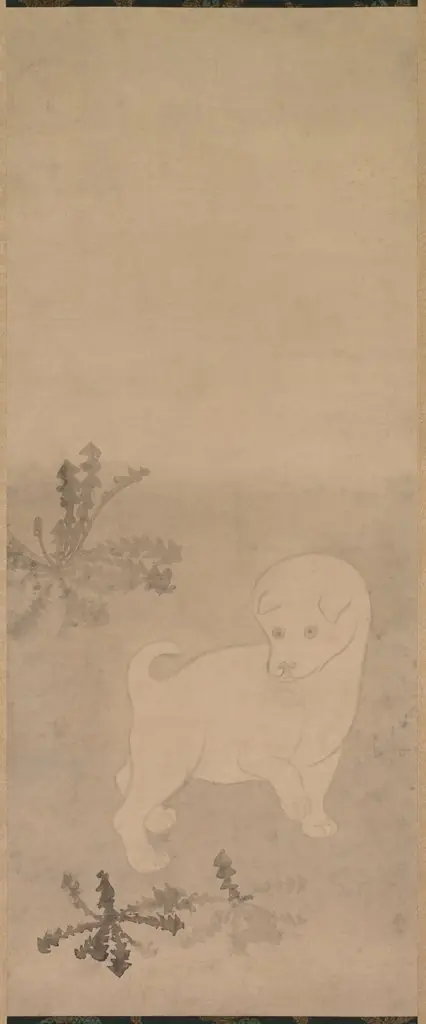 Puppy with Dandelions
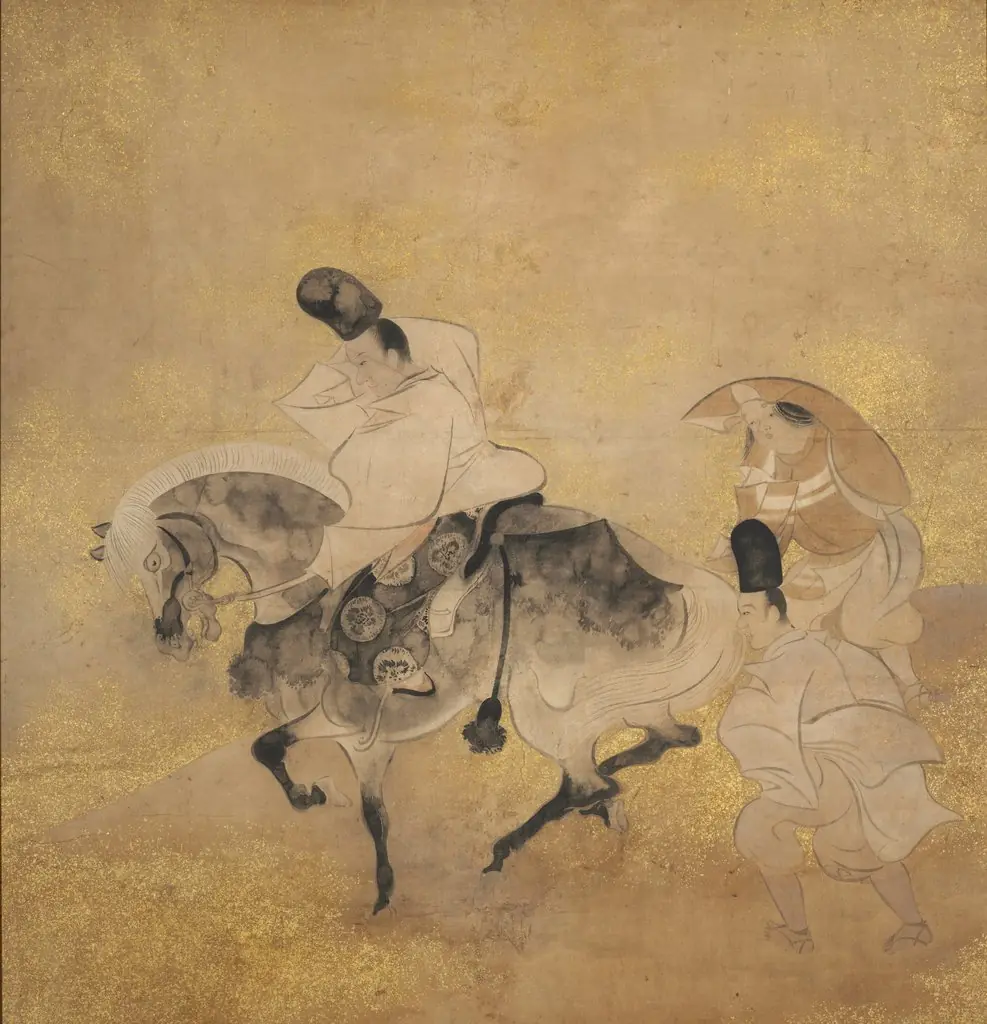 Crossing at Sano