Artwork
俵屋宗理筆 朝顔図屏風|Morning Glories
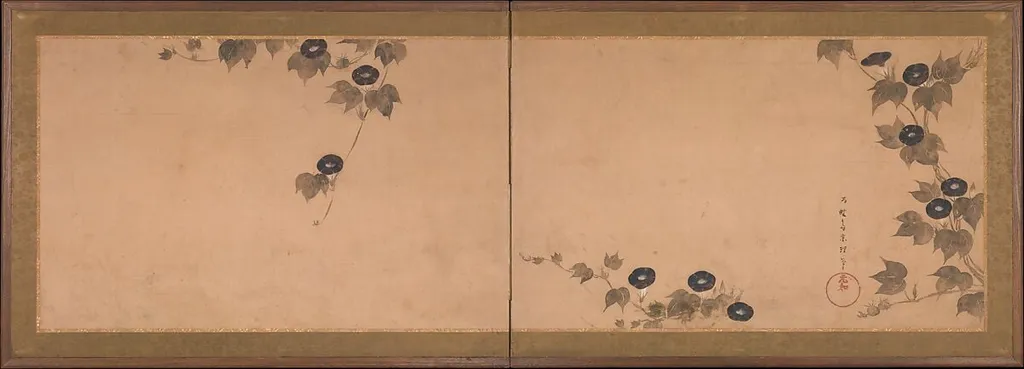
俵屋宗理筆 朝顔図屏風|Morning Glories is an ink painting by the Baroque artist Tawaraya Sōri. It dates from 1750 and is held in the collection of the Metropolitan Museum of Art.
About this work
Overview
This two-panel folding screen, attributed to Tawaraya Sōri and dated around 1750, depicts morning glories rendered in ink and light color on paper.
This two-panel folding screen, attributed to Tawaraya Sōri and dated around 1750, depicts morning glories rendered in ink and light color on paper. It is part of the collection at The Metropolitan Museum of Art. The composition is restrained, focusing on the natural forms of vines and blossoms without decorative excess. The background is a muted, earth-toned ground that allows the subject to emerge with quiet clarity.
Subject & Meaning
Morning glories, known for their brief daily bloom, were a common motif in Edo-period art, symbolizing transience and quiet beauty. Sōri’s depiction avoids sentimentality, presenting the flowers and foliage with observational precision. The arrangement suggests a moment caught in nature—vines curling, leaves unfurling, blossoms opening—inviting contemplation rather than narrative.
Technique & Style
Sōri employs subtle gradations of ink and diluted pigments to model form and suggest texture. Leaves vary in tone from pale gray to deep brown, creating a sense of volume without heavy shading. Lines are fluid yet controlled, defining stems and tendrils with economy. The absence of a horizon or spatial context emphasizes the flat, decorative potential of the screen format, characteristic of Rinpa aesthetics.
History & Provenance
The screen is documented as the work of Tawaraya Sōri, a Kyoto-based artist active in the mid-18th century. It entered The Metropolitan Museum of Art’s collection in the 20th century, though its earlier ownership history remains largely unrecorded. Its survival in good condition reflects its preservation within private or institutional collections following its creation.
Context
Sōri worked within the Rinpa tradition, which emphasized stylized naturalism and refined materials. His approach to floral subjects aligned with contemporary Kyoto tastes for elegant, understated decoration. Unlike Western still-life traditions, this work avoids symbolic allegory or dramatic lighting, instead valuing harmony between subject and surface, reflecting broader Japanese aesthetic principles of the Edo period.
Legacy
Sōri’s screen exemplifies the enduring appeal of Rinpa’s delicate balance between observation and abstraction. While not widely known outside specialist circles, it contributes to the understanding of how nature was interpreted in Japanese decorative arts. Its influence is seen in later artists who continued to explore botanical subjects with similar restraint and sensitivity.
Artist & collection

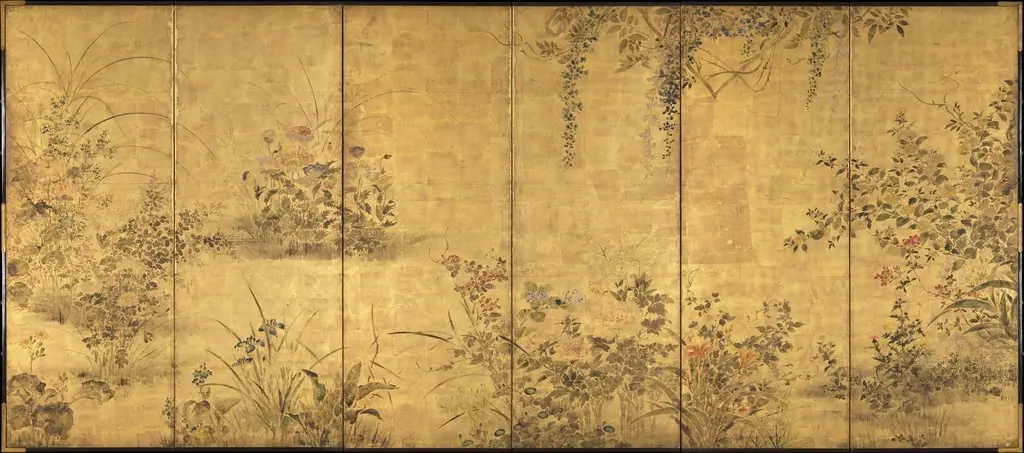
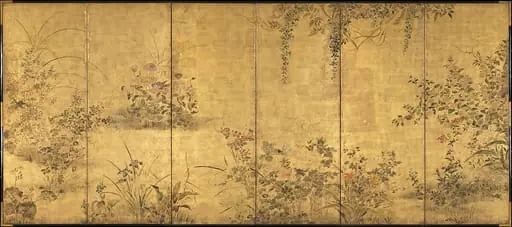 四季花野菜図屏風|Flowering Plants and Vegetables of the Four Seasons
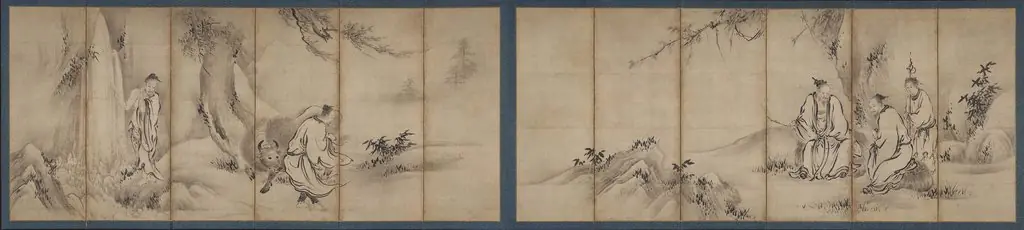 Chinese Sages
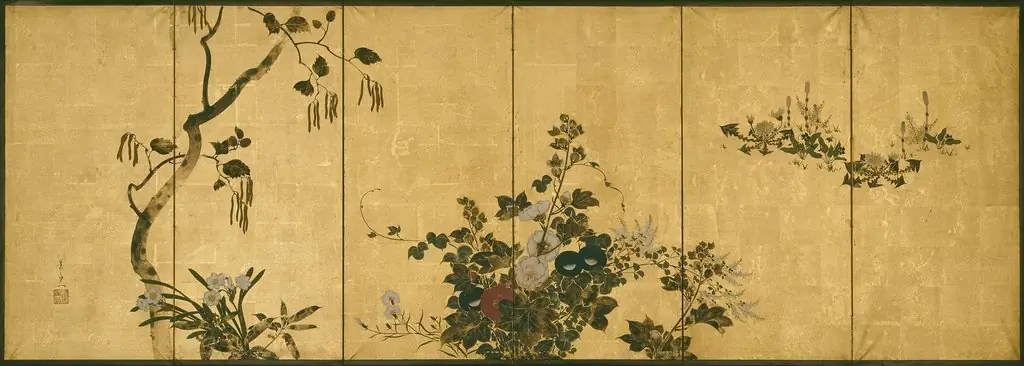 Flowers of Autumn and Winter
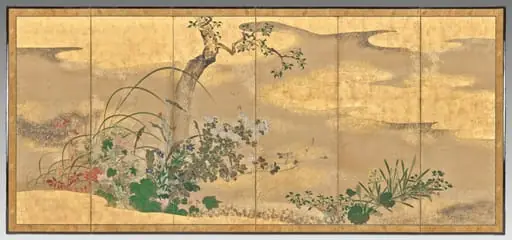 Flowers and Trees of the Four Seasons (left screen)
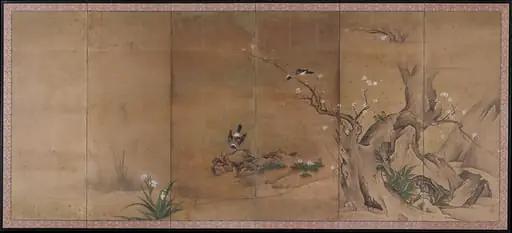 狩野山卜筆四季花鳥図屏風|Birds and Flowers of the Four Seasons
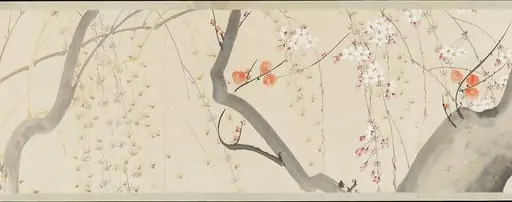 Untitled
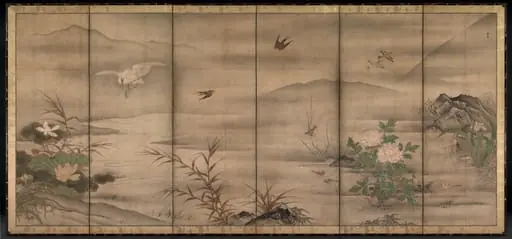 Birds and Flowers in a Landscape of the Four Seasons
 Untitled
 Flowering Plants and Vegetables of the Four Seasons
 Literary Gathering in the Orchid Pavilion