Artwork
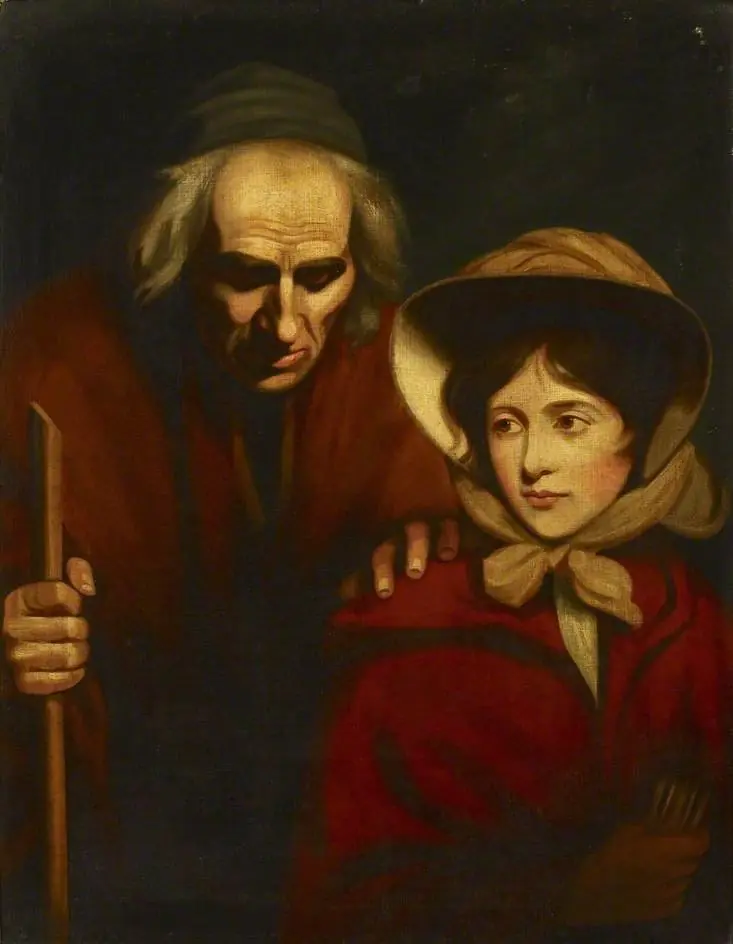
The Blind Beggar of Bednall Green
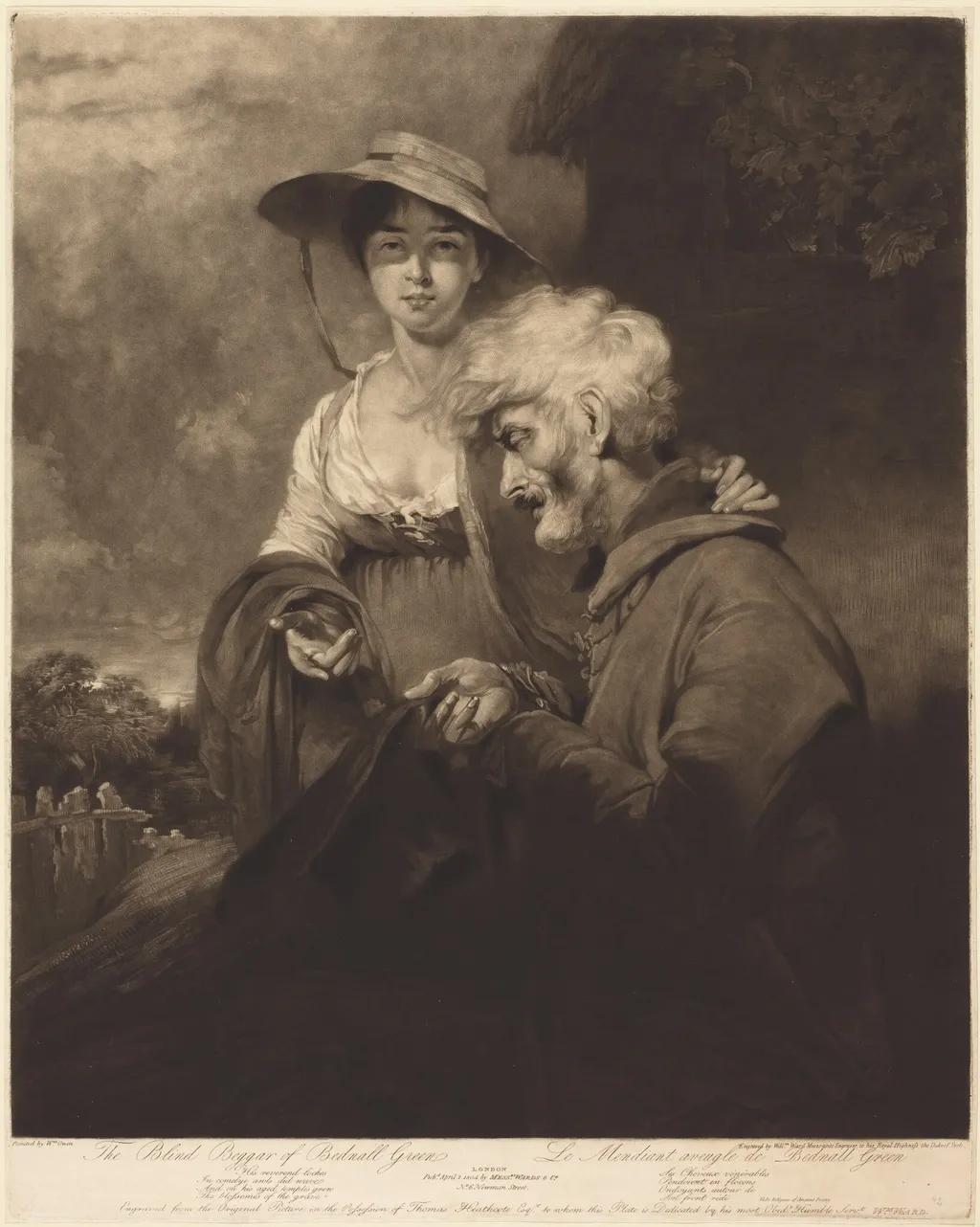
The Blind Beggar of Bednall Green is an ink print by the Romanticist artist William Ward. It dates from 1804 and is held in the collection of the National Gallery of Art.
About this work
Overview
William Ward’s 1804 mezzotint, titled The Blind Beggar of Bednall Green, presents a monochrome scene on laid paper. An elderly, bearded figure, clearly blind, leans upon the arm of a young woman dressed in a loose gown and a wide‑brimmed hat. Behind them a muted cityscape with a bridge recedes into the distance, rendered in soft gradations of light and shadow.
Subject & Meaning
The composition juxtaposes vulnerability and compassion: the beggar’s sightless gaze contrasts with the woman’s gentle, supportive gesture. The interaction suggests a moment of quiet charity, inviting viewers to contemplate themes of dependence, societal care, and the human connection that bridges age and circumstance.
Technique & Style
Executed as a mezzotint, Ward employed a labor‑intensive process of roughening and smoothing the copper plate to achieve rich tonal ranges. The print’s delicate chiaroscuro—subtle transitions from deep black to luminous whites—creates a three‑dimensional ambience, while the laid‑paper texture adds a faint, tactile quality to the atmospheric background.
History & Provenance
Created in the early nineteenth century, the work reflects Ward’s engagement with social genre subjects popular in British printmaking. Though specific ownership records are scarce, the print has been catalogued in several collections of British mezzotints, underscoring its role in documenting contemporary attitudes toward poverty and benevolence.
Artist & collection

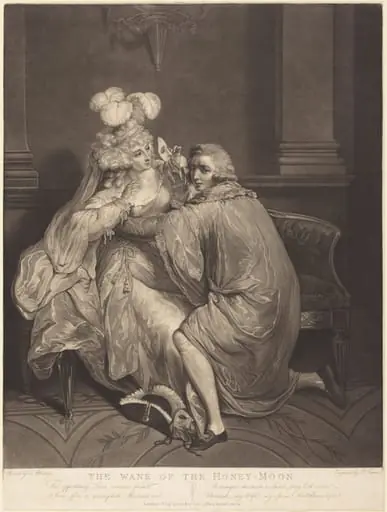 The Wane of the Honeymoon
![Indian Summer [L'estate di San Martino], by Eleuterio Pagliano](https://artifactworldgallery.com/img/eleuterio-pagliano--indian-summer-l-estate-di-san-martino--c18fa1d8e52f5b86-w320.webp) Indian Summer [L'estate di San Martino]
Indian Summer [L'estate di San Martino]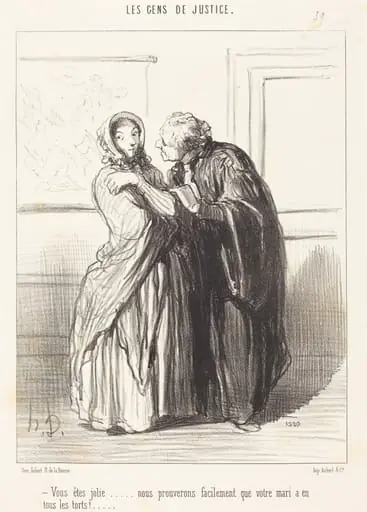 Vous êtes jolie...
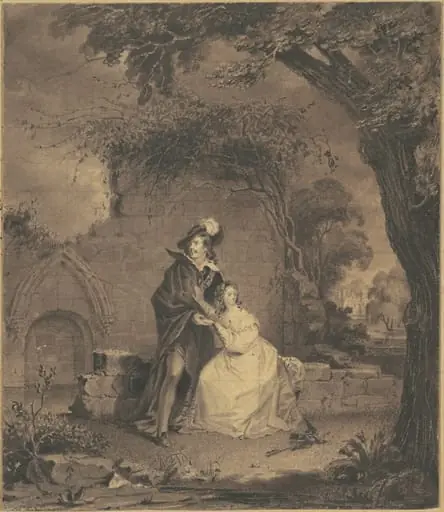 The Bride of Lammermoor
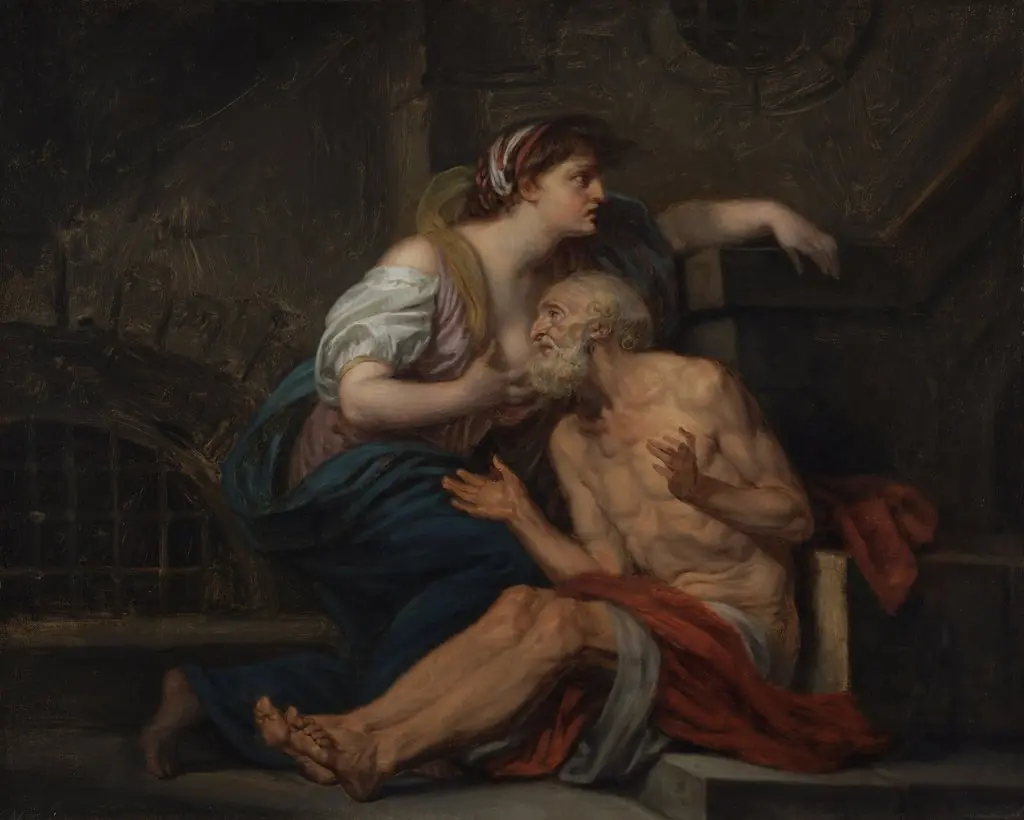 Cimon and Pero: "Roman Charity"
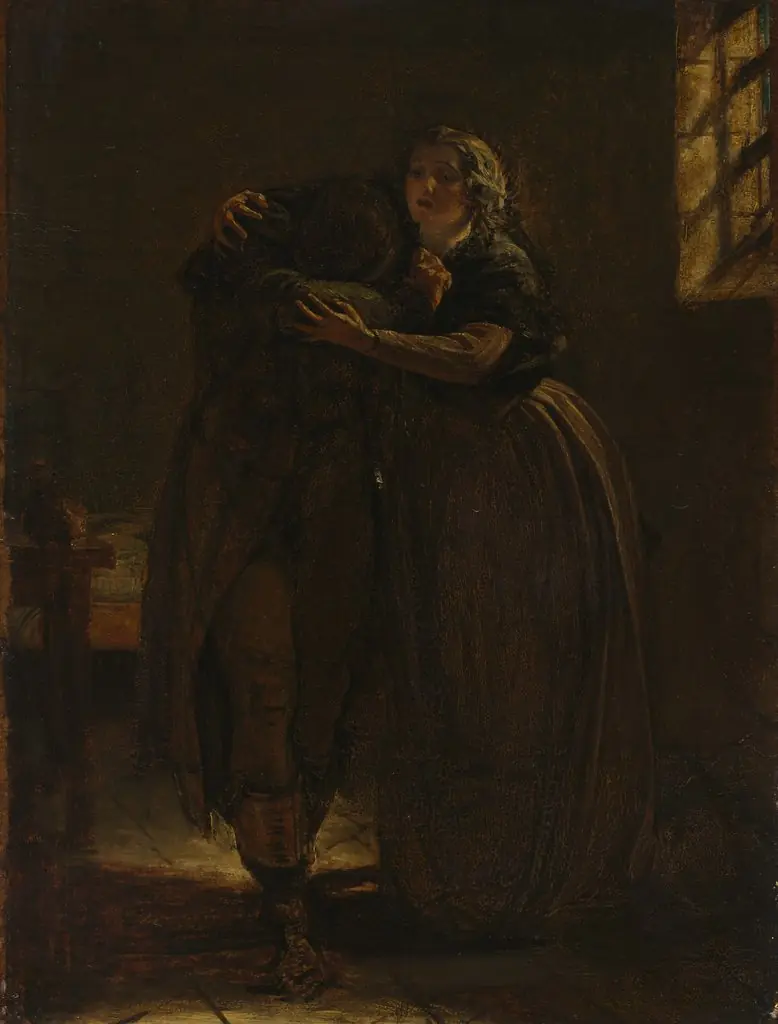 Study for "Come Rest in this Bosom my own Stricken Dear"
 Study for "Come Rest in this Bosom my own Stricken Dear"
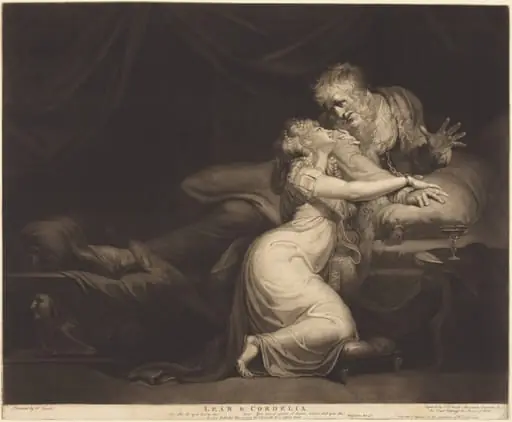 Lear and Cordelia
 Reverie
 The Power of Justice
 The Full of the Honey-Moon
 The blind Beggar of Bethnal Green and his Daughter