Artwork
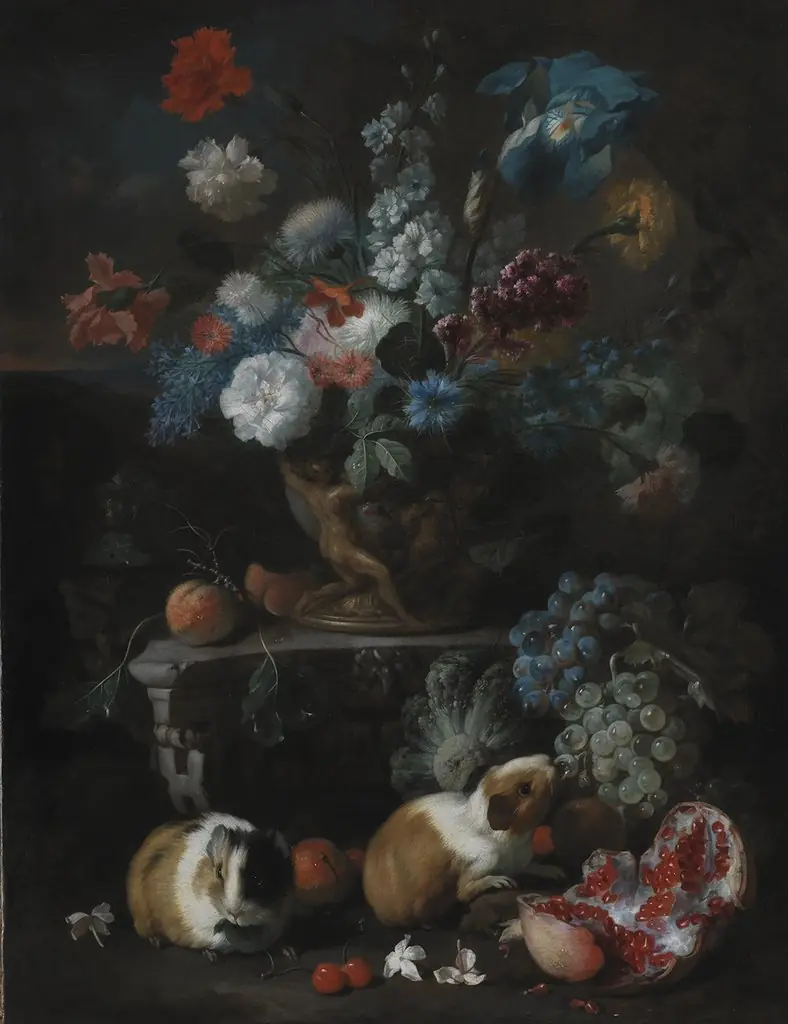
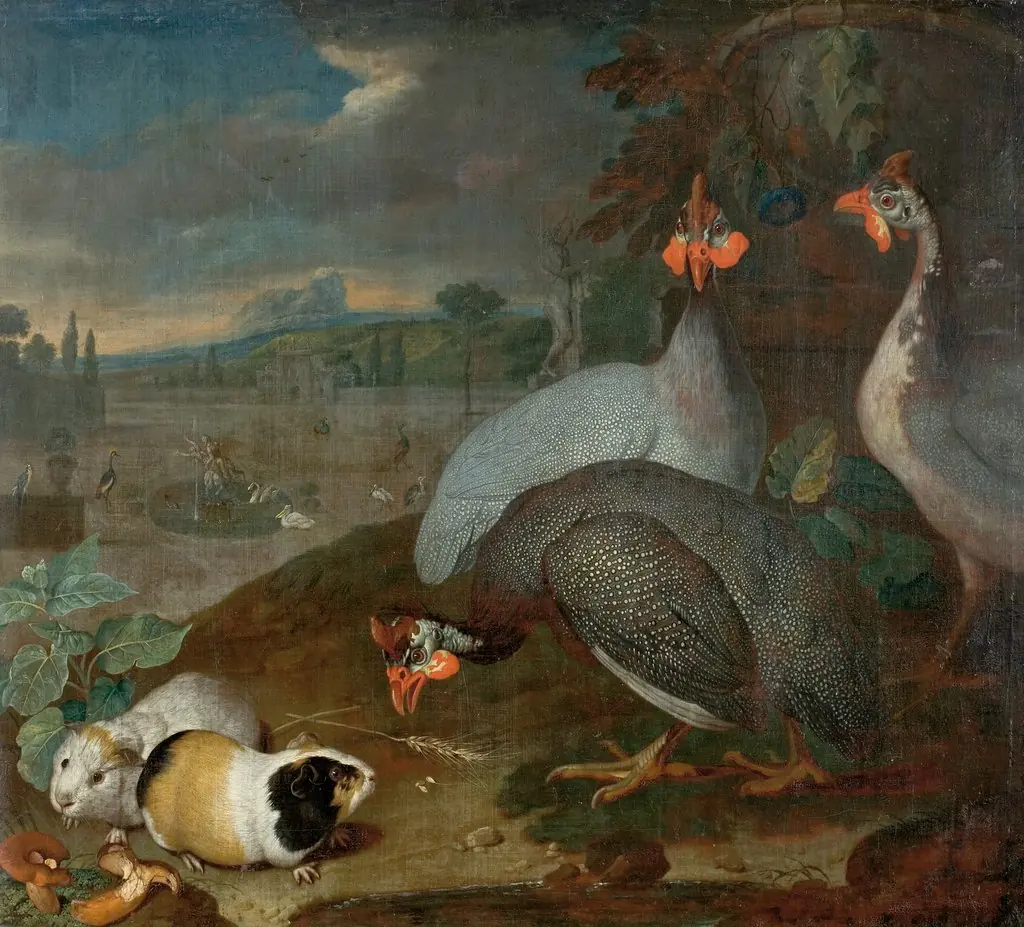
Still life with guinea pigs.
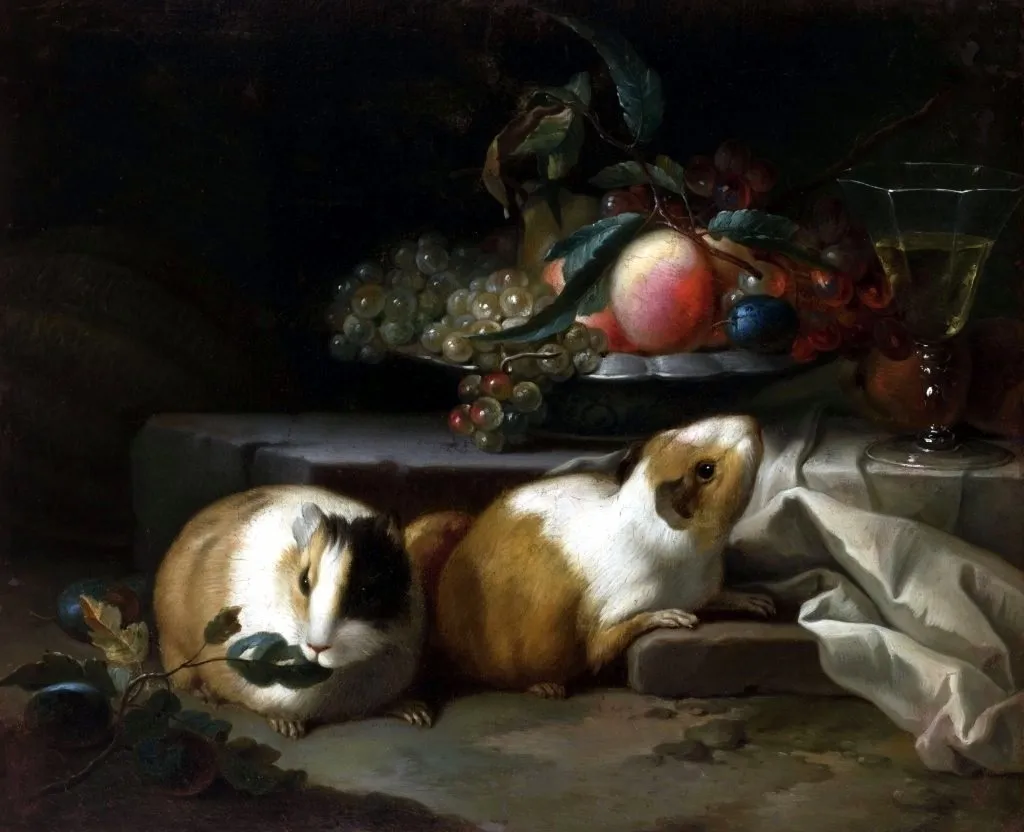
Still life with guinea pigs. is an oil painting by Teodor Lubieniecki. It dates from 1650 and is held in the collection of the National Museum in Kraków.
About this work
Overview
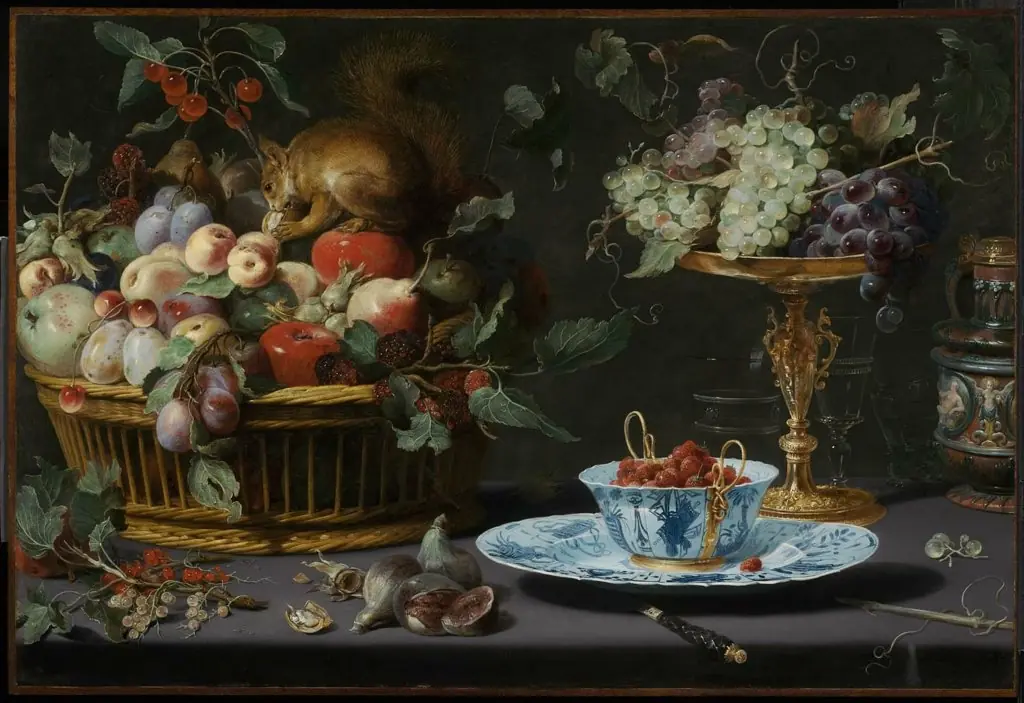
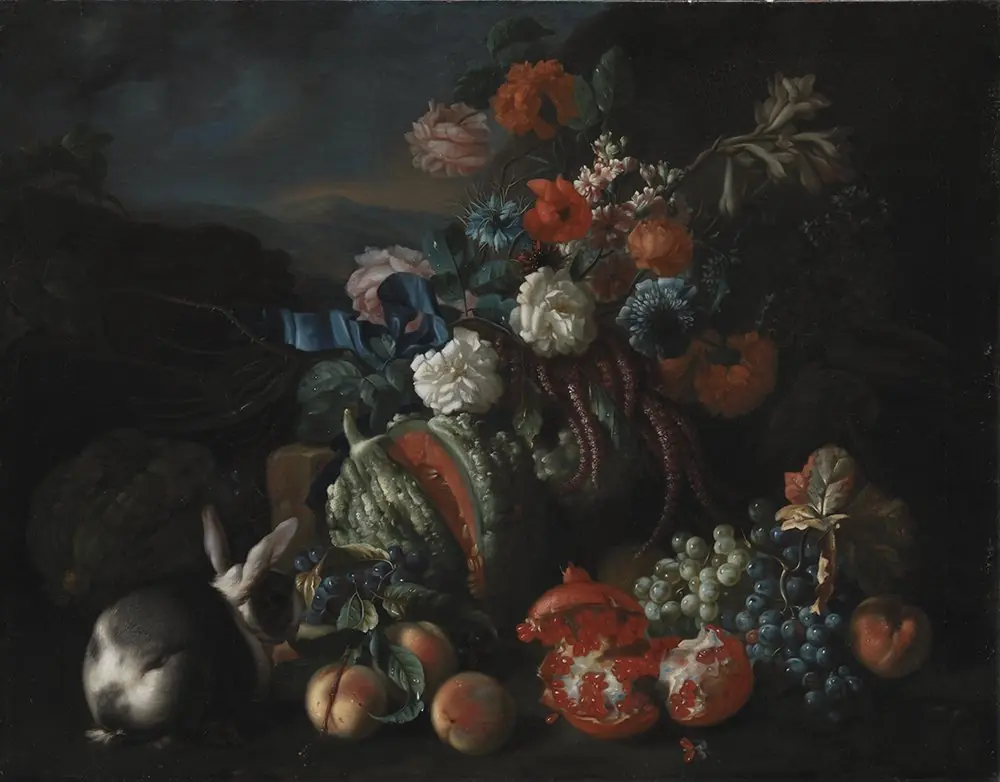
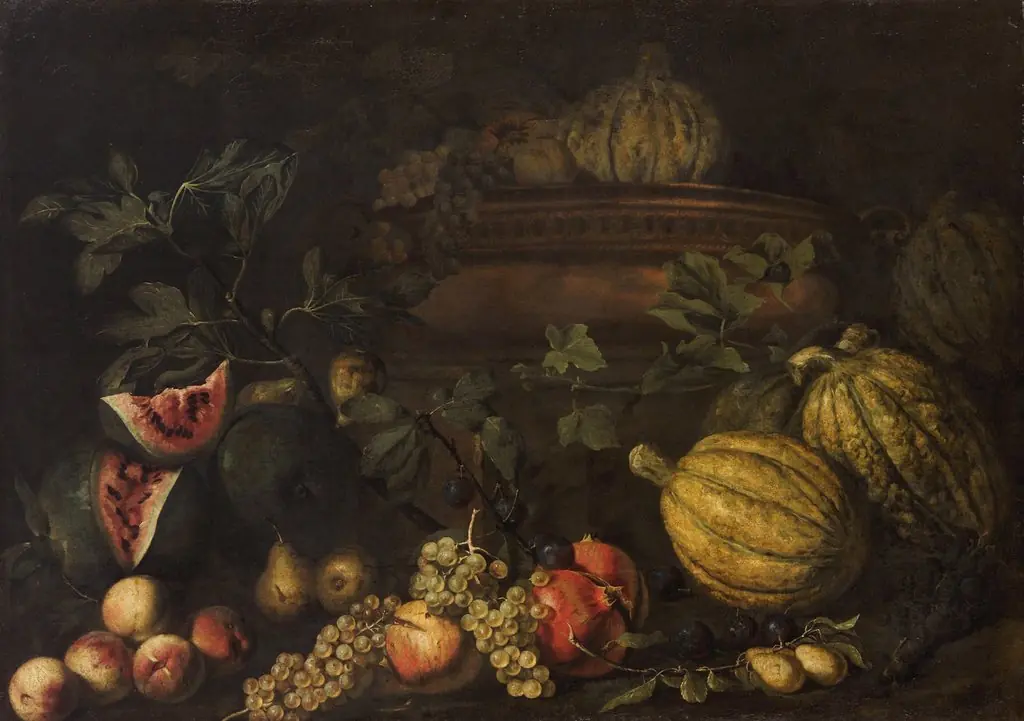
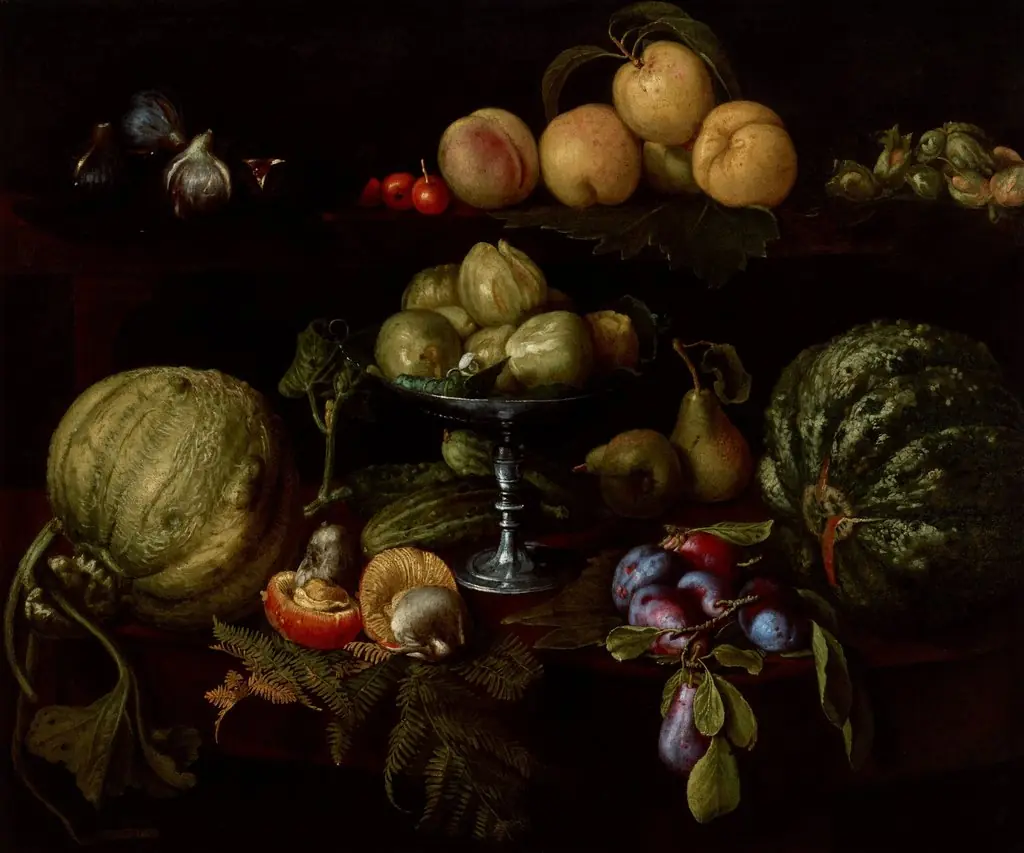
Teodor Lubieniecki’s oil painting Still life with guinea pigs, executed around 1650, is part of the collection of the National Museum in Kraków. The work presents a domestic tableau on a stone floor, where two small rodents are set amid an arrangement of fruit, wine and a draped cloth, rendered in the warm tonal palette typical of mid‑seventeenth‑century still lifes.
Subject & Meaning
The central figures are two guinea pigs, one patterned in white and brown, the other in white and tan, positioned prominently in the foreground. Their presence alongside a sumptuous spread of grapes, peaches, plums and a glass of wine suggests a juxtaposition of the humble and the luxurious, inviting contemplation of abundance, domestic comfort and the natural world within a cultivated interior.
Technique & Style
Lubieniecki employs a chiaroscuro scheme, contrasting illuminated surfaces of the fruit and fur against the darker stone floor to model volume.
Lubieniecki employs a chiaroscuro scheme, contrasting illuminated surfaces of the fruit and fur against the darker stone floor to model volume. The brushwork is smooth, allowing subtle transitions of light across the glossy skins of the grapes and the soft fur of the animals. Warm, earthy hues dominate, while the reflective glass and cloth introduce highlights that enhance the sense of three‑dimensional space.
History & Provenance
Created circa 1650, the painting entered the holdings of the National Museum in Kraków, where it remains on display. Its attribution to Lubieniecki is based on stylistic analysis and archival records linking the work to the artist’s known oeuvre of still‑life compositions produced in the Polish‑Lithuanian Commonwealth during the mid‑17th century.
Artist & collection