Artwork
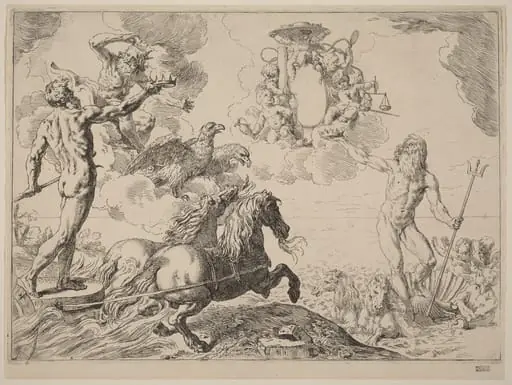
The Triumph of Neptune and Thetis
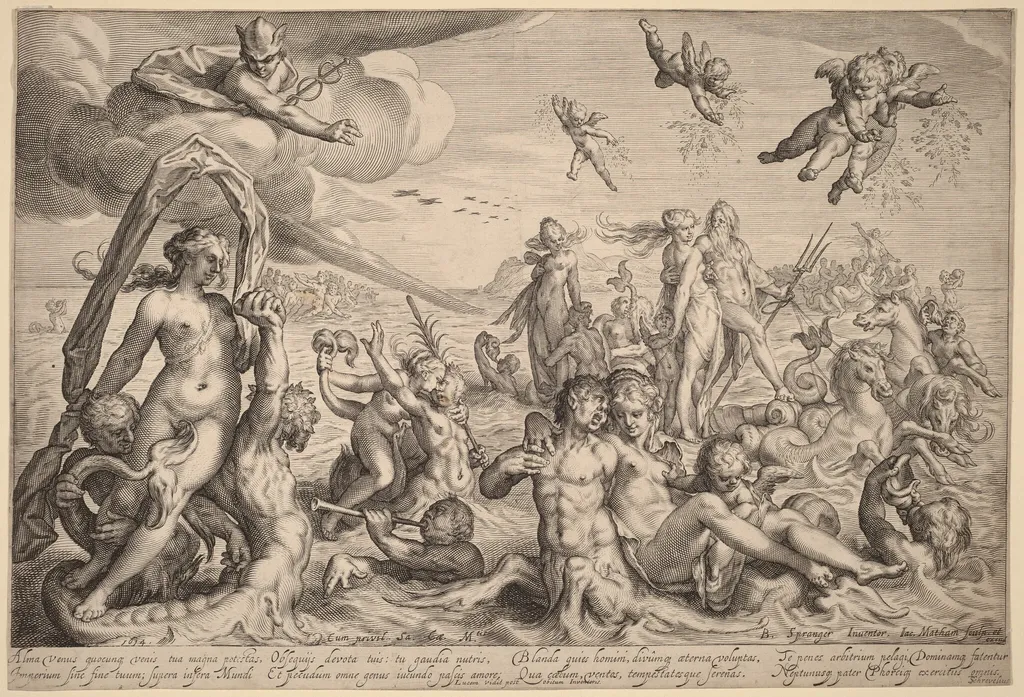
The Triumph of Neptune and Thetis is an ink print by the Baroque artist Jacob Matham. It dates from 1614 and is held in the collection of the National Gallery of Art.
About this work
Overview
Jacob Matham’s 1614 engraving, titled The Triumph of Neptune and Thetis, presents a bustling maritime tableau drawn from classical mythology. Central figures—Neptune, ruler of the seas, and the sea‑nymph Thetis—are surrounded by a procession of nude participants, some astride marine creatures, others engaged in music or combat, all set against a distant horizon of hills and clouded sky.
Subject & Meaning
The composition celebrates the divine union of Neptune and Thetis, invoking themes of power, fertility, and the harmonious order of the oceanic realm. The surrounding figures, rendered in various active poses, amplify the sense of a celebratory procession, suggesting both the majesty of the gods and the vitality of the natural world they command.
Technique & Style
Executed as an engraving on laid paper, Matham employs fine line work and cross‑hatching to model volume and texture, achieving a rich interplay of light and shadow. The dynamic arrangement of bodies and the dramatic spatial depth reflect Baroque sensibilities, emphasizing movement, emotional intensity, and a theatrical presentation of mythic narrative.
History & Provenance
Created in the early seventeenth century, the print aligns with Matham’s broader output of reproductive and original engravings after contemporary masters. While specific ownership records are scarce, the work circulated among collectors of Dutch prints, contributing to Matham’s reputation as a skilled interpreter of mythological subjects.
Context
The engraving emerges from a period when Northern European artists increasingly engaged with classical themes, adapting them to the exuberant visual language of the Baroque. Its emphasis on nude figures and vigorous composition mirrors contemporary tastes for dramatic storytelling and the exploration of human anatomy within mythic frameworks.
Artist & collection


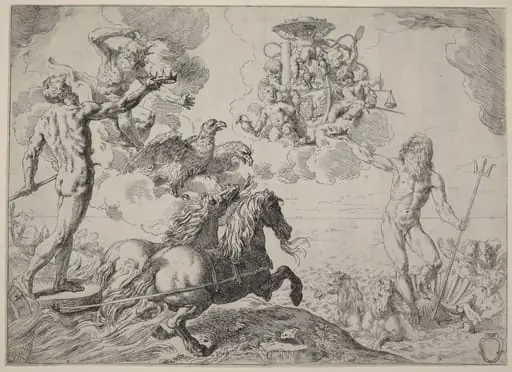 Jupiter, Neptune and Pluto
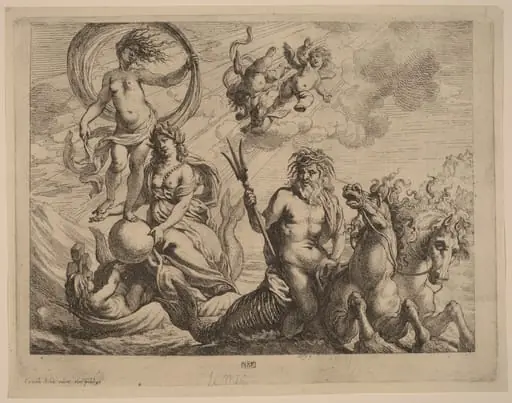 Neptune with Two Horses on the Sea
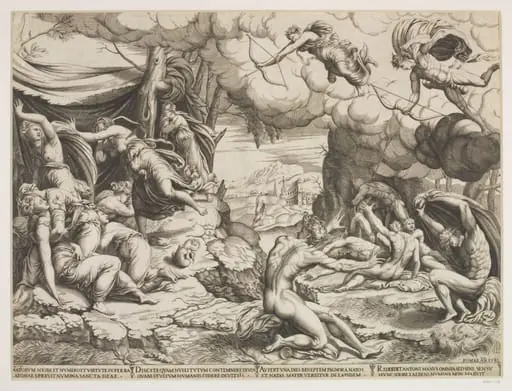 The Daughters of Niobe
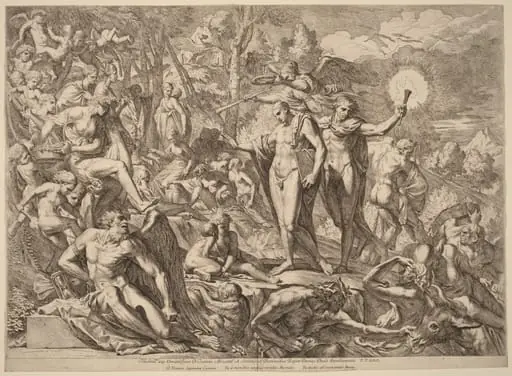 Parnassus
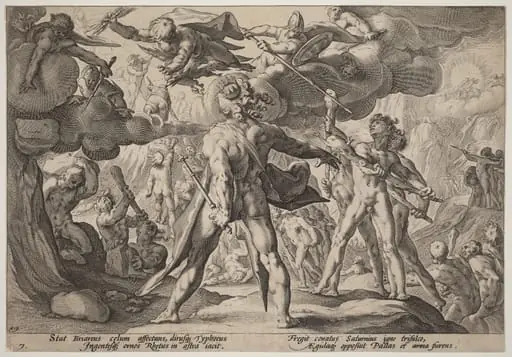 The Giants Climbing the Heavens
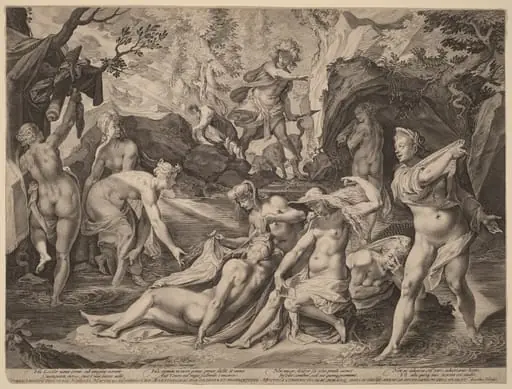 Diana Surprised by Actaeon
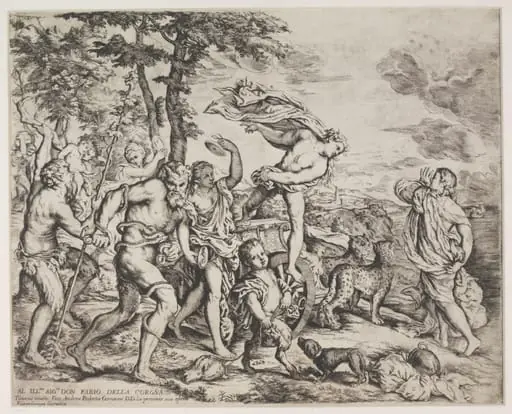 Bacchus and Ariadne
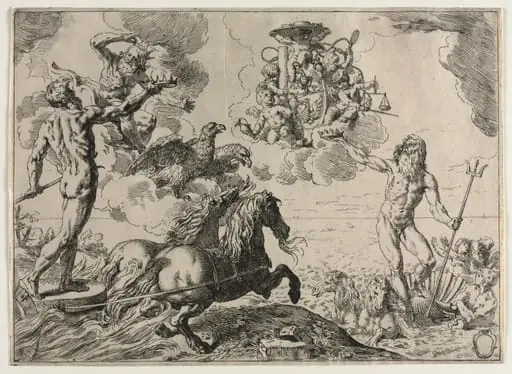 The "Quos Ego"
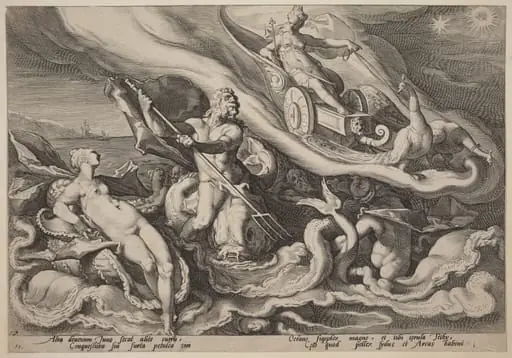 Juno Complaining to Oceanus and Tethys about Callisto
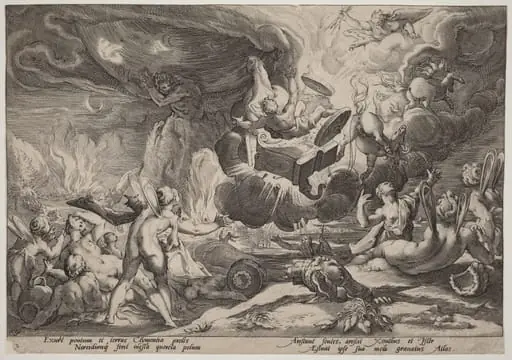 The Fall of Phaeton
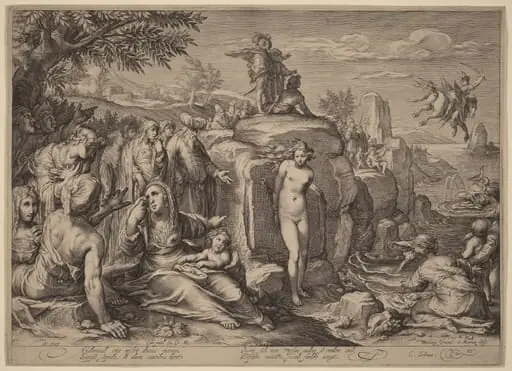 Perseus and Andromeda
 Jupiter, Neptune and Pluto