Artwork
The Goathland Chalice
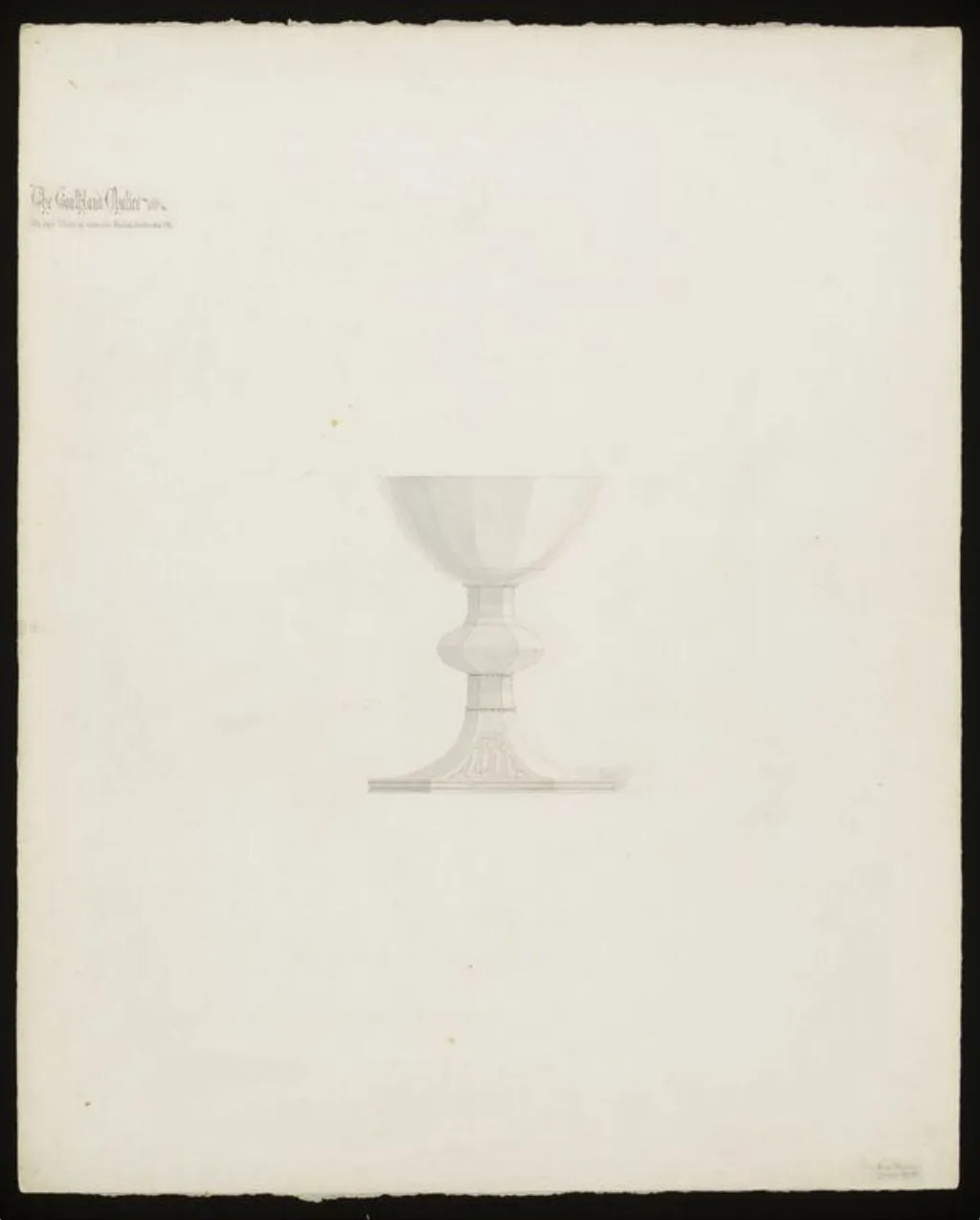
The Goathland Chalice is a drawing by Frank Theodore. It dates from 1911 and is held in the collection of the Victoria and Albert Museum.
About this work
Overview
The Goathland Chalice is a pencil drawing produced by Theodore Frank Charles Emanuel while he was apprenticing with the ecclesiastical metalworking firm Barkentin and Krall. Executed between 1906 and 1914, the work records a wide‑bowl chalice set on a stem and decorative base, rendered with clean lines and subtle shading that convey form without ornamental excess.
Subject & Meaning
The image isolates a single liturgical vessel, emphasizing its rounded bowl and elegant proportions. By presenting the chalice against an unadorned background, Emanuel directs the viewer’s attention to the object's functional and symbolic role in worship, reflecting the reverence accorded to such church plate.
Technique & Style
Created in graphite, the drawing employs a limited tonal range to model volume and surface texture. Emanuel’s handling of line and shading produces a clear sense of depth while maintaining a restrained aesthetic, characteristic of early‑20th‑century design studies that favored precision over decorative flourish.
History & Provenance
The work originates from Emanuel’s study of historic church plate designs by architects such as G. F. Bodley and J. L. Pearson, undertaken between 1909 and 1913. During this period he earned medals for building construction and metal casting in 1910, indicating his recognized technical competence. The drawing now resides in the Victoria and Albert Museum’s collection.
Artist & collection
Artist
Frank Theodore spent years hunched over library manuscripts and museum drawers, sketching medieval church silver until his hands cramped.

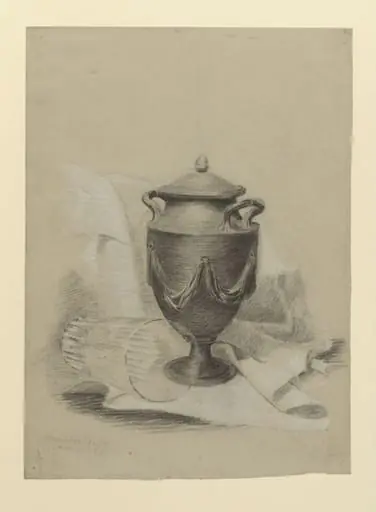 Drawing of a swagged urn (black basalt ware) and a glass tumbler
![Sheet of Studies [recto and verso], by John Flaxman](https://artifactworldgallery.com/img/john-flaxman--sheet-of-studies-recto-and-verso--af37285108779a00-w320.webp) Sheet of Studies [recto and verso]
Sheet of Studies [recto and verso]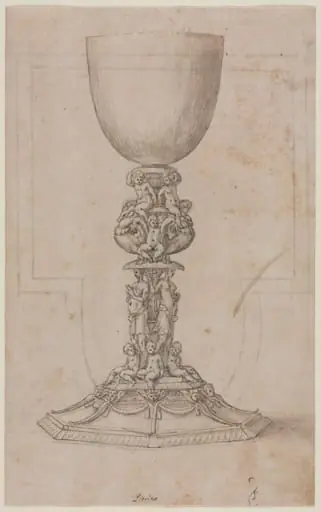 Design for a Chalice (recto)
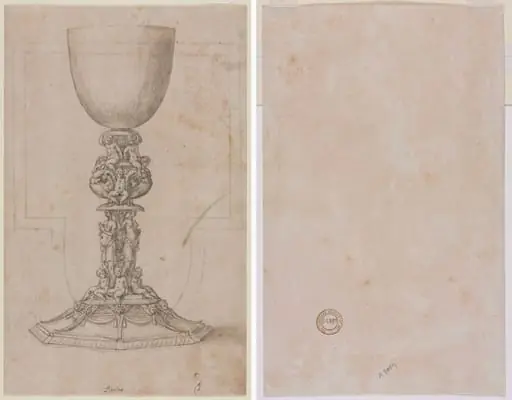 Design for a Chalice (recto) Architectural Plan (verso)
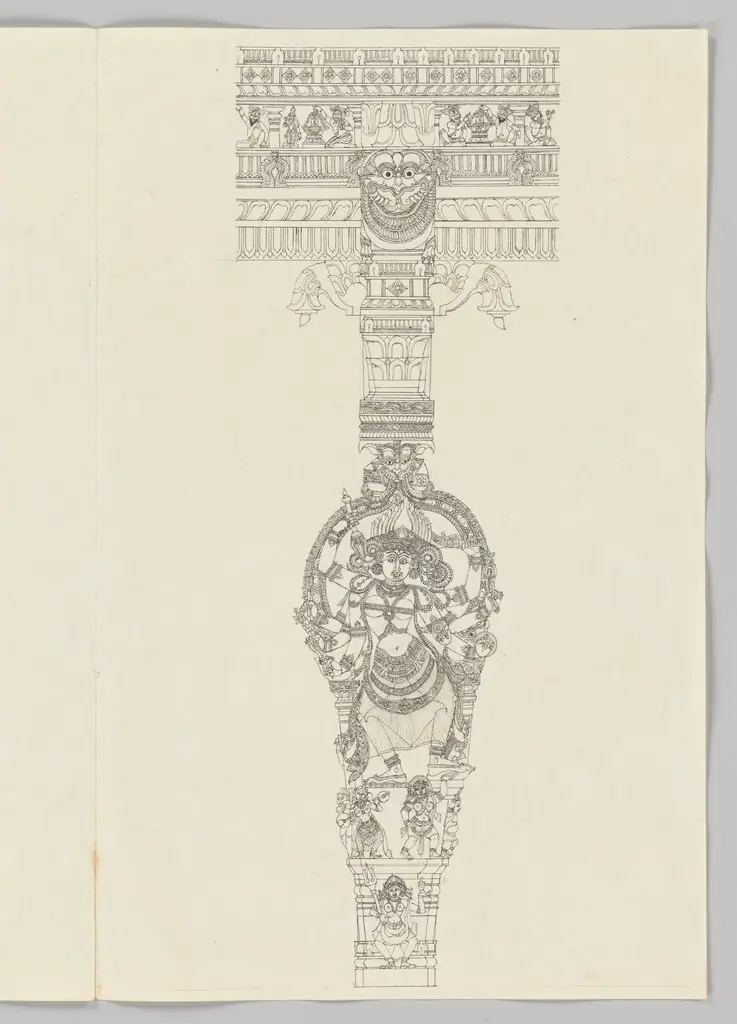 Kali
Kali Cup
Cup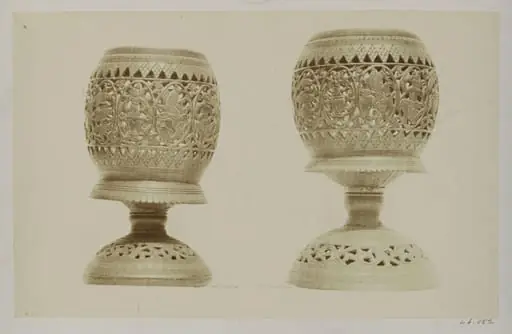 Modern Javanese sculpture, two carved cocoa-nut cups
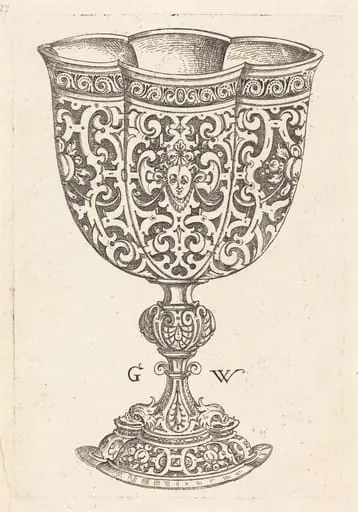 Chalice with six embossings, base decorated with two dolphins
 Cup
Cup