Artwork
Design for a Chalice (recto)
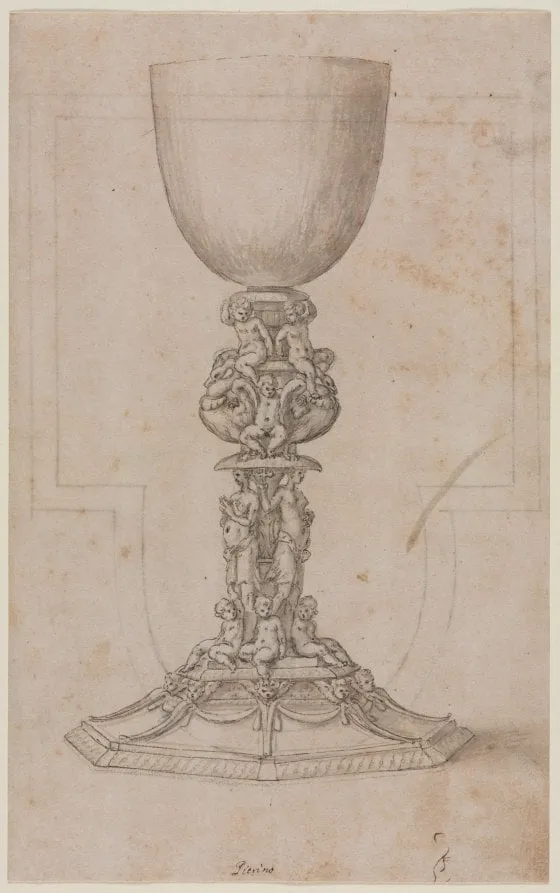
Design for a Chalice (recto) is a drawing by the Renaissance artist Luzio Romano. It dates from 1504 and is held in the collection of the Cleveland Museum of Art.
About this work
This design shows a fancy metal cup with carved angels and birds on its base.
This design shows a fancy metal cup with carved angels and birds on its base. The angels are called seraphim, the highest rank. Tiny naked kids sit below women and pelicans.
The pelican is a symbol. It pecks its chest to feed its young, standing for charity. The whole cup is meant for church use, not just looks.
It was made by an assistant to a big-name designer. See more designs by Luzio Romano (Italian, active 1528–75).
Overview
This drawing, attributed to Luzio Romano, presents a detailed plan for a liturgical chalice, likely intended for a goldsmith’s execution. The composition outlines the cup’s form, decorative elements, and symbolic motifs, offering insight into the design process for sacred vessels during the mid‑sixteenth century.
Subject & Meaning
The design incorporates a tiered foot adorned with seraphim—angelic figures representing the highest celestial order—while the lower register features nude children, female figures, and pelicans. The pelican, shown piercing its own breast to feed its offspring, functions as an emblem of self‑sacrifice and charity, echoing the theological significance of Christ’s blood in the Eucharist.
Technique & Style
Executed in fine pen and wash, the drawing displays a meticulous approach to ornamentation, with precise line work delineating the intricate relief work envisioned for the metal surface. The stylistic vocabulary reflects the Renaissance interest in classical motifs combined with allegorical iconography, characteristic of the workshop of Perino del Vaga.
History & Provenance
Luzio Romano, active between 1528 and 1575, worked as an assistant to the prominent designer Perino del Vaga. His surviving drawings, primarily for ecclesiastical objects, document the collaborative production of sacred metalwork in Italy. The chalice design is preserved as part of a collection that records the workshop’s output for religious commissions.
Artist & collection
Artist
Luzio Luzi (sometimes Luzzi or Luci), also known as Luzio Luzi da Todi and Luzio Romano (died late 16th century), was an Italian painter, stuccoist, and draftsman of the High Renaissance era favoring the Mannerist style.

 Border Lines (verso)
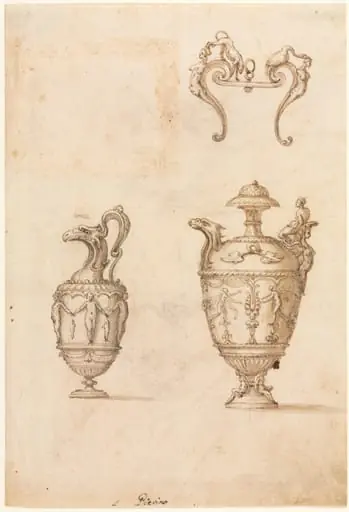 Design for Two Vases and an Ornament (recto)
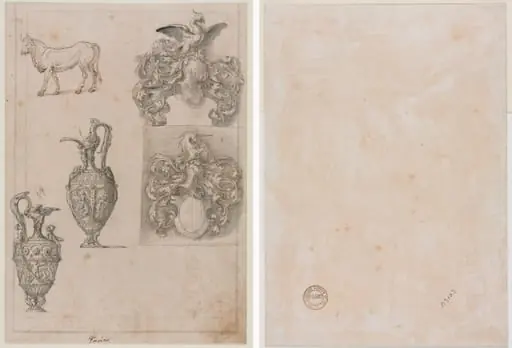 Design for Two Vases, Two Coats of Arms, and a Bull (recto) Several Line Borders (verso)
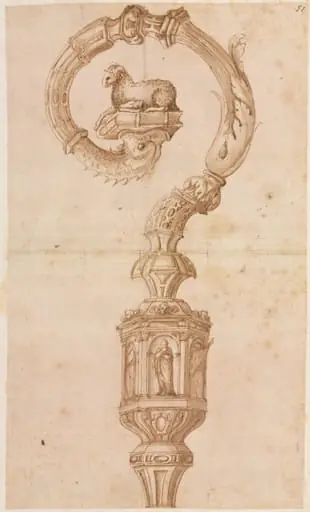 Design for a Crozier
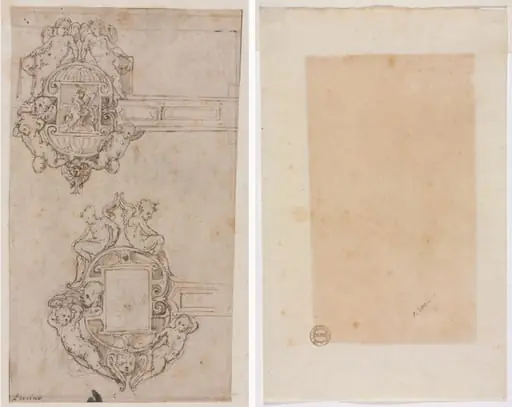 Design for Decorative Hinges (recto) Border Lines (verso)
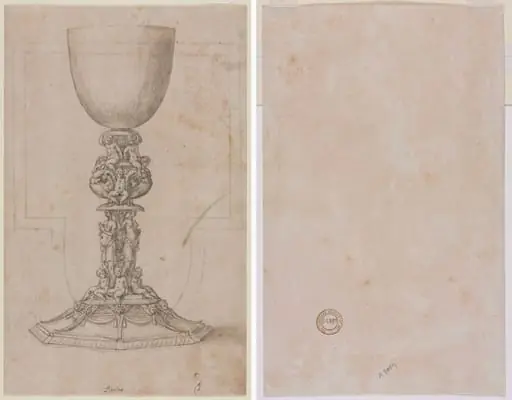 Design for a Chalice (recto) Architectural Plan (verso)
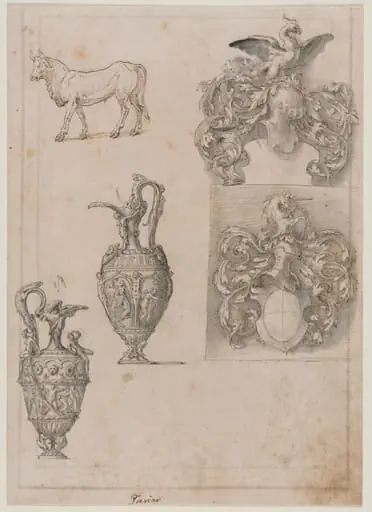 Design for Two Vases, Two Coats of Arms, and a Bull (recto)
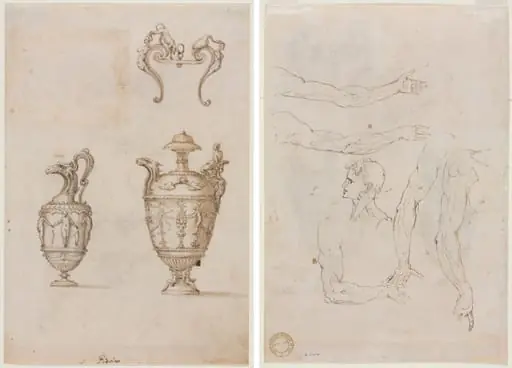 Design for Two Vases and an Ornament (recto); Sketches of Five Arms and a Head (verso)
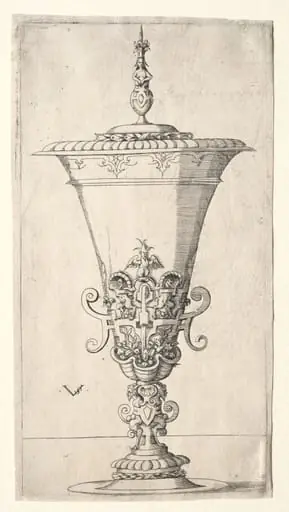 Covered Cup with Satyrs
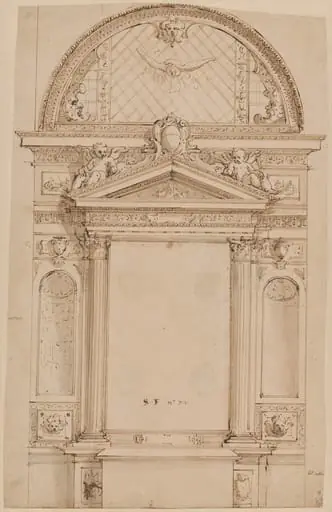 Design for an Altar
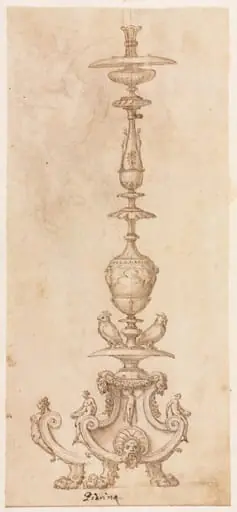 Design for a Candlestick
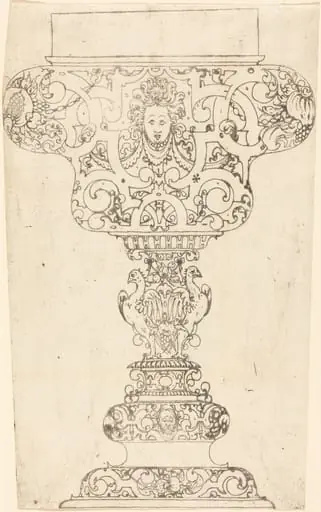 Ornament - Large Goblet
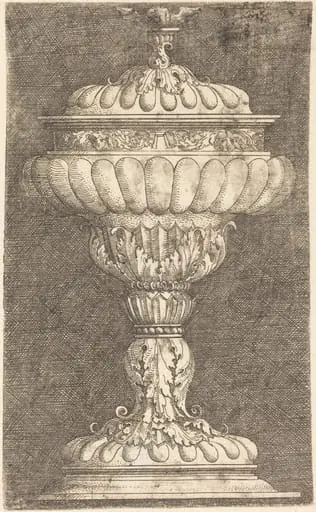 Covered Goblet with Winged Ball
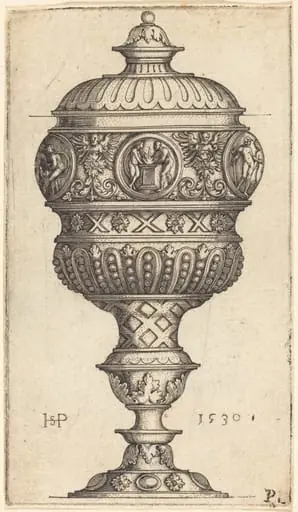 Goblet with Medallions
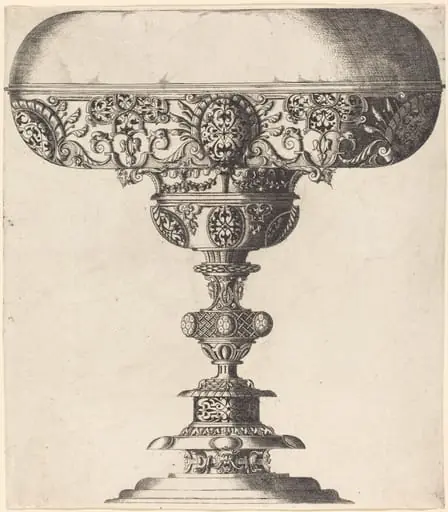 Cup
Cup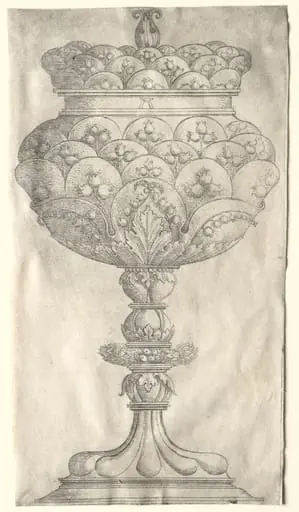 Goblet with Lillies of the Valley
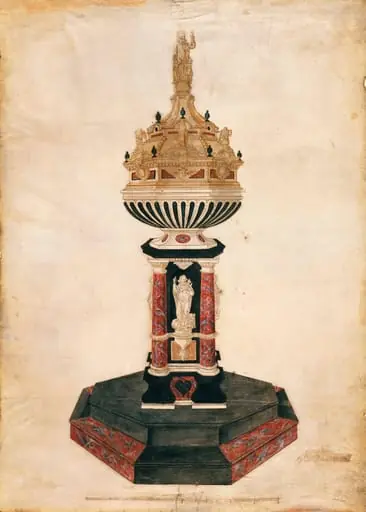 Canterbury Cathedral Font Design
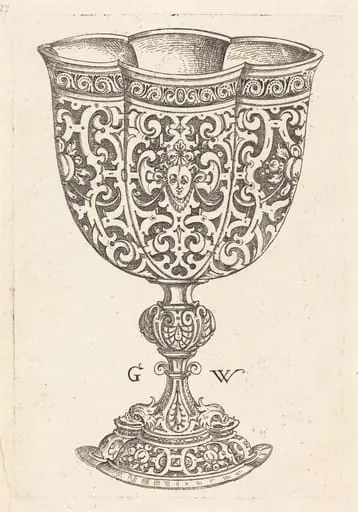 Chalice with six embossings, base decorated with two dolphins
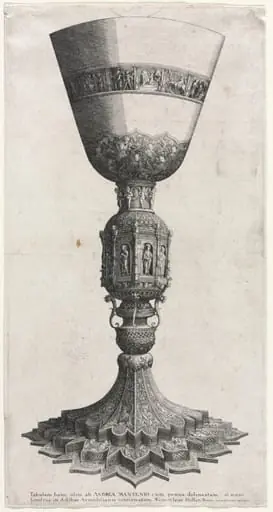 The Great Chalice Adorned with Figures