Artwork
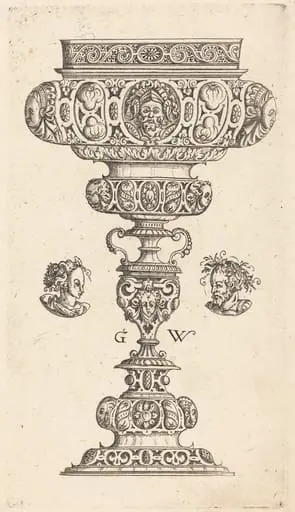
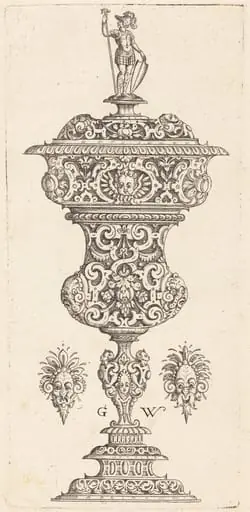
Chalice with six embossings, base decorated with two dolphins
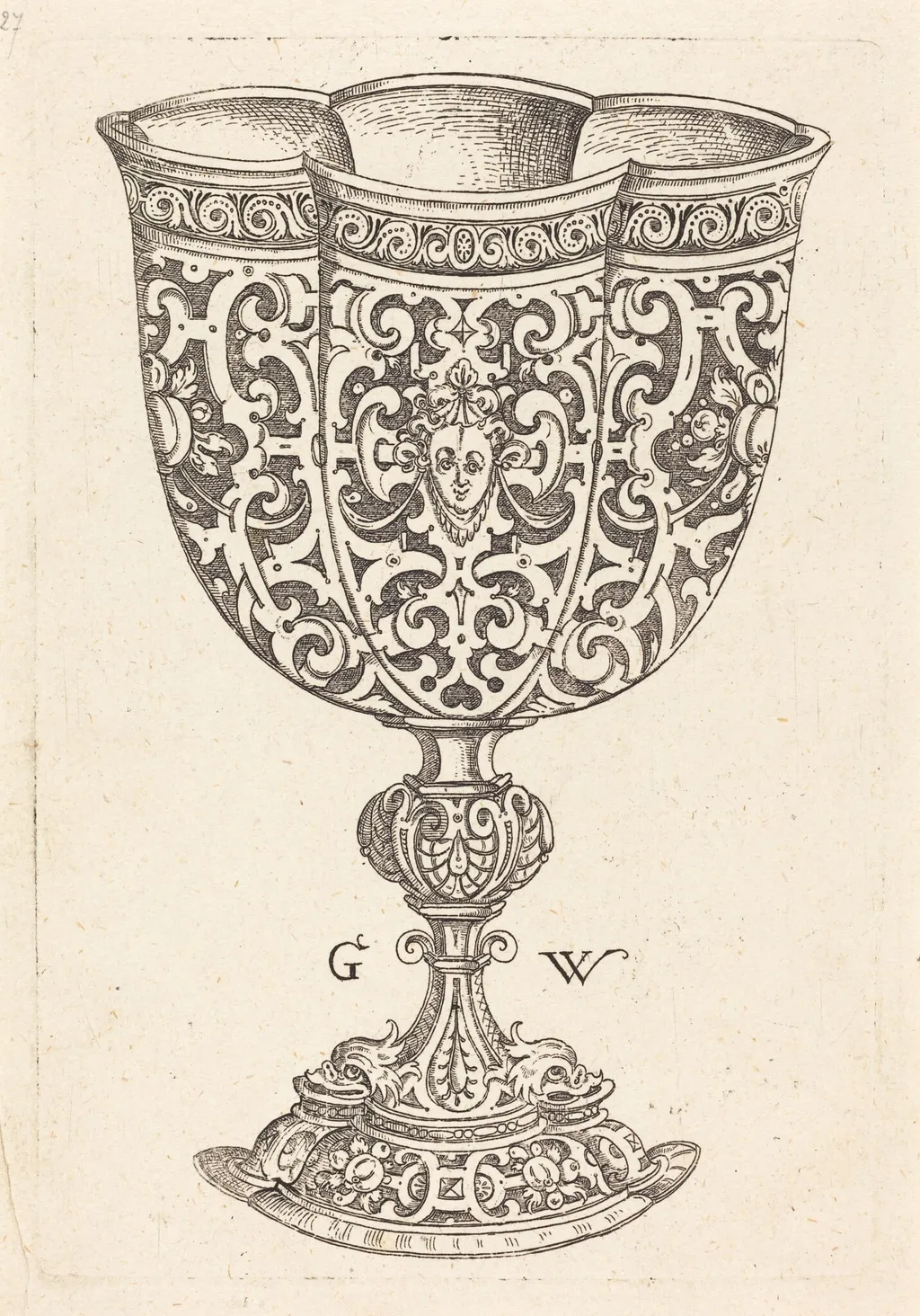
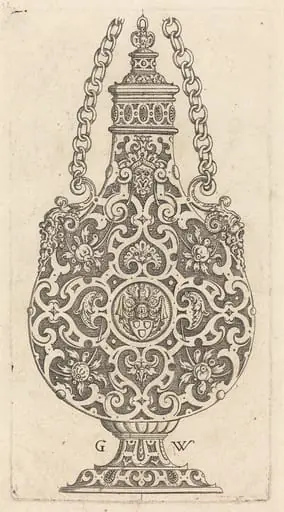
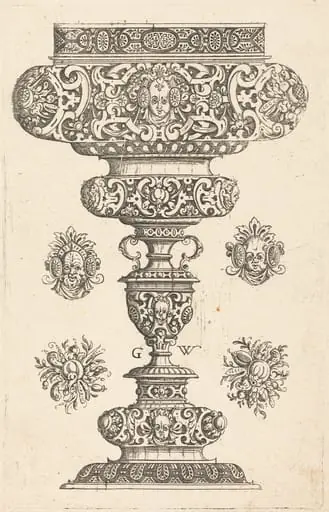
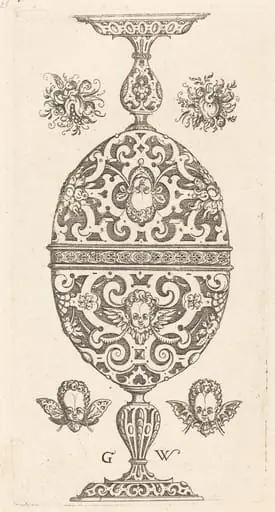
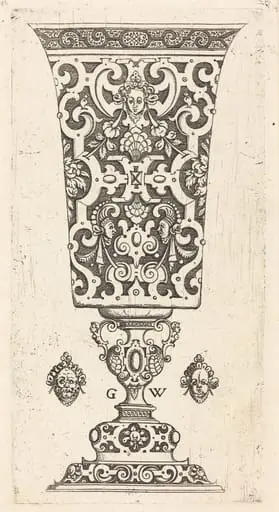
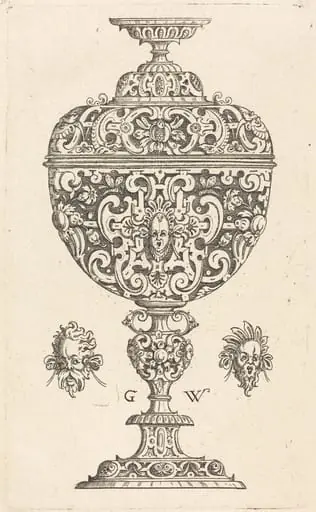
Chalice with six embossings, base decorated with two dolphins is an ink print by the Renaissance artist Georg Wechter I. It dates from 1579 and is held in the collection of the National Gallery of Art.
About this work
Overview
Georg Wechter I’s 1579 engraving presents a silver chalice rendered in line and stipple. The vessel is adorned with six raised ornamental motifs along its shaft and a base that features a pair of stylized dolphins. The composition is executed on paper, offering a detailed study of decorative metalwork through the medium of print.
Subject & Meaning
The image focuses on a liturgical cup, a symbol of communion and ritual. The six embossings suggest a pattern of repeated iconography, while the dolphins—often associated with water and salvation—introduce a playful, allegorical element that balances the solemnity of the chalice with a sense of movement.
Technique & Style
Wechter employed the engraving process, incising lines into a copper plate with a burin before inking and pressing onto paper. The fine hatching and cross‑hatching convey the texture of metal and the fluidity of the dolphin forms, reflecting the Northern Renaissance’s interest in precise detail and ornamental design.
History & Provenance
Created in 1579, the print belongs to the late‑Renaissance period in Germany, when engravers often reproduced designs of metalwork for pattern books and craftsmen. The work is attributed to Georg Wechter I, a noted goldsmith and designer whose prints served as reference material for artisans across Europe.
Context
During the late sixteenth century, decorative motifs for ecclesiastical objects were widely circulated in printed form, facilitating a shared visual language among goldsmiths. The inclusion of marine creatures aligns with contemporary trends that blended classical symbolism with emerging naturalistic observation.
Legacy
Wechter’s engraving contributed to the diffusion of ornamental motifs that would appear in later silverware and decorative arts. By translating a three‑dimensional object into a two‑dimensional print, the work exemplifies how print media supported the transmission of design ideas across regions and generations.
Artist & collection